

Free visual inspection and a written scope of work before any mitigation begins - photos, moisture readings, and drying logs go in your claim file
The scope we write is the scope we bill. Anything new gets shown to you, in writing, before we touch it.
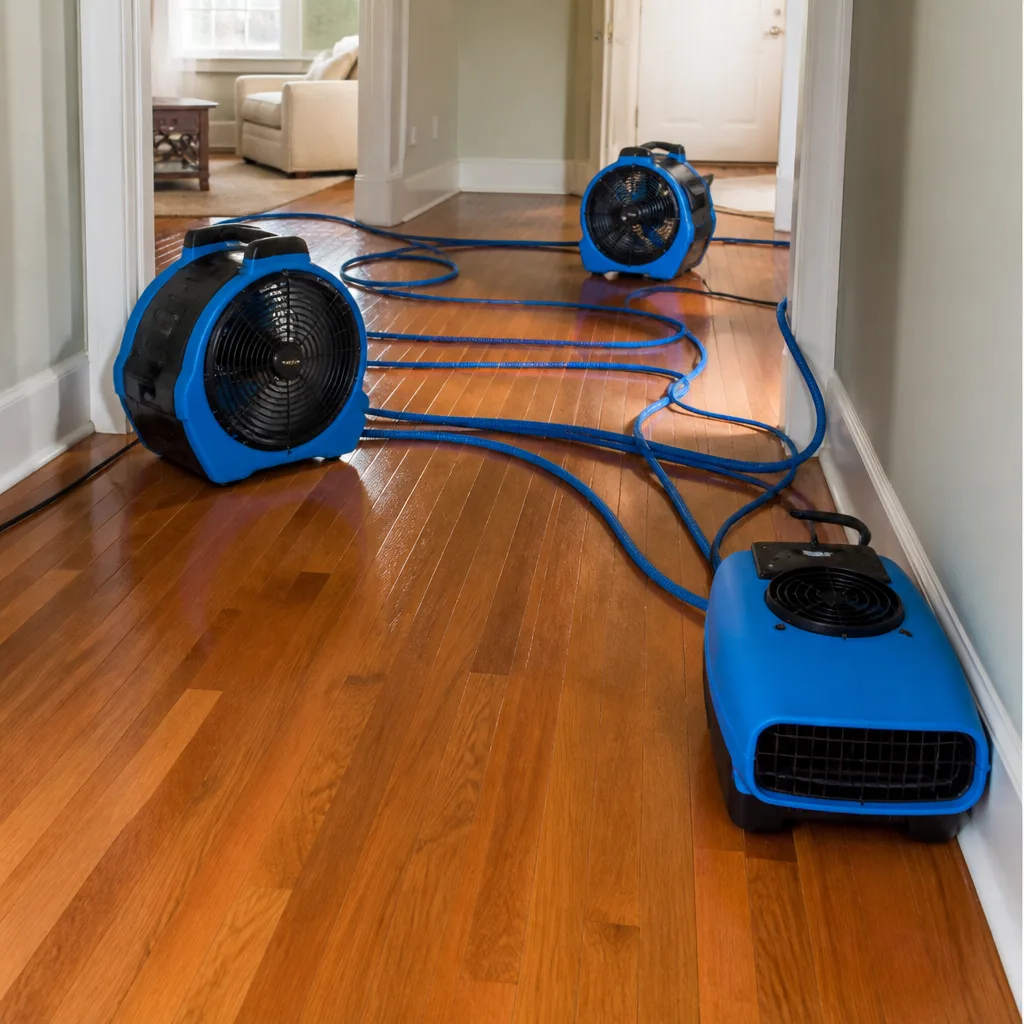
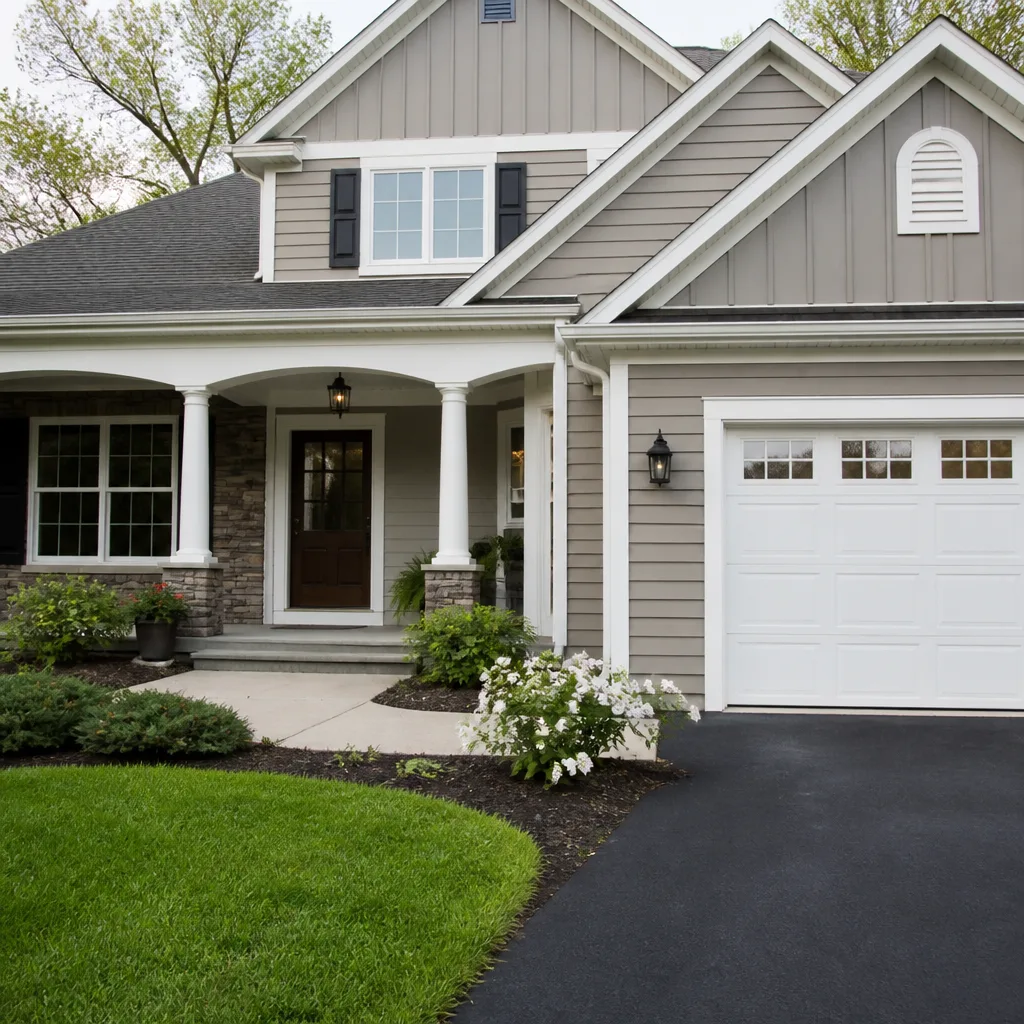
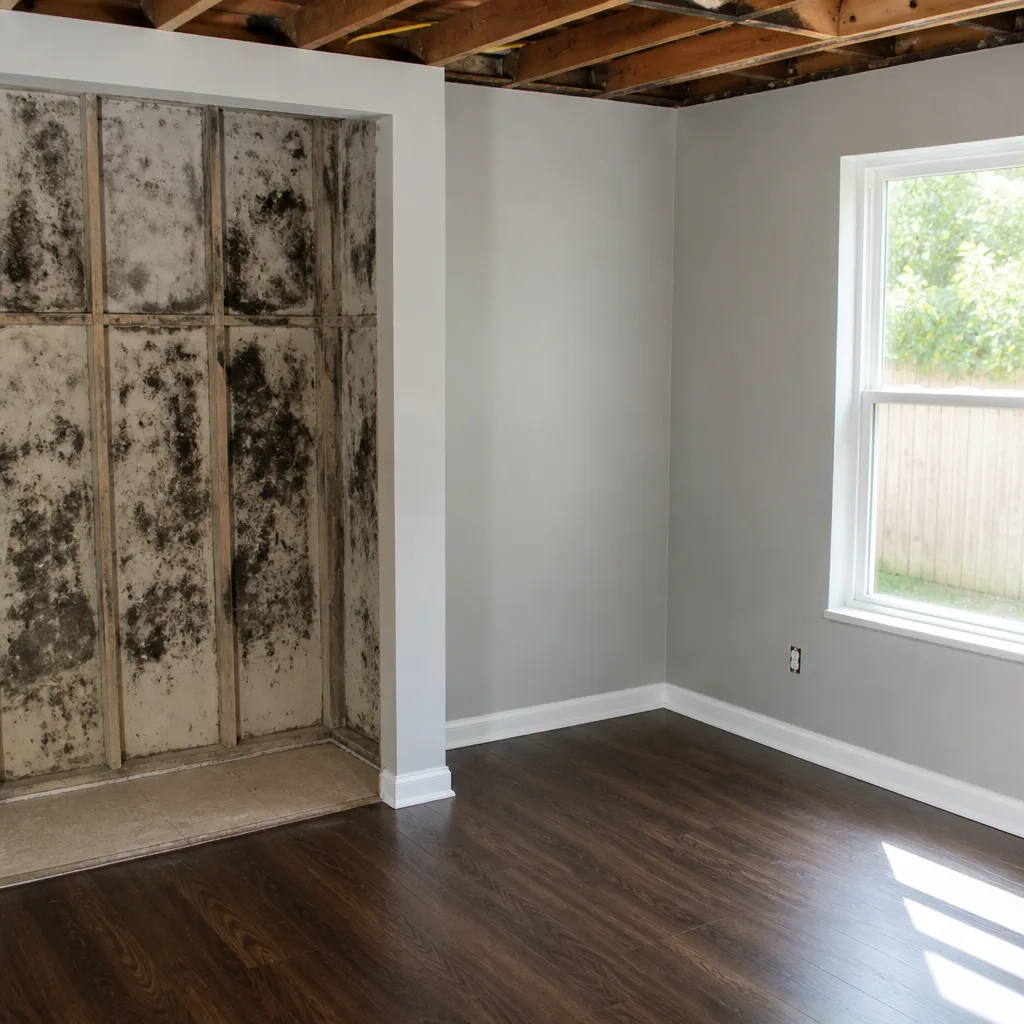
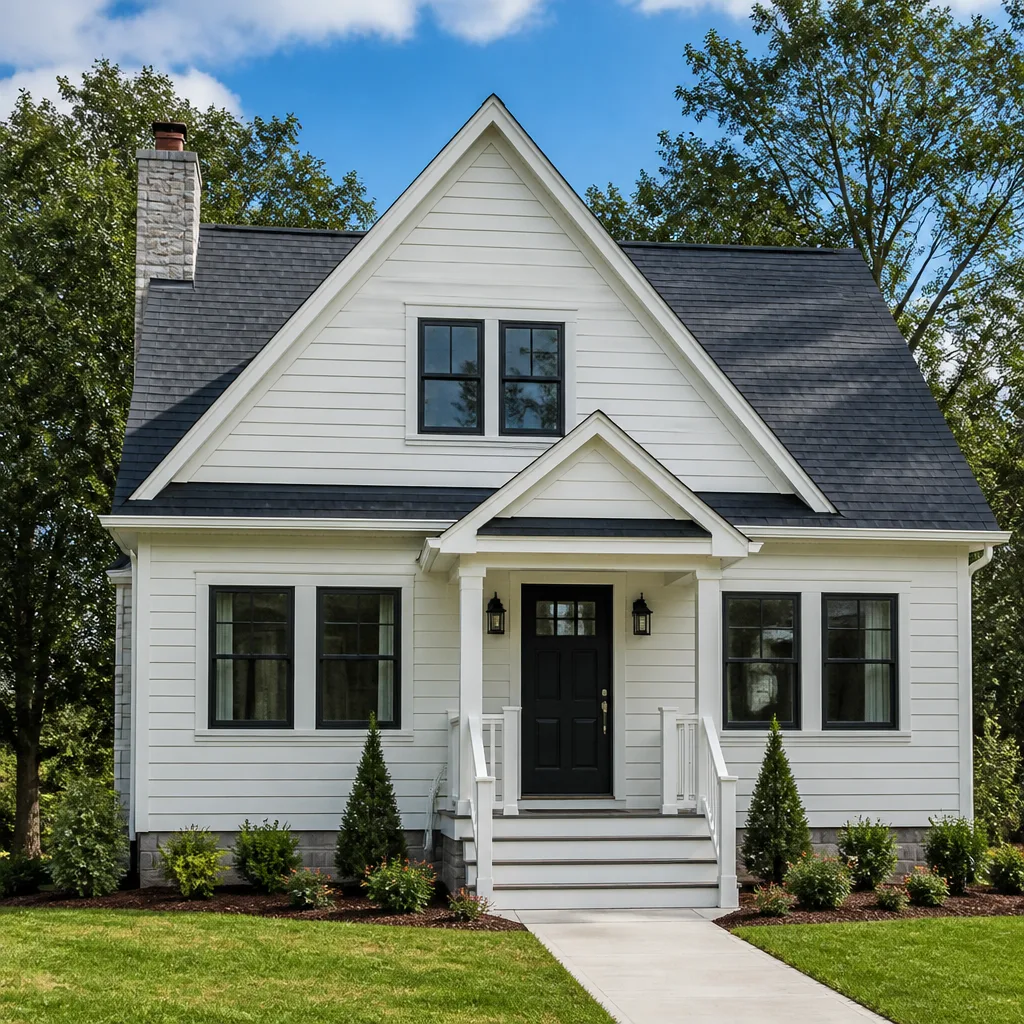
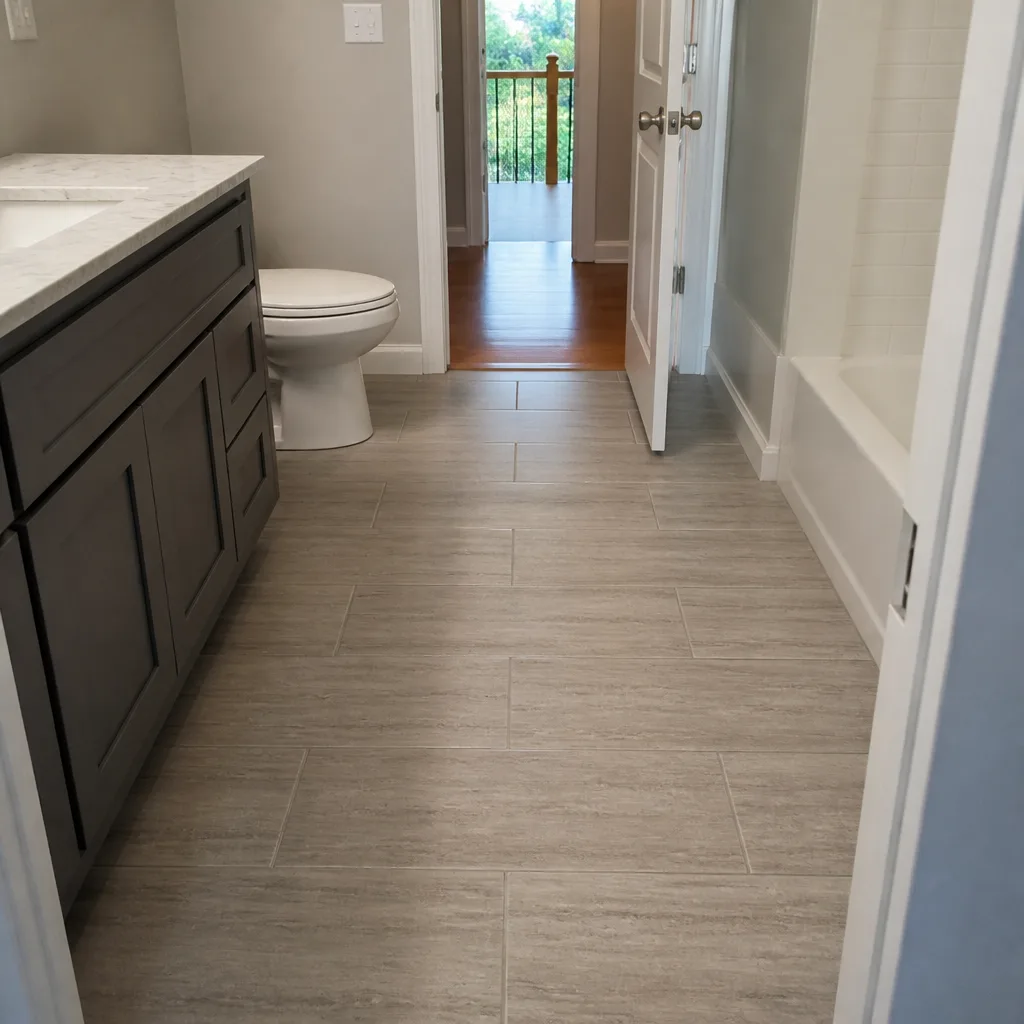
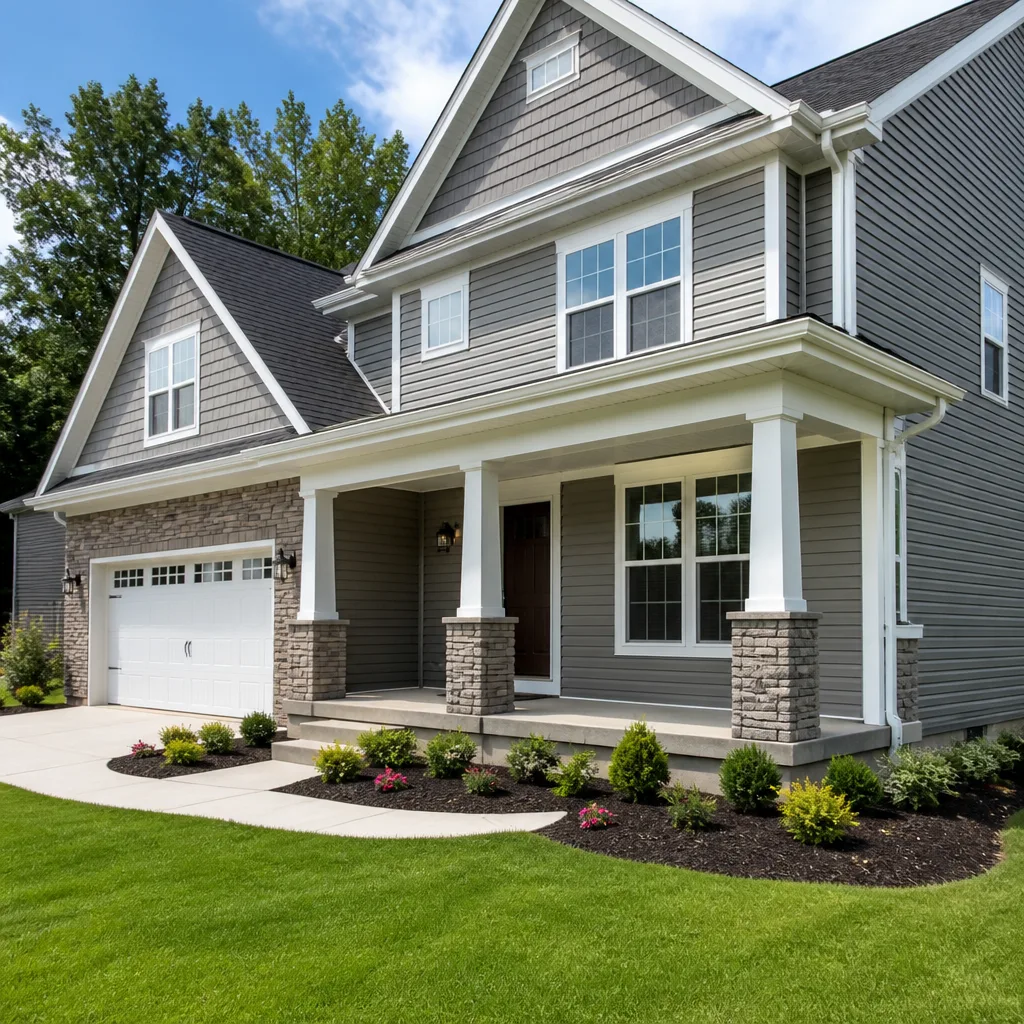
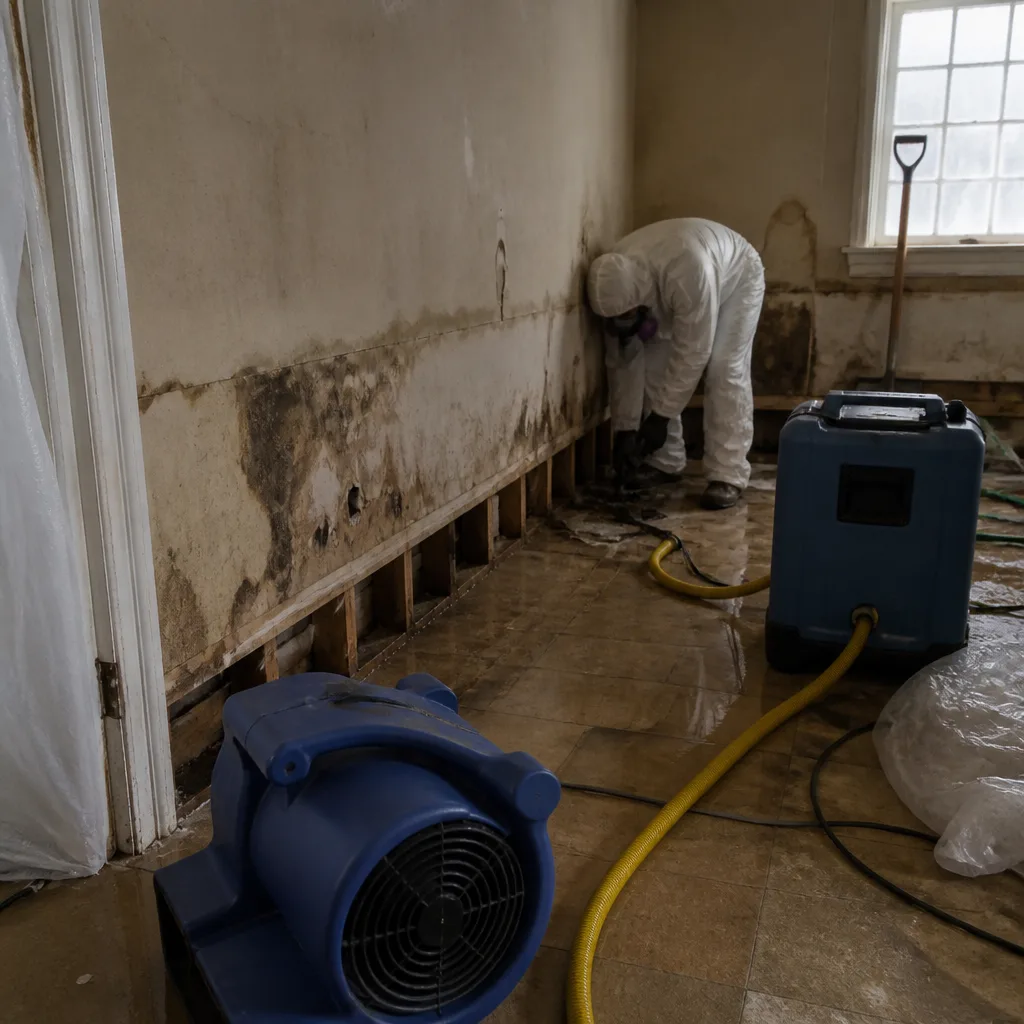 Before
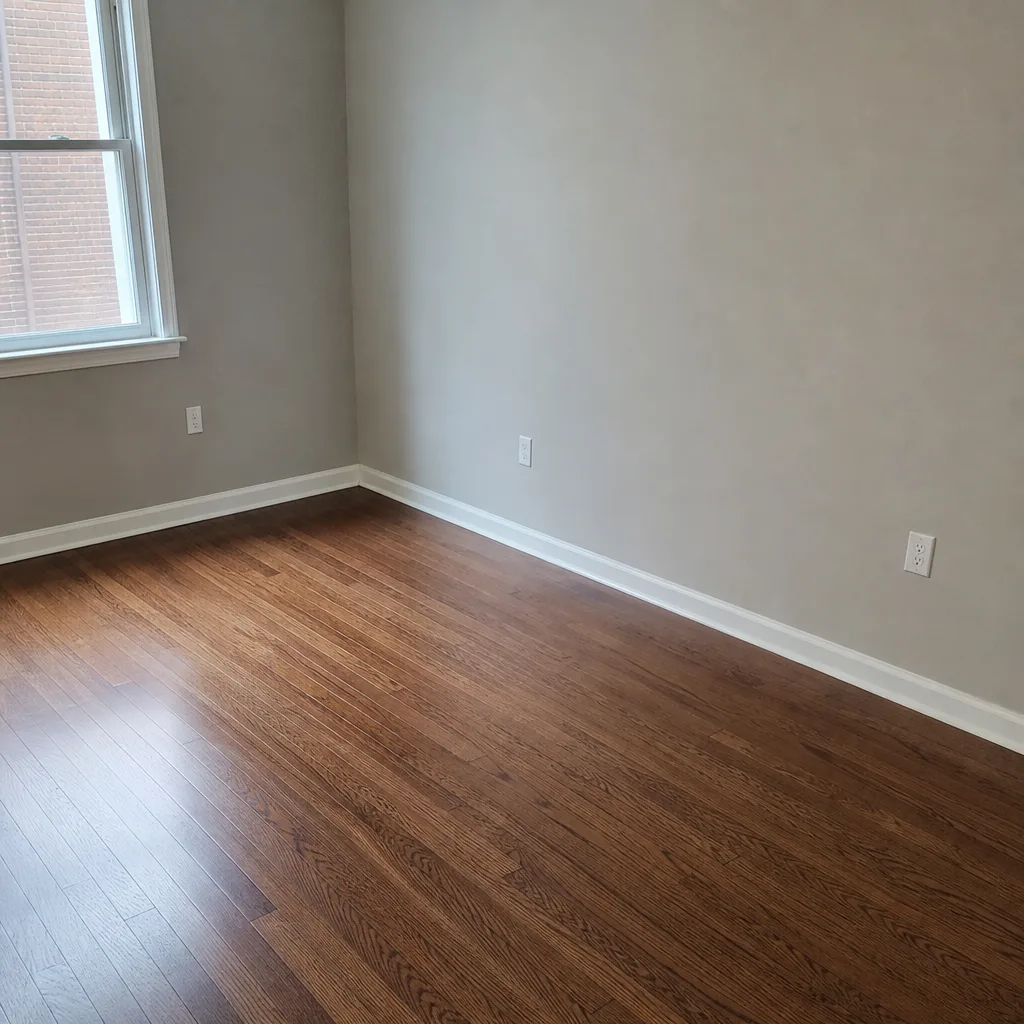 After
After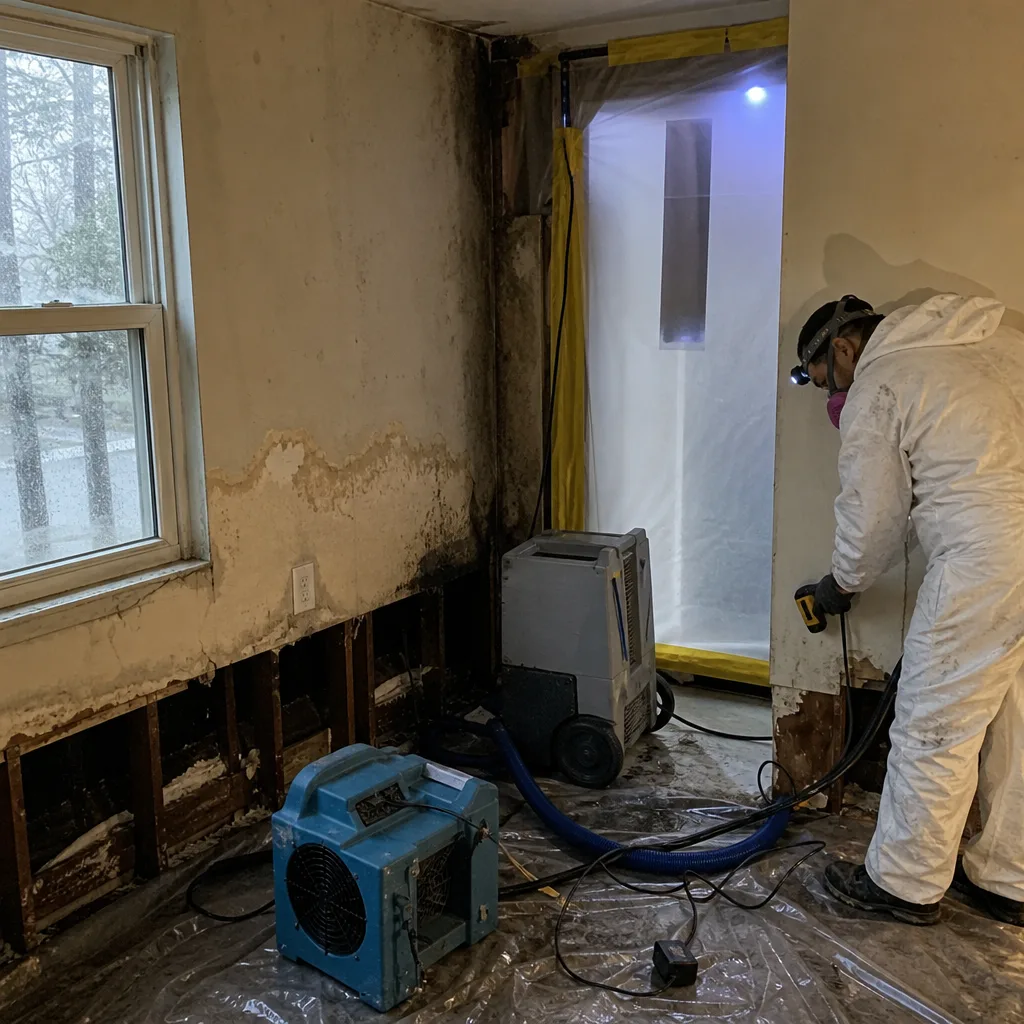 Before
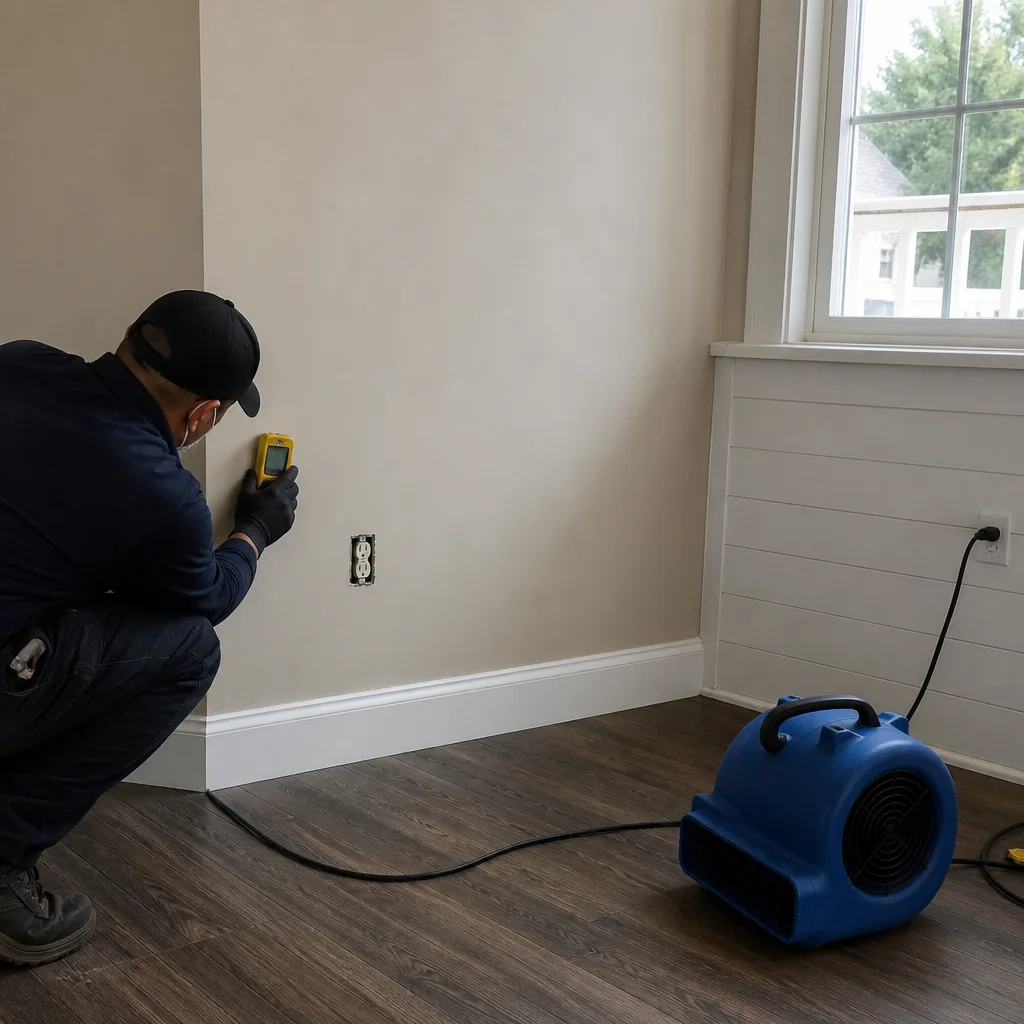 After
After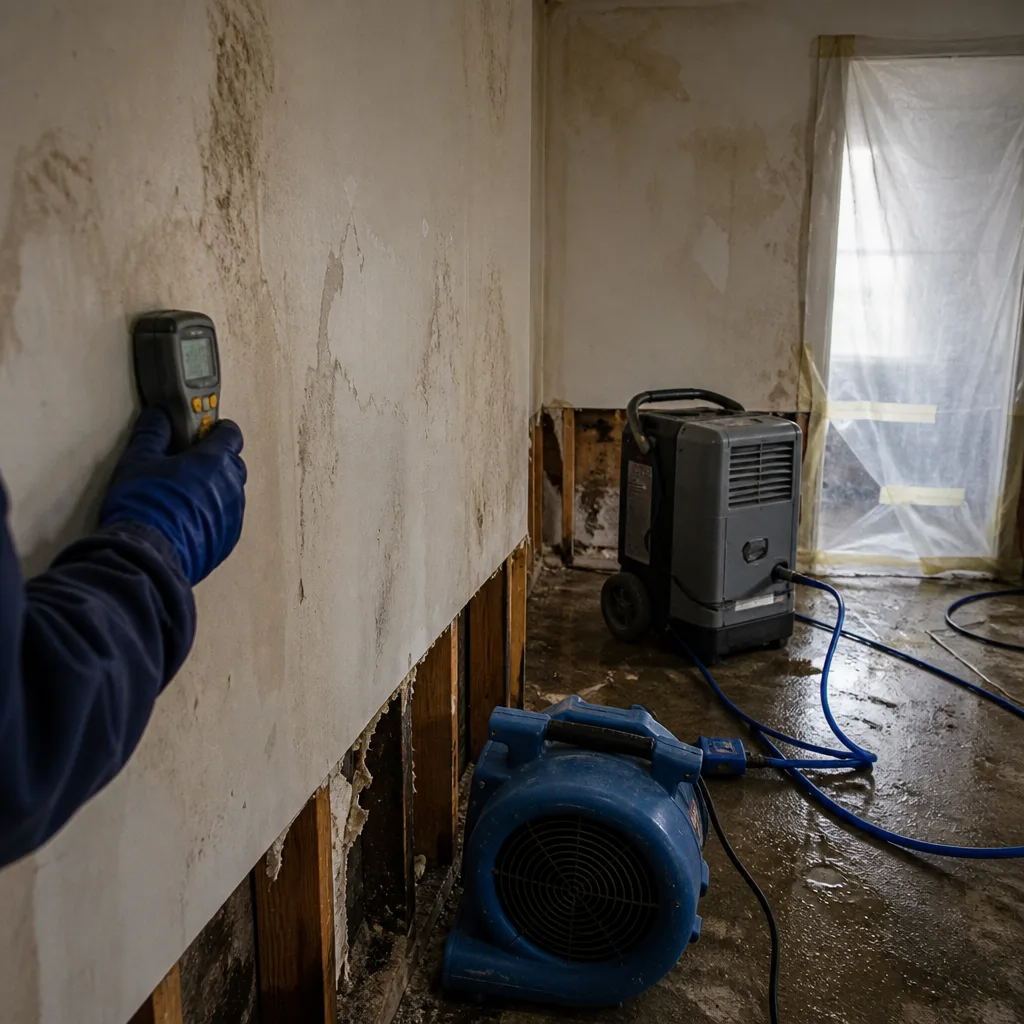 Before
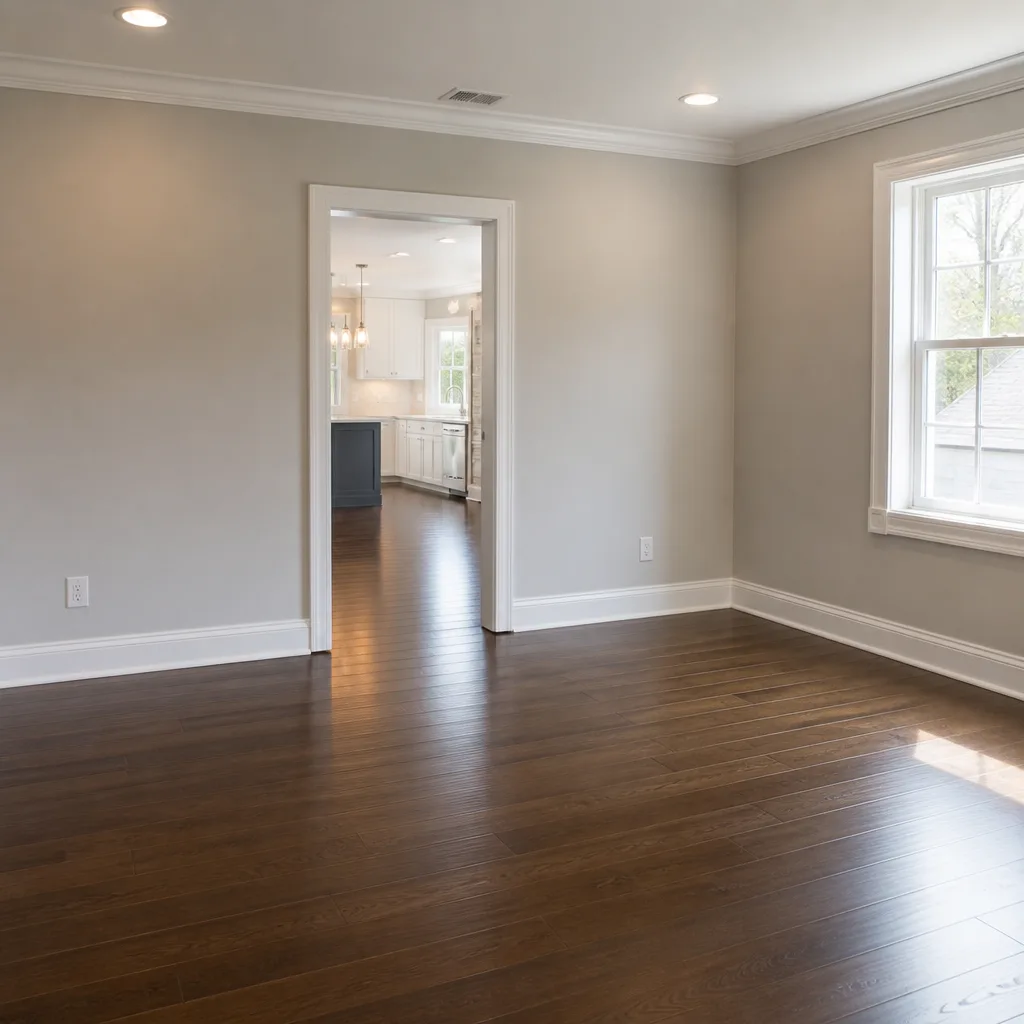 After
After24/7 Emergency Mold Remediation in Ridgefield
Mold in a Ridgefield basement is rarely a surface problem. It’s a sign of water moving through your foundation or crawl space, often weeks before you smell it. Floodline Restoration Co. answers live at (201) 762-0667, 24 hours a day. A background-checked, IICRC-trained crew can be at your door in Ridgefield within 45 minutes to start the free visual inspection and stop the spread before it reaches your living space.
Here’s what matters in the first hour: mold colonies double in size every 24 to 48 hours when they have moisture. In Ridgefield’s lower-lying blocks near the Hackensack River, that moisture is often already in the walls from groundwater pressure. So the clock isn’t a sales line. It’s the difference between containment and a full tear-out. We’ll be there when we say. That’s the standard.
Understanding Mold Remediation Severity in Ridgefield Properties
Most mold jobs in Ridgefield fall into one of three categories, and the category shapes the scope. The first is surface-level growth on drywall or framing after a one-time leak, a supply line freeze, or a water heater failure. The second is recurring basement or crawl space mold driven by groundwater saturation, what contractors call hydrostatic pressure. The third is the hardest: long-established mold behind walls in post-WWII Cape Cods and colonials, often hidden for years and only found after a wall comes open for unrelated work.
Ridgefield’s housing stock makes the second and third categories unusually common. Homes built in the 1940s through 1960s predate modern vapor barriers and exterior waterproofing. Original cast-iron drain stacks rust through at the joints. Sump pits were installed before perimeter drain systems became standard. So when a nor’easter saturates the Meadowlands watershed, water pushes up through block foundations, and old basements become humid cavities that hold 60 to 70 percent relative humidity for weeks. Mold does not need standing water. It needs sustained moisture. That’s why a moisture map, not a visual inspection, is the real diagnostic tool.
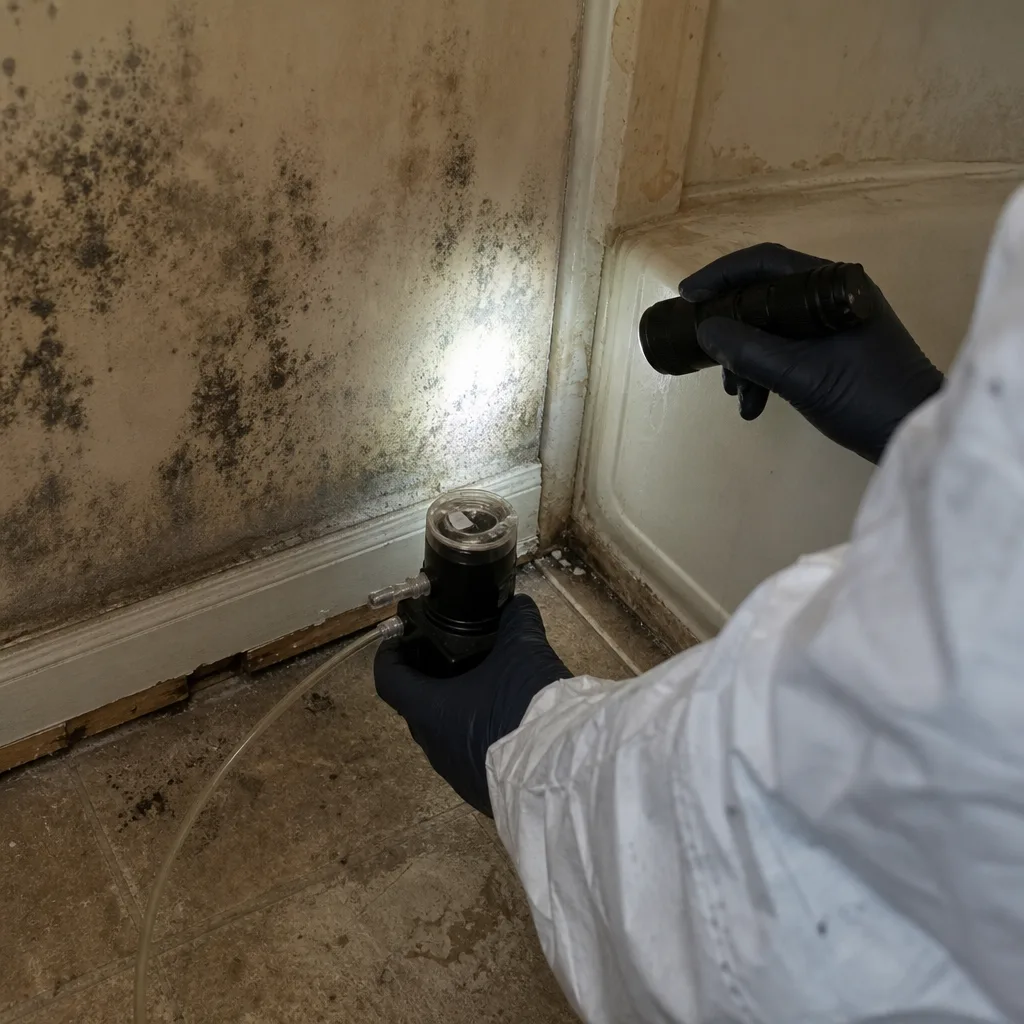
We use thermal imaging, hygrometers, and penetrating moisture meters to find water that a flashlight never will. Then we classify the water damage under IICRC standards: Category 1 clean water, Category 2 gray water, or Category 3 water containing sewage or river water. Category 3 mold and water damage in Ridgefield basement spaces requires full containment, negative air pressure, and HEPA air scrubbing, not just bleach and a fan.
Why Ridgefield Property Owners Choose Floodline Restoration Co.
- 45-minute response commitment: A live dispatcher verifies your address in Ridgefield and lines up the nearest certified crew. No call centers, no voicemail trees.
- Live answer, all night: At 2 a.m., a human being picks up. Not a recording. That’s been true since Curt Bowman founded the company in 2010.
- IICRC-, RIA-, and IFA-trained technicians: Our crews hold the applied microbial remediation (AMRT) and water damage restoration (WRT) certifications relevant to mold work.
- Free visual inspection: We assess the visible damage and walk a moisture meter through affected areas before you ever see an estimate.
- Direct insurance billing: We send detailed documentation and a line-item scope to your carrier, then track the claim with your adjuster so you don’t have to.
- One team from start to finish: The same crew that sets containment runs the HEPA scrubbers and handles the rebuild. No mid-job handoff to a subcontractor you have never met.
Our Mold Remediation Process
Inspection & Assessment
We map moisture through walls, floors, and the crawl space. In Ridgefield’s older construction, that means checking the foundation sill, baseboard cavities, and the bottom two feet of any finished basement wall where hydrostatic pressure first shows moisture. We also identify the water source, because remediation without a water source fix is just a countdown to recurrence.
Containment & Stabilization
We set up full containment with 6-mil plastic barriers and run HEPA-filtered negative air machines so mold spores don’t move into the upstairs living spaces. Any standing water is extracted with truck-mounted or portable Dri-Eaz extraction units. If the source is Category 3 water, contaminated materials come out under containment conditions.
Drying & Dehumidification
Dri-Eaz and Phoenix dehumidifiers and air movers run continuously until moisture readings reach IICRC dry standard, typically 10 to 14 percent moisture content in dimensional lumber. We log readings daily and hand you the drying log. On Ridgefield’s lower blocks, this phase often takes longer because exterior soil stays saturated after flood events.
Cleaning & Sanitization
We HEPA-vacuum all surfaces in the contained area, clean non-porous materials with an EPA-registered antimicrobial, and remove mold-damaged drywall, insulation, carpet, and pad. Porous materials with visible mold growth cannot be cleaned. They come out.
Mold Prevention & Humidity Control
This is the step that matters most in Ridgefield. We address the moisture source: sump pump replacement or upgrades, perimeter drainage correction, vapor barrier installation in crawl spaces, and dehumidifier sizing for the space’s cubic footage. Without this, the mold returns.
Repairs & Restoration
The same Floodline crew rebuilds what came out: new drywall, insulation, flooring, and trim. We finish to a paint-ready or fully finished standard, depending on the scope. Then we hand you the documentation and the 90-Day Done Right Promise in writing: if it’s not done right, we make it right.
Need Emergency Mold Remediation in Ridgefield Now?
Crews minutes away, answering live 24 hours a day. The sooner we start, the less it costs.
Working With Your Insurance Company
Mold coverage is one of the fastest-changing parts of property insurance policies, and the answer is almost never a simple yes or no. What changes the outcome is documentation: a clear cause of loss, photos from the first hour, moisture readings showing the extent of the water intrusion, and a scope of work tied to the damaged area.
Floodline Restoration Co. has been direct-insurance billing since day one. We photo-document every affected room before we touch a wall. We run moisture readings and keep drying logs. We prepare estimates in the format carriers recognize. Then we talk to your adjuster directly, so you’re not playing messenger between two parties who speak different languages. If your Ridgefield home sits in a FEMA flood zone, flood insurance questions add a second layer. We walk you through what’s covered, what isn’t, and what your options are before work begins.
What We Provide Your Insurer
- Thorough documentation of the loss
- Photos of all damage, room by room
- Moisture readings and drying logs
- A detailed, line-item scope of work
- Direct coordination with your carrier
Built for Ridgefield’s Loss Calendar
Ridgefield’s mold season isn’t a season. It’s a set of triggers that hit at different times of year, and all of them lead back to water.
January and February bring deep freezes that split supply lines in unheated crawl spaces and basements, especially in 1940s and 1950s homes where pipes run through exterior framing. These freeze breaks send clean water through walls for hours before anyone notices, and by then the wall cavity is wet. March and April thaw, and snowmelt plus spring rain raises the water table under the borough’s lower-elevation sections, leading to basement seepage through floor-wall joints and sump pump failures. Summer thunderstorms dump inches of water in an hour, overwhelming old storm drains and sending street water toward the lowest point on the property, which in Ridgefield is often the basement stairwell or the crawl space access. Fall nor’easters and extended rain events saturate the Hackensack River watershed for days, and the hydrostatic pressure on block foundations builds until water finds a path through.
Each of these events sets up mold. The water itself is not the problem. The problem is the three weeks of elevated humidity that follow if the drying isn’t done right. That’s why a single visit is not the goal. The goal is a dry standard that holds.
Mold Remediation Across Ridgefield’s Neighborhoods
Ridgefield’s geography splits the borough into two very different water problems, and the mold patterns follow.
The lower blocks along Arthur Street and Edgewater Avenue toward the Meadowlands fringe sit close to the water table. These are the homes where a nor’easter re-wets basements that were dry for months. We see recurring mold here, not because the last remediation was done wrong, but because the exterior soil never dries enough to stop moisture from pressing through the block. Homes in these blocks need perimeter drainage corrections, upgraded sump systems, and often a crawl space vapor barrier to break the cycle.
The higher ground near the Palisades side, up around Broad Avenue and the streets climbing toward the ridge, tends to see different failures: aging supply lines, water heaters at end of life, and roof leaks that track down interior walls. Mold there is usually tied to a single event rather than standing groundwater.
Homes along Slocum Avenue and the residential streets south of Route 5 sit on a middle band where original 1950s construction is common. We regularly find mold behind finished basement paneling that was installed over block walls with no moisture barrier in an era before that was standard practice. Those basements never had a chance to stay dry. The fix is removing the material, drying behind the wall, and installing proper drainage and vapor control. It’s a local pattern we’ve tracked for over a decade.
Specialized Mold Remediation Services We Offer in Ridgefield
Mold Inspection & Testing
We start with a visual inspection and moisture mapping, then decide whether air or surface sampling is needed. In Ridgefield’s post-WWII homes, testing often confirms what moisture readings already suggest: elevated spore counts behind walls, not in the living space yet. We interpret lab results in plain terms and tie every finding to a water source.
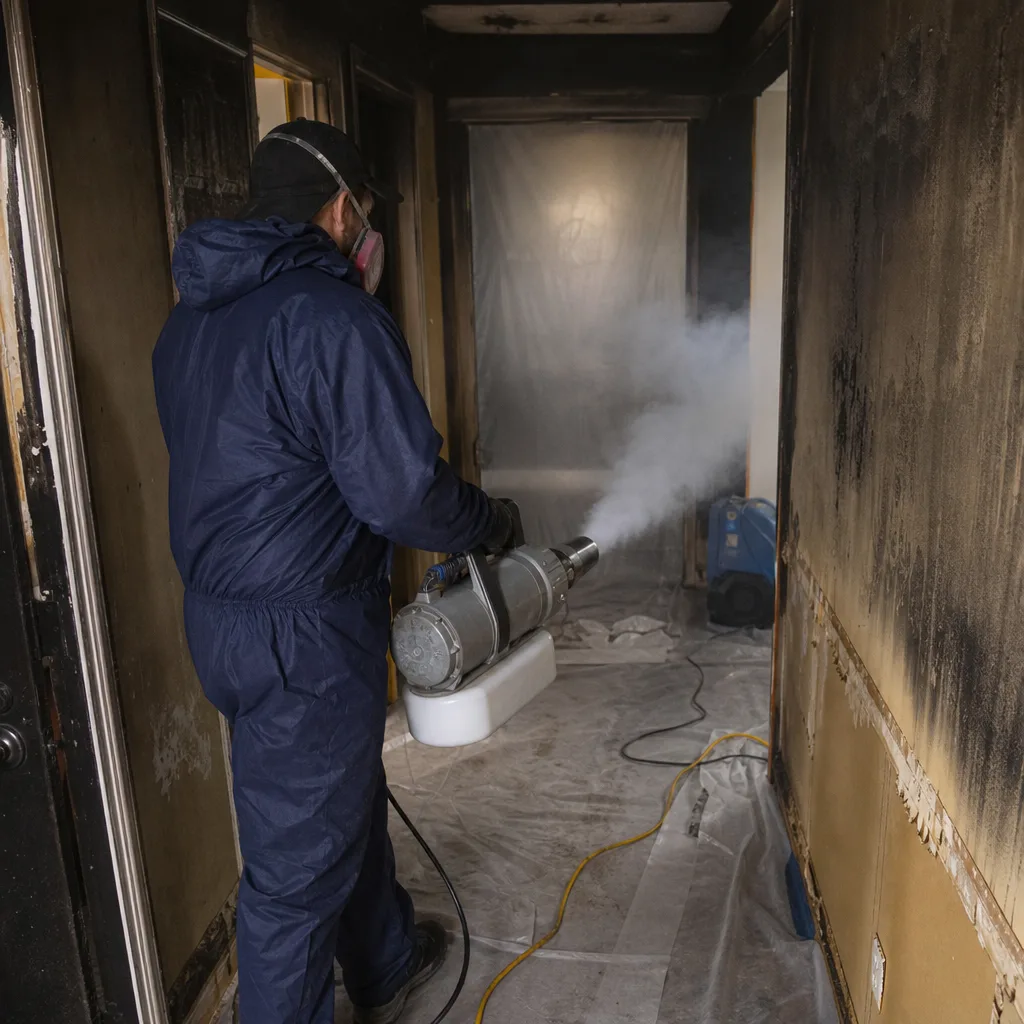
Mold Removal
Removal means demolition of mold-damaged material under containment, not spraying bleach over a problem. In Ridgefield basements, that usually means cutting out drywall, baseboard, and insulation at the bottom of the wall where groundwater infiltrates, then drying the framing behind it. The mold goes out with the material.
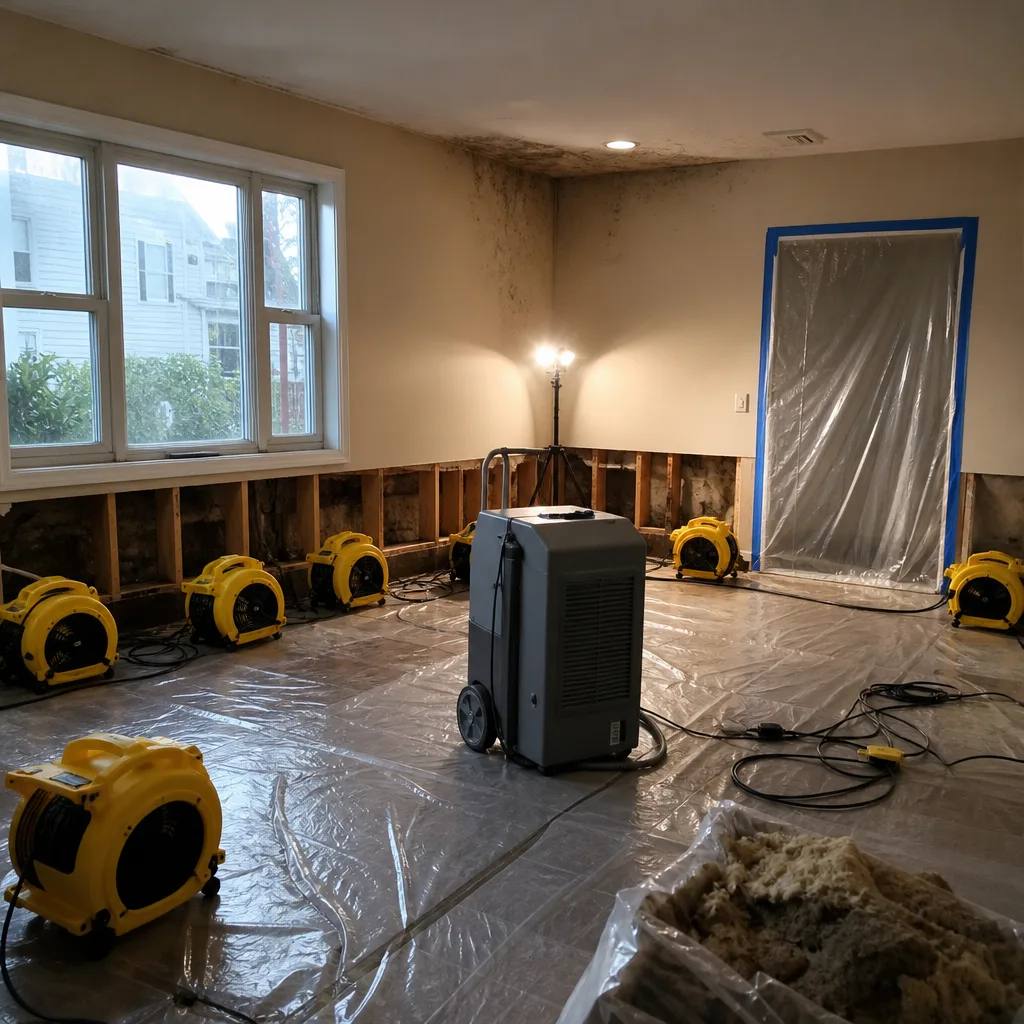
Black Mold Remediation
Stachybotrys chartarum, the black mold everyone asks about, grows on chronically wet high-cellulose materials like drywall and ceiling tile. It can develop within 10 to 21 days of sustained moisture. In Ridgefield homes with Hurricane Sandy-era damage that was never fully dried, we still find it behind walls in otherwise finished rooms. Our Mold Remediation team handles full containment and removal for this. Black mold is not a DIY cleanup.
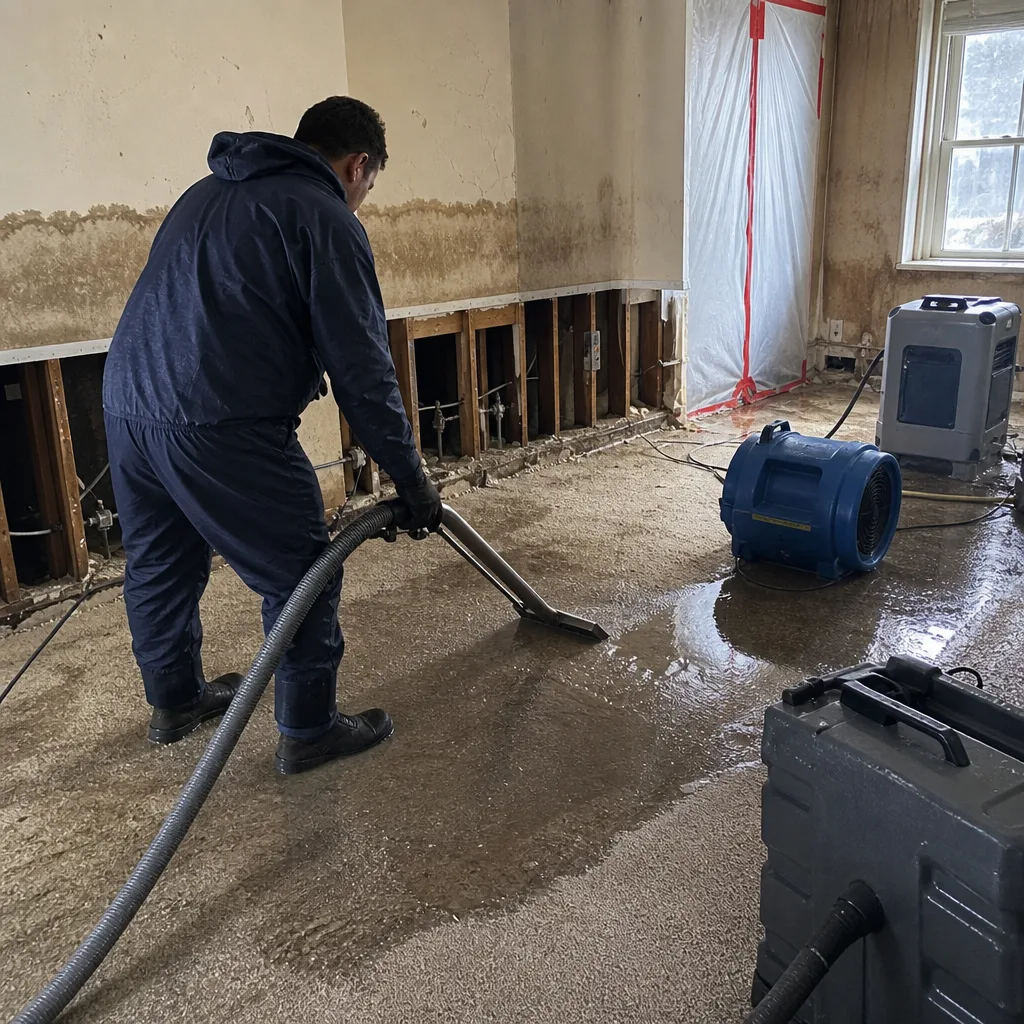
Air Quality Restoration
After physical removal, the air inside the contained area needs to match the air outside before we call the job done. We run HEPA scrubbers during work and post-remediation air sampling to verify clearance. In Ridgefield homes where mold has been present for months or years, airborne spore counts can be elevated throughout the house, not just the basement.
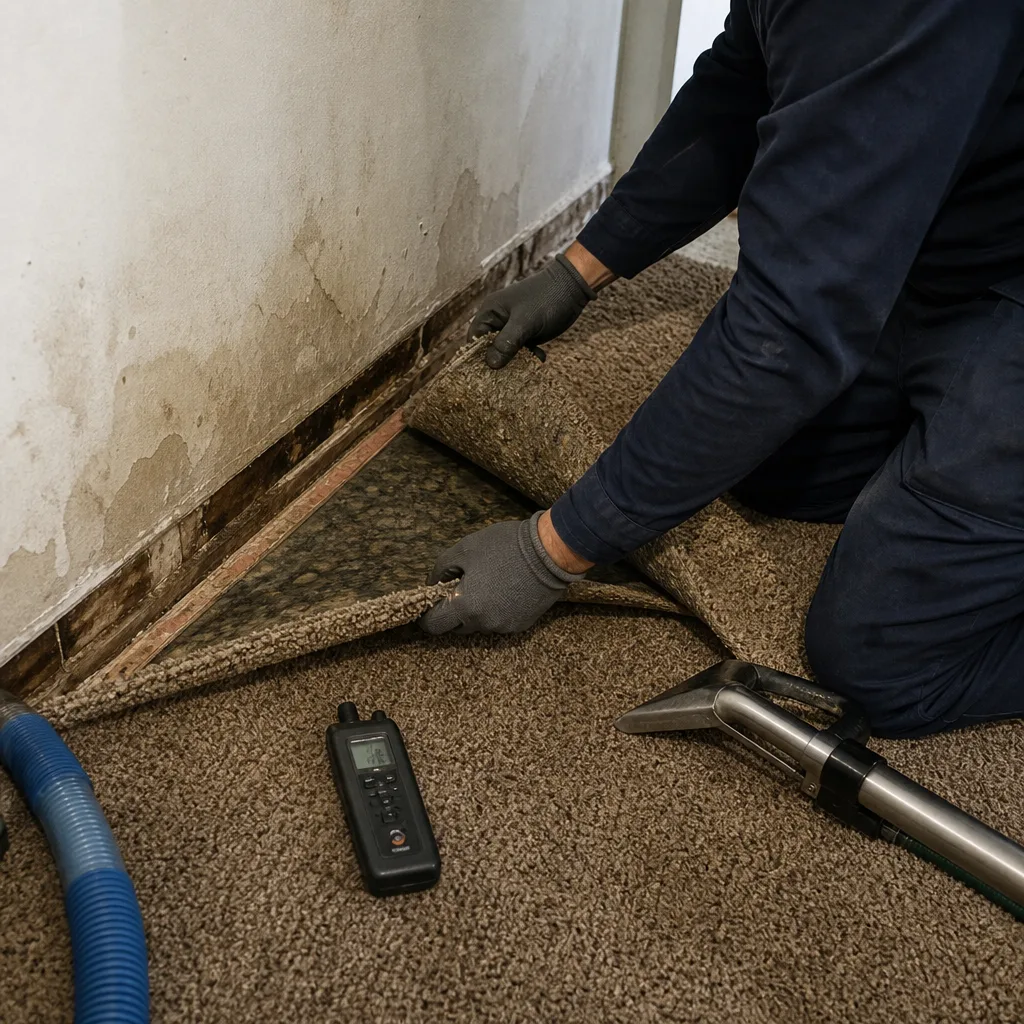
Crawl Space Treatment
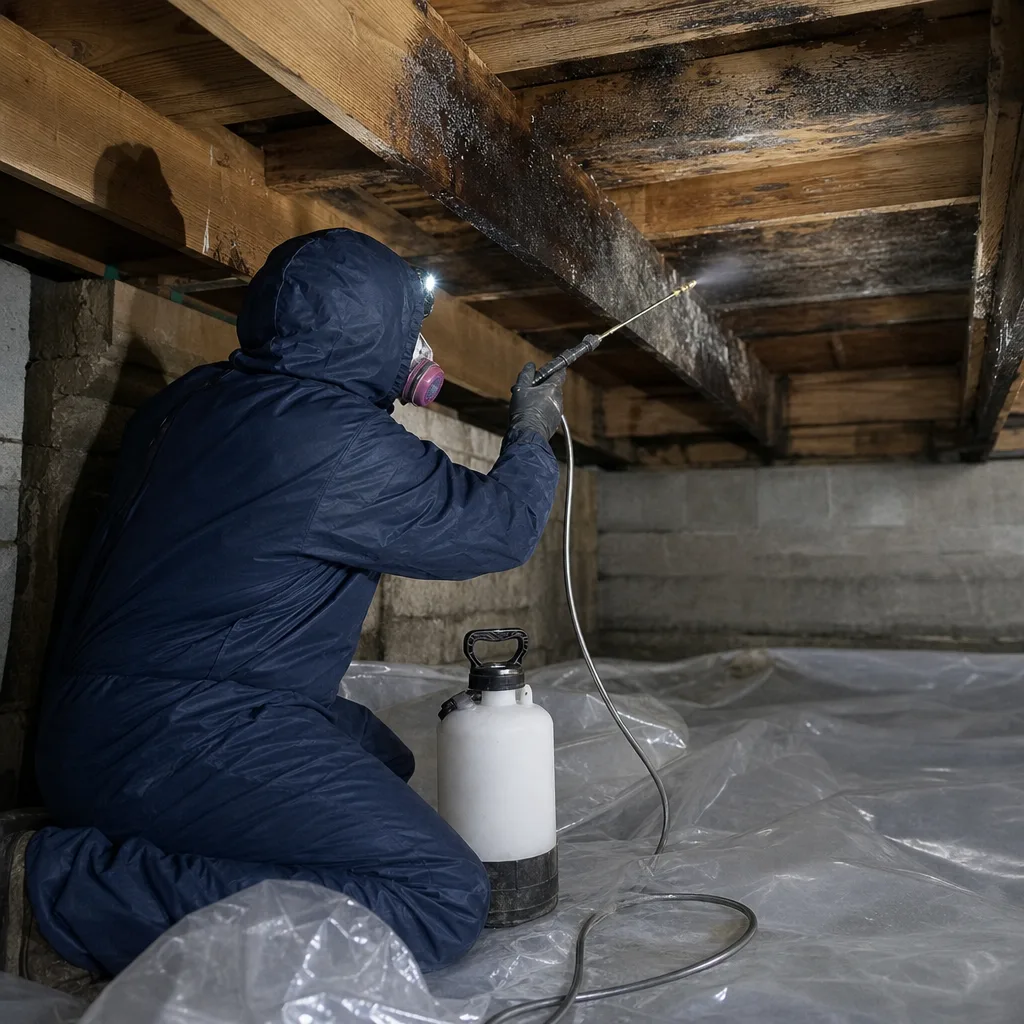
Ridgefield crawl spaces are low, often vented to the outside, and exposed to the same groundwater pressure as basements. We install vapor barriers, seal rim joists, and size dehumidifiers to the cubic footage of the space. A properly treated crawl space stops the mold cycle at the source in the lowest, dampest part of the house.
Moisture & Humidity Control
This is the work that keeps mold from coming back. We install and maintain sump pumps, perimeter drainage, dehumidifiers, and vapor barriers. In Ridgefield’s flood-zone sections, this is often the real mold remediation, the part that avoids another tear-out next year.
What happens when you call
- 1
A real person answersNo phone trees - you reach a local pro.
- 2
You get an upfront price rangeHonest numbers before anyone is dispatched.
- 3
A background-checked tech heads outLicensed & insured, dispatched right away.
- 4
You approve before work beginsNothing starts until you say go.
Mold Remediation Costs in Ridgefield, NJ
Every Ridgefield mold job starts with a free visual inspection. Here’s what you can expect in this market, based on the work we do in 07657.
- Mold Inspection & Testing: $300-$600, including moisture mapping and, if warranted, one to three air or surface samples sent to a certified lab.
- Small containment & removal (under 30 sq ft): $1,200-$3,500, typically a single wall cavity, a closet, or a section of basement drywall.
- Full basement mold remediation: $4,000-$12,000, including containment, removal, drying, cleaning, and antimicrobial application. Larger finished basements in Ridgefield’s colonials can run higher.
- Crawl space treatment: $2,500-$7,000 depending on square footage, access, and whether a vapor barrier and drainage correction are included.
- Moisture & humidity control systems: $1,800-$5,500 for sump pump replacement, dehumidifier installation, and perimeter drainage correction.
What moves the price: the square footage of mold growth, whether Category 3 water is involved, how much drywall and insulation has to come out, and whether the crawl space or exterior drainage needs correction. Insurance coverage depends on the source of water and your policy. We prepare the documentation your carrier needs and bill directly. The free inspection gives you a firm scope in writing before any work starts. No surprises on the bill. That’s the deal.
We Also Serve Cities Near Ridgefield
Floodline crews cover Ridgefield and the surrounding Bergen and Hudson County communities, including Ridgefield neighbors Moonachie, North Bergen, Secaucus, and Weehawken. If your home sits in one of these towns and you’re dealing with mold, water, or storm damage, the same certified crew and the same 90-Day Done Right Promise apply.
Ridgefield Mold Remediation Questions, Answered
Why does mold keep coming back in my Ridgefield basement even after remediation?
Because the moisture source was never fully addressed. In Ridgefield’s lower-elevation sections, groundwater pressure pushes water through block foundations every time the water table rises. If a remediation removed the mold but didn’t correct exterior drainage, install a vapor barrier, or address hydrostatic pressure, the wall re-wets and mold returns. We always identify and fix the water source as part of the scope.
Do I need a permit for mold remediation in Ridgefield’s flood zones?
Bergen County flood-zone permit requirements apply to structural repairs and to any work involving foundation drainage, sump pump replacement, or crawl space modifications on affected properties. Mold removal itself typically falls under standard health and safety protocols, but if the scope includes drainage correction or rebuilding in a FEMA flood zone, permits are required. We handle the permit process for you. Call (201) 762-0667 and we’ll tell you exactly what your property needs.
Can you salvage my 1950s Cape Cod’s original plaster walls after water damage?
Sometimes yes, depending on how long the plaster was wet and how far the water traveled. Plaster can be dried and restored if it hasn’t delaminated from the lath and if there’s no mold growth inside the wall cavity. But in Ridgefield’s older homes, saturated wall cavities often mean mold behind the plaster, not on it, and opening one section usually reveals the true extent. We’ll tell you honestly once we open the first inspection cut.
How do you handle black mold from Hurricane Sandy damage still lingering in Ridgefield basements?
Sandy flooded basements all through this part of Bergen County, and many were never fully dried behind finished walls. We handle it the same way a licensed mold firm handles any Category 3 water loss: full containment, removal of all mold-damaged material, drying to standard, and air clearance testing. The difference is that Sandy-era mold jobs often reveal structural drying needs and drainage corrections that were skipped the first time. That’s part of doing it done right now.
What makes Ridgefield mold remediation different from nearby Palisades Park?
Palisades Park sits on higher ground above the floodplain. Ridgefield’s lower sections don’t. That means the water source in a Ridgefield basement is often groundwater, not a burst pipe or a roof leak. The mold work itself is the same science, but Ridgefield jobs require drainage correction and hydrostatic pressure management that higher-elevation towns largely skip. If you don’t address that, the mold comes back. We design the scope around it from day one.
How fast can a crew actually get to my Ridgefield home?
Within 45 minutes is our commitment for emergency response. A live dispatcher answers your call at (201) 762-0667, confirms your property details, and routes the nearest available certified crew. On a typical job the containment goes up and extraction starts the same visit. The goal is to stop the spread before the end of the first day.
Can we stay in the house during mold remediation?
Yes, in most cases. We isolate the affected area with containment barriers and run negative air pressure so spores don’t migrate into living spaces. If the affected area is the only bathroom or the main bedroom, we’ll talk through timing and options before we start. The important thing is not to delay, and to keep the affected area sealed off until we arrive.
What should I do in the first 30 minutes after finding mold in my Ridgefield home?
Shut the door to the affected room if you can, and don’t disturb the mold. Running a fan or trying to wipe it down spreads spores. Turn off any HVAC system that draws air through the affected area. Then call (201) 762-0667. We’ll talk you through the next steps, including whether to shut off water to the property and how to photograph the area for your insurance claim. The free inspection is the fastest way to a real answer.
Serving Ridgefield, NJ - Our Local Coverage Area
We’re based in the Ridgefield area and know this community well. Use the map below to see our service coverage - if you’re nearby, we can almost certainly help.
Moisture Work That Sticks: A Ridgefield Foundation Lesson
On a 1950s Cape Cod near the Meadowlands fringe, our crew found mold behind baseboards after a nor’easter re-wetted the basement. The homeowner had pumped the water out twice the previous spring. Each time it came back within days. The ground outside wasn’t draining anywhere. We used moisture mapping to trace saturation through the block walls, then set up containment, removed Category 3 water-damaged drywall, and placed Dri-Eaz dehumidifiers with air movers until moisture readings matched pre-loss condition. Months later, the homeowner told us the sump pump had finally stopped cycling. The water wasn’t the problem. The path it took was.
That’s the job in Ridgefield’s lower blocks. It isn’t a one-day dry-out. It’s understanding where the water will be next time, and building the fix so next time never comes.
Floodline Restoration Co. serves Ridgefield with the same crew from first inspection to final rebuild, live dispatch 24 hours a day, and the 90-Day Done Right Promise in writing on every job. If you’re seeing mold, smelling it, or wondering about a basement that never quite dried after the last storm, call (201) 762-0667 now. The estimate is free. The answer is honest. And if it’s not done right, we make it right.
Written by Curt Bowman, Owner at Floodline Restoration Co., serving Ridgefield and surrounding Bergen County communities since 2010.