
Free visual inspection and a written scope of work before any mitigation begins - photos, moisture readings, and drying logs go in your claim file
The scope we write is the scope we bill. Anything new gets shown to you, in writing, before we touch it.
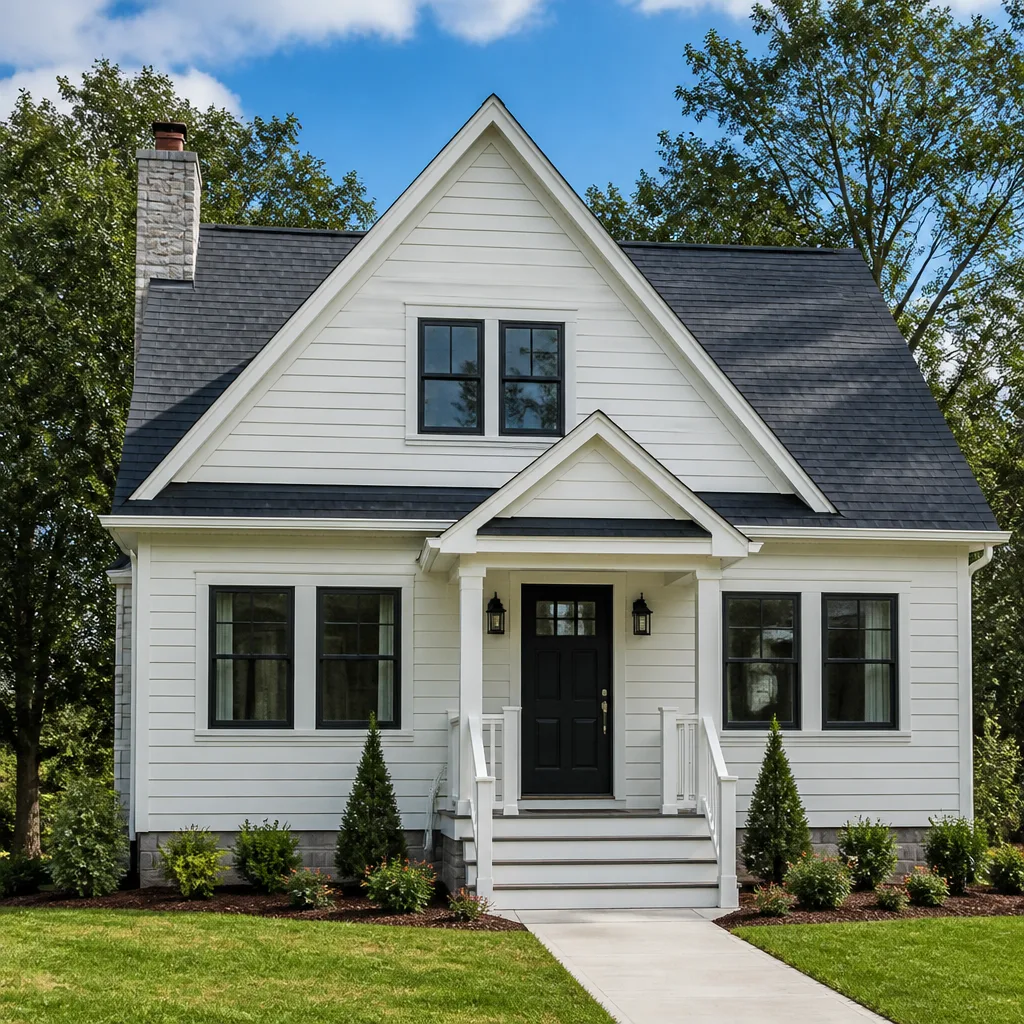
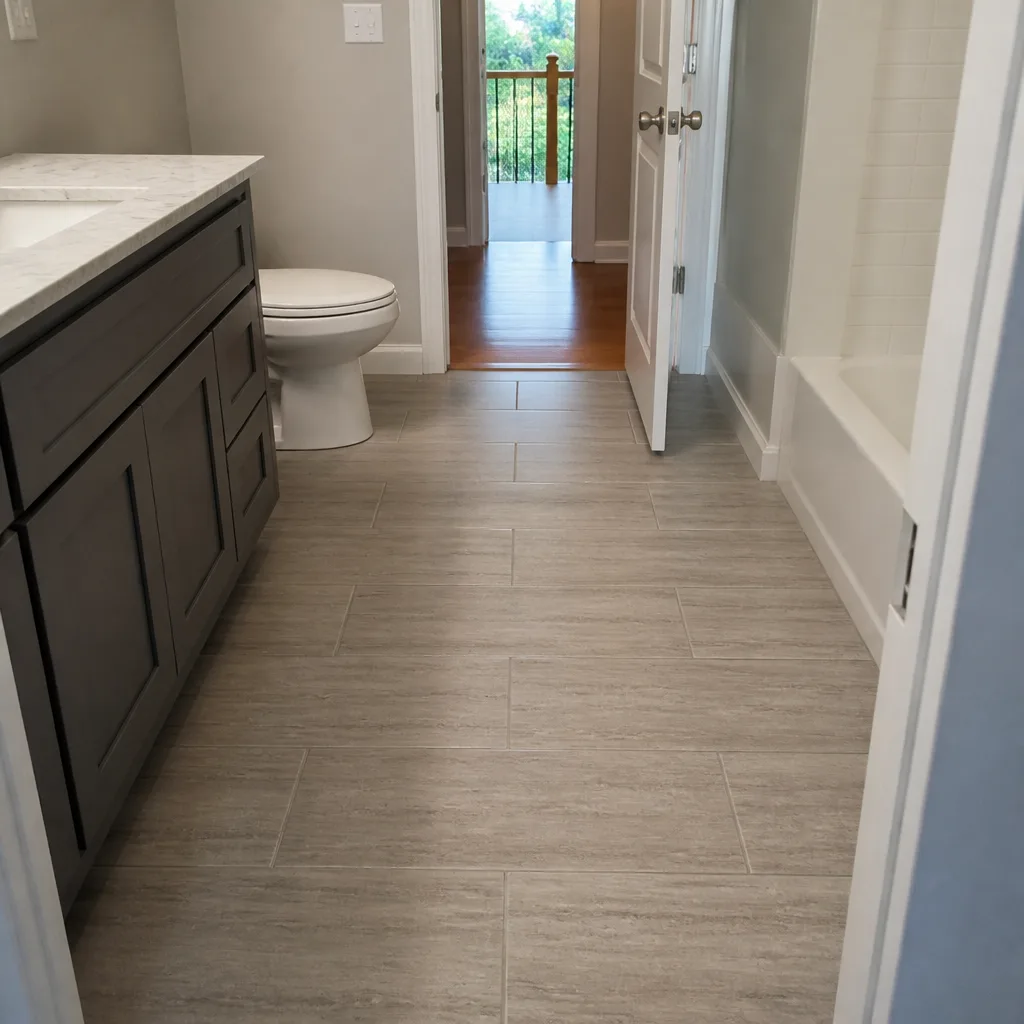
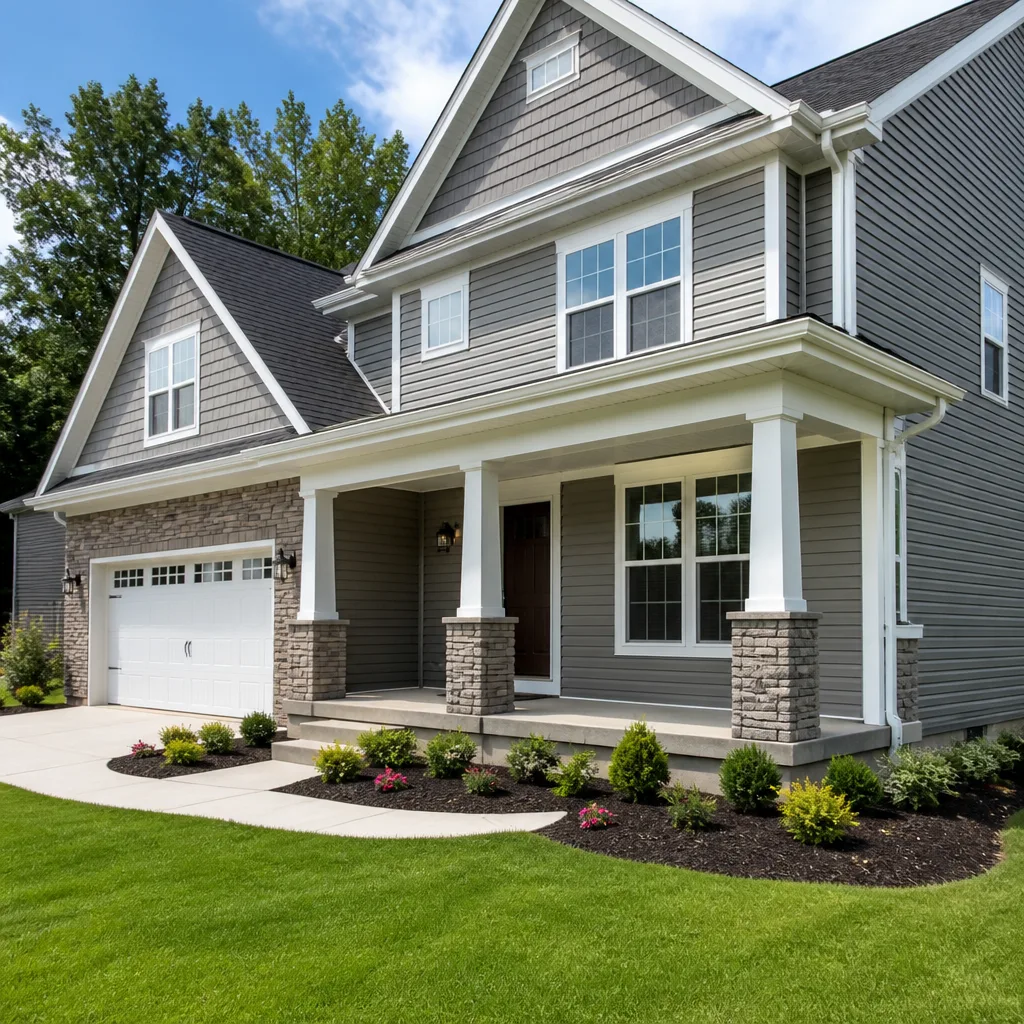
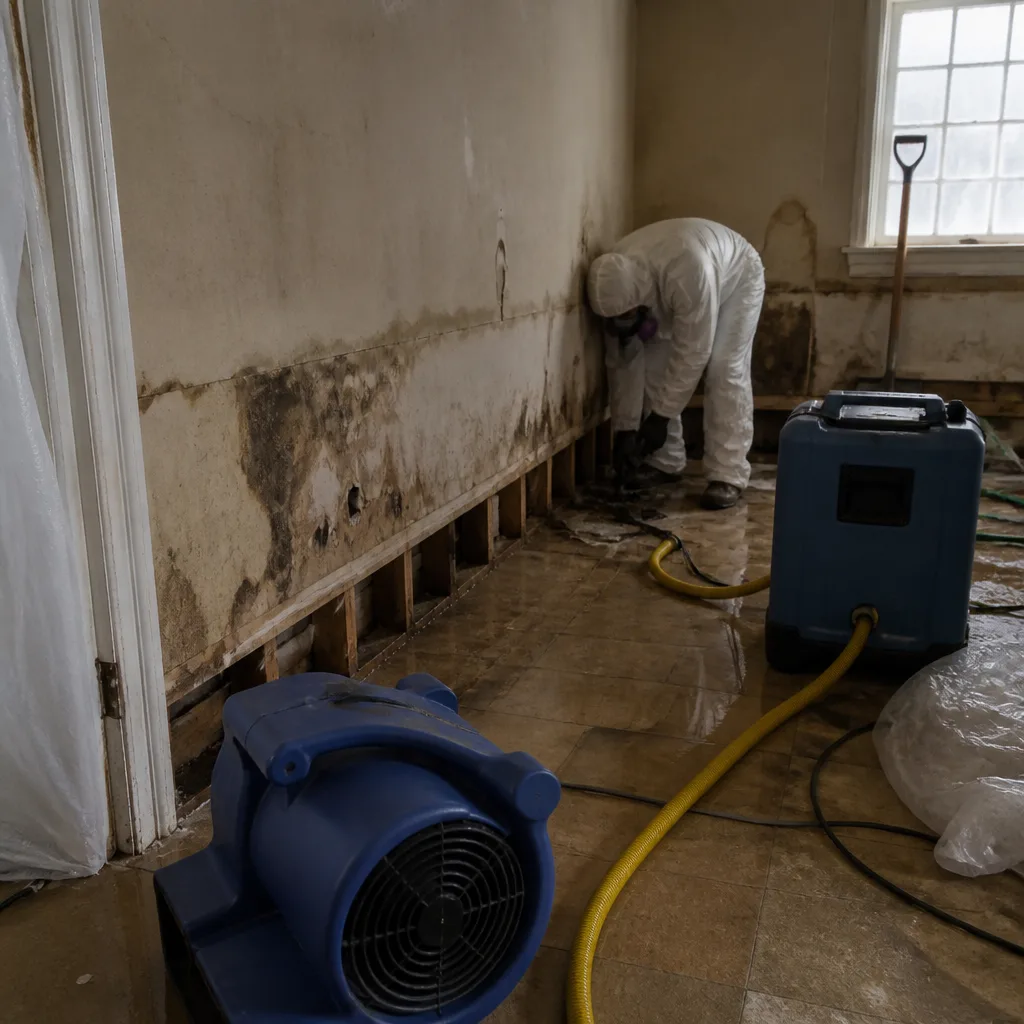 Before
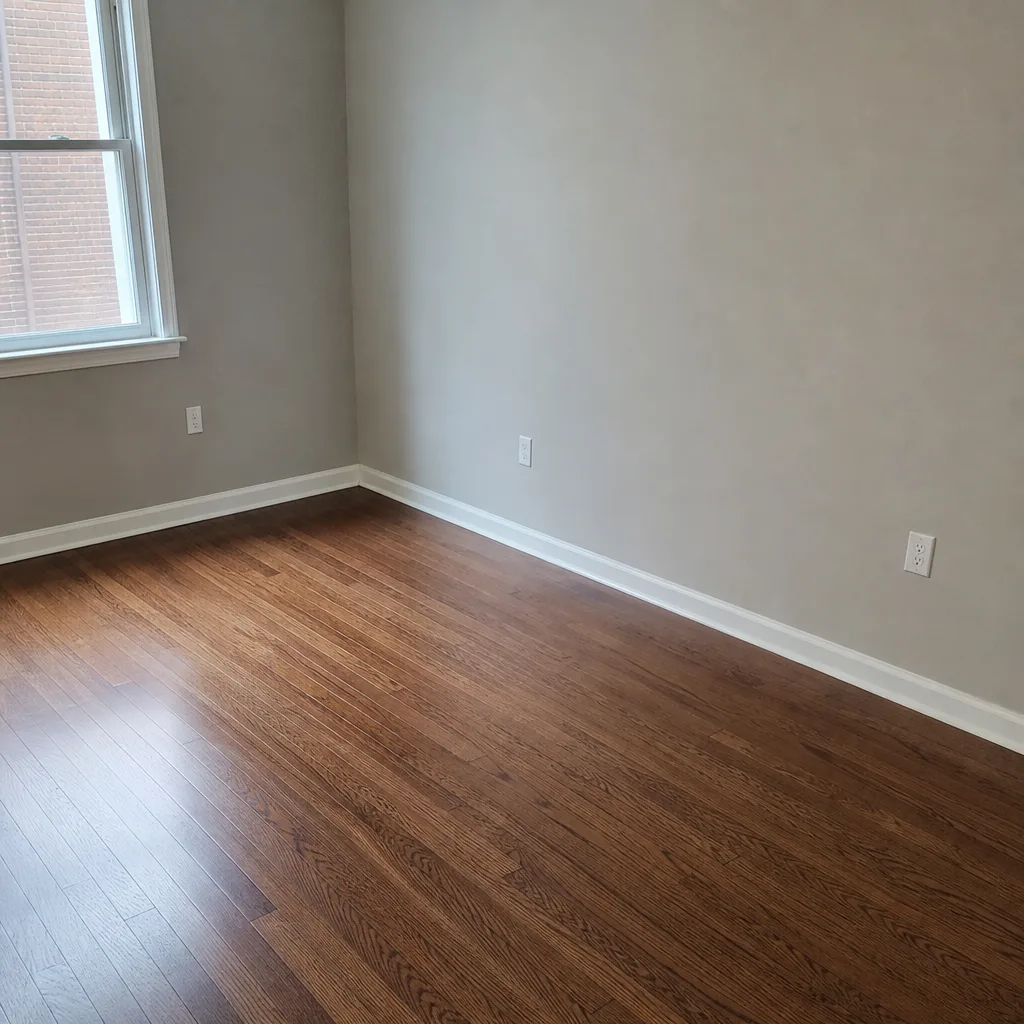 After
After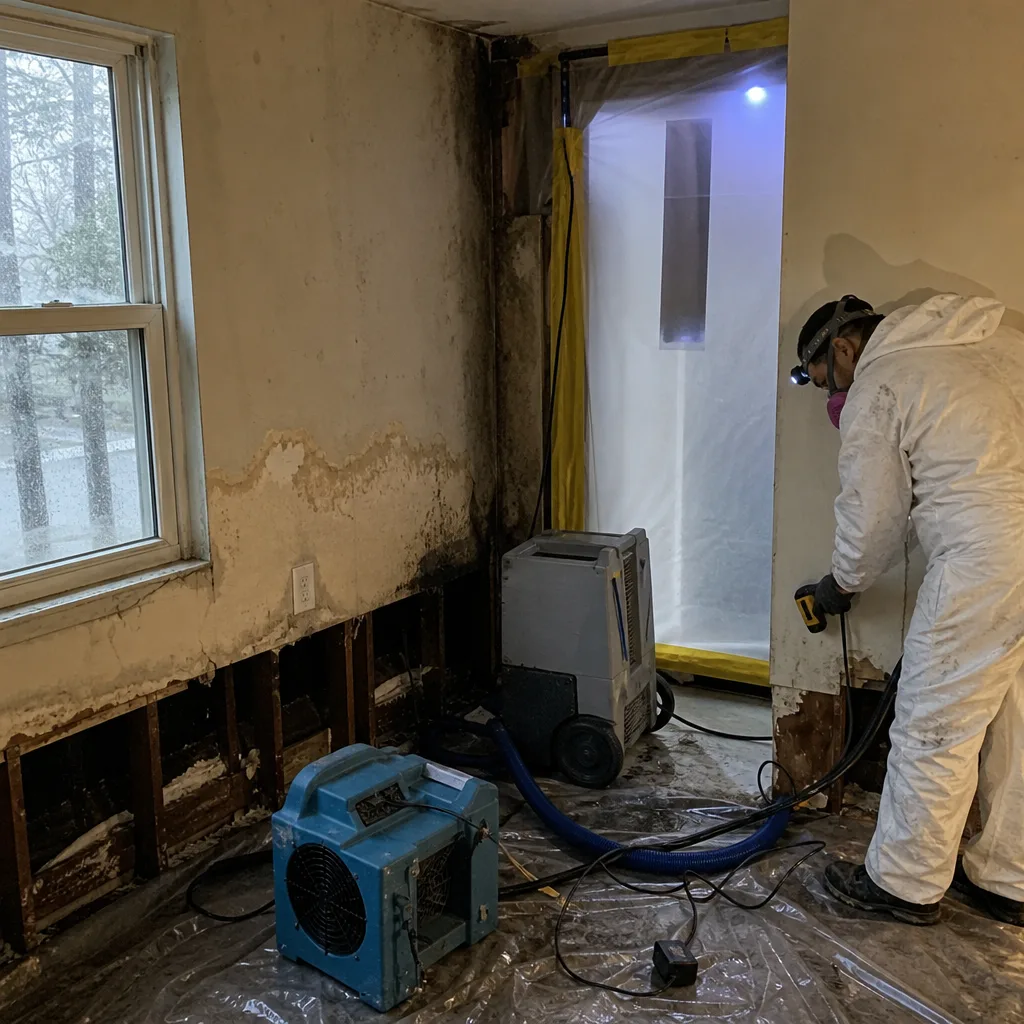 Before
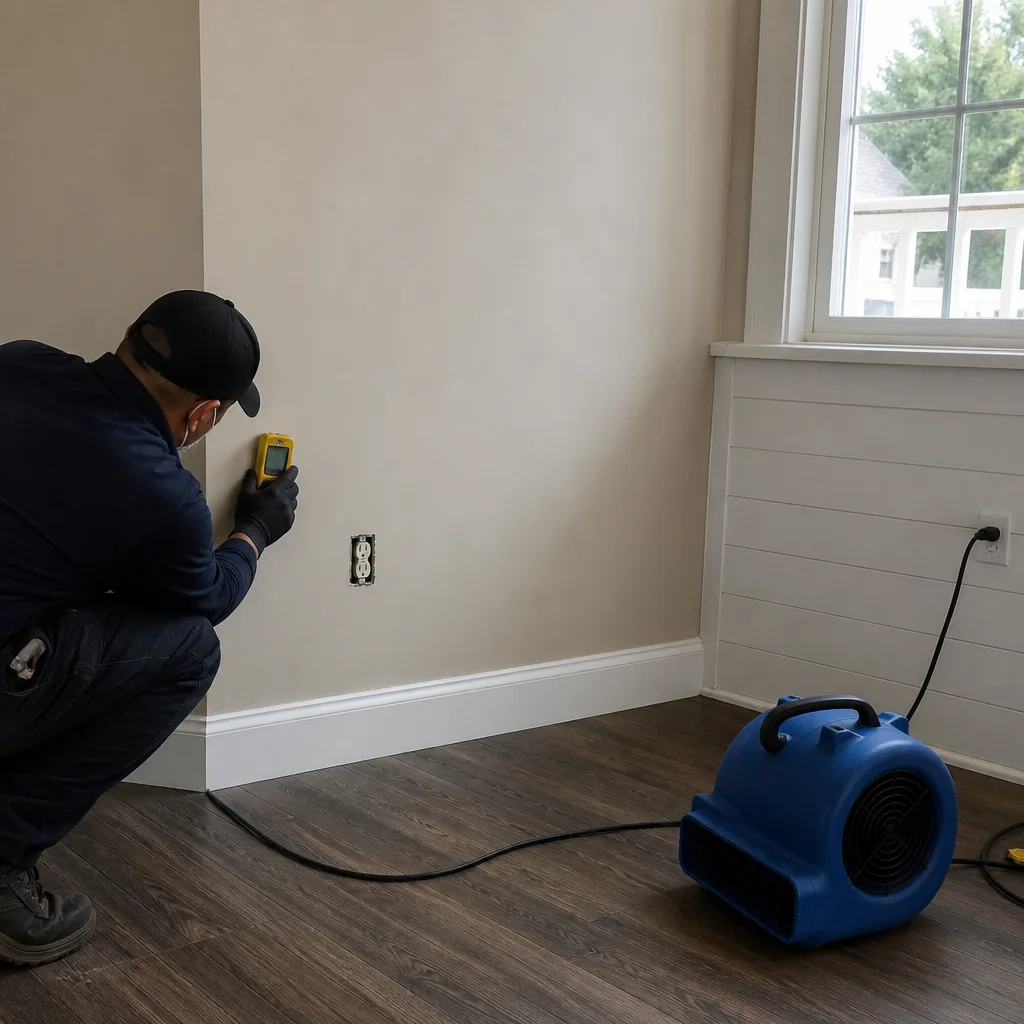 After
After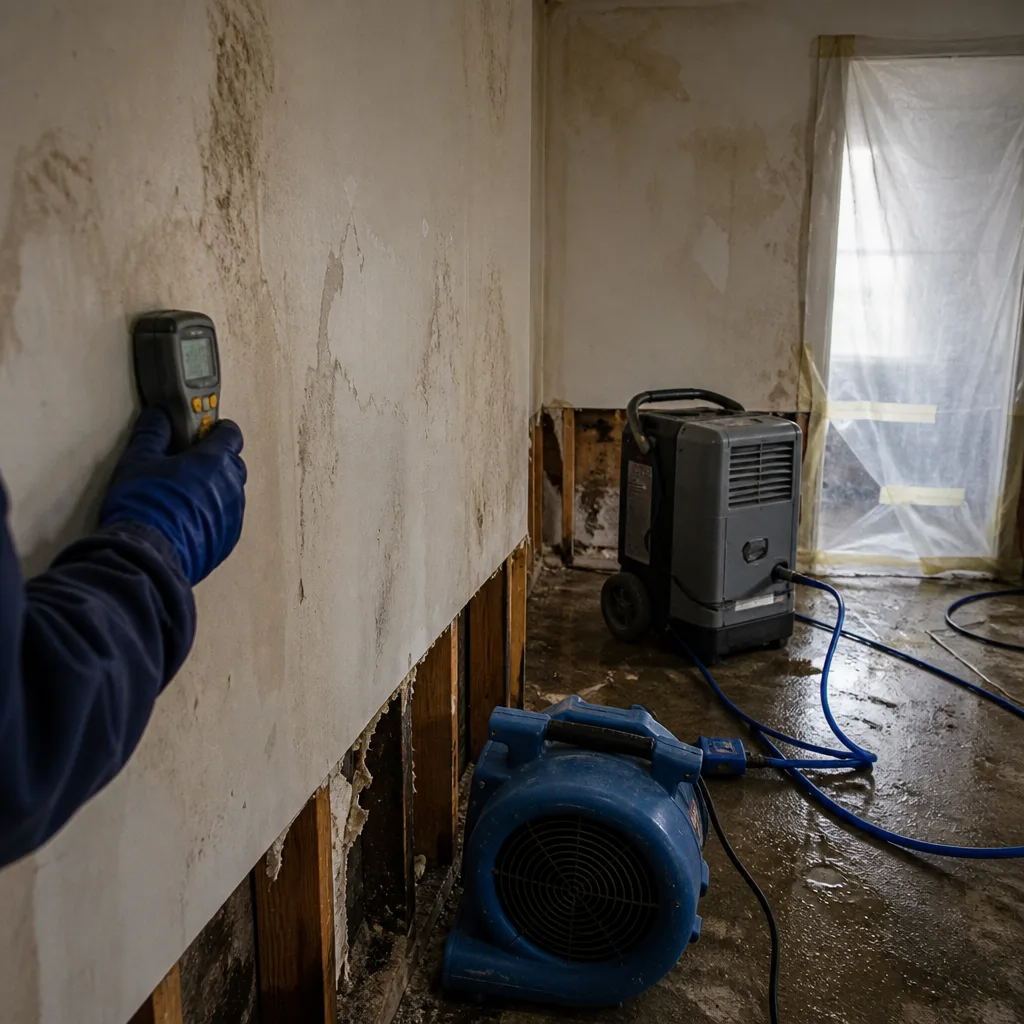 Before
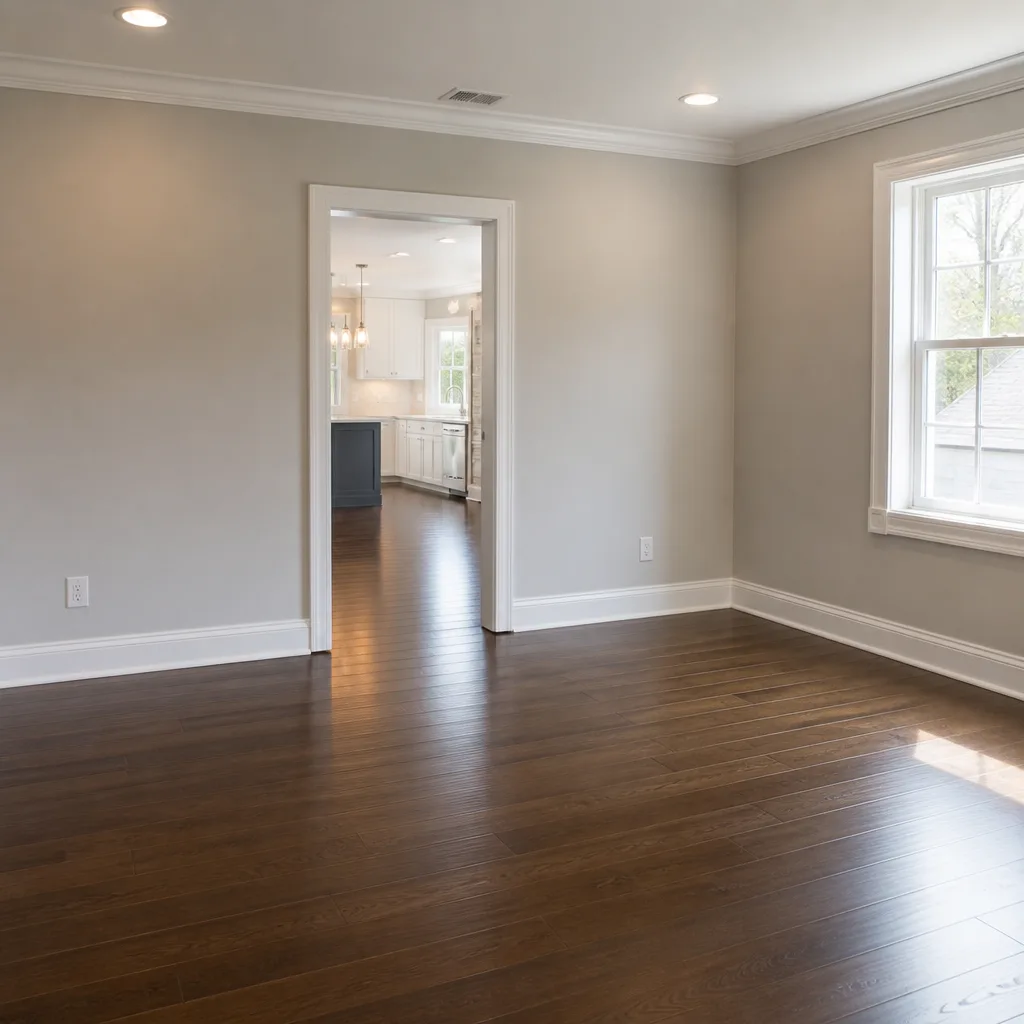 After
After24/7 Emergency Storm & Disaster Restoration in Lyndhurst
Storm damage in Lyndhurst rarely waits for business hours. When a nor’easter pushes the Passaic over its banks or a summer squall tears shingles off a Riverside Avenue roof at 9 p.m., you need a crew that answers the phone and moves. Floodline Restoration Co. dispatches certified technicians to Lyndhurst homes around the clock, every day of the year. A live dispatcher answers at 2 a.m., not a recording. That means water extraction starts the same visit, not the next morning. Call (201) 762-0667 the moment you see water where it shouldn’t be. The first hour determines whether you’re drying a basement or rebuilding one. We perform a free visual inspection on every Lyndhurst call, walk you through what we find, and start mitigation work before mold gets its 48-hour foothold.
Understanding Storm & Disaster Restoration Severity in Lyndhurst Properties
Storm water in Lyndhurst is not one problem; it’s three, and they compound. Surface flooding from the Lyndhurst side of the Passaic River brings Category 3 water: river water carrying silt, sewage overflows, road runoff, and whatever the Meadowlands washes back. That water is contaminated and demands full containment, antimicrobial treatment, and material removal, not just drying. Separately, groundwater rises through foundation walls as hydrostatic pressure builds, pushing Category 1 water through cracks in 1920s-era poured concrete and block. It looks clean. Left unaddressed for 48 hours, it soaks carpet pad, wicks into drywall, and creates the damp, dark conditions where mold moves fast. Then there’s roof and window intrusion during wind events, which damages finishes from the top down while groundwater attacks from below. In Lyndhurst’s housing stock, a 1940s Cape Cod or two-family with a semi-finished basement will hide moisture behind wood paneling and under vinyl tile where it isn’t visible until the damage is advanced. We moisture-map every job because long-time Lyndhurst homeowners know that what you can’t see in these older basements is usually worse than what you can.
Why Lyndhurst Property Owners Choose Floodline Restoration Co.
- 45-minute response commitment: Our Lyndhurst crews are dispatched from nearby staging, and you’ll get a straight ETA from the human on the phone.
- A live person answers, always: No phone trees, no “leave a message after the tone.” At any hour, a Floodline dispatcher picks up and starts the process.
- IICRC-certified technicians: Every crew carries WRT and ASD certifications for water and structural drying, and AMRT for mold work. The certification isn’t a plaque; it’s a standard applied on every Lyndhurst job.
- Free visual inspection: We look before we quote. You’ll know what you’re dealing with and what it will cost before any work begins.
- Direct insurance billing: We document everything, photograph everything, and then work directly with your adjuster. You’re not the middleman.
- One team, start to finish: From first extraction to final trim, the same certified crew handles your Lyndhurst job. No handoff, no “that’s a different department.”
Our Storm & Disaster Restoration Process
Inspection & Assessment
We arrive, walk the property with you, and map the full extent of water, wind, or structural damage. Thermal imaging and moisture meters show us what’s behind baseboards and under flooring in your Lyndhurst basement. We also document pre-existing conditions so your current claim stays clean.
Extraction & Stabilization
Truck-mounted extraction removes standing water immediately. We board up broken windows and tarp damaged roofs the same visit, securing the structure against further weather and unauthorized entry.
Drying & Dehumidification
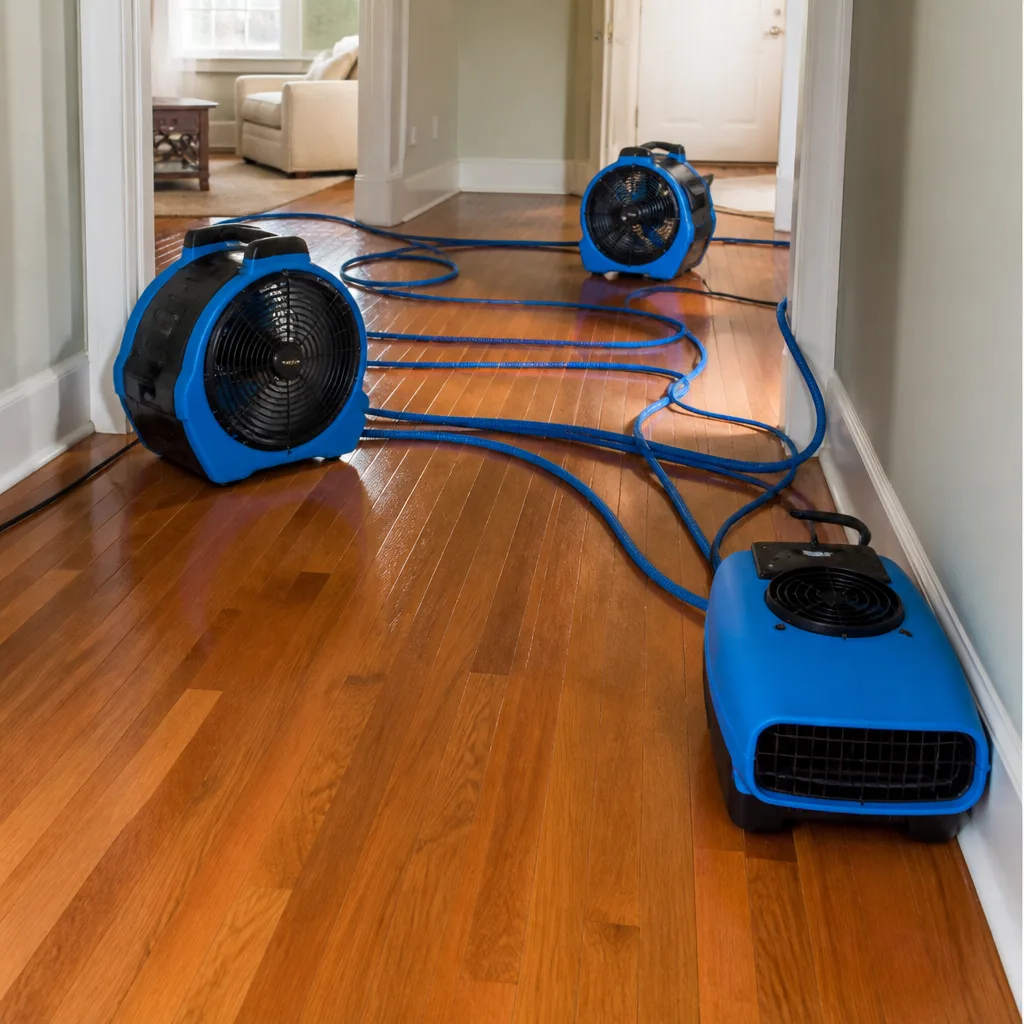
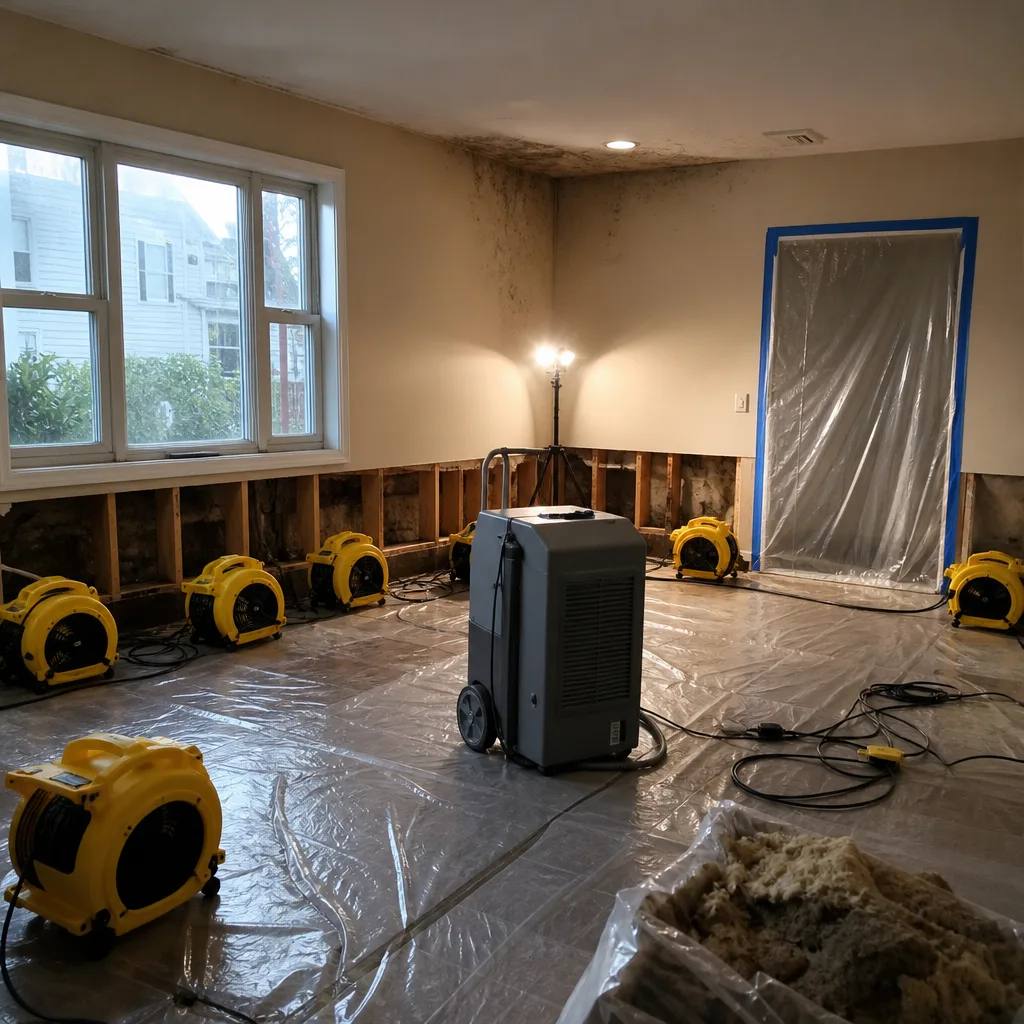
Professional-grade Dri-Eaz air movers and Phoenix dehumidifiers are positioned for maximum airflow across saturated surfaces. We take daily moisture readings from the same mapped points and keep logging until the dry standard is met, not before.
Cleaning & Sanitization
Storm water carries contaminants, so every Category 3 job gets antimicrobial application. HEPA air scrubbers run during cleanup to control airborne spores. Salvageable materials are cleaned; non-salvageable materials are cut out and removed.
Containment & Mold Prevention
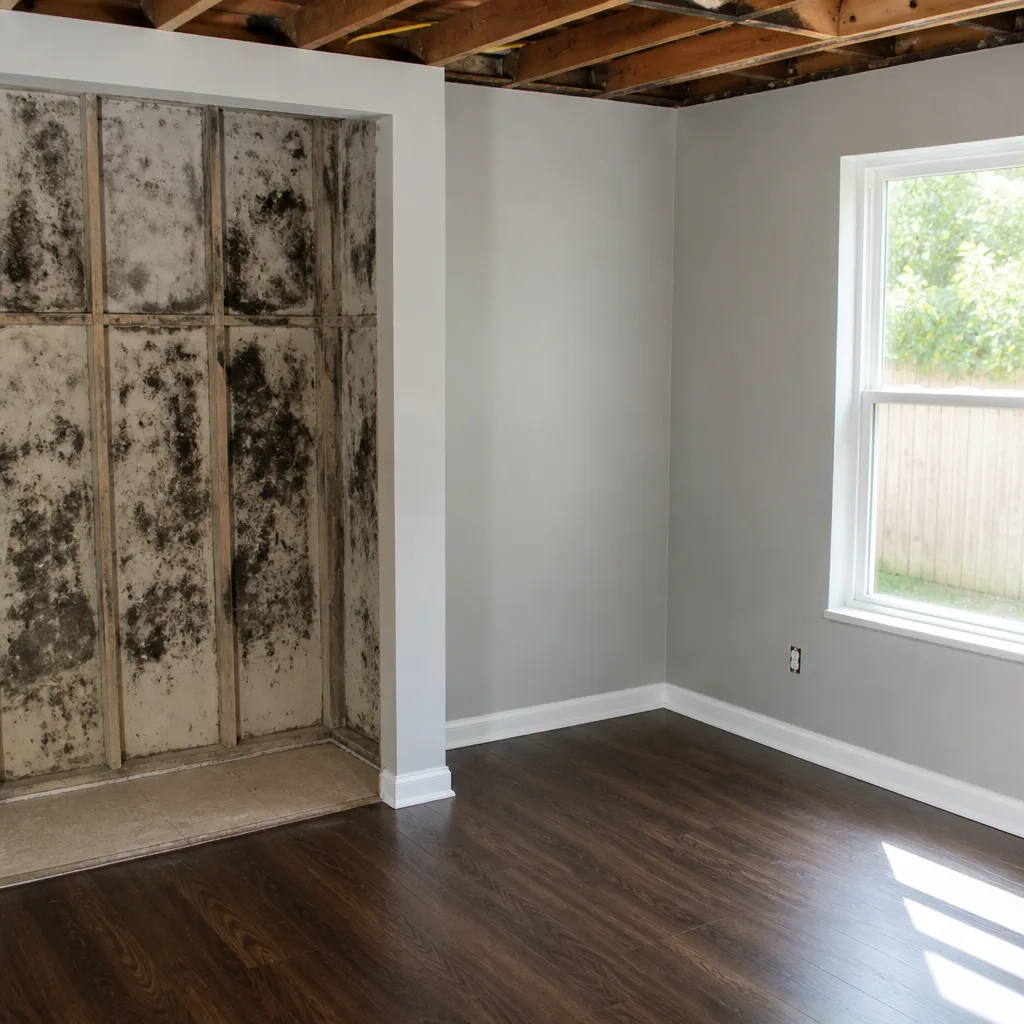
In Lyndhurst’s older basements, we use physical containment barriers and negative air pressure during demolition to keep any latent mold from migrating into living spaces. This step is not optional on repetitive-loss properties.
Repairs & Restoration
Once the structure is dry and stable, we rebuild: drywall, insulation, flooring, trim, paint. The same certified team that extracted the water handles the reconstruction, so your home is restored to a condition you recognize, backed in writing.
Need Emergency Storm & Disaster Restoration in Lyndhurst Now?
Crews minutes away, answering live 24 hours a day. The sooner we start, the less it costs.
Working With Your Insurance Company
When a storm floods your Lyndhurst basement, you’re dealing with two emergencies: the water and the claim. We handle the second one with the same urgency as the first. From the first hour on site, our crews document everything: date-stamped photos of every affected room, moisture readings before and after drying, and a detailed, line-item scope of work using industry-standard estimating. Then we talk to your adjuster directly. You shouldn’t have to translate between a contractor and an insurance carrier. On repetitive-loss properties near the Passaic, this documentation is the difference between a clean resolution and a tangled dispute. We’ve seen the conflict that arises when current damage isn’t separated from prior flood scarring, and our documentation protocols exist to prevent exactly that.
What We Provide Your Insurer
- Thorough documentation of the loss
- Photos of all damage, room by room
- Moisture readings and drying logs
- A detailed, line-item scope of work
- Direct coordination with your carrier
Built for Lyndhurst’s Loss Calendar
Lyndhurst’s storm losses follow a rhythm, but it’s a rhythm with four percussionists. January and February bring deep freezes that burst supply lines in uninsulated 1920s basements, sending clean water pouring through finished spaces for hours before anyone notices. March and April bring rapid snowmelt and spring rain, and the water table under Lyndhurst rises, pressing groundwater through every crack in every original foundation. Summertime thunderstorms dump inches of rain in an hour on already-saturated ground and overtaxed drain lines; flash flooding hits streets near the Meadowlands as fast as anywhere in Bergen County. Then comes nor’easter season, when the Passaic River rises and wind-driven rain finds every gap in roofs, windows, and siding on homes built before modern flashing standards. But the real Lyndhurst pattern is that these events compound. A flooded basement in March means saturated soil in April, which means a summer thunderstorm has no capacity left in the ground, so the same house floods twice. We plan for the whole calendar, not the single event.
Storm & Disaster Restoration Across Lyndhurst’s Neighborhoods
The work changes street by street. Along Riverside Avenue and the streets running west toward the Passaic, we’re handling repetitive-loss basements where river flooding has been through the same block foundation walls multiple times. Documentation has to be meticulous; separating new damage from old flood scarring is the first job before the first pump runs. Over near Valley Brook Avenue, the older two-families with finished basements show a different pattern: water backing up through aging cast-iron drain lines during heavy rain, combined with groundwater seepage through block walls. In the center of town, where many original homes have had multiple renovations over seven or eight decades, we see mixed materials that complicate drying. A room might have 1950s plaster over one wall, 1980s drywall over another, and carpet over concrete below, each requiring a different drying approach. Near the Meadowlands to the east, the soil holds water longer, and basements dry slower. Our moisture maps account for all of it.
Specialized Storm & Disaster Restoration Services We Offer in Lyndhurst
Storm Damage Cleanup
Wind-thrown branches, broken glass, soaked insulation, roof debris. We clear the damage, secure the structure, and remove all storm-generated waste. On Lyndhurst’s older homes, we’re careful to identify what’s original material and what’s been added, so cleanup doesn’t create a second problem.
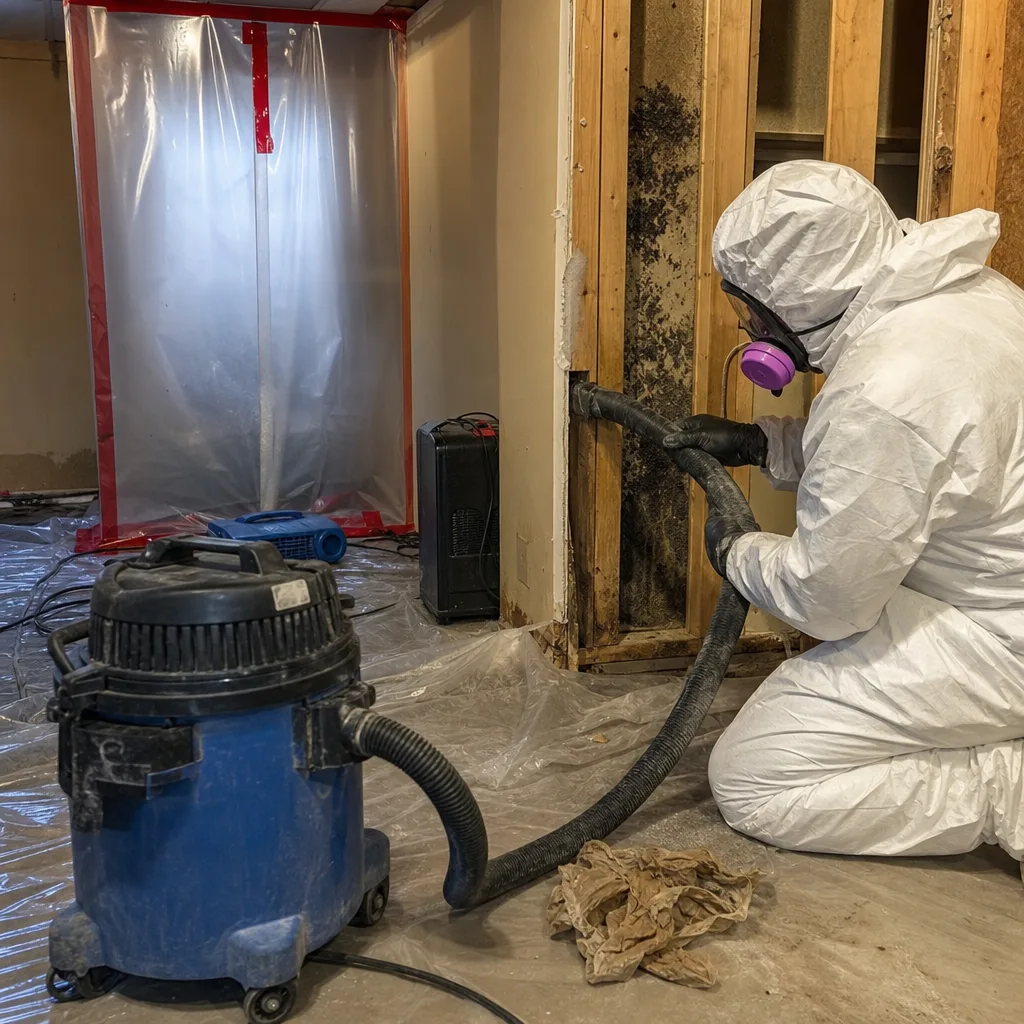
Flood Damage Restoration
The heart of our work in Lyndhurst. Whether the Passaic came over the bank or groundwater came through the wall, we extract, dry, sanitize, and rebuild. On repetitive-loss properties, we restore to a higher standard than what was there, because the next flood is coming and the house should be more ready for it, not less. Our Storm & Disaster Restoration team handles this start to finish, with no mid-job handoff.
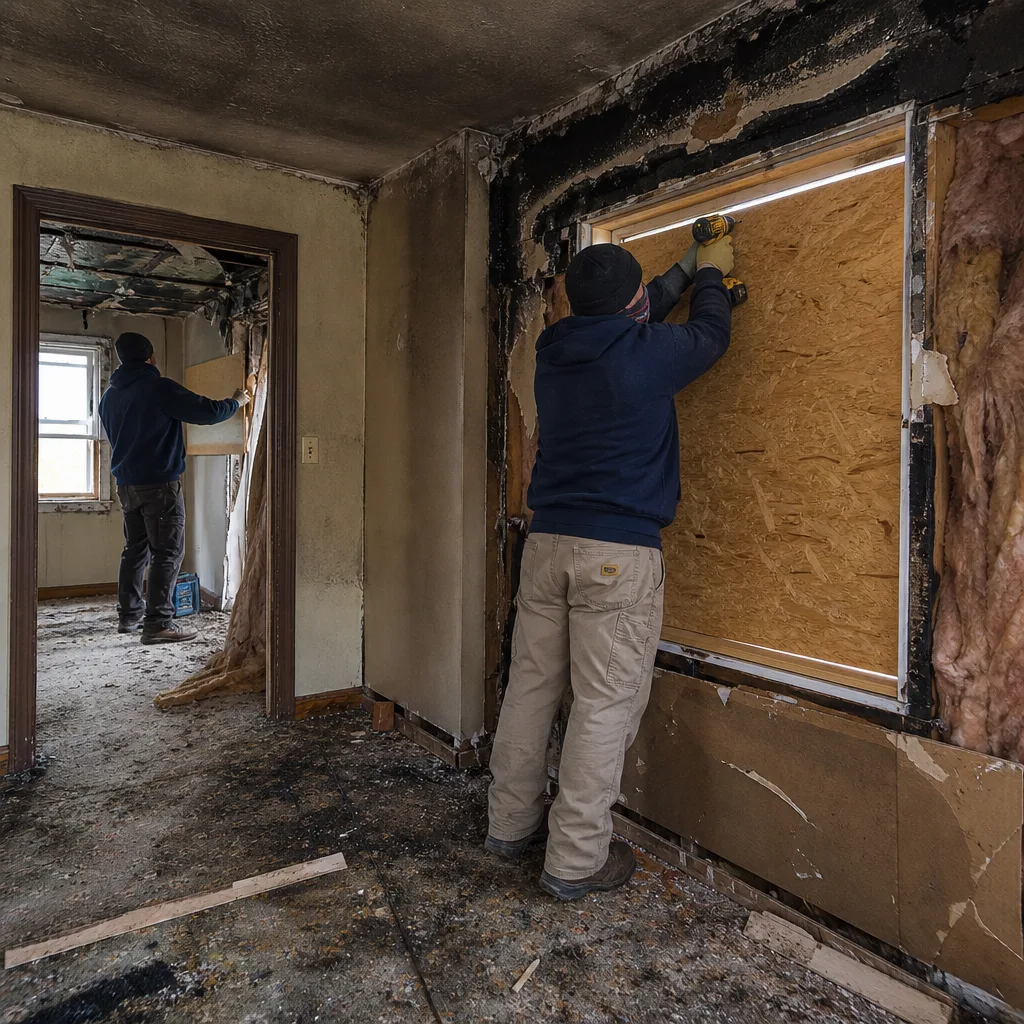
Emergency Board-Up
Broken windows, damaged doors, a tree branch through the wall. We board up immediately, securing your Lyndhurst home against weather and entry. Board-up isn’t a temporary patch in our process; it’s the stabilization step that lets drying equipment work effectively inside.
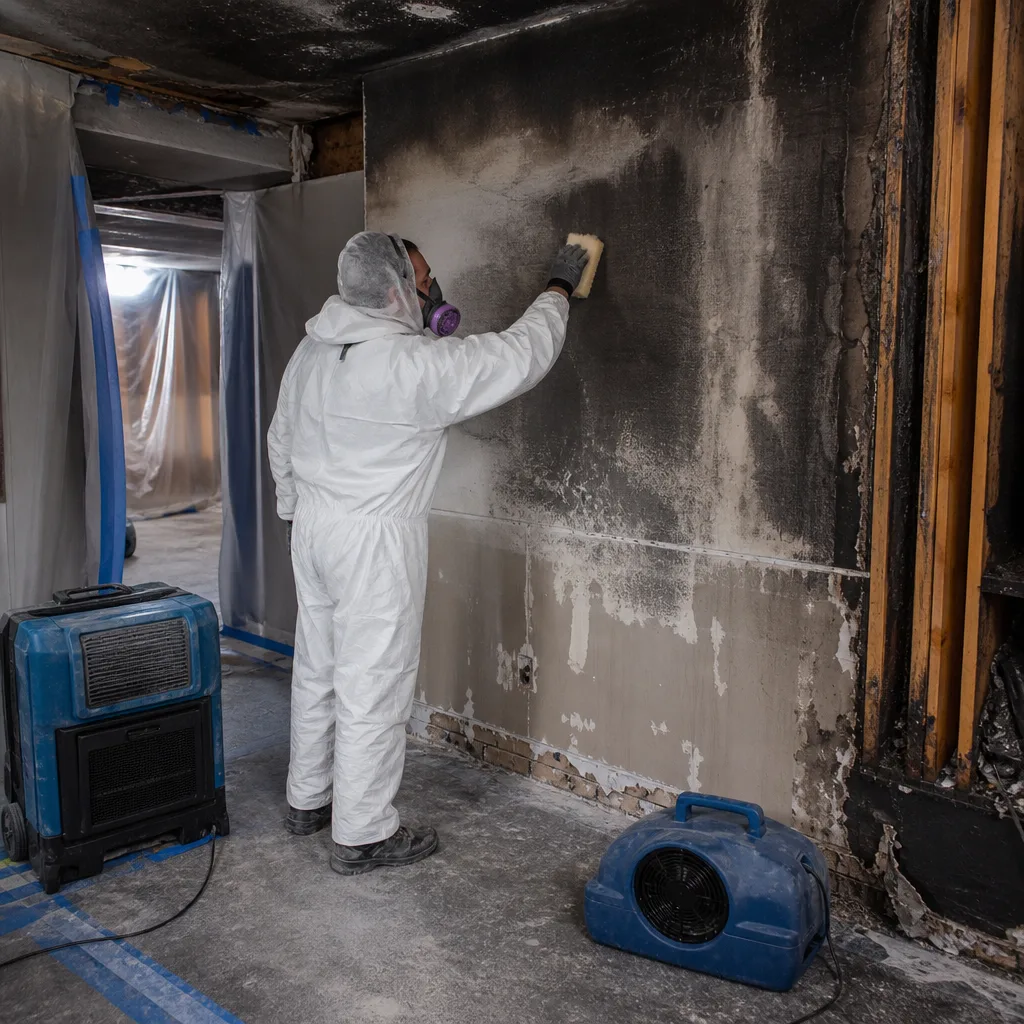
Roof Tarping
Missing shingles, torn flashing, punctured decking. We tarp before the next rain hits, because Lyndhurst storms rarely come alone. A proper tarp job keeps interior drying from being undone the same week.
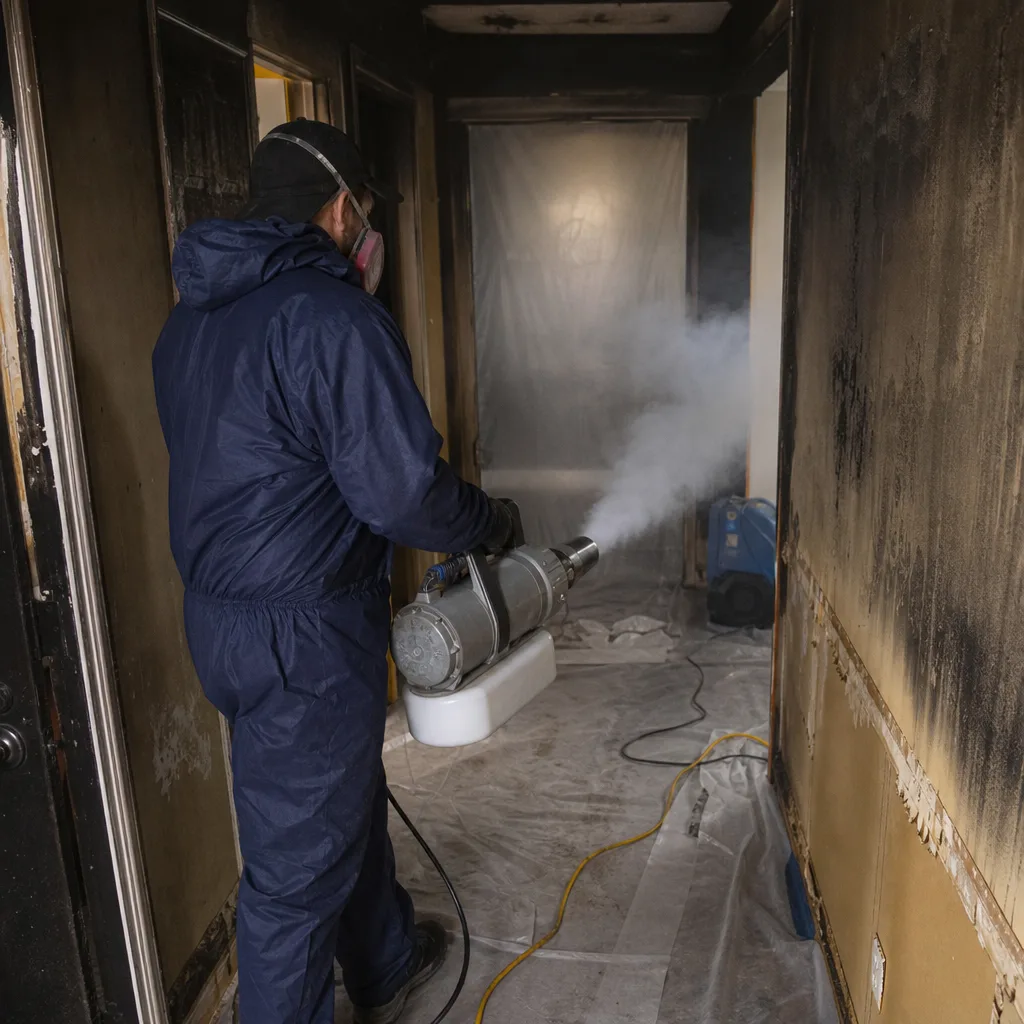
Debris Removal
Storm debris in the yard is a hazard and a claim complication. We remove it, document it, and dispose of it properly. You get a clear property and a clear record for your insurer.
What happens when you call
- 1
A real person answersNo phone trees - you reach a local pro.
- 2
You get an upfront price rangeHonest numbers before anyone is dispatched.
- 3
A background-checked tech heads outLicensed & insured, dispatched right away.
- 4
You approve before work beginsNothing starts until you say go.
Storm & Disaster Restoration Costs in Lyndhurst, NJ
Honest numbers matter. In Lyndhurst, a straightforward Category 1 water extraction and dry-out on a small unfinished basement typically runs $2,500 to $5,000. A Category 3 flood job, where contaminated river water demands containment, antimicrobial treatment, and material removal, commonly falls between $6,000 and $15,000 depending on the basement’s finished square footage. Roof tarping after wind damage runs $400 to $1,200 for most Lyndhurst homes; emergency board-up runs $350 to $900 per opening. Debris removal runs $300 to $2,500 depending on volume and accessibility. What moves the price most: whether water reached finished surfaces, how long it sat, and whether Lyndhurst’s high water table is actively re-introducing moisture. Insurance covers the majority of storm and flood restoration claims we handle, subject to deductible and policy limits. Our free visual inspection gets you a firm scope and a written estimate before work starts. Call (201) 762-0667 to schedule one.
We Also Serve Cities Near Lyndhurst
Our crews serve Lyndhurst and the surrounding Bergen County communities: North Arlington, Rutherford, East Rutherford, and Carlstadt. Same certified technicians, same 45-minute response commitment, same live answer on the phone any hour of the day.
Lyndhurst Storm & Disaster Restoration Questions, Answered
How does Lyndhurst’s repetitive-loss status change the way a flood damage restoration job is documented?
It changes everything about the first hour on site. Before we touch a pump, our crews photograph every wall, floor, and finished surface, and we map pre-existing damage. On a repetitive-loss property, the insurance claim needs to show exactly what this flood did versus what the last flood left behind. Without that separation, a legitimate claim can get tangled in disputes over old flood scarring. We document pre-loss condition thoroughly, take moisture readings at mapped points before and after drying, and provide that full record to your carrier.
Why do Lyndhurst basements on streets away from the Passaic River still get water during a nor’easter?
Because Lyndhurst sits with the Passaic River on its western edge and the Meadowlands to the east, the water table under the entire township runs high. When a nor’easter drops heavy rain, the ground saturates and hydrostatic pressure builds against foundation walls everywhere in town, not just along the river. Water gets pushed through cracks, joints, and old mortar points in original block and poured-concrete foundations. It’s a groundwater problem, not a surface-water problem, and it requires a different drying approach: we check moisture readings behind baseboards on the foundation walls, not just where you can see puddles.
What’s the difference between category 1, 2, and 3 water in a Lyndhurst storm damage job?
Category 1 is clean water: a burst supply line, rainwater that came straight down through a roof hole before touching anything else. Category 2 has contamination: water that has run across floors, through walls, or sat in a sump pit. In Lyndhurst’s older basements, what starts as Category 1 often becomes Category 2 quickly. Category 3 is grossly contaminated: river water, sewage, anything that came in from the Passaic or backed up through a drain line. Category 3 always demands containment, antimicrobial treatment, and removal of porous materials. The category determines whether we’re drying or tearing out.
How quickly do we need to start water extraction after a Lyndhurst flood to avoid mold in an older basement?
Mold establishes in 48 to 72 hours. In Lyndhurst’s older basements, finished with wood paneling and carpet over concrete, the clock runs faster because those materials hold moisture against the slab where airflow is poor. We recommend extraction within the first few hours. The same visit, if possible. The sooner air movers and dehumidifiers are running, the better your odds of keeping original finishes instead of cutting them out.
Does Lyndhurst’s code-upgrade trigger affect what we can restore versus what must be replaced after a storm?
Yes, and it’s a real consideration on repetitive-loss homes. When flood damage repairs exceed 50% of a structure’s market value, building code requires bringing the entire structure up to current floodplain standards. That can mean elevating electrical panels, relocating HVAC, and changing construction methods. We flag this early. On most Lyndhurst flood jobs, repairs stay under the trigger, but on heavily flooded finished basements in repetitive-loss zones, it’s a conversation we have with you and your adjuster before work begins, not after.
Will my insurance cover storm damage restoration in Lyndhurst?
Most homeowners policies cover wind damage, falling trees, and interior water from roof leaks. Flood damage from the Passaic River or groundwater is a separate flood policy through FEMA’s NFIP or a private carrier. We work with both types of claims daily. Our documentation protocols meet the standards every major carrier expects, and we bill your insurer directly. You get a copy of everything. For an exact read on your policy, we coordinate the process with your adjuster and explain what’s covered as we go.
Can we stay in our Lyndhurst home during storm damage restoration?
Depends on the scope. If the damage is limited to an unfinished or semi-finished basement and containment is in place, you can usually stay upstairs. Running air movers and dehumidifiers is noisy, and HEPA air scrubbers run continuously during mold-sensitive work. If Category 3 water touched your main living spaces, or if demolition is extensive, you may be more comfortable out for a few days. We’ll give you a straight answer during the inspection.
What should we do in the first 30 minutes after finding storm water in our Lyndhurst basement?
Turn off electricity to the affected area at the breaker if you can do so safely. Don’t walk through standing water that may be electrically charged. Call (201) 762-0667. Then photograph everything from the stairs; don’t go wading in. Move small valuables if it’s safe. Don’t use a shop vac on Category 3 water; it isn’t enough and it spreads contamination. Our crew on the phone will walk you through the next steps while we’re on the way. The line the water left is where we start.
Storm Damage in Lyndhurst: The Reality Between the River and the Meadowlands
Lyndhurst’s geography makes water intrusion a chronic condition, not an isolated event. The township sits between the Passaic River floodplain on the west and the low-lying Meadowlands wetlands on the east. The result is a water table that stays high year-round, pressing against foundations on streets nowhere near either body of water. We routinely treat “dry weather” flooding in Lyndhurst basements, where groundwater pushes through original block walls because of hydrostatic pressure alone, no storm required. This is the defining reality of restoration work here. A contractor from a neighboring Bergen County town might show up, extract the standing water, and declare the job done. Then the water comes back in two weeks because the foundation wasn’t dried, the moisture readings behind the baseboards were never taken, and the groundwater pressure was never addressed. Our crews know Lyndhurst’s water table the way a mechanic knows an engine. We check behind the walls, under the flooring, and at the foundation line. Anything less is a callback waiting to happen.
Field Note: A Riverside Avenue Cape Cod
Our crew worked a 1947 Cape Cod on Riverside Avenue where repeated Passaic River flooding had saturated the original block foundation walls over years, not hours. Water had intruded through the blocks themselves, not just over the sill. We performed water extraction with truck-mounted units, set up containment, and ran Dri-Eaz air movers and Phoenix dehumidifiers positioned to dry the walls from the inside face, monitoring structural drying with moisture mapping twice daily. After reaching pre-loss condition moisture readings, we applied antimicrobial treatment and documented the full scope of work for the homeowner’s insurance claim, including the code-upgrade triggers on the flood-damaged basement finish. The house didn’t just dry. It dried to the standard it should have been at before the last flood, because the next one isn’t a question. It’s a season.
Serving Lyndhurst, NJ - Our Local Coverage Area
We’re based in the Lyndhurst area and know this community well. Use the map below to see our service coverage - if you’re nearby, we can almost certainly help.
Floodline Restoration Co.: The Line the Water Left Is Where We Start
Floodline Restoration Co. was founded in 2010 by Curt Bowman, built around a dispatch board, not a sales desk. For over 42 years, our crews have served local communities with a simple promise: the 90-Day Done Right Promise, the Keystone Standard. If it’s not done right, we make it right. In writing. No arguing, no paperwork battles. That promise runs through everything we do in Lyndhurst, from the first extraction to the final walkthrough. Our technicians are background-checked, uniformed, and certified to IICRC, RIA, and IFA standards. We answer the phone with a live person, 24 hours a day, 7 days a week. And we bill your insurance carrier directly, so you’re never the middleman. Standing offers: $50 Off Any Repair Over $250, $89 Seasonal Tune-Up, and a Senior & Veteran 5% Discount, always. Call (201) 762-0667 for a free estimate. We’ll be there when we say.
Written by Curt Bowman, Owner at Floodline Restoration Co., serving Lyndhurst and surrounding Bergen County communities since 2010.