
Free visual inspection and a written scope of work before any mitigation begins - photos, moisture readings, and drying logs go in your claim file
The scope we write is the scope we bill. Anything new gets shown to you, in writing, before we touch it.
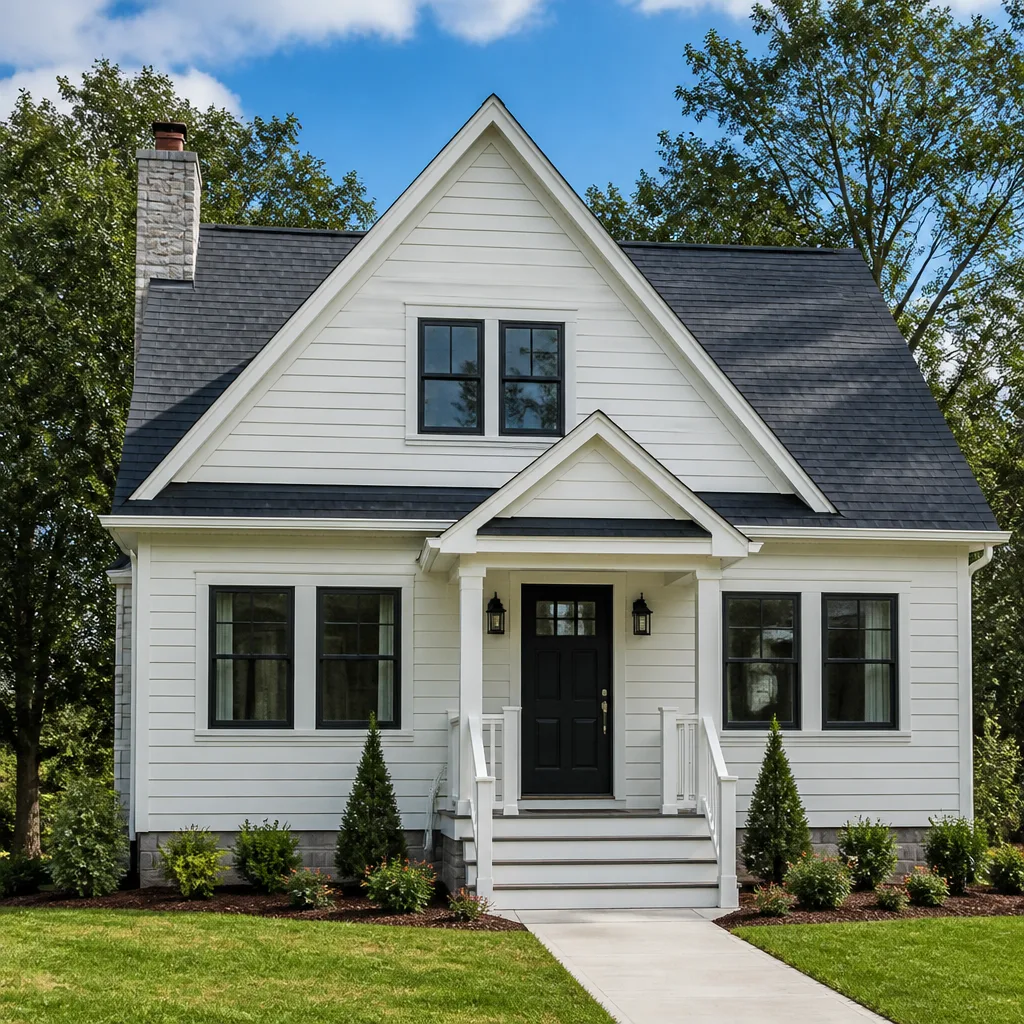
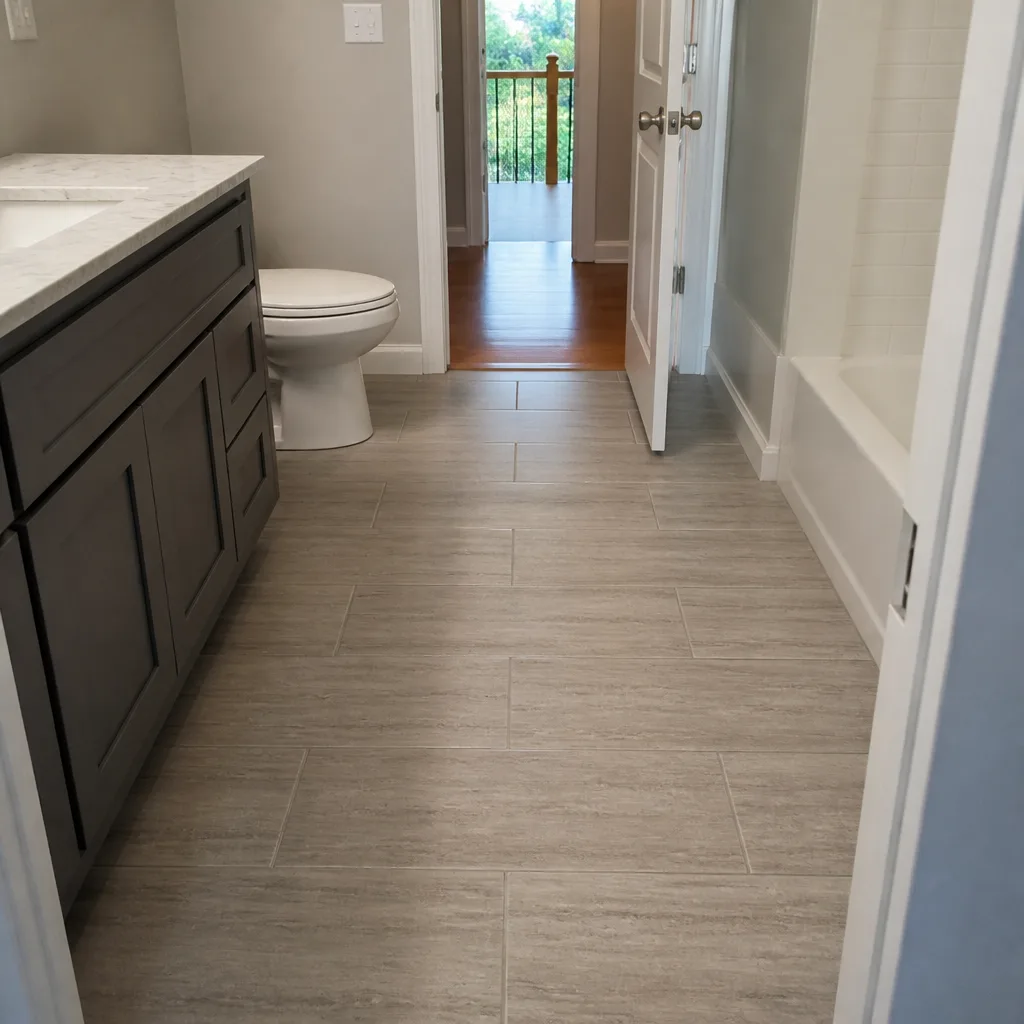
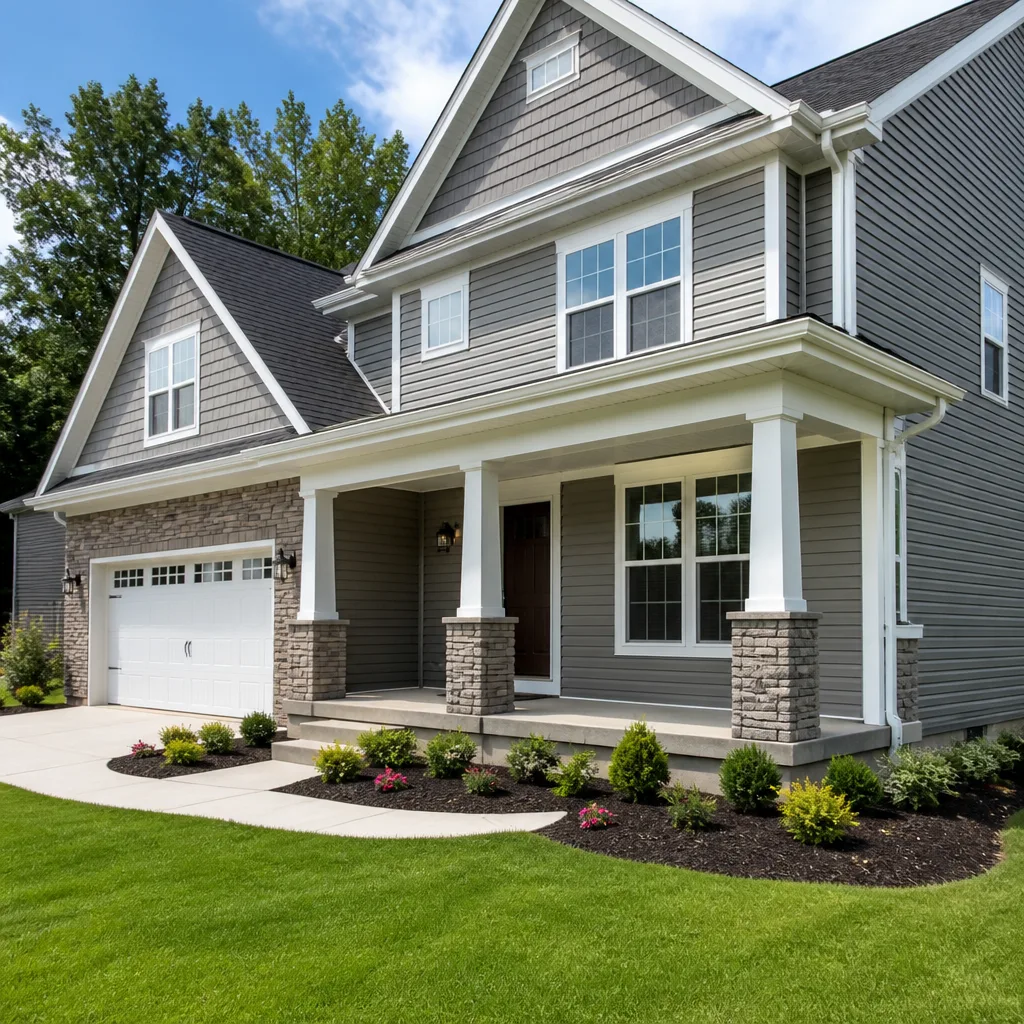
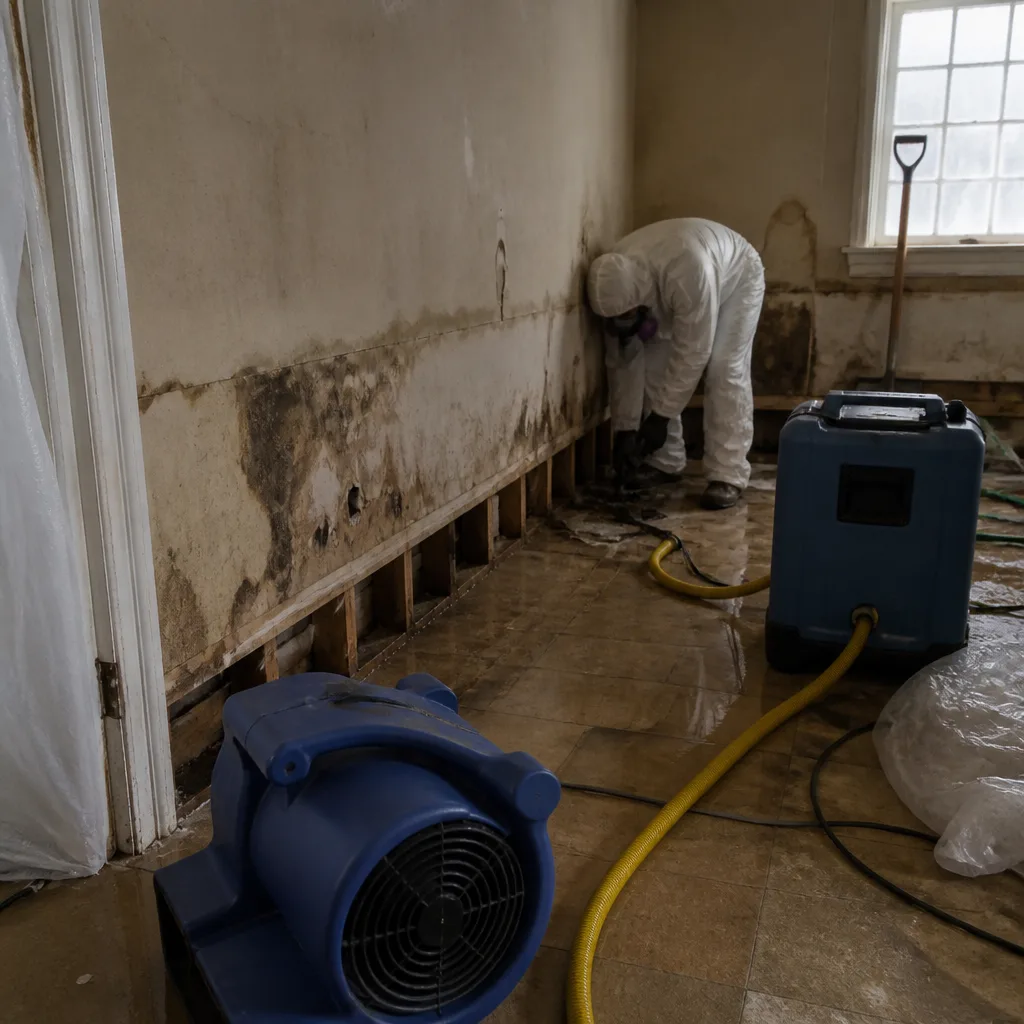 Before
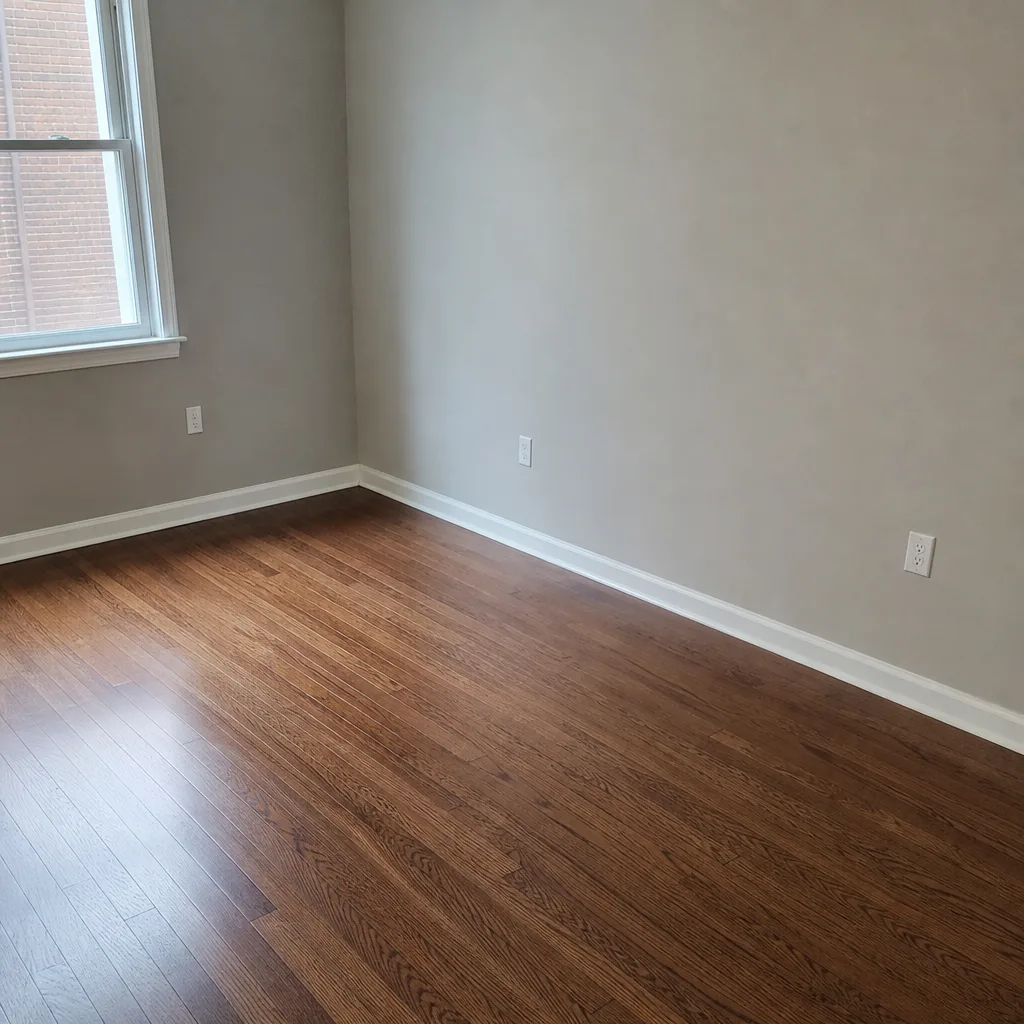 After
After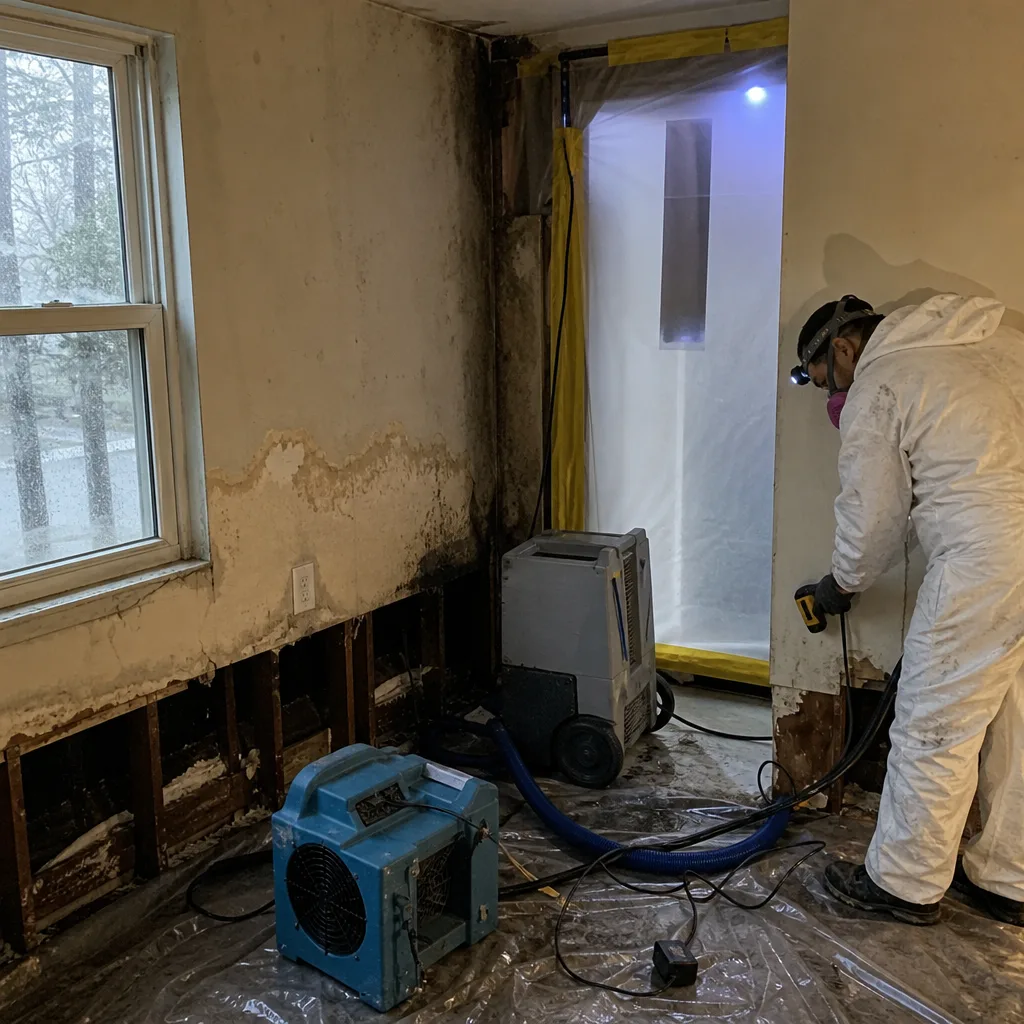 Before
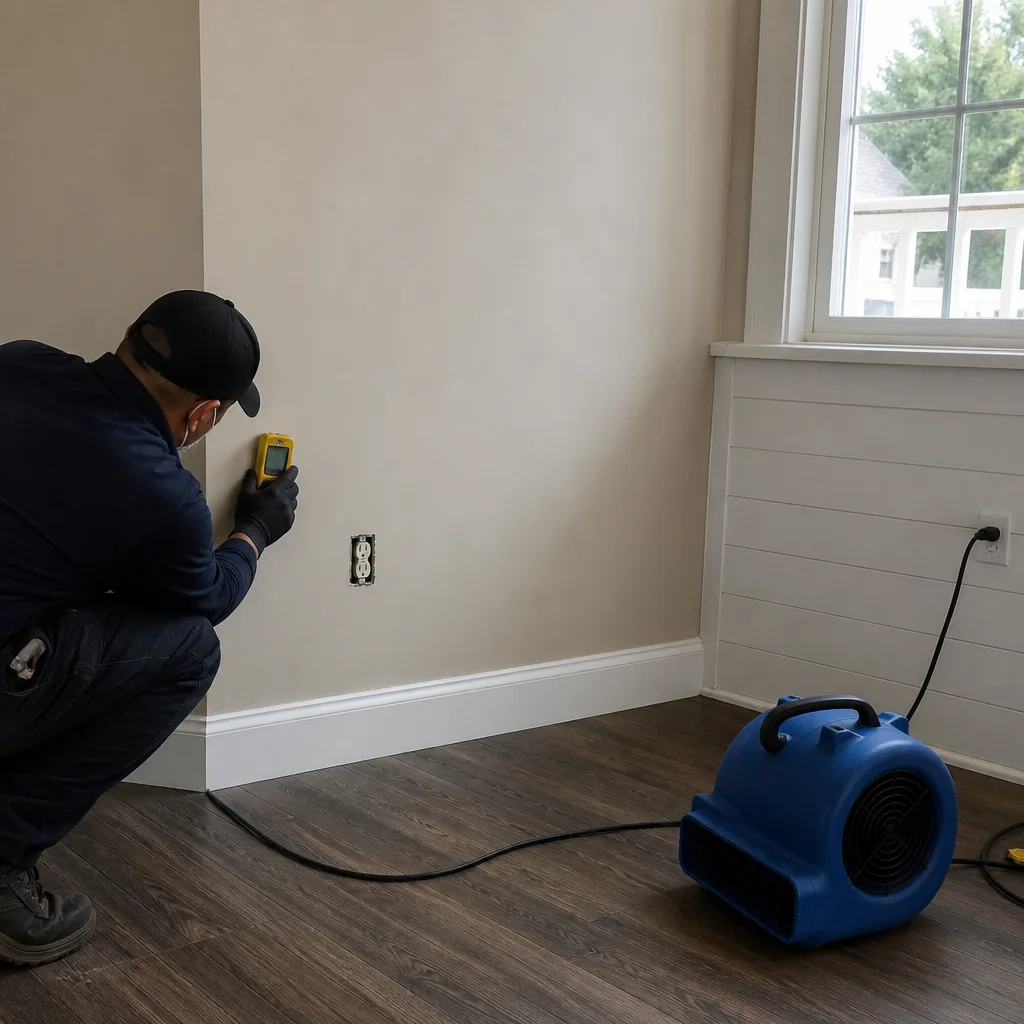 After
After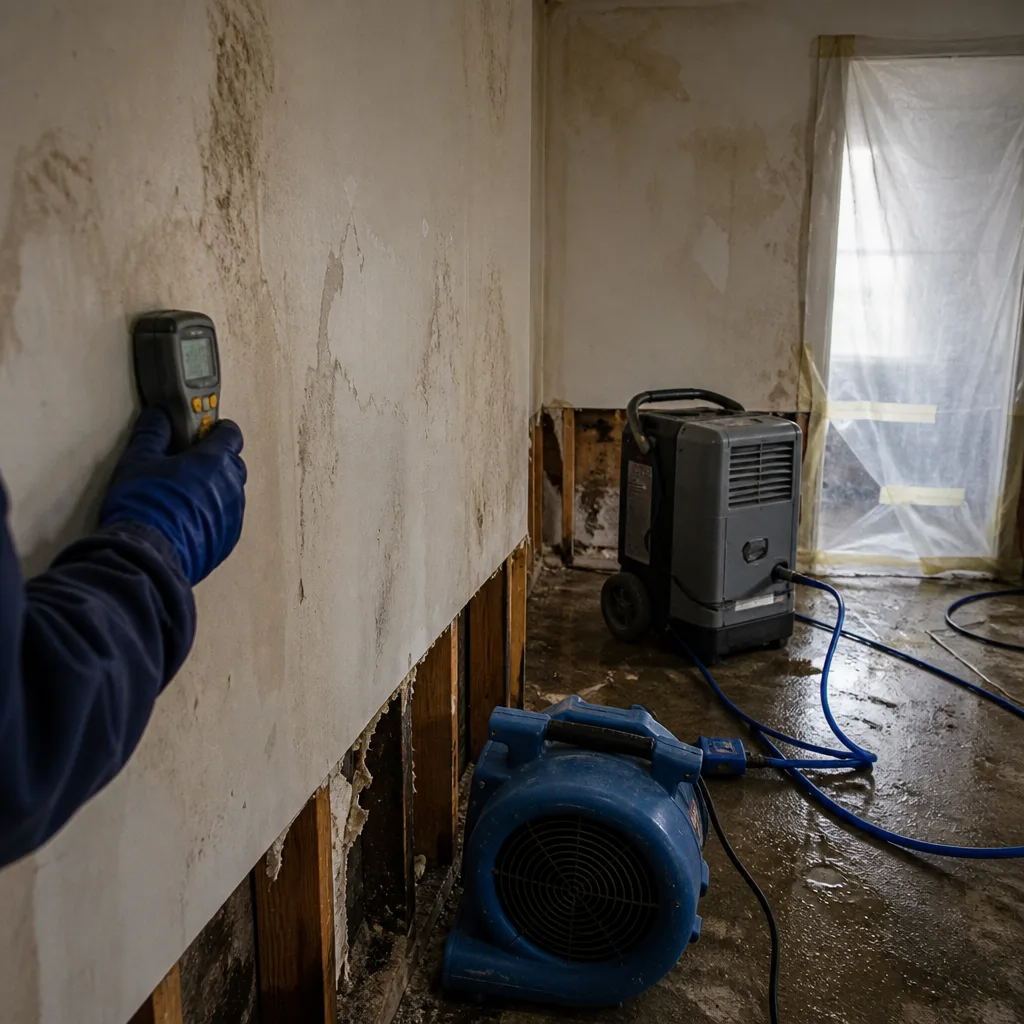 Before
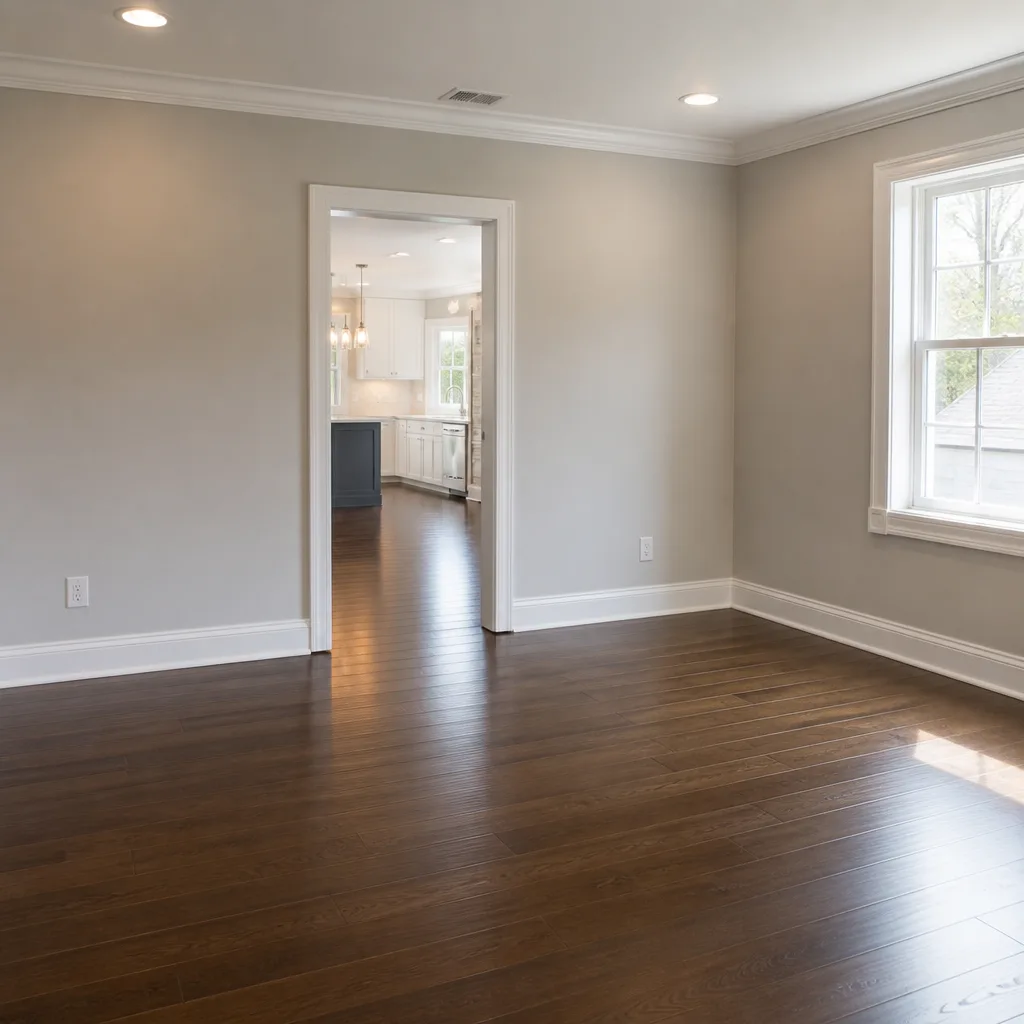 After
After24/7 Emergency Storm & Disaster Restoration in Weehawken
Storm damage in Weehawken needs a response team that knows this town’s split personality: riverfront towers hit by Hudson surge and bluff-top row houses fed by Palisades groundwater. Our crews answer live at (201) 762-0667 every hour of every day, and we dispatch into Weehawken immediately. The first hour after a storm matters because water moves fast through 1920s brick and plaster, and what starts as a wet basement corner becomes a structural problem by morning. We arrive, assess the full picture, and start extraction on the same visit, not the next day.
Understanding Storm & Disaster Restoration Severity in Weehawken Properties
Storm damage in Weehawken splits into two distinct failure modes. Riverfront properties in Port Imperial face Category 3 water, the classification for floodwater carrying sewage, Hudson River sediment, and chemical runoff. That water requires full containment, antimicrobial treatment, and disposal of saturated porous materials. Upper Weehawken row houses face a different enemy: Category 1 and 2 groundwater intrusion that seeps through basalt fractures behind the foundation. The damage looks less dramatic but runs deeper because it saturates brick and mortar for weeks before anyone notices. In both cases, we use moisture mapping with thermal imaging to find water you cannot see, because the water inside a wall cavity is the water that keeps doing damage after the storm passes. Weehawken’s housing stock, much of it built before 1950, holds water differently than newer construction. Original plaster wicks moisture upward. Shallow basements sit near the water table. The result is a restoration job that demands local knowledge, not just equipment.
Why Weehawken Property Owners Choose Floodline Restoration Co.
- A 45-minute response commitment. When a storm drops a tree limb through your roof on Highwood Terrace, the clock is running on water damage. Our first crew reaches Weehawken within 45 minutes of your call.
- A live person answers at 2 a.m. You get a dispatcher who knows Weehawken’s blocks and buildings, not a phone tree. The same dispatcher you talk to at noon answers at midnight.
- IICRC-certified technicians. Our crews train to WRT, FSRT, and AMRT standards. That means water damage, fire and smoke, and mold remediation are handled by people who carry the certifications to prove it.
- Free visual inspection before any work begins. We walk the property with you, explain what we see, and hand you a written scope. No pressure, no surprise line items later.
- Direct insurance billing. We coordinate with your carrier, send the documentation, and bill them directly. You are not the messenger between Floodline and the adjuster.
- One team from extraction to reconstruction. The crew that sets up drying equipment also handles the rebuild. No mid-job handoff to a subcontractor you never met.
Our Storm & Disaster Restoration Process
Inspection & Assessment
We start with a full walkthrough using thermal imaging cameras and moisture meters. In Weehawken, that means checking not just the obvious damage but also the hidden water paths behind wainscoting, under built-in cabinetry, and along the rear foundation wall where the Palisades rock face meets the structure.
Extraction/Stabilization
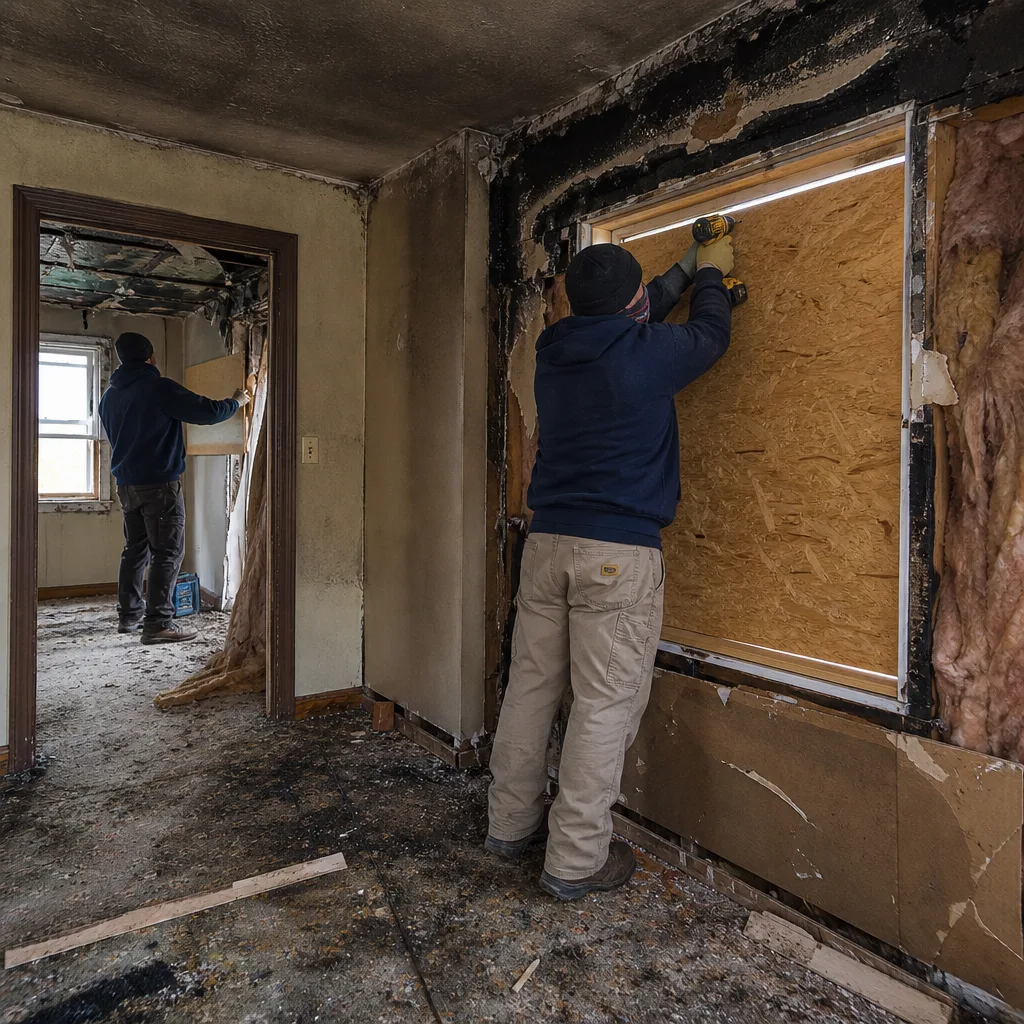
Standing water comes out first. We use truck-mounted extraction units and submersible pumps for flooded basements and Port Imperial ground-level units. For storm damage, stabilization also means emergency board-up and roof tarping to stop more water from entering.
Drying & Dehumidification
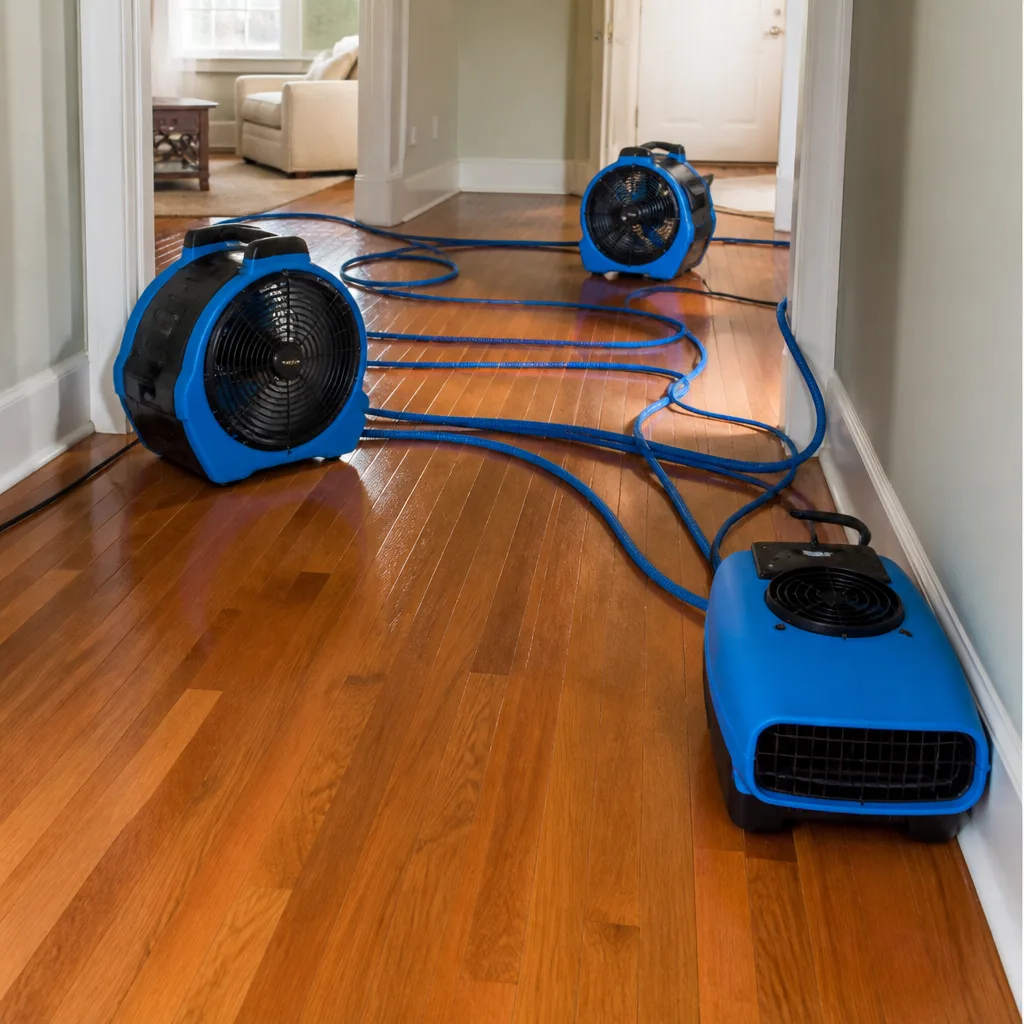
Dri-Eaz and Phoenix LGR dehumidifiers run around the clock, with XPOWER air movers positioned to dry wall cavities and subflooring. We log moisture readings daily and show you the numbers. The drying continues until the dry standard is met, not until the calendar says so.
Cleaning & Sanitization
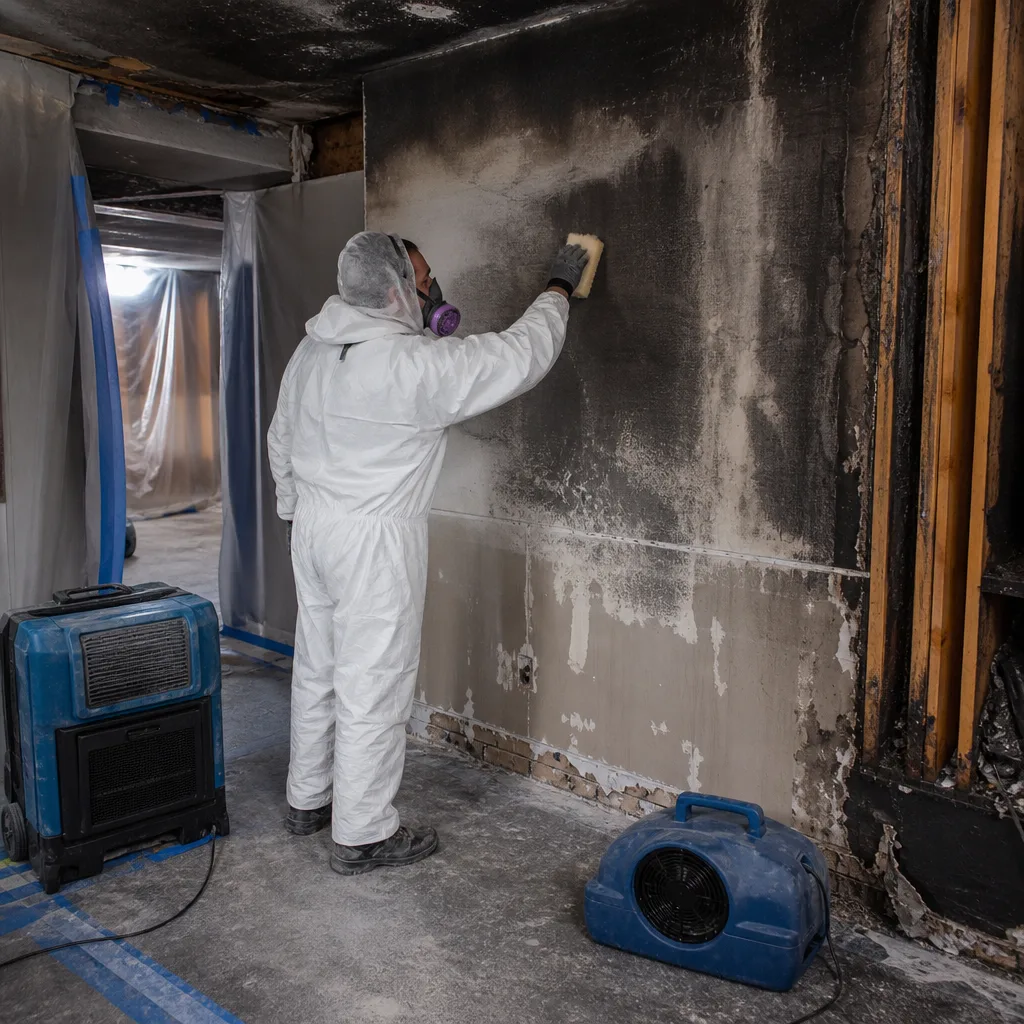
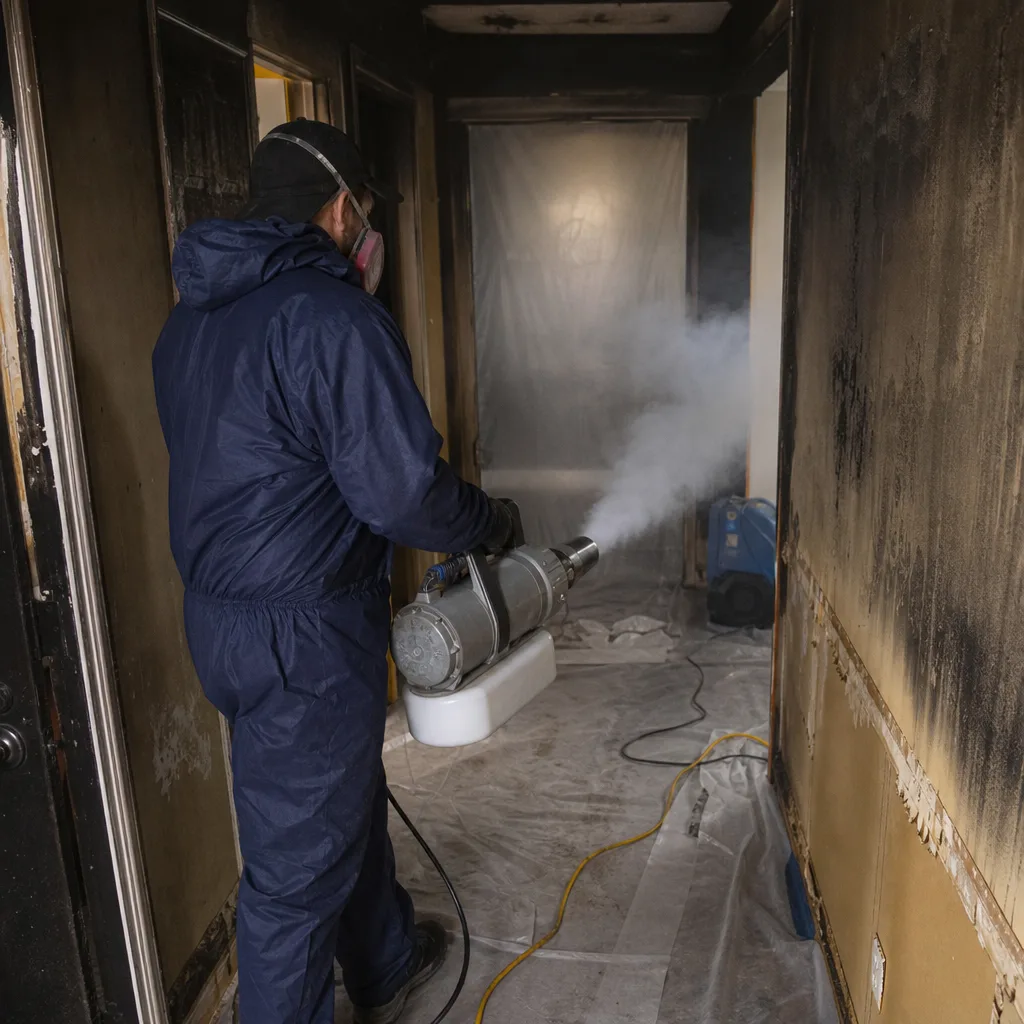
Every affected surface gets cleaned with antimicrobial treatments appropriate to the water category. Category 3 floodwater means full containment and disposal of saturated porous materials. Category 2 groundwater gets cleaning and sanitization with materials salvage prioritized where safe.
Specialty Storm Treatment
Weehawken bluff-top homes need interior weeping systems and vapor barriers where groundwater intrusion is chronic. Riverfront condo units need large-loss coordination with HOA common areas. We handle both.
Repairs & Restoration
The same crew that extracted water rebuilds what was removed. Drywall, flooring, trim, paint. We restore your home to pre-loss condition and stand behind it with the 90-Day Done Right Promise in writing.
Need Emergency Storm & Disaster Restoration in Weehawken Now?
Crews minutes away, answering live 24 hours a day. The sooner we start, the less it costs.
Working With Your Insurance Company
Storm and flood claims in Weehawken involve real money and specific documentation requirements. We handle the paperwork from the first hour because our technicians document everything: photos room by room, moisture readings timed and dated, a line-item scope of work written before demolition starts. Our team communicates directly with your adjuster so you do not spend your days chasing claim updates. For Port Imperial HOA-managed properties, we also coordinate with property managers on common-area damage, which is where many claims stall. The 90-Day Done Right Promise applies regardless of who writes the check.
What We Provide Your Insurer
- Thorough documentation of the loss
- Photos of all damage, room by room
- Moisture readings and drying logs
- A detailed, line-item scope of work
- Direct coordination with your carrier
Built for Weehawken’s Loss Calendar
Weehawken’s storm losses follow a Hudson County calendar. January and February bring deep freezes that burst supply lines in uninsulated 1920s row house crawlspaces, sending water through plaster ceilings before anyone notices. March and April thaw saturates the ground around the Palisades escarpment, and groundwater intrusion spikes in bluff-top basements. July and August thunderstorms dump inches of rain in an hour, overwhelming the combined storm drains near Park Avenue and backing water into lower-level entries. October and November nor’easters push Hudson River surge toward Port Imperial, and wind damage sends tree limbs through original wood windows on the upper plateau. Each season demands a different response, and our crews carry the equipment for all of them: submersible pumps for surge flooding, air movers for pipe bursts, tarps and board-up materials for wind loss.
Storm & Disaster Restoration Across Weehawken’s Neighborhoods
Upper Weehawken, the plateau above the cliff, holds the town’s original housing stock: brick row houses along Highwood Terrace, Eldorado Place, and Gregory Avenue, most built between 1910 and 1950. These homes sit close to the Palisades rock face, and stormwater does not always behave the way a textbook says it should. Water moves laterally through basalt fractures and enters foundations from the rear, not the roof. Our crews know to check the back wall first on a bluff-top water loss, because that is where Weehawken’s geography does the damage. Down at the riverfront, Port Imperial’s towers from the 1990s and 2000s face a different storm profile. Storm surge from the Hudson, like what Hurricane Sandy delivered in 2012, floods ground-level lobbies, parking levels, and mechanical rooms before it ever touches a residential floor. Restoration there means large-loss coordination with building management, not just drying out one unit. Boulevard East runs along the cliff edge between these two worlds, and debris from storms often blocks that corridor, slowing response. We route our trucks accordingly.
Specialized Storm & Disaster Restoration Services We Offer in Weehawken
Flood Damage Restoration
Flooding in Weehawken means either Hudson River surge in Port Imperial or groundwater intrusion on the bluff. We treat them as separate problems. River surge is Category 3 water requiring full containment and material disposal. Bluff groundwater is chronic, structural, and solved with interior weeping systems and vapor barriers. Both get moisture-mapped, both get logged daily readings, both get dried to standard. Our Storm & Disaster Restoration team handles flood losses from first extraction to finished rebuild.
Roof Tarping
Wind damage on the upper plateau tears shingles off century-old roofs and sends branches through original wood sheathing. Tarping stops the bleed. We secure tarps on the same visit, using methods that do not add nail holes where water can enter. On Port Imperial buildings, roof work means coordinating with HOA management and following building access rules. We do that too.
Emergency Board-Up
Storm damage often leaves windows broken and doors blown open. Board-up is the fastest way to protect what remains. For Weehawken’s older homes with original wood windows and doors, we measure and cut exact-fit plywood on site, securing it without damaging the frames you will want to keep or restore. Security matters: a boarded-up home on a dark Weehawken street is less inviting to looters. But it has to be done right, with attention to the historic millwork many of these homes retain.
Storm Damage Cleanup
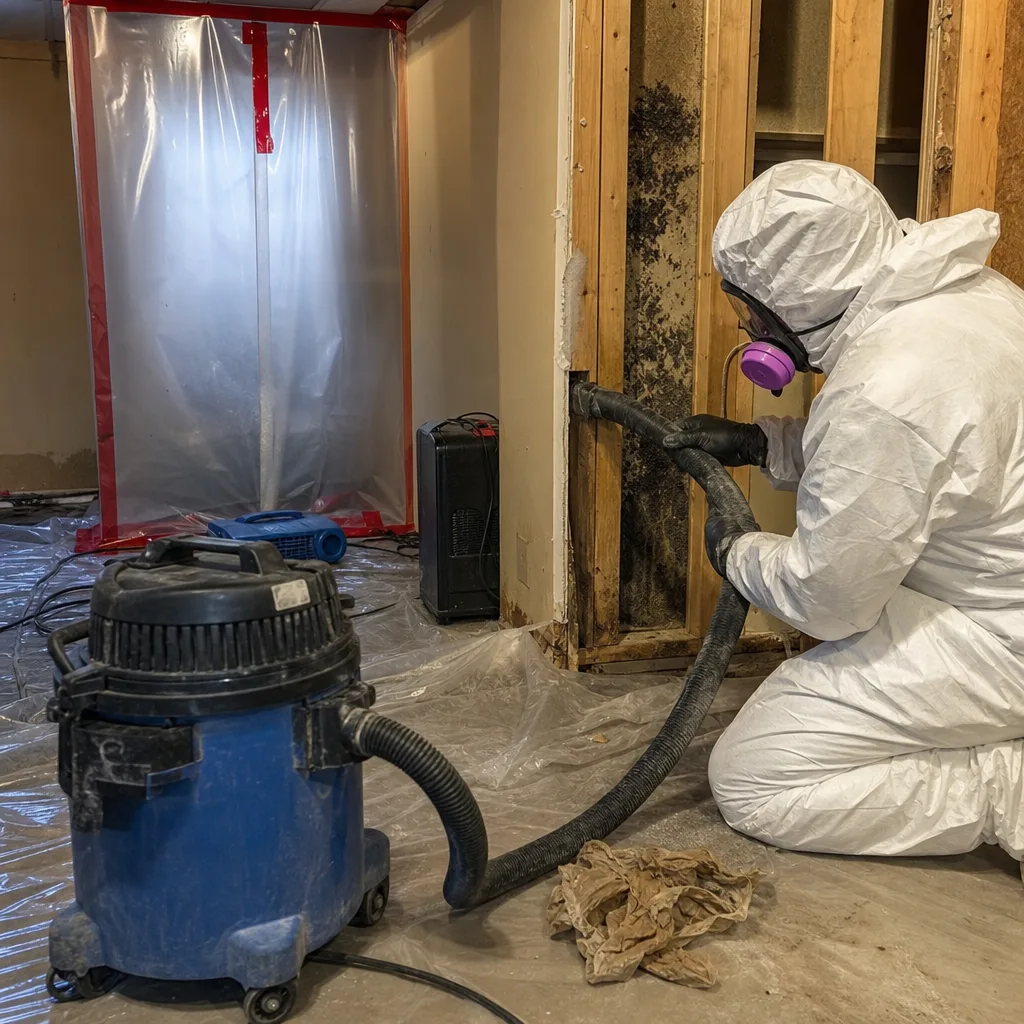
After the water is out and the boards are up, the cleanup starts. Debris removal, saturated material disposal, surface cleaning, and sanitization. We remove storm debris from interiors and entryways, including the wet insulation and plaster that harbor mold growth. For Category 3 losses, we follow IICRC S500 protocols for containment and disposal. For groundwater losses, we focus on long-term moisture control so the problem does not return with the next rain.
Debris Removal
Storms leave Weehawken’s narrow streets and tight alleyways littered with branches, shingles, and worse. We remove storm debris from your property, not just the street. The difference matters to homeowners whose backyards abut the Palisades cliff and collect everything the wind pushes over the edge. Our crews haul it, dispose of it properly, and document it for your insurance claim.
Wind Damage Repair
Wind is an underrated force in Weehawken. The same Palisades cliff that shapes the town channels gusts that tear off flashing, break windows, and pull gutters loose. We repair wind damage from the roof line down: flashing, fascia, gutters, broken glass, and the structural wood behind them. The work is done by the same crew that handled the water, so nothing gets lost between trades.
What happens when you call
- 1
A real person answersNo phone trees - you reach a local pro.
- 2
You get an upfront price rangeHonest numbers before anyone is dispatched.
- 3
A background-checked tech heads outLicensed & insured, dispatched right away.
- 4
You approve before work beginsNothing starts until you say go.
Storm & Disaster Restoration Costs in Weehawken, NJ
Storm restoration in Weehawken lands in a range, and we give you a written scope before work starts so the number is real. Flood damage restoration typically runs $3,500 to $12,000 depending on the water category, square footage, and whether the Palisades rock face is involved. Emergency board-up and roof tarping run $400 to $1,800 as a standalone service, often less when bundled with a full restoration scope. Debris removal runs $250 to $1,500. Wind damage repair ranges from $800 for simple flashing and gutter work to $15,000 or more for structural roof repairs. Homeowners insurance covers most storm damage; the exception in Weehawken is chronic groundwater intrusion on the bluff, which many policies exclude. We walk you through what your policy covers before we start, and we bill your carrier directly. Call (201) 762-0667 for a free inspection and a firm number in writing.
Written by Curt Bowman, Owner at Floodline Restoration Co.
We Also Serve Cities Near Weehawken
Our crews respond throughout Hudson County. We handle storm and disaster restoration in Union City, Hoboken, North Bergen, and Secaucus, bringing the same live 24/7 dispatch and written guarantee to every job. See our Storm & Disaster Restoration in Weehawken page for full local coverage details.
Weehawken Storm & Disaster Restoration Questions, Answered
Why does my Weehawken row house basement get wet weeks after a rain when I have no roof leak?
Because the water is not coming from the roof. In upper Weehawken, groundwater seeps through fractures in the Palisades basalt behind your foundation and enters through the rear wall. It takes days or weeks to travel through the rock and saturate the soil, which is why the wet basement shows up long after the storm passed. The fix is an interior weeping system and vapor barrier, not a roofing repair. Call (201) 762-0667 and we will trace the actual source with moisture mapping.
Can mold already be growing in my Port Imperial condo if the water loss happened 36 hours ago?
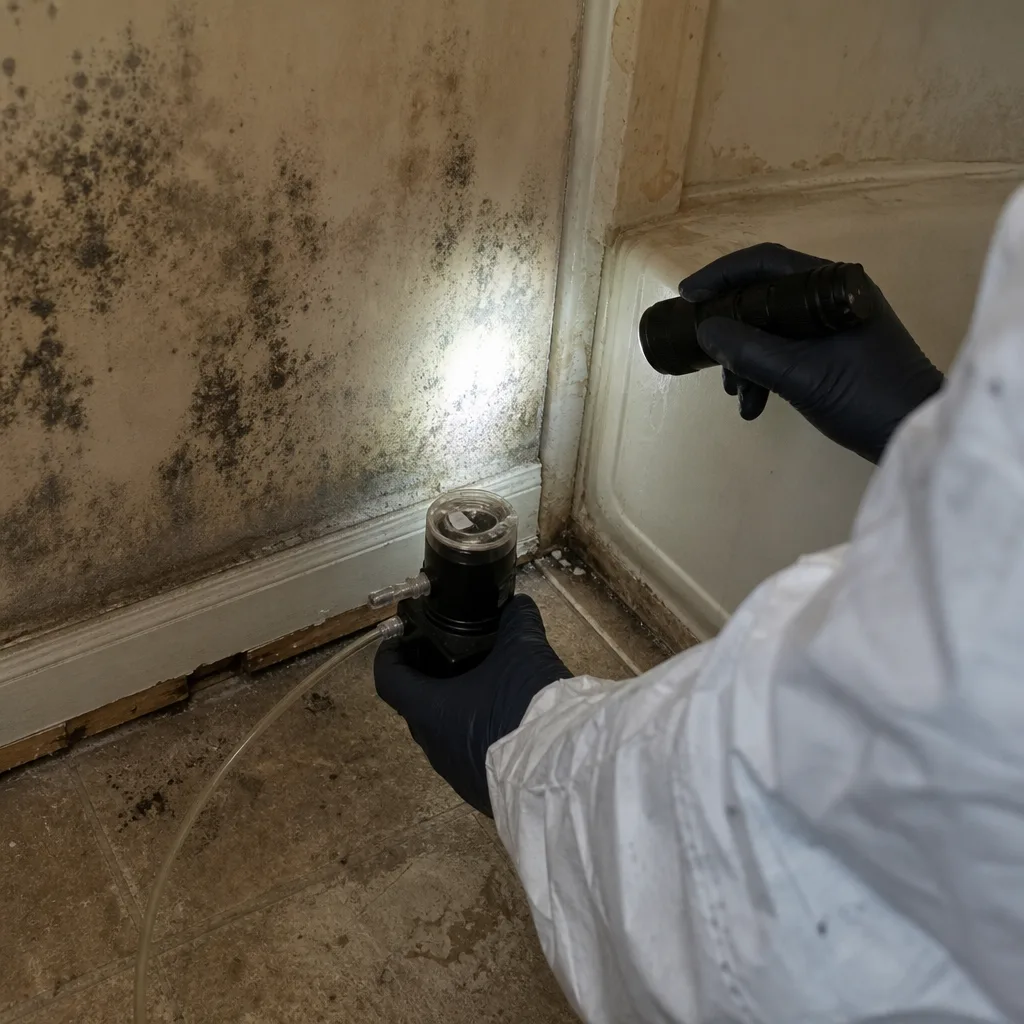
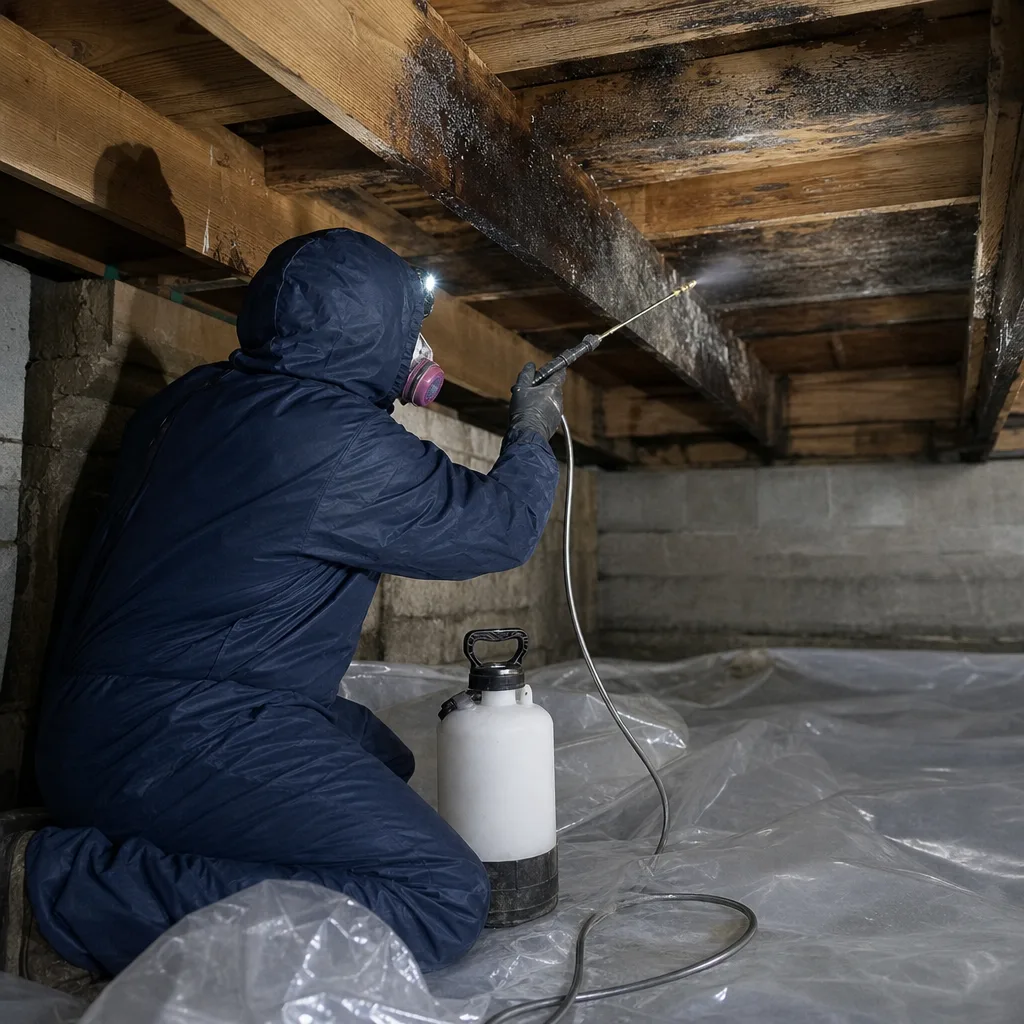
Yes. Mold colonization begins within 24 to 48 hours in the right conditions, and high-rise condo interiors with drywall and carpet offer exactly those conditions. If water sat overnight behind baseboards or under flooring, mold spores are already active. Do not wait to see visible growth. We run HEPA air scrubbers and apply antimicrobial treatments before the colony spreads. Call (201) 762-0667 for an immediate inspection.
What does emergency board-up cover on a Weehawken bluff-top home with original wood windows and doors?
Board-up covers broken glass, storm-blown doors, and any opening that lets water, animals, or people enter your home. On older Weehawken homes, we custom-cut plywood to fit original window frames without drilling into the millwork, preserving the wood you intend to keep. We also secure roofs with tarps when wind damage exposes the interior. The point is to stop further damage immediately, and we do it on the same call.
Does homeowner’s insurance cover Palisades groundwater intrusion in Weehawken basements?
Many standard policies exclude groundwater intrusion because it is classified as a maintenance issue, not a sudden event. However, storm-driven surface water that enters through a foundation crack may be covered depending on your policy language. We document the water path, the timing, and the damage in a format adjusters recognize. Our team has worked hundreds of Weehawken groundwater claims and knows how to present the evidence. Call (201) 762-0667 and we will review your situation before you file.
How do you handle Category 3 black water from a Hudson River storm surge in my Port Imperial building?
Category 3 water is contaminated with sewage, river sediment, and hydrocarbons. We treat it under IICRC S500 protocols: full containment of the affected area, removal of saturated porous materials, antimicrobial treatment of the structure, and HEPA air filtration during the entire process. Port Imperial losses also require large-loss coordination with your HOA and property manager on common-area damage. We handle that coordination directly so you deal with one team. Call (201) 762-0667 for a surge damage assessment.
How fast can you actually get to my Weehawken home?
Our dispatchers answer live 24/7, and we commit to a 45-minute response time anywhere in Weehawken. Upper plateau homes on Highwood Terrace and Eldorado Place are close to our Hudson County route. Port Imperial buildings may take a few extra minutes for access coordination with building staff. The key is that extraction starts on the first visit, not a follow-up appointment. Call (201) 762-0667 and the clock starts.
How long does storm damage drying and restoration actually take?
Drying typically runs 3 to 7 days with professional-grade Dri-Eaz and Phoenix dehumidifiers and XPOWER air movers running continuously. The real answer depends on the materials: plaster walls from a 1920s Weehawken row house hold water longer than modern drywall. Restoration and rebuild add another 1 to 4 weeks depending on the scope. We give you a written timeline with your scope of work before we start.
What should I do in the first 30 minutes after storm damage hits my Weehawken home?
Call (201) 762-0667 first, before moving anything. Then, if it is safe: shut off the main water valve if a pipe burst, move electronics and valuables to higher ground, and do not enter standing water if it may be Category 3 from the Hudson. Do not use a wet-vac on flooded carpet if the water came from outside. Take photos of everything you can see. Our dispatcher will talk you through what to do while the crew is on the way.
Serving Weehawken, NJ - Our Local Coverage Area
We’re based in the Weehawken area and know this community well. Use the map below to see our service coverage - if you’re nearby, we can almost certainly help.
Real Storm Damage, Real Weehawken Response
On a late-October call to a 1920s brick row house on Highwood Terrace, our crew found a finished basement with rising damp and buckling oak flooring. The homeowner had called a general contractor first, who blamed a bathroom leak and cut into the wrong wall. We started with moisture mapping and thermal imaging. The source was not plumbing or rain. It was the exposed Palisades rock face abutting the rear foundation, groundwater migrating through basalt fractures that had been doing damage for years. We installed an interior weeping system, applied antimicrobial treatment, and ran Dri-Eaz LGR dehumidifiers and XPOWER air movers for five days. The pre-loss condition was restored without disturbing the original plaster above. That is the difference between knowing Weehawken and just showing up with equipment.
Weehawken’s geography creates two distinct storm restoration environments within one square mile, and a restoration company that treats them the same will fail on one of them. Our crews live on this route. They know the difference between a Port Imperial surge loss and a bluff-top groundwater intrusion, and they know which equipment, which protocols, and which documentation each requires. When you call Floodline Restoration Co. at (201) 762-0667, you get a live person who dispatches a local crew, and you get a written scope before work begins. We have been doing storm and disaster restoration work long enough to know that the first call is the one that saves the house.
Written by Curt Bowman, Owner at Floodline Restoration Co., serving Weehawken and Hudson County.