
Free visual inspection and a written scope of work before any mitigation begins - photos, moisture readings, and drying logs go in your claim file
The scope we write is the scope we bill. Anything new gets shown to you, in writing, before we touch it.
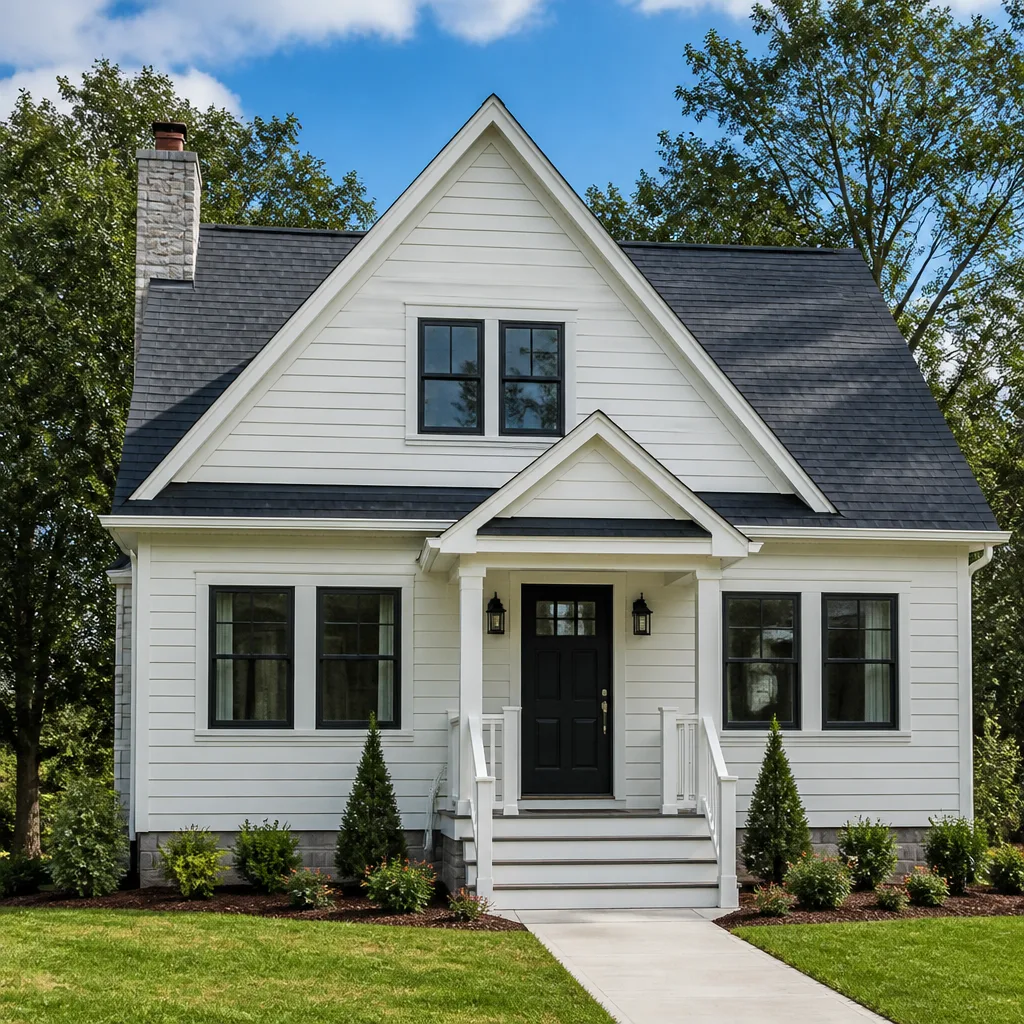
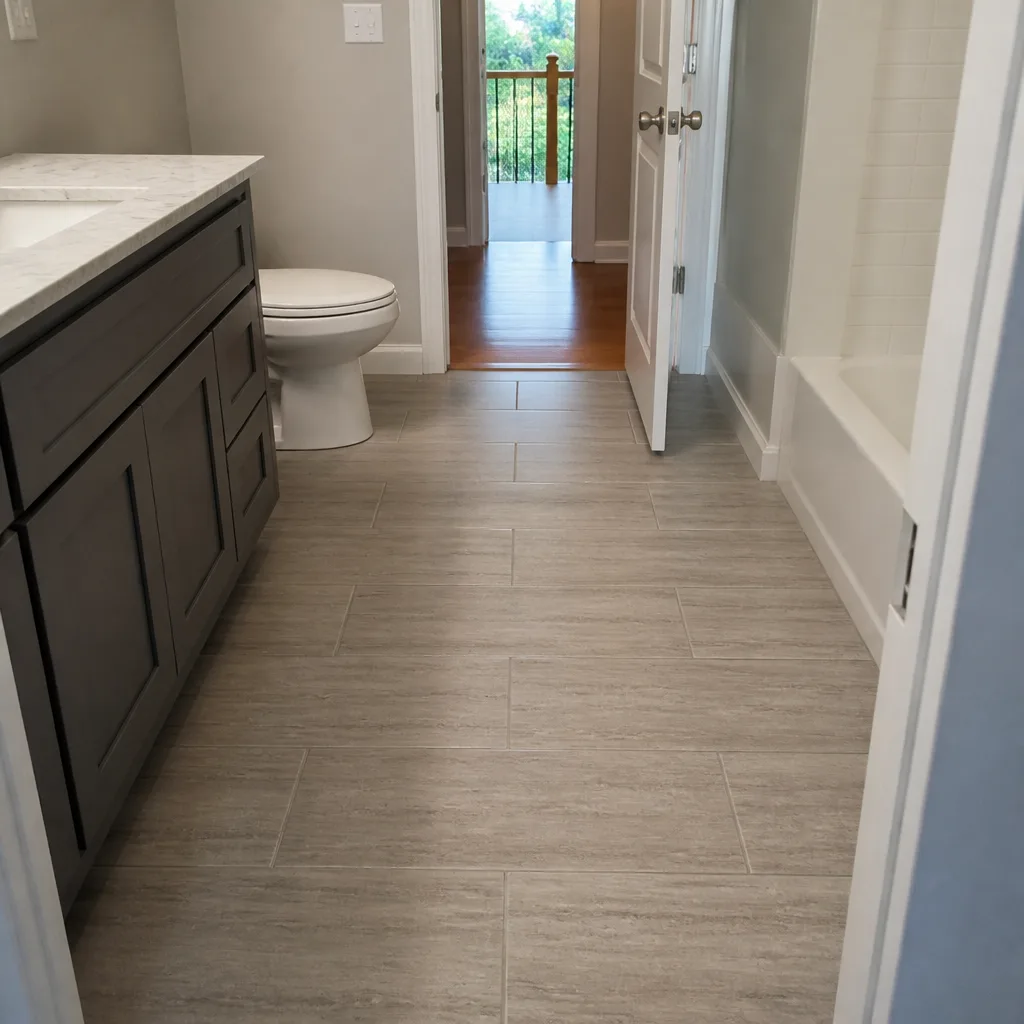
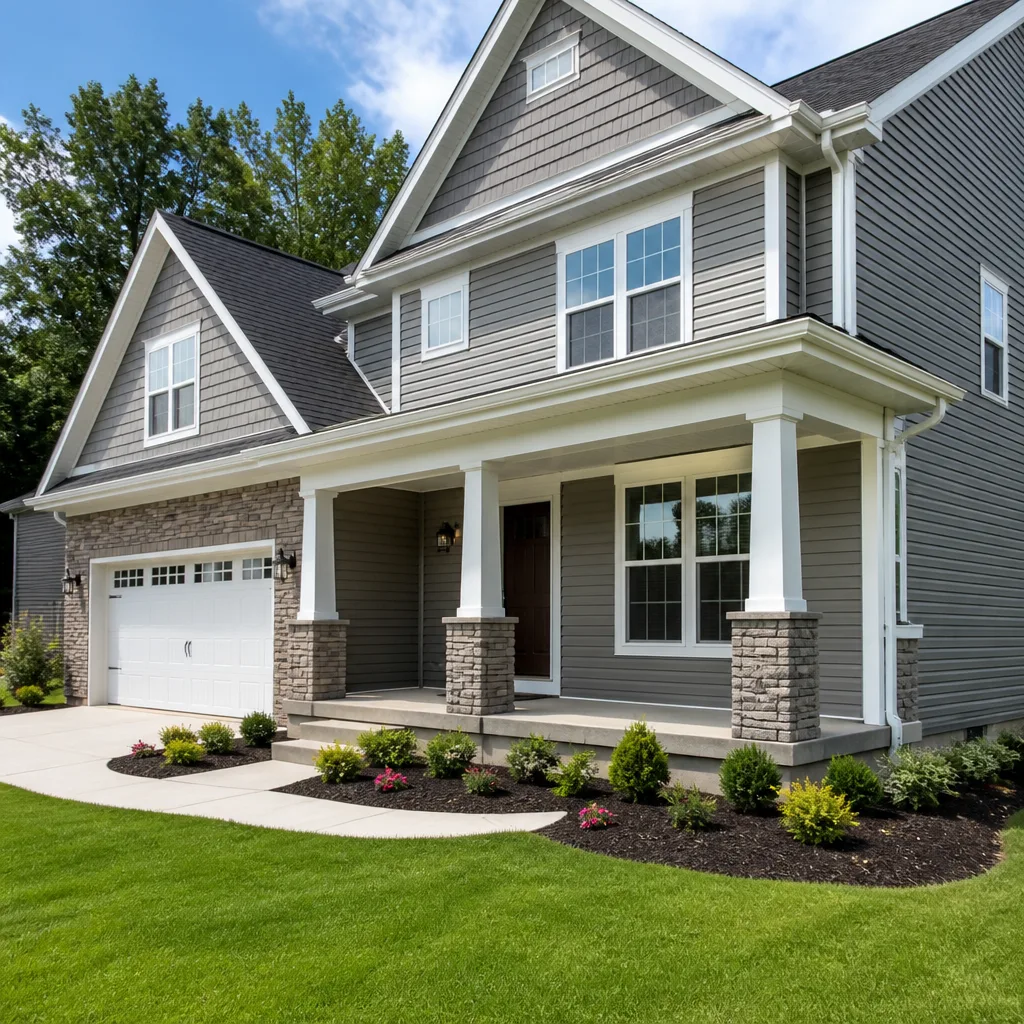
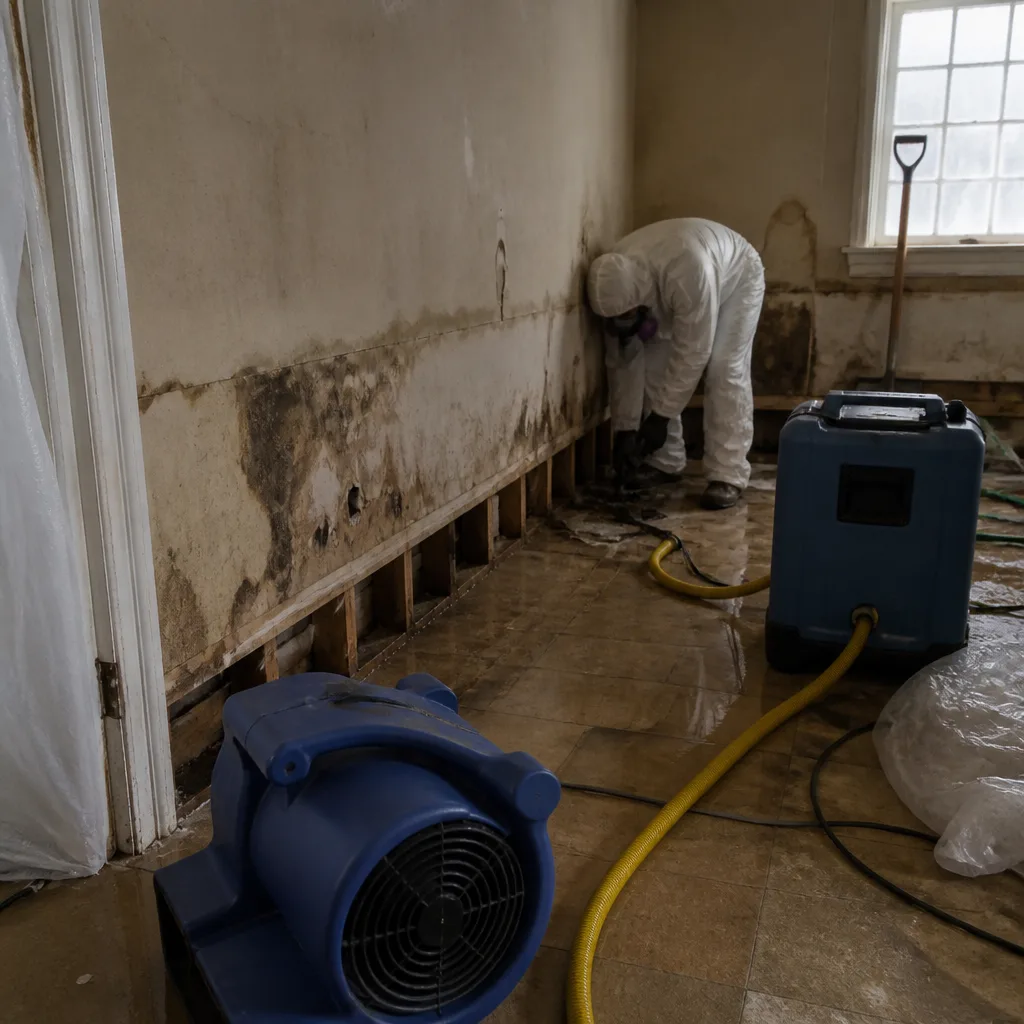 Before
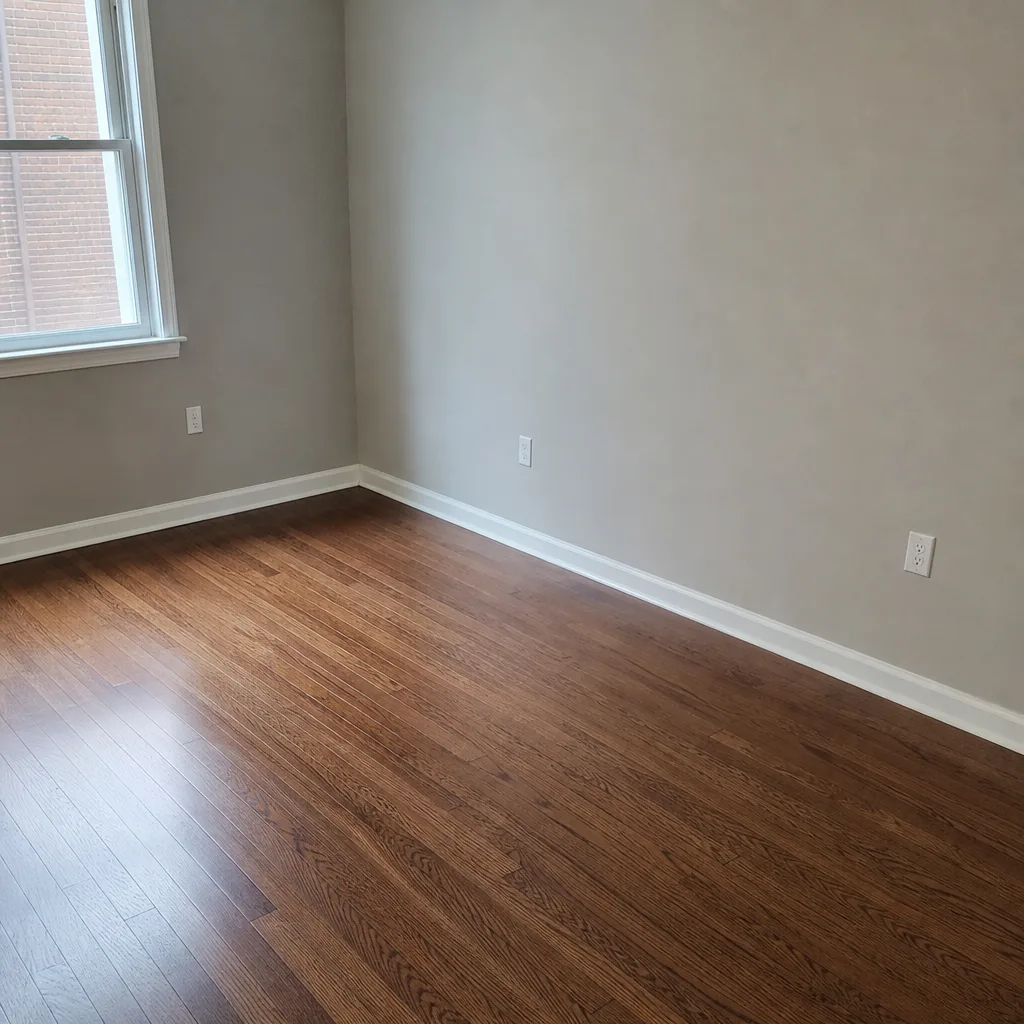 After
After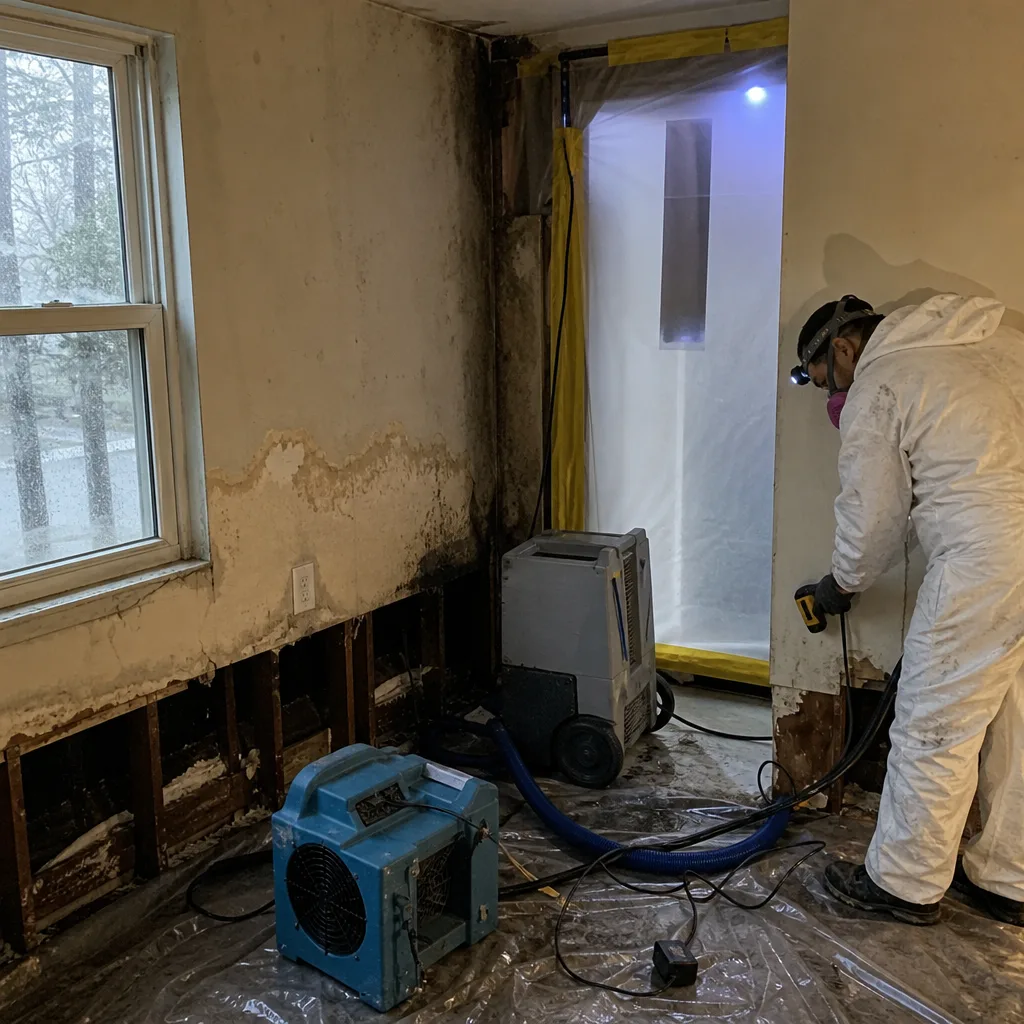 Before
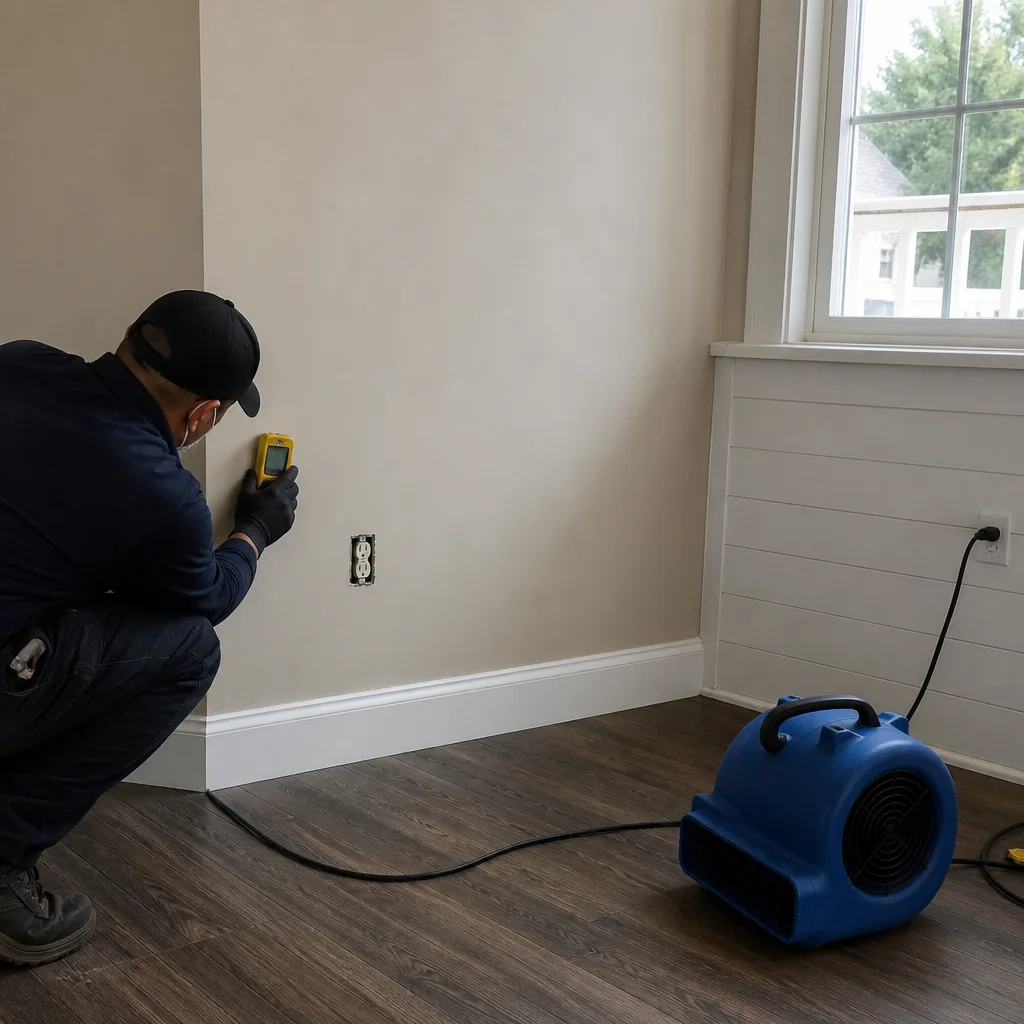 After
After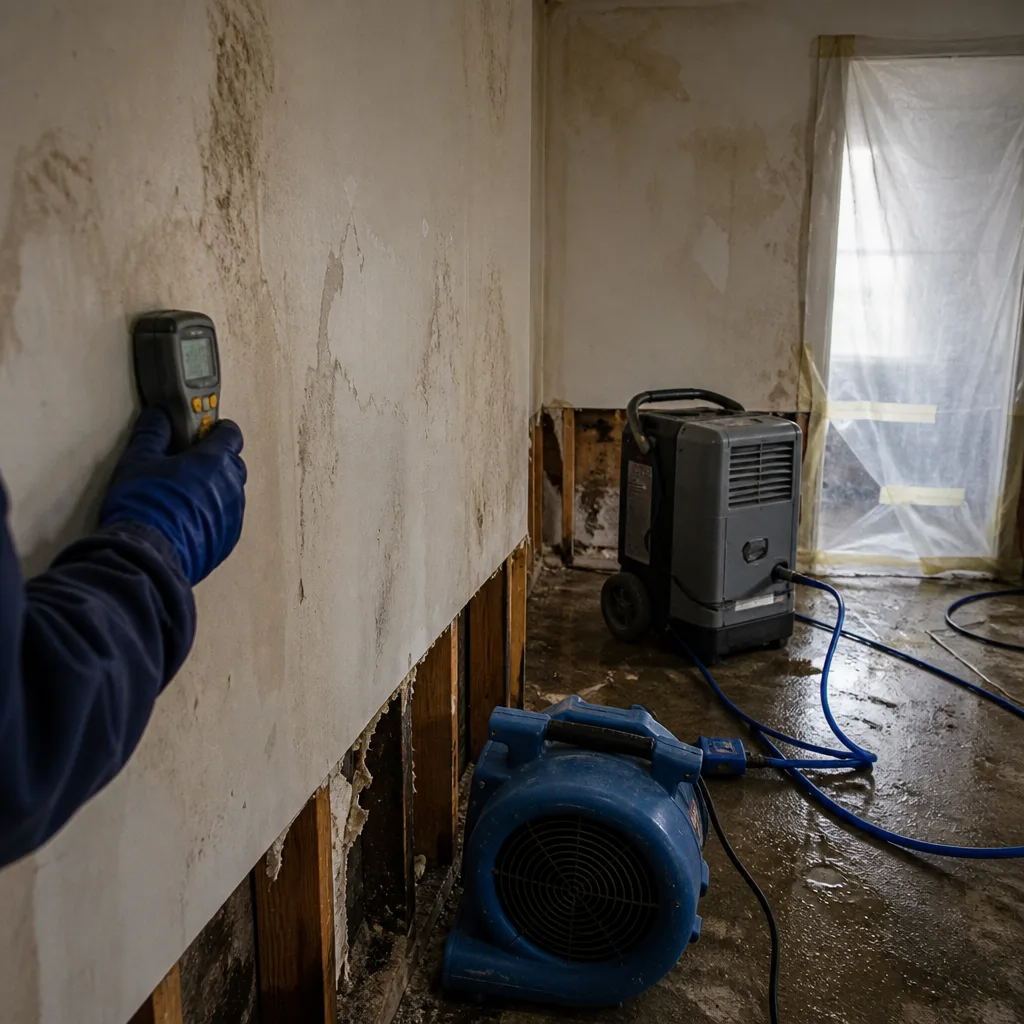 Before
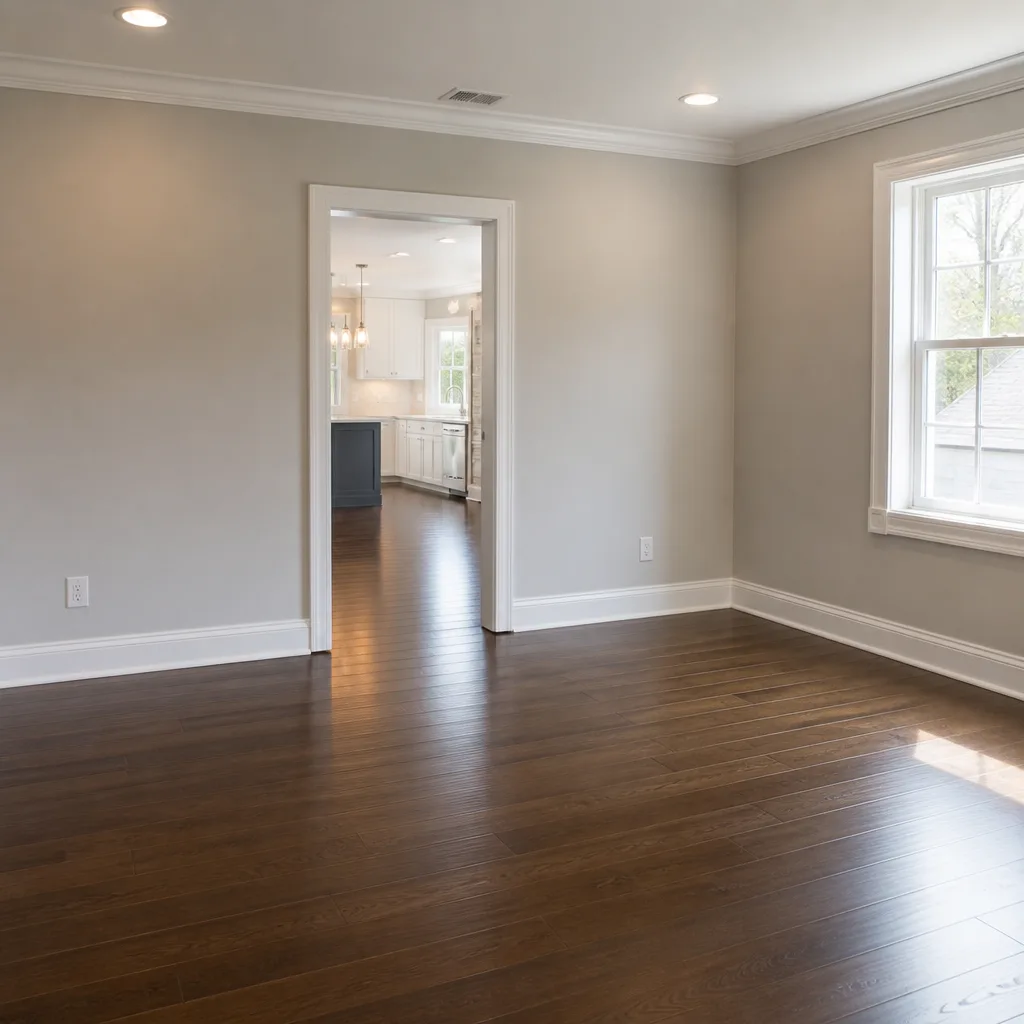 After
After24/7 Emergency Water Damage Restoration in Kearny
Water damage restoration in Kearny costs $1,800 to $9,000 for a typical basement flood, depending on how deep the water went and whether the walls absorbed moisture. For severe storm or sewage-flood damage, the range is $6,000 to $22,000. Crews from Floodline Restoration Co. answer live 24 hours a day and can reach homes near the Kearny Avenue corridor within 45 minutes for emergency extraction. Call (201) 762-0667 now if you have standing water.
In a town built on former wetland, every hour of delay matters. Kearny basements sit over a water table so high it pushes back against your drying equipment. That means the first hour is not just about stopping the visible damage. It is about preventing a mold bloom that, in this specific landscape, arrives faster than the national restoration guidelines assume.
Our Water Damage Restoration team arrives with truck-mounted extraction units and moisture mapping tools. The visual inspection is free. We are not going to leave you with a machine running and a hope. We measure, we log, and we keep measuring until the structure is actually dry.
Understanding Water Damage Restoration Severity in Kearny Properties
Before we pull equipment off a truck, our team classifies the water by contamination risk. Category 1 is clean water from a broken supply line. Category 2 carries significant biological or physical contaminants, like an overflowing washing machine or dishwasher discharge. Category 3 is grossly contaminated water carrying pathogens, and in Kearny this category is not a rare event. Standing water in a basement near the Passaic River, street drain backflow from a storm, or a failed sewer lateral in an old home all fall here.
Kearny’s housing stock changes how each category behaves. Homes built before the 1940s, especially the attached brick and wood-frame two- and three-families near the Boulevard and Belgrove Drive, often have full concrete slabs over rubble-and-mortar foundations with no exterior waterproofing. When water sits, it wicks up through the slab’s capillary network into original plaster-and-lathe walls. Those walls hold moisture differently than modern drywall. They dry slower and hide the readings you get from a surface moisture meter, which is why our techs use penetrating probes and thermal imaging in every older Kearny basement.
Kearny also has many early electrical systems in these basements. Knob-and-tube or early BX cable is common in homes built between 1910 and 1940. If water reached the lower wall cavities or floor outlets, the electrical inspection happens before any drying equipment goes in. That is not optional. It is a safety boundary.
Why Kearny Property Owners Choose Floodline Restoration Co.
- 45-minute response commitment for Kearny-area dispatch. A live dispatcher answers at 2 a.m., not a voicemail, and our crews are staged to reach the 07032 and 07099 zip codes fast.
- 24/7 live answer, every day of the year. There is no message box. A person picks up the phone, asks the right questions, and sends a crew.
- IICRC-certified technicians on every job. Our crews hold Water Damage Restoration Technician (WRT) and Applied Structural Drying (ASD) credentials, and follow RIA and IFA standards in the field.
- Free visual inspection and moisture assessment. Before any bill, you know exactly what is wet, how wet, and what the next three days look like.
- Direct insurance billing. The paperwork between us and the carrier is not your job. We coordinate with your adjuster and send documentation from the first hour.
- One team from extraction through reconstruction. The same crew that pulls the water also rebuilds the wall. No mid-job handoff to a sub you have never met.
Our Water Damage Restoration Process
Inspection & Assessment
We map every wet surface with penetrating moisture meters and thermal imaging, including behind baseboards and inside wall cavities. In Kearny, that means testing for rising damp from the water table, not just surface saturation.
Extraction & Stabilization
Truck-mounted Dri-Eaz extraction units pull standing water fast. We also cut power below the flood line in older homes until the electrical system is verified safe.
Drying & Dehumidification
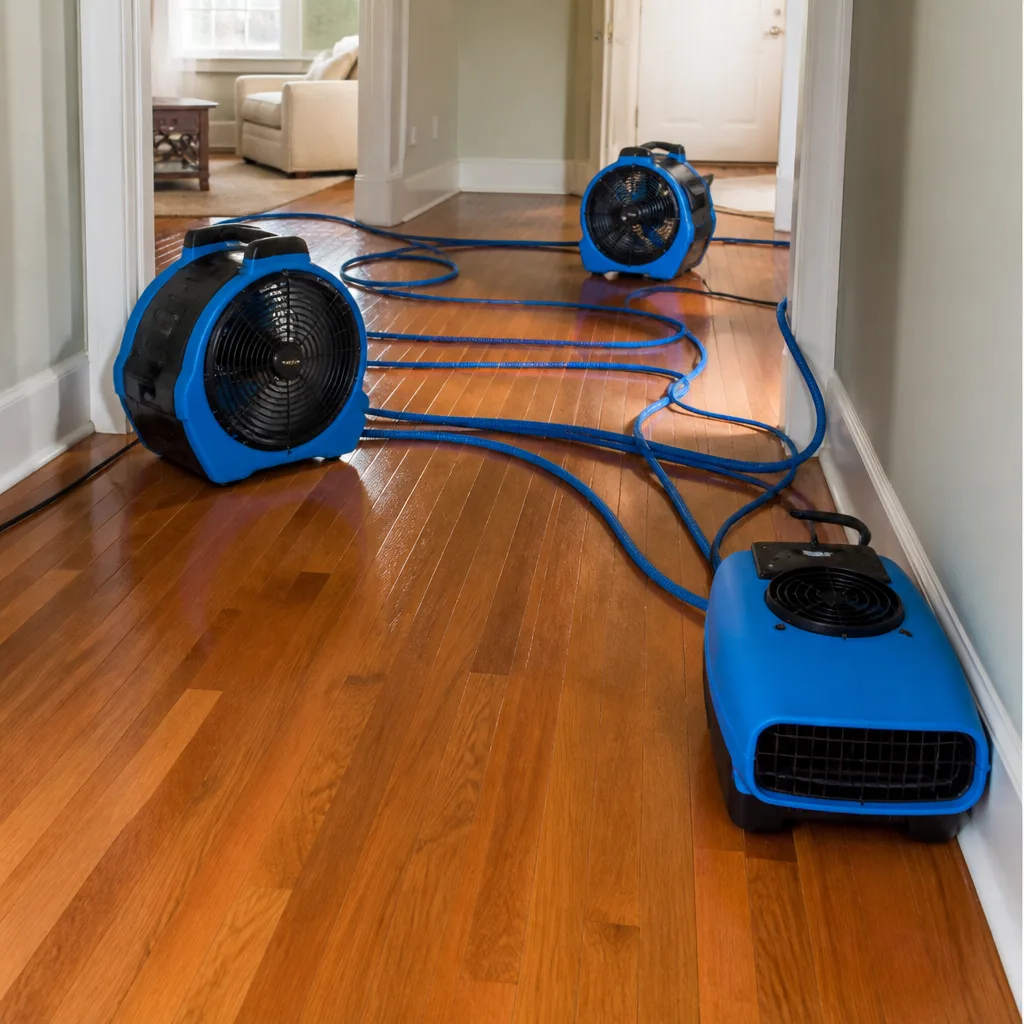
Professional-grade Phoenix dehumidifiers and high-volume air movers are placed based on the moisture map, not guesswork. In Kearny’s wetland-fill soils, we run drying cycles 30 to 50 percent longer than the national standard and verify with daily readings.
Cleaning & Sanitization
Category 2 and 3 water require antimicrobial treatment on every contacted surface. We also remove saturated materials like carpet pad and compromised plaster, with full containment and HEPA air scrubbing in occupied homes.
Mold Prevention in Kearny Conditions
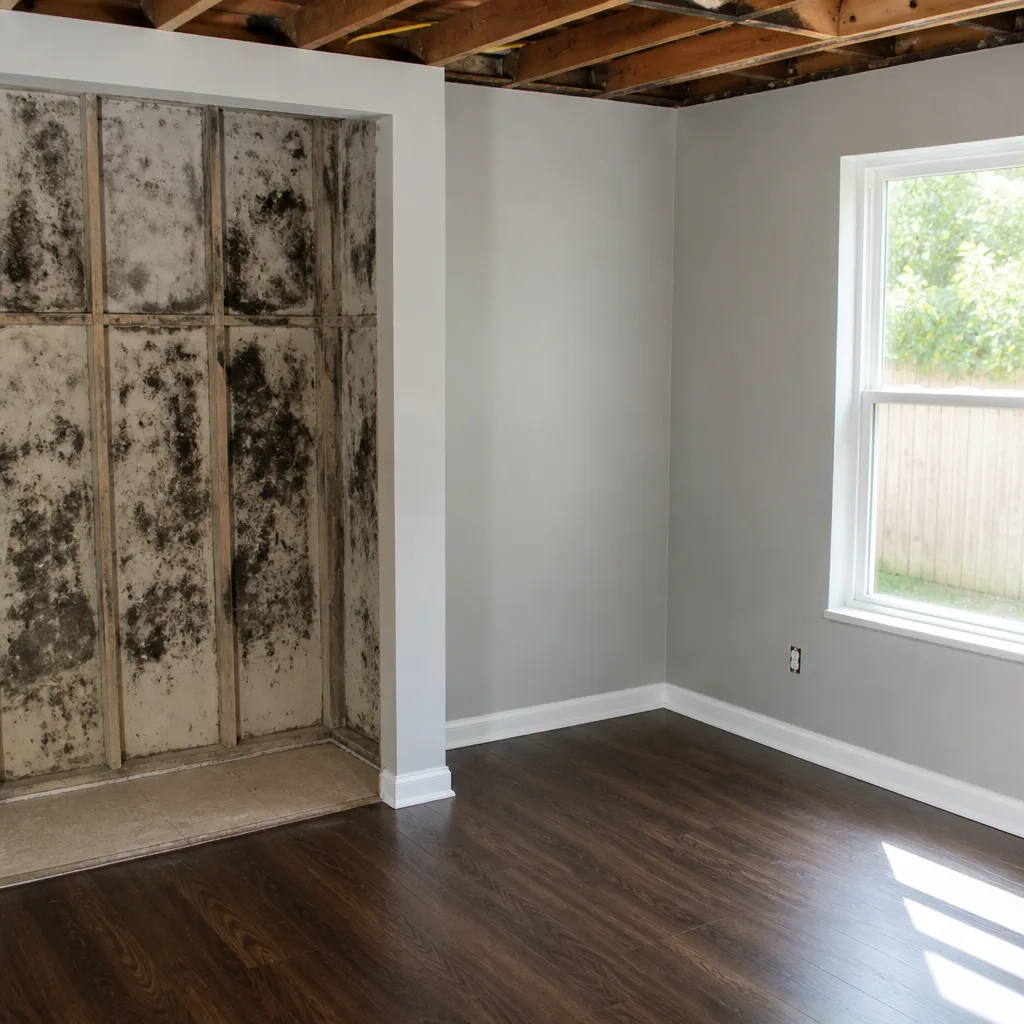
Because ambient humidity off the adjacent wetlands stays high, our techs test for mold behind baseboards within days of a flood, not weeks. We treat window reveals, sill plates, and the bottom 24 inches of plaster-and-lathe walls as high-risk zones.
Repairs & Restoration
We rebuild what was removed, and we bring any electrical or plumbing in the affected area up to current NJ code before closing the wall. The finish goes back only after a final moisture log confirms the dry standard.
Need Emergency Water Damage Restoration in Kearny Now?
Crews minutes away, answering live 24 hours a day. The sooner we start, the less it costs.
Working With Your Insurance Company
We have handled hundreds of water damage claims in Hudson County, and we know the difference between what your policy covers and what it does not. In Kearny specifically, many homeowners are surprised to learn that surface floodwater from the Passaic River is not covered by a standard homeowner’s policy at all. FEMA flood insurance is a separate program, and many properties in this floodplain do not carry it. We do not let that become your paperwork pile.
From the first hour, we document everything: pre-existing conditions, moisture readings, category of water, and the full scope of removal. We bill your carrier directly for covered work, and when a claim is disputed we give your adjuster everything they need without asking you to become a professional project manager.
What We Provide Your Insurer
- Thorough documentation of the loss
- Photos of all damage, room by room
- Moisture readings and drying logs
- A detailed, line-item scope of work
- Direct coordination with your carrier
Built for Kearny’s Loss Calendar
Water damage restoration in Kearny is not a single-month problem. It follows a calendar that any local homeowner past their first winter recognizes. January and February bring deep freezes that split supply lines in uninsulated basement crawl spaces and along exterior walls in 1920s-era construction. When the thaw comes in March, hydrostatic pressure pushes groundwater through rubble foundations and up through slab cracks, and basements that were “always a little damp” become full standing-water events.
Spring nor’easters occur when high tides on the Hackensack meet rain-driven Passaic overflow, and that is when we see the worst compound flooding in the low blocks near the old Kearny Marsh. June through August brings flash thunderstorms that overwhelm street drainage and back up the combined sewer laterals common in older Kearny neighborhoods. September’s tropical-storm remnants repeat the river and tidal pattern. Then the cycle begins again.
We plan crews around this calendar. That is why our Kearny dispatch stays staged within a tight radius, and why we do not have to “fit you in” when a March nor’easter puts water in fifteen basements along the same block.
Water Damage Restoration Across Kearny’s Neighborhoods
The response route changes based on where you live. In the numbered streets off Kearny Avenue, near Town Hall and the library, we work mostly in 1910s and 1920s attached wood-frame homes with shallow basements and no sump pits. Losses there are typically broken supply lines and sewer backflow. Across Belgrove Drive toward the river, the homes sit lower and the water table sits higher. We see more storm-inundation events and more Category 3 water.
Up in the Arlington section near the North Arlington border, homes from the 1930s and 1940s have slightly deeper basements, but the original cast-iron drain stacks are often at end-of-life, and joint failure behind a wall becomes a hidden slow leak that saturates plaster for weeks before anyone notices. Near Schuyler Avenue and the Passaic Avenue corridor, older multi-family buildings with shared party walls present a different challenge: water in one side migrates through the common foundation and shows up in the neighbor’s unit two days later.
In the blocks around West Hudson Park and down toward the Hackensack, the soil is looser fill, and drying cycles run longest. The building type and the ground underneath it change our equipment layout and our daily reading schedule. A single national playbook does not work here.
Specialized Water Damage Restoration Services We Offer in Kearny
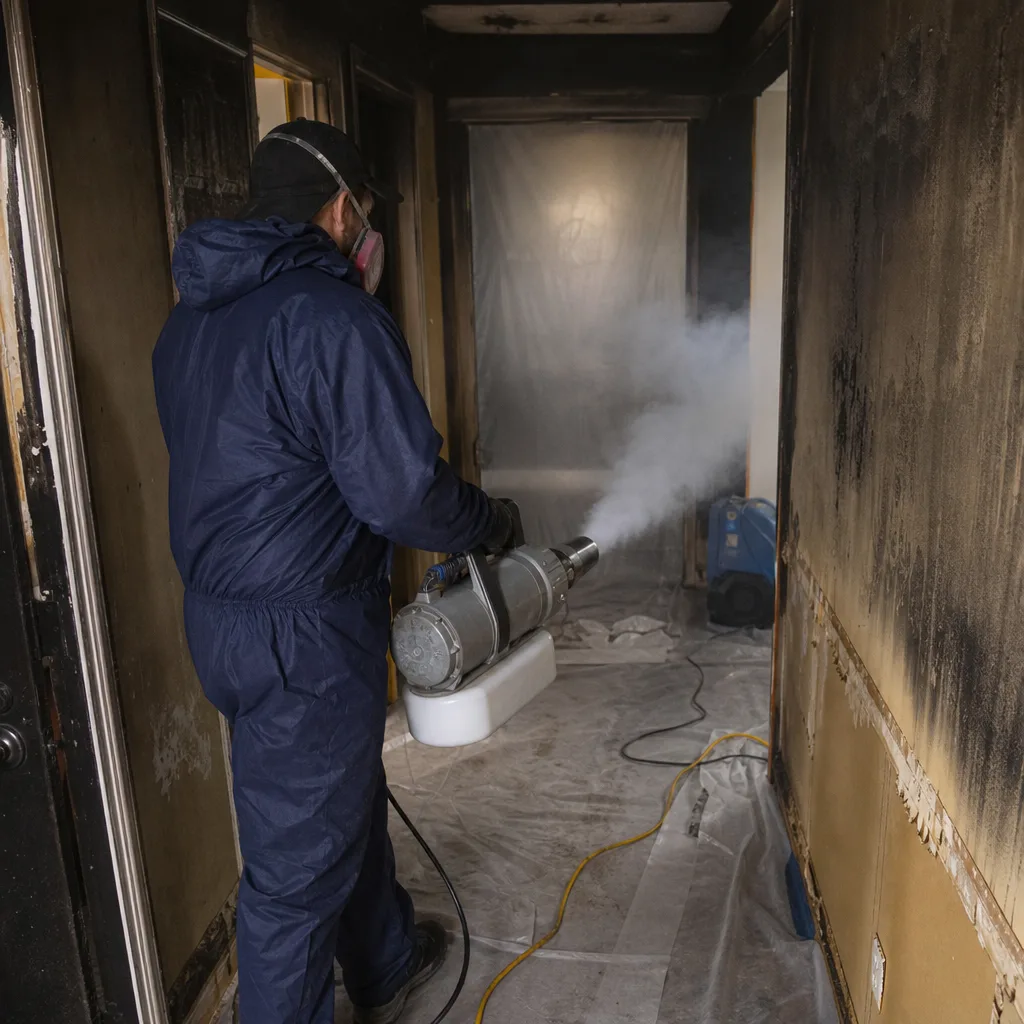
Emergency Water Extraction
Standing water is measured in gallons and minutes. Our truck-mounted Dri-Eaz units pull hundreds of gallons per visit, and in Kearny’s older basements we also extract from the wall cavities themselves, not just the floor surface. The goal is to stop capillary rise before it reaches the lath.
Structural Drying & Dehumidification
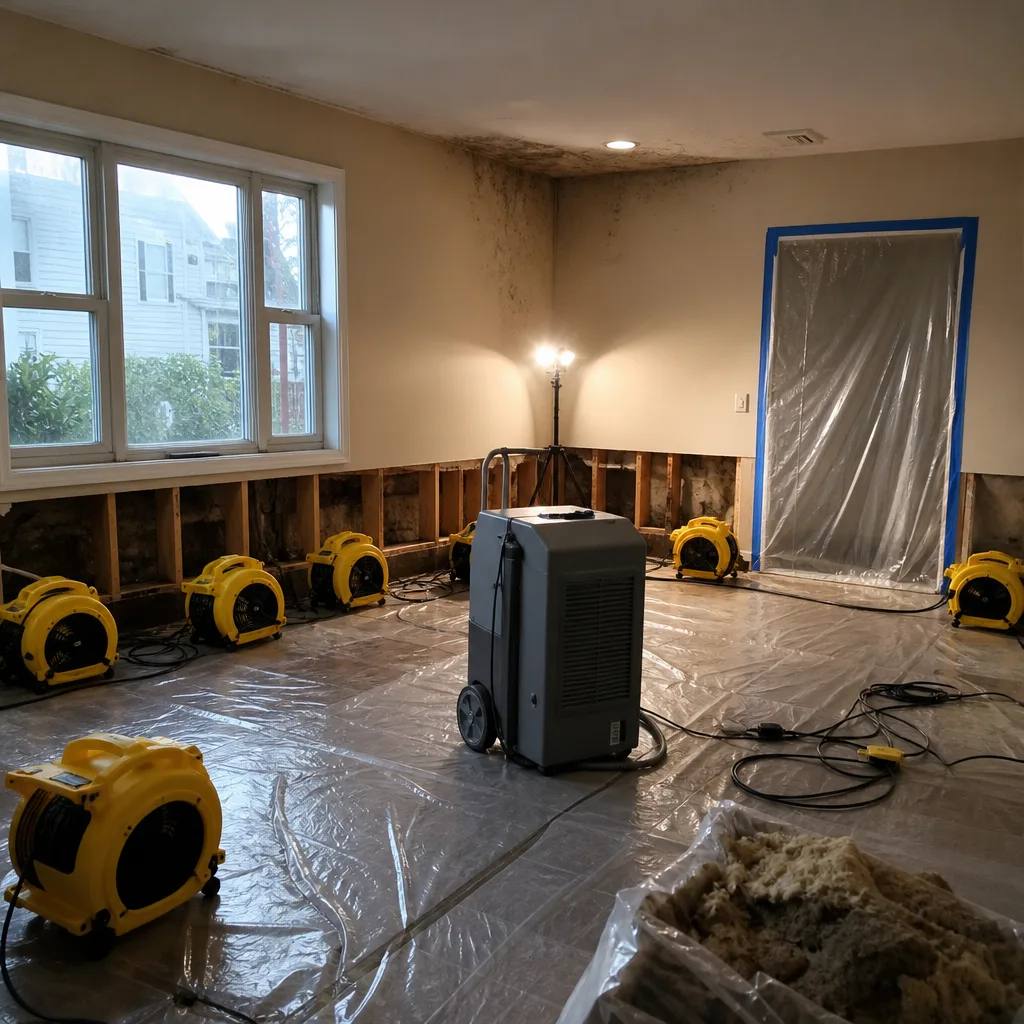
Kearny runs on a different drying clock than most of northern New Jersey. The water table under slab foundations resists drying, so our Phoenix dehumidifiers and air movers run longer, and we take daily moisture readings with penetrating probes. We do not pull equipment until the log shows the structure, not just the air, is dry.
Flood Cleanup
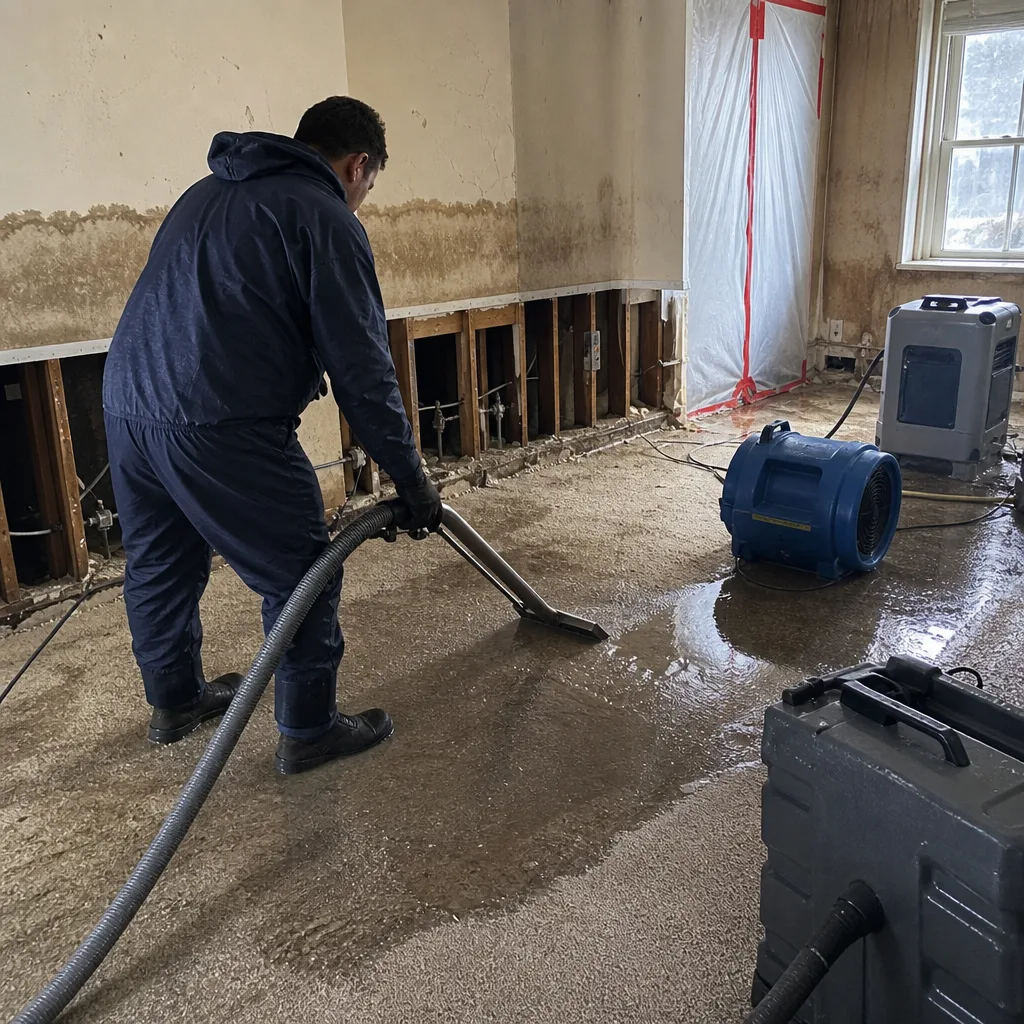
When the Passaic overtops or street drains push water into your basement, the water is rarely clean. We treat storm and surface water in Kearny as presumptively contaminated, with full removal of porous materials, antimicrobial treatment, and containment in occupied homes.
Burst Pipe Restoration
January freeze-thaw cycles split copper and galvanized supply lines in exterior walls and unheated stairwells. We extract, dry, and repair, and we replace the failed section with current-code materials. In older Kearny homes, that often means upgrading a small galvanized run rather than patching it.
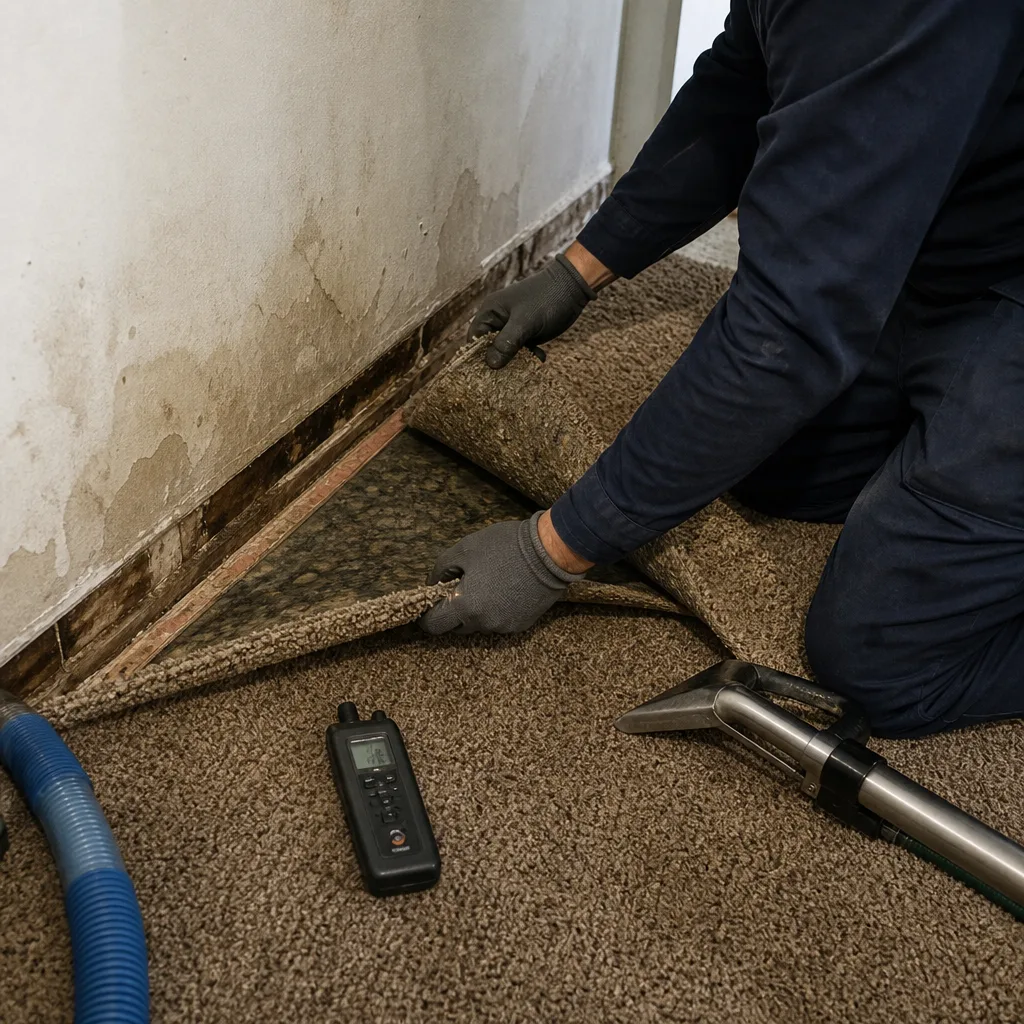
Basement Water Removal
Basement flooding is the most common call we take in Kearny, and it is also the one most often underestimated. The water on the floor is only the visible half. We map the moisture in the walls, the slab, and the sill plate before we declare the extraction complete.
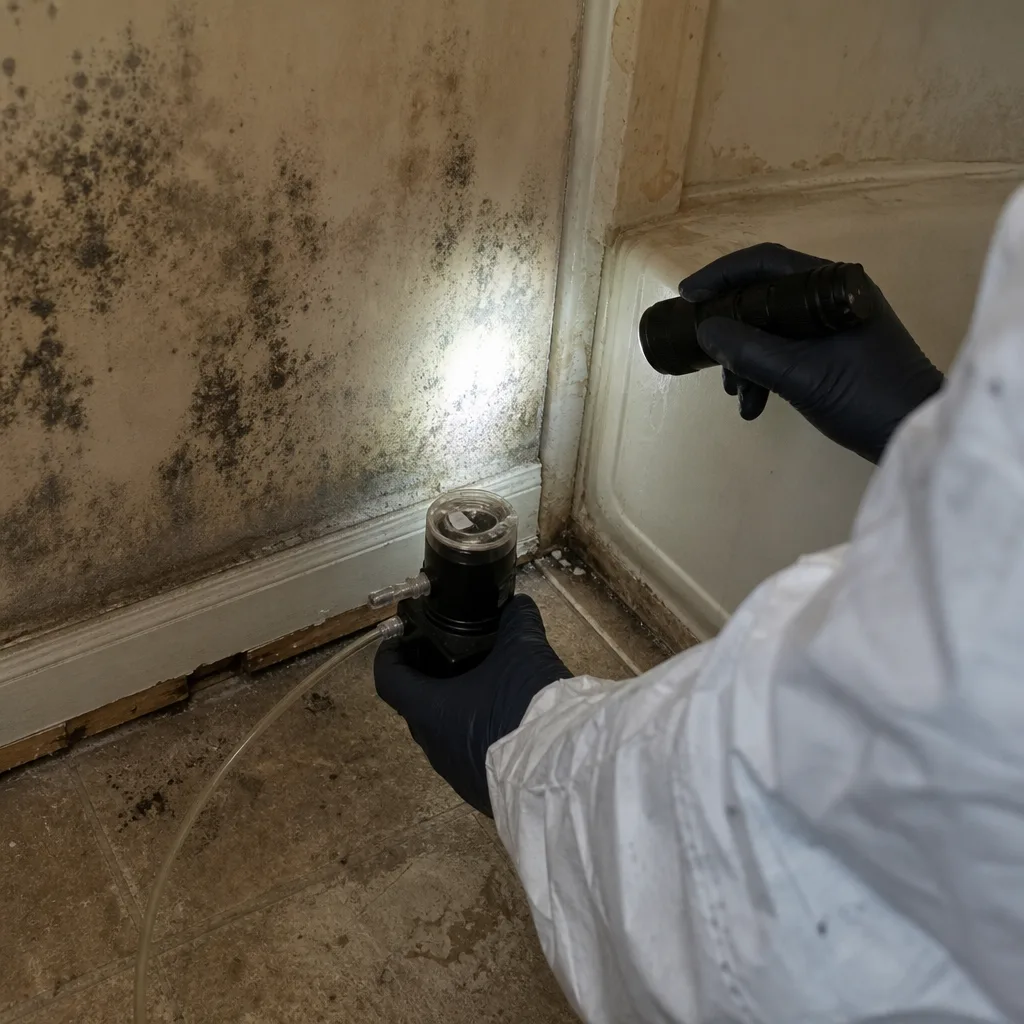
Ceiling & Roof Leak Water Damage
Fast roof runoff from summer thunderstorms finds every compromised flashing and aging membrane. We dry ceiling cavities from above and below, treat the framing, and coordinate the repair so the same crew closes the ceiling only after a final moisture check.
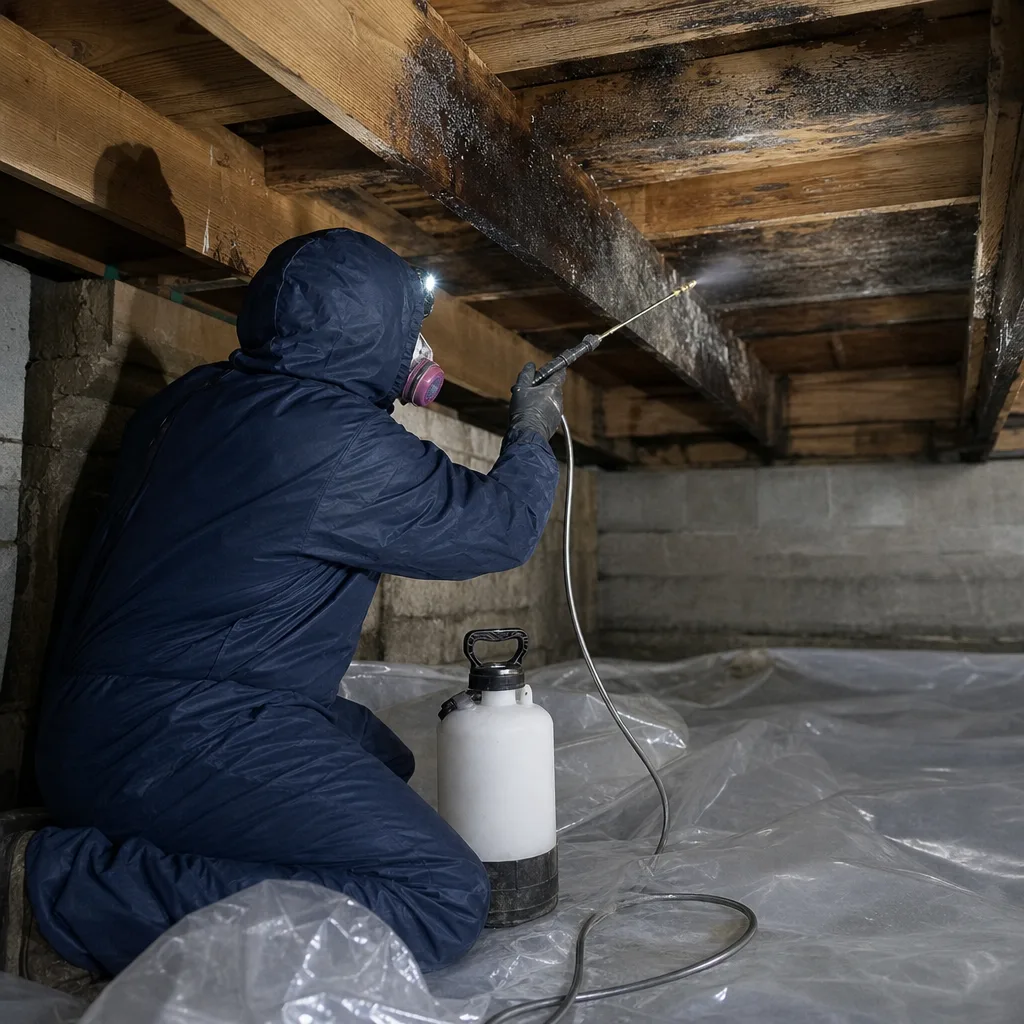
What happens when you call
- 1
A real person answersNo phone trees - you reach a local pro.
- 2
You get an upfront price rangeHonest numbers before anyone is dispatched.
- 3
A background-checked tech heads outLicensed & insured, dispatched right away.
- 4
You approve before work beginsNothing starts until you say go.
Water Damage Restoration Costs in Kearny, NJ
For a typical basement water removal and dry-out in Kearny, you are looking at $1,800 to $4,500 when the water is clean and caught within hours. Category 2 water from a washer overflow or dishwasher blowout, with pad removal and antimicrobial treatment, ranges from $3,000 to $7,000. Category 3 sewage or Passaic-flood water in a full basement runs $6,000 to $22,000 depending on whether the lower wall cavities are involved and whether electrical or plaster replacement is needed.
What moves the price in Kearny specifically is the foundation type. Rubble-and-mortar foundations with no exterior waterproofing hold moisture longer, requiring more drying days and more equipment. Original plaster-and-lathe walls are more labor-intensive to open, treat, and close than drywall. And when knob-and-tube wiring is in the affected area, the code-required upgrade adds cost that a generic template never predicts.
Insurance covers a burst pipe or an appliance failure under most standard Kearny homeowner policies. It does not cover Passaic River surface flooding without a separate flood policy. Either way, the free inspection gives you a firm, written scope before any work starts. Call (201) 762-0667 and we will tell you what you are actually dealing with.
We Also Serve Cities Near Kearny
Our crews work across the Hudson County border towns and the lower Bergen corridor. We regularly handle water damage restoration in Kearny and the surrounding communities: North Arlington, Secaucus, Hoboken, and Lyndhurst. If you are just outside the town line, call and we will confirm availability for your block.
Serving Kearny, NJ - Our Local Coverage Area
We’re based in the Kearny area and know this community well. Use the map below to see our service coverage - if you’re nearby, we can almost certainly help.
Kearny Water Damage Restoration Questions, Answered
How does Kearny’s high water table affect how long structural drying takes after a basement flood?
It extends drying times by 30 to 50 percent compared to the national standard. Saturated soils under slab foundations push moisture back up through the concrete even after surface water is gone, so our Phoenix dehumidifiers and air movers run longer, and we take daily moisture readings with penetrating probes until the structure itself, not just the air, is dry.
Should I worry about contamination in floodwater that comes into my Kearny basement from the Passaic River or street drains?
Yes. Water from the Passaic River or from combined sewer and storm drain backflow is Category 3 water, not clean water. It can carry sewage, legacy industrial contaminants from surrounding former manufacturing sites, and biological pathogens. All porous materials it contacts must be removed, and hard surfaces need antimicrobial treatment.
Do older Kearny homes with original plaster-and-lathe walls need special handling after water damage?
They do. Plaster-and-lathe wicks water higher and releases it slower than drywall. We open the wall at the bottom, inspect behind the baseboard, and use penetrating moisture probes to find hidden wet lath. We also check for knob-and-tube wiring in the wet zone before drying equipment goes in, because wet early wiring is a fire hazard.
Why does mold appear faster in Kearny basements after a flood than in neighboring towns?
Because of the ambient humidity coming off the adjacent wetlands and the high water table under the slab. In a flooded Kearny basement, mold can establish itself within 72 hours, and often faster than a national guideline predicts. That is why we test behind baseboards within days, not weeks, and treat sill plates and lower wall cavities as high-risk zones.
If my Kearny home flooded but I don’t have flood insurance because FEMA maps under-model our area, can restoration still be done properly?
Yes. The restoration itself is not dependent on your insurance coverage. We document everything, dry the structure properly, and give you a written line-item scope. You may be paying out of pocket, and if so we tell you that honestly up front, with a firm number before work starts.
How fast can someone actually get to my Kearny property?
Our dispatch commitment for the Kearny area is 45 minutes from the time you call (201) 762-0667. A live person answers 24 hours a day. The visual inspection is free, and extraction equipment goes in the same visit if water is standing.
Do I really need full restoration, or can I just dry the floor and be done?
If the water reached baseboards, walls, or the sill plate, drying the floor alone leaves hidden moisture that will bloom mold within weeks. In Kearny specifically, the high water table means the slab itself can keep feeding moisture back even after the surface looks dry. The free moisture assessment tells you what is actually wet before you decide.
Can I stay in the home during the drying process?
For clean-water losses in a contained area, usually yes. For Category 3 water, or when we open walls with potential asbestos-containing plaster or wet knob-and-tube wiring, we recommend the affected floor be vacated until the high-risk work is complete. We tell you straight what is safe.
When water finds its way into a Kearny basement, the ground underneath is part of the problem, not a separate issue. That is the insight that changes how the job gets done. Call (201) 762-0667 for a free visual inspection and a square deal, in writing, before any work starts.
Written by Curt Bowman, Owner at Floodline Restoration Co., serving Kearny and northern New Jersey since 2010.