
Dri-Eaz Water Damage Restoration in Secaucus: A Homeowner’s Guide
A dehumidifier running in the wrong room, at the wrong airflow setting, for the wrong number of hours can add three to five days to a drying job, and you won’t know it happened until mold shows up six weeks later. Dri-Eaz equipment isn’t magic. It’s a precision tool that only works when the crew knows how to read the moisture map, size the machines, and log the grain depression daily. If you’d rather not think about any of this, call (201) 762-0667 and a live dispatcher will get a crew to your Secaucus home today.
What Dri-Eaz Equipment Actually Does in a Secaucus Basement
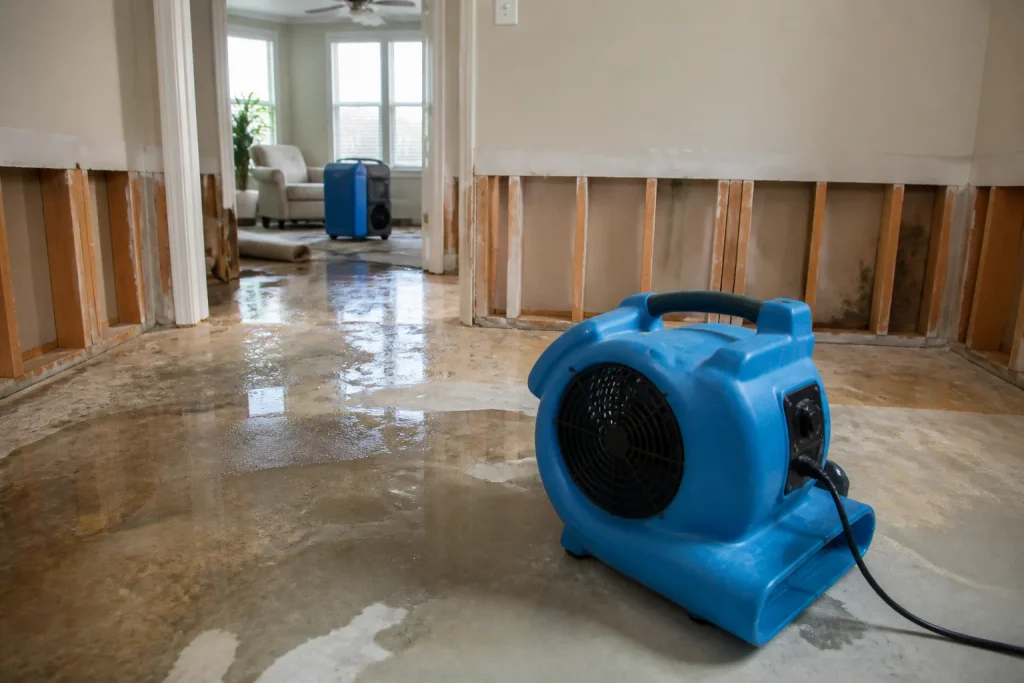
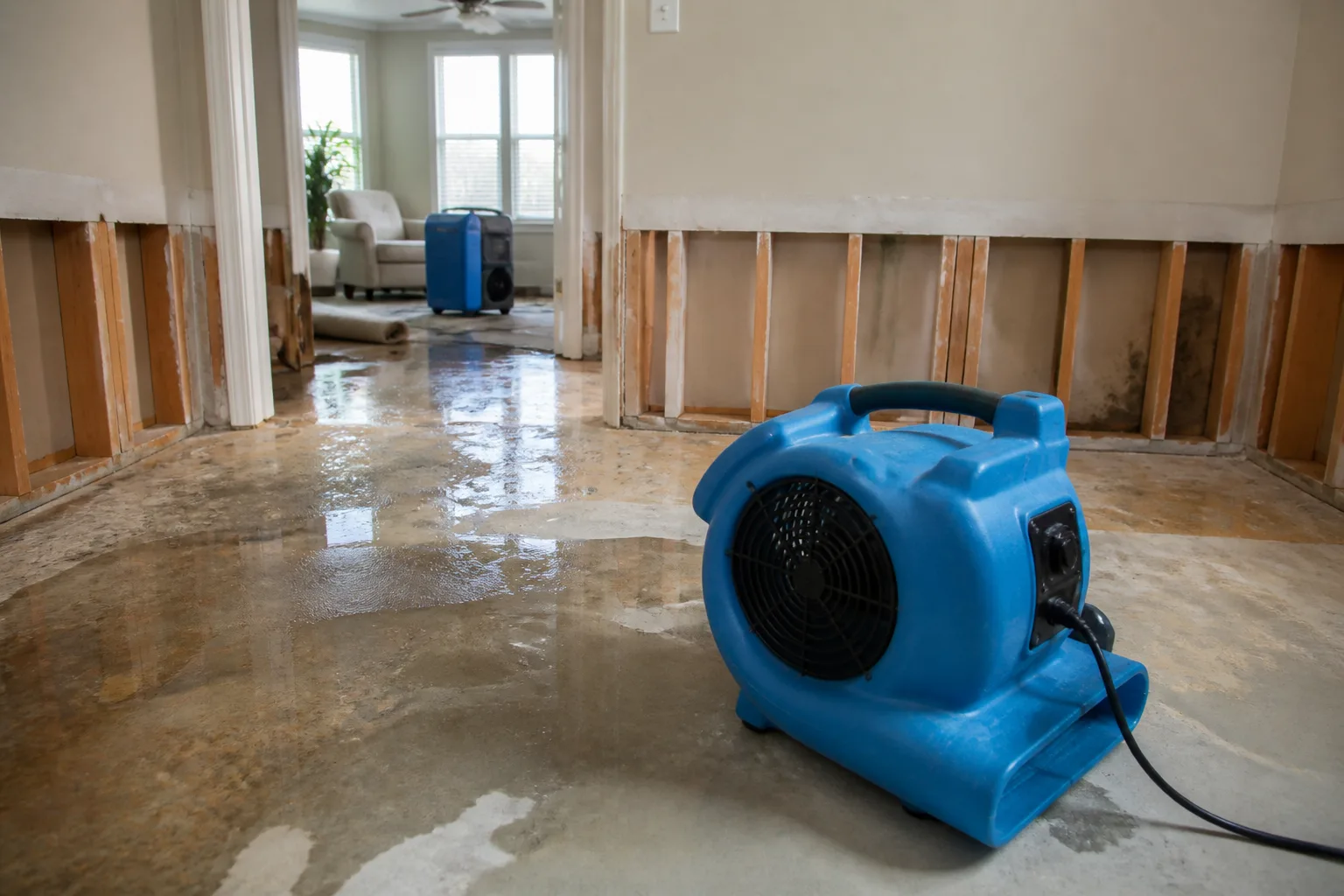
Most homeowners believe a dehumidifier pulls water out of the air and that’s the end of it. That’s true, but it misses the more important job. The real work happens inside the materials. Water that soaked into drywall, subfloor, and framing doesn’t evaporate on its own fast enough to prevent damage. A Dri-Eaz LGR 2800i creates a low-vapor-pressure environment that pulls moisture out of those materials and into the air, where the coil strips it out and drains it away. That’s the cycle: material to air to drain. When it’s staged correctly in a Secaucus finished basement, the machine runs 24 hours a day until the dry standard is met.
The distinction matters because New Jersey summers run wet. July and August in Secaucus regularly see outdoor relative humidity above 70 percent. A conventional dehumidifier, the kind you’d buy at a hardware store, loses efficiency fast in those conditions. LGR stands for Low Grain Refrigerant. Dri-Eaz LGR units are built to keep pulling moisture even when the air is already damp, which is precisely when lesser machines stall out. In a slab-on-grade ranch off County Avenue, we’ve watched conventional units plateau after 48 hours while the LGR kept dropping grains for another four days. That difference is the gap between a dry home and a mold problem.
How to Read a Dri-Eaz Moisture Log Like a Pro
Every legitimate drying job produces a moisture log. If your contractor isn’t logging daily readings, that’s a red flag. The log tracks three numbers per room: relative humidity, temperature, and specific humidity measured in grains per pound (GPP). What you want to see is grain depression, the drop in GPP from one day to the next.
Here’s what a properly drying Secaucus basement looks like on paper:
- Day one: After extraction, the room typically reads 70-90 GPP. Dri-Eaz equipment gets staged and powered on.
- Day two: GPP should drop 15-25 points. If it drops less than 10, the machines are undersized or mis-staged.
- Day three: Expect another 10-15 point drop. The air should feel noticeably drier.
- Day five to seven: The room should reach the dry standard, usually 45-55 GPP depending on the season and the materials.
One thing we see in older Secaucus homes near the Hackensack River floodplain: basements with high clay content in the surrounding soil take longer. Water wicks through the foundation walls even after the interior air is dry. A competent tech accounts for that on day one and sets expectations honestly. A less experienced crew blames the equipment when the numbers stall. The log tells the truth either way. And that written log is your protection if the insurance carrier questions whether drying was actually completed. Photo documentation plus daily GPP readings is hard to argue with.
Sizing and Staging: What a Correct Dri-Eaz Layout Looks Like
You can spot an under-equipped job before the first day ends. Professional drying follows a formula, and once you know the baseline, it’s easy to verify with your own eyes.
For a standard finished basement in Secaucus, roughly 400 to 800 square feet, a proper setup looks like this:
- One Dri-Eaz LGR 2800i per 800-1,000 square feet of affected area. Two units if the space exceeds that or if the room has high ceilings or dense finished walls.
- One air mover per 150-200 square feet of wet surface. That’s typically four to six air movers in a single basement rec room. If you see two fans and a single dehumidifier in a 600-square-foot space, someone is cutting corners.
- Dehumidifier placement at least six inches off the wall. Air has to circulate behind the unit. Pushed flush against a wall, the machine starves its own intake.
- Air movers aimed at 45 degrees toward the wet walls, not straight at the floor. The goal is turbulent airflow across the surface, not a leaf blower aimed at carpet.
We run Dri-Eaz alongside Phoenix, XPOWER, B-Air, and Injectidry equipment. The brand matters less than the setup. A Dri-Eaz unit staged wrong underperforms a conventional unit staged right. The number people miss is the air mover count. If you walk into your own basement and see one fan blowing at a wall while a dehumidifier hums in the corner, you’re looking at a job that will take twice as long. And the crew will bill you for the extra days.
Why Secaucus Housing Stock Needs Extended Drying Protocols
Secaucus isn’t a new-construction town. A lot of the single-family homes here are slab-on-grade ranches built in the 1960s and 1970s, with finished basements that sit at or below grade. Some sit close enough to the Hackensack River floodplain that groundwater pushes against foundation walls during heavy rain. That changes the drying math.
Newer construction with vapor barriers and modern drainage dries faster because the envelope is tighter and the materials are more uniform. Older Secaucus homes dry slower for three reasons. First, the concrete slab absorbs water and releases it slowly over days, not hours. Second, 50-year-old framing often has multiple layers of paint, paneling, or flooring that trap moisture between them. Third, crawl spaces under older additions tend to have poor ventilation, which keeps humidity high even when the main room is drying well.
A properly trained tech reads those conditions before staging equipment. We send background-checked, uniformed technicians certified to IICRC, RIA, and IFA standards, and they’re taught to treat every Secaucus basement as its own microclimate. A split-level over by Harmon Meadow doesn’t dry the same way a ranch off Paterson Plank Road does. If your contractor shows up, plugs in two machines, and says they’ll check back in a week, they haven’t done the assessment. The moisture map from day one determines everything that follows.
The Paperwork That Protects You When the Carrier Pushes Back
Insurance carriers don’t like paying for drying they can’t verify. That’s not cynicism; it’s how claims work. If your contractor finishes the job and hands you a bill with no documentation behind it, the adjuster has every incentive to knock down the drying line items. This is where the written moisture log becomes your best friend.
Floodline Restoration Co. has been serving Secaucus homeowners for over 42 years, and we’ve seen carriers accept drying claims without question when the file includes daily GPP readings, photo documentation from day one through completion, and a clear scope of work agreed to in writing before equipment ever gets powered on. That’s the square deal: no surprises on the bill, and the homeowner never plays messenger between us and the carrier. We bill insurance directly.
Here’s what a strong claim file looks like:
- Day one photos of the water line, affected materials, and equipment placement.
- Daily moisture readings logged with date, time, room, and GPP.
- Before-and-after photos of the same walls and floors, same angles.
- A written scope signed by you before work starts, with the dry standard stated in plain English.
If your contractor won’t provide that, you’re carrying the risk. We hand you the log and the scope, and we stand behind the result with the 90-Day Done Right Promise, in writing. If it’s not done right, we make it right. No arguing, no paperwork battles.
When to Call a Pro Instead of Watching the Dehumidifier Run
There are jobs where a homeowner can rent a couple of fans and wait it out. A small spill under a sink, caught within an hour, dried with a box fan and some elbow grease, fine. But if you’re reading a Dri-Eaz guide because water has been sitting in your Secaucus basement overnight, you’re past the rental counter stage.
Call a professional when any of these are true:
- Water touched drywall, baseboards, or finished flooring. Those materials wick moisture upward fast, and hidden pockets mean mold later.
- The water came from a sewage line or outside flooding. That’s not clean water, and drying alone won’t solve contamination.
- You can smell dampness 24 hours after the water stopped. That’s microbial activity starting, not a drying problem.
- The affected area is more than a single room. Drying a whole basement with rental equipment is slow, expensive, and rarely done right.
Sewage cleanup needs a different protocol entirely. If the water is gray or black, see our Water Damage Restoration in Secaucus page for what that involves. For mold that’s already visible or suspected, our Mold Remediation in Secaucus service handles containment and removal. And if the damage came from a fire or smoke event, Fire & Smoke Damage Restoration in Secaucus covers that process from board-up to rebuild. We’re the full-cycle team, from Floodline Restoration Co. home base here in town, and we don’t hand the job off mid-stream.
One more thing worth saying. We pulled a Dri-Eaz unit out of a garage over near the Secaucus Junction area a few months back where a homeowner had rented it from a big-box store. The machine was fine. The problem was it sat in the wrong room for four days while the water in the finished wall behind it did what water does. By the time we got there, the drywall was already showing the first signs of microbial growth. The rental cost him $400. The remediation cost him insurance’s attention. The log would have told the story sooner if there’d been one.
The Bottom Line
Dri-Eaz equipment is the industry standard for a reason. It’s built to handle the humidity loads that New Jersey summer throws at a drying job, and when it’s staged, sized, and logged correctly, it cuts days off recovery time. The catch is that the equipment is only as good as the crew running it and the documentation that comes with it. A written moisture log with daily grain depression readings is the difference between a job that’s done and a job that’s defensible to your insurance carrier. If you’re in Secaucus and you want the job done right, and backed in writing, Floodline Restoration Co. offers free estimates. Call (201) 762-0667, day or night. A live person answers.
Frequently Asked Questions
Professional drying for a standard Secaucus basement typically runs $2,500 to $5,500 depending on square footage, how long the water sat, and whether contents need cleaning. Sewage, mold, or rebuild work adds to that. Direct insurance billing means you’re not fronting the full amount while the claim processes. Call (201) 762-0667 for an exact quote. Estimates are free, and we put the scope in writing before work starts.
Most Secaucus basements reach the dry standard in three to five days with correctly sized LGR equipment. Older slab-on-grade homes near the Hackensack floodplain, or basements with finished walls and dense framing, can take seven to ten days. The moisture log tells the real story. If your contractor won’t show you daily readings, ask why.
Most homeowner policies cover sudden and accidental water damage, including professional drying, minus your deductible. The claim goes through cleanest when the contractor provides photo documentation and daily GPP logs. We bill carriers directly and coordinate with your adjuster, so you’re not stuck explaining grain depression to a claims desk. Call (201) 762-0667 and we’ll walk you through what your policy likely covers.
For anything beyond a small contained spill, yes. The Dri-Eaz LGR 2800i pulls moisture in conditions where hardware-store dehumidifiers plateau. But the equipment is only half the equation. A rented unit in the wrong room with no air movers and no moisture log won’t dry your home; it’ll just run up the days until mold starts. Professional setup, daily readings, and a written guarantee are what you’re actually paying for.
Written by Curt Bowman, Owner at Floodline Restoration Co., serving Secaucus since 2010.
Need Damage Restoration Help?
Call Floodline Restoration Co. - licensed & insured, here with fast after-hours help in Secaucus.
(201) 762-0667