
Water Damage Restoration Cost Guide: What Secaucus Homeowners Pay in 2026
Most Secaucus homeowners pay between $2,400 and $6,800 for water damage restoration in 2026, with sewage backups and finished-basement floods running higher, often $9,000 to $15,000 when rebuild work is included. The single biggest factor isn’t square footage: it’s whether you’re working with one company from extraction through rebuild, or juggling two contractors with two invoices and a gap in the middle. If you’re standing in water right now and would rather skip the math, call (201) 762-0667 and a live person will answer.
Every year we get called out to homes where a homeowner paid for “complete restoration” and ended up with a line-item invoice that skipped structural drying entirely. The walls looked fine. Six months later, the baseboards curled and the smell came back. This guide lays out what restoration actually costs in Secaucus in 2026, line by line, so you can read an invoice and know what’s there and what isn’t.
What Secaucus Homeowners Actually Pay in 2026: The Real Numbers
National averages are useless here. Hudson County labor rates run 15 to 20 percent above the national baseline, and Secaucus has its own mix of housing stock: pre-1980 townhomes with finished basements, mid-century ranches on slabs, and a growing number of newer condos near the Hackensack River. Our Floodline Restoration Co. home service area includes all of it.
Here’s what we’re billing in Secaucus right now, based on the last 18 months of jobs in town:
- Category 1 clean water (supply line, water heater): $2,400-$4,200. Extraction, drying, minor drywall cuts. Most common job we see.
- Category 2 grey water (washing machine, dishwasher overflow): $3,800-$6,500. Includes antimicrobial treatment and more aggressive material removal.
- Category 3 sewage backup: $7,000-$14,000 before rebuild. Full containment, disposal of contaminated materials, and specialized drying.
- Finished basement flood with rebuild: $11,000-$22,000. This is the full-cycle number: demo, drying, new drywall, flooring, trim.
Those numbers assume a standard 300 to 600 square foot affected area. The range exists because two jobs that look identical from the doorway can be very different once the moisture meter comes out.
The Line-Item Breakdown: What Your Invoice Should Contain
A restoration invoice isn’t a mystery document. It follows the same structure whether the contractor uses Xactimate or writes it by hand. Here’s what every legitimate water damage restoration invoice in Secaucus should include, and what it means when one of these lines is missing.
Extraction is first and it should be itemized by hour or by square foot. Professional-grade extraction with truck-mounted or portable units typically runs $150-$350 per room. If you see a single flat number with no breakdown, ask for one.
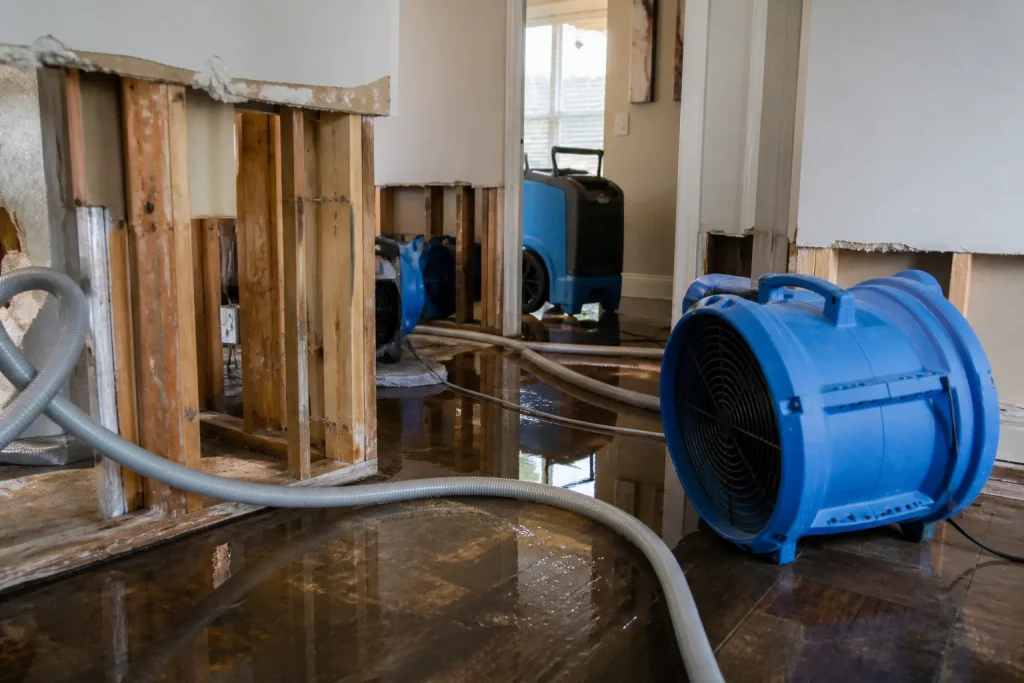
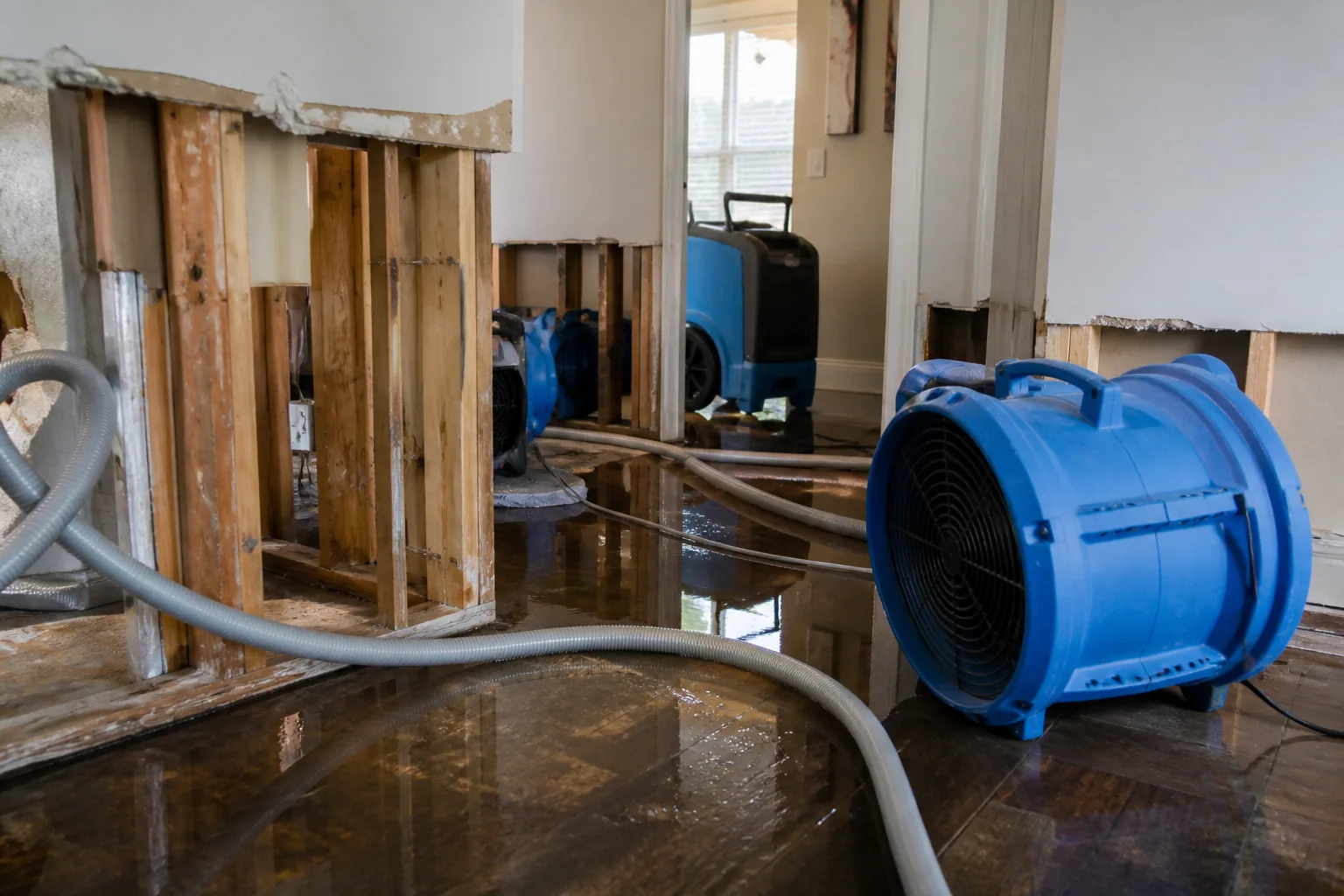
Equipment rental per diem is the line most homeowners question and the one that quietly drives up cost when drying drags on. Air movers and dehumidifiers rent at $25-$55 per unit per day. A standard basement job runs 6 to 10 air movers and 2 to 3 dehumidifiers for 3 to 5 days. Do the math: that’s $600-$1,600 just in equipment rental. We use Dri-Eaz and Phoenix dehumidifiers and XPOWER air movers because they’re faster and more reliable, which means fewer days on rent. If someone shows up with two box fans and a dehumidifier from a hardware store, they’re not drying anything. They’re guessing.
Antimicrobial treatment should always appear on Category 2 and Category 3 jobs, typically $200-$500 depending on area. Missing line item, corner cut.
Demolition covers cutting wet drywall, pulling carpet, removing baseboards. In Secaucus, figure $3-$6 per square foot of removed material, with disposal included. Pre-1980 townhomes sometimes double this number because we’re cutting through plaster and lath, not drywall.
Structural drying is the line that separates professionals from extraction crews. This is the monitoring, the daily moisture readings, the repositioning of equipment as drying fronts move. It’s priced as monitoring visits, usually $150-$275 per visit, with 3 to 5 visits on a typical job. When a company skips this or charges for it but can’t produce a moisture log, the invoice is inflated in the other direction: drying stopped too early, and you’ll pay for the mold later.
Rebuild is the biggest variable. Drywall replacement in Secaucus runs $75-$110 per sheet installed and finished. Flooring replacement depends on material: vinyl plank $3-$7 per square foot including install, engineered hardwood $8-$14, tile $12-$20. Trim, paint, and door adjustments add up fast.
The 18-23% Problem: Why Splitting Mitigation and Rebuild Costs More
Here’s the thing most cost guides won’t tell you. The average Secaucus homeowner who hires one company for water mitigation and a different company for reconstruction pays 18 to 23 percent more in total out-of-pocket costs than someone who uses a single full-cycle company. Not because the rates are higher. Because of how split jobs actually work.
A mitigation company that doesn’t rebuild has no incentive to write a complete scope. They dry what’s wet and leave. The rebuild contractor shows up, finds damage behind the drywall or under the floor that the first crew never documented. Now you’re filing a supplemental insurance claim. The insurer denies it because the damage wasn’t in the original scope. You’re left holding the difference.
Then there’s duplicate mobilization. Two companies, two trips, two sets of equipment delivery fees, two project managers. That alone is $500-$900 duplicated. Add the scope gaps and you’re past 18 percent without anyone overcharging you once.
We handle Water Damage Restoration in Secaucus from the first extraction to the last coat of paint with the same crew. The moisture map from day one is the same map we use for rebuild. Nothing gets lost between contractors because there’s no handoff. One scope, written in full, submitted to the insurer, and agreed to before we start swinging hammers.
How Insurance and Xactimate Actually Work in Secaucus
Insurance adjusters use Xactimate, a pricing database that calculates restoration costs based on local zip code data. The problem is that Xactimate’s baseline rates lag behind real Hudson County market prices by 8 to 12 percent. A contractor who doesn’t bill carriers directly has no leverage here. They write an estimate, the carrier pays what Xactimate says, and the homeowner gets a check that doesn’t cover the actual bill.
We bill the carrier directly, and we’re in Mold Remediation in Secaucus territory when a water job has sat too long. Direct billing changes the conversation. We argue line items in Xactimate language, we document everything with photos and moisture logs, and the check goes where it’s needed: to the company doing the work. You’re not playing messenger between an adjuster and a contractor. We’ve spent 42 years in these communities, founded in 2010 with a dispatch board and not a sales desk. The phone rings, a real person answers, and the job gets scheduled. That’s how it should work when your basement is full of water at 2 a.m.
For water damage specifically, speed is the wildcard in the insurance math. The faster extraction starts, the smaller the claim, the fewer supplements, the less you fight. When a single company handles the full cycle, documentation is continuous. No gaps between mitigation and rebuild means nothing for the insurer to question. If you’ve got a fire situation, our Fire & Smoke Damage Restoration in Secaucus service runs on the same principle: photographic evidence, direct carrier billing, and a written scope.
The Hidden Cost of Waiting: What 24 Hours Does to Your Bill
Every 24 hours of standing water pushes a job toward a worse category and a bigger invoice. It’s not linear. It jumps.
Hour 0-24: Clean water from a supply line soaks into drywall, wicks up insulation, saturates carpet pad. This is Category 1. Restoration: $2,400-$4,200.
Hour 24-48: Bacteria start multiplying. The water has now been sitting long enough that contaminants from the surrounding materials have leached in. This is functionally Category 2. Restoration: $3,800-$6,500. That’s an $800 to $2,300 jump, and the difference is just one day of waiting.
Hour 48+: Depending on the source and the room, you’re entering Category 3 territory. Sewage, standing grey water, or anything that’s been soaking through old carpet pad into a subfloor. Restoration: $7,000 and up, plus more demolition, plus more time.
We pulled one out of a garage over near Harmon Meadow last month where a water heater had been leaking for three days before the homeowner noticed. By the time we got there, the bottom two feet of drywall had wicked moisture up into the insulation, and the concrete was holding a half-inch of water at the low spot. What would have been a $2,800 extraction and dry became a $7,400 job with full drywall replacement. The homeowner was apologetic, like he’d failed by not catching it. He hadn’t. Nobody watches their water heater around the clock. But it’s exactly why we push same-visit extraction when someone calls: the clock is the most expensive line item on the invoice.
In Secaucus specifically, finished basements make this worse. Most of the basements in the Pleasant View and North End neighborhoods are finished living space: sheetrock walls, carpet or laminate, electrical run through the studs. A flood there isn’t just water in an unfinished concrete box. It’s water inside wall cavities, under flooring, behind baseboards. The hidden cost of waiting multiplies because there are more materials to saturate.
Secaucus has another factor: older cast-iron drain stacks in pre-1980 townhomes. Cast iron corrodes from the inside. A slow leak behind a wall can go undetected for weeks, not days, and by the time it shows as a stain on the ceiling, the damage is already Category 2. We’ve seen cast-iron stacks in Secaucus townhomes where the pipe had rusted through in a dozen pinhole spots, feeding moisture into the wall cavity for a month. That’s a $400 plumbing fix that turned into a $6,000 restoration because no one caught it early. If you own a pre-1980 townhome in Secaucus, have your cast-iron drains inspected during the next plumbing visit. It’s the cheapest water damage prevention you’ll ever buy.
Secaucus-Specific Risk Factors That Change the Baseline
Proximity to the Hackensack River does more than raise flood insurance premiums. Groundwater pressure in the neighborhoods nearest the river pushes moisture up through slabs and foundation walls, especially after heavy rain. A basement that “just feels damp” near the river isn’t a humidity problem. It’s hydrostatic pressure. That’s why we use Injectidry systems for slab and sub-surface drying on river-adjacent properties, and why structural drying in those homes takes longer than the national average. More drying days means more equipment rental, which is a cost specific to this geography.
Pre-1980 townhomes have the cast-iron issue plus another problem: plaster and lath walls. When those walls get wet, demolition is slower, disposal is heavier, and repair requires a plasterer, not just a drywall crew. Expect a 20 to 30 percent premium on rebuild for pre-1980 plaster work in Secaucus.
Finished basements we already covered. They’re prevalent in Secaucus because the town’s housing stock runs older and homeowners maximize usable square footage. The finished basement isn’t a cost factor by itself. It becomes one when combined with river proximity or old drain stacks, because the water gets into more materials faster and hides longer.
When to Call a Pro Instead of Reading Another Guide
If the water is from a supply line, covers an area smaller than a bathroom, and you caught it within a few hours, you might handle extraction yourself with a wet vac and fans. Maybe. But if any of these apply, stop reading and call:
- The water has been sitting more than 24 hours
- The source is a sewage line, dishwasher, or washing machine (Category 2 or 3)
- The water reached drywall, baseboards, or any finished surface
- You smell anything musty, sour, or “wet dog”
- You have a finished basement or a pre-1980 home with cast-iron drains
In any of those cases, call (201) 762-0667. A live dispatcher answers at any hour, every day. We’ll get a certified technician to your door, assess the damage, and put extraction equipment in motion on the same visit. Our technicians are background-checked, uniformed, and trained to IICRC, RIA, and IFA standards. Every job is backed by the 90-Day Done Right Promise, which we call the Keystone Standard: if it’s not done right, we make it right, in writing, no arguing.
Current standing offers that apply to any water damage job: $50 off any repair over $250, the $89 Seasonal Tune-Up, and a 5% Senior & Veteran discount, always.
The Bottom Line
Water damage restoration in Secaucus costs what it costs because of the water’s category, the materials it reached, and how long it sat. Clean water caught fast: $2,400-$4,200. Grey water or a day of delay: $3,800-$6,500. Sewage: $7,000-$14,000. Finished basement rebuilds: $11,000-$22,000. The single biggest cost driver you can control is speed, and the second biggest is whether you’re paying one company or two. Split contracts add 18 to 23 percent on average through duplicate mobilization, scope gaps, and denied supplements. Direct carrier billing and a single full-cycle provider close that gap.
If you’re in Secaucus and you need help, Water Damage Restoration in Secaucus is what we do every day. Floodline Restoration Co. offers free estimates. Call (201) 762-0667 and talk to a real person.
Frequently Asked Questions
How much does water damage restoration cost in Secaucus in 2026?
Most Secaucus homeowners pay $2,400 to $6,800 for typical water damage restoration, with sewage backups and finished-basement rebuilds running $9,000 to $15,000 or more. The cost depends on the water category, how long it sat, and what materials it reached. Call (201) 762-0667 for a free, specific estimate.
Will my insurance cover water damage restoration?
Most homeowners policies cover sudden and accidental water damage, like a burst supply line or water heater failure. Gradual leaks, sewer backups, and flood water from outside are often excluded unless you have specific endorsements. A contractor who bills the carrier directly and documents everything with photos and moisture logs makes approval far more likely. Call (201) 762-0667 and we’ll walk through your policy with you.
How fast can someone actually get here?
If you call Floodline Restoration Co. at (201) 762-0667, a live dispatcher answers immediately, day or night. We schedule a certified technician to reach your home as fast as logistics allow, and extraction equipment starts running on the same visit. Speed is the line item that saves you money on every water damage invoice.
Do I really need full restoration, or can I just dry it out with fans?
If water reached drywall, baseboards, carpet pad, or any finished surface, fans won’t cut it. Moisture inside wall cavities and under flooring keeps spreading until the dry standard is met with professional equipment and daily moisture readings. Without that, you’ll be paying for mold remediation in six months. If you’re unsure, call (201) 762-0667 and we’ll assess it honestly, no pressure either way.
Written by Curt Bowman, Owner at Floodline Restoration Co., serving Secaucus since 2010.
Need Damage Restoration Help?
Call Floodline Restoration Co. - licensed & insured, available 24/7 in Secaucus.
(201) 762-0667