
Last updated August 25, 2026
Free visual inspection and a written scope of work before any mitigation begins - photos, moisture readings, and drying logs go in your claim file
The scope we write is the scope we bill. Anything new gets shown to you, in writing, before we touch it.

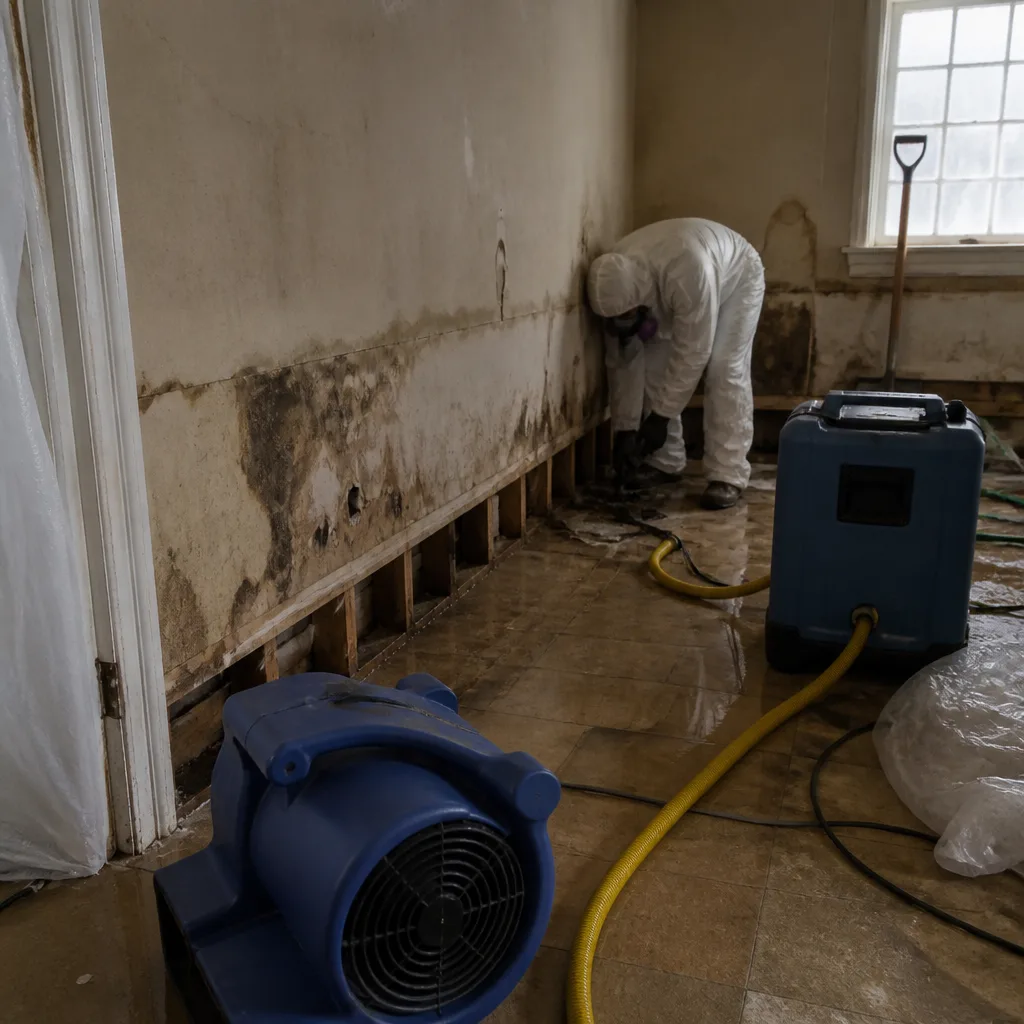 Before
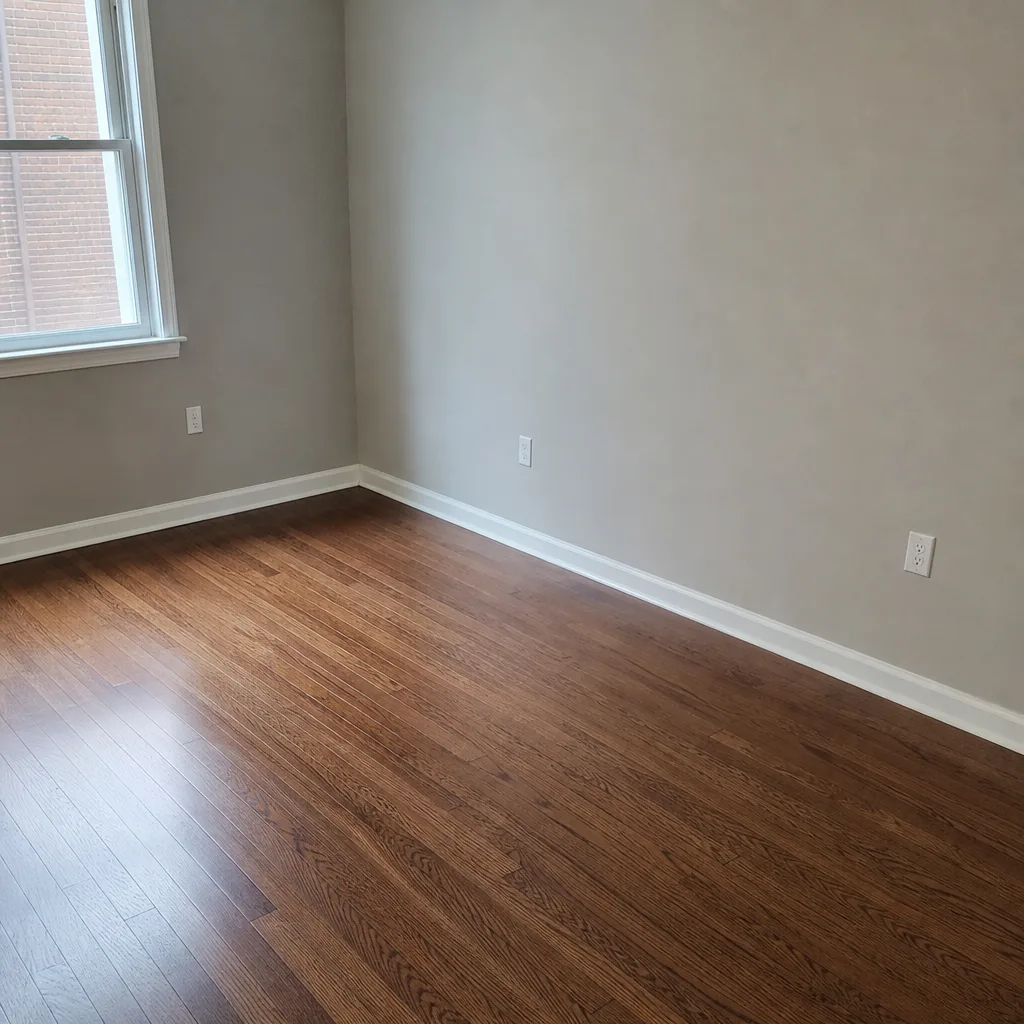 After
After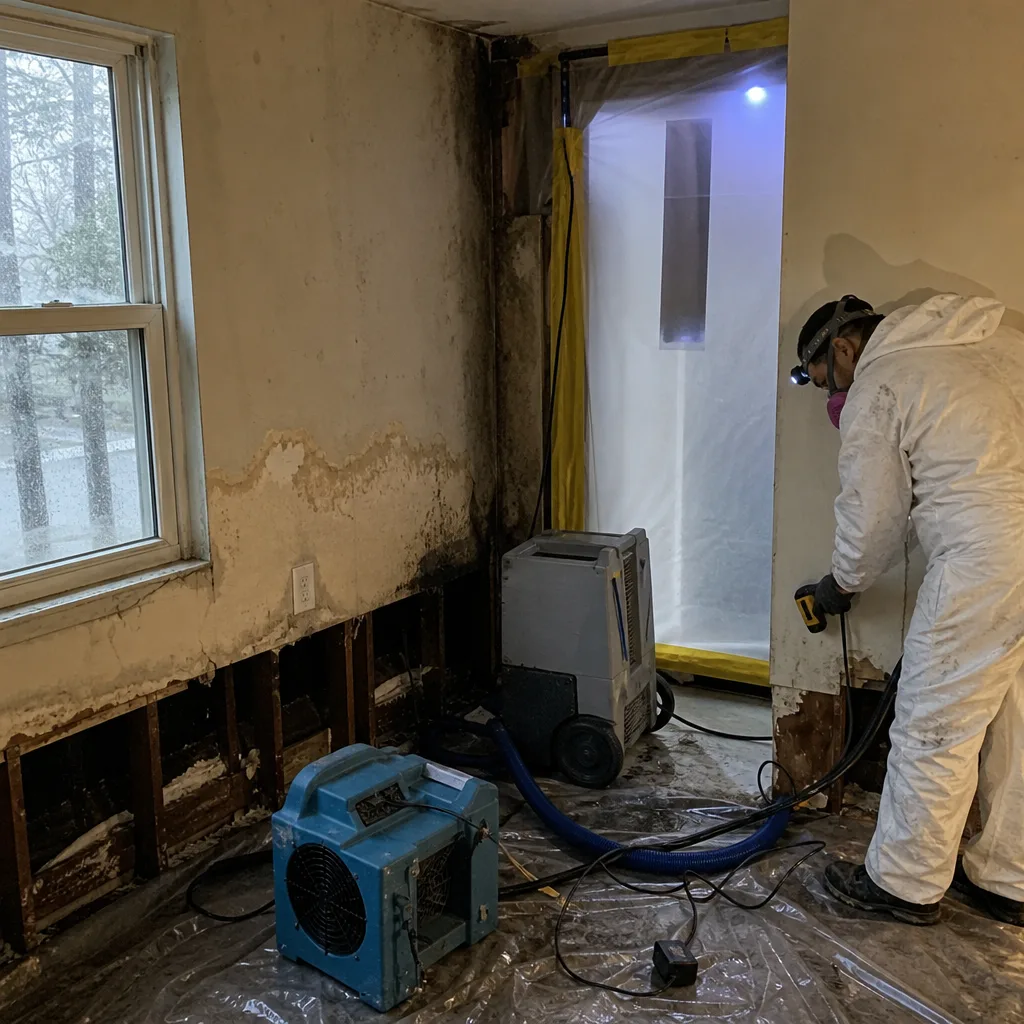 Before
 After
After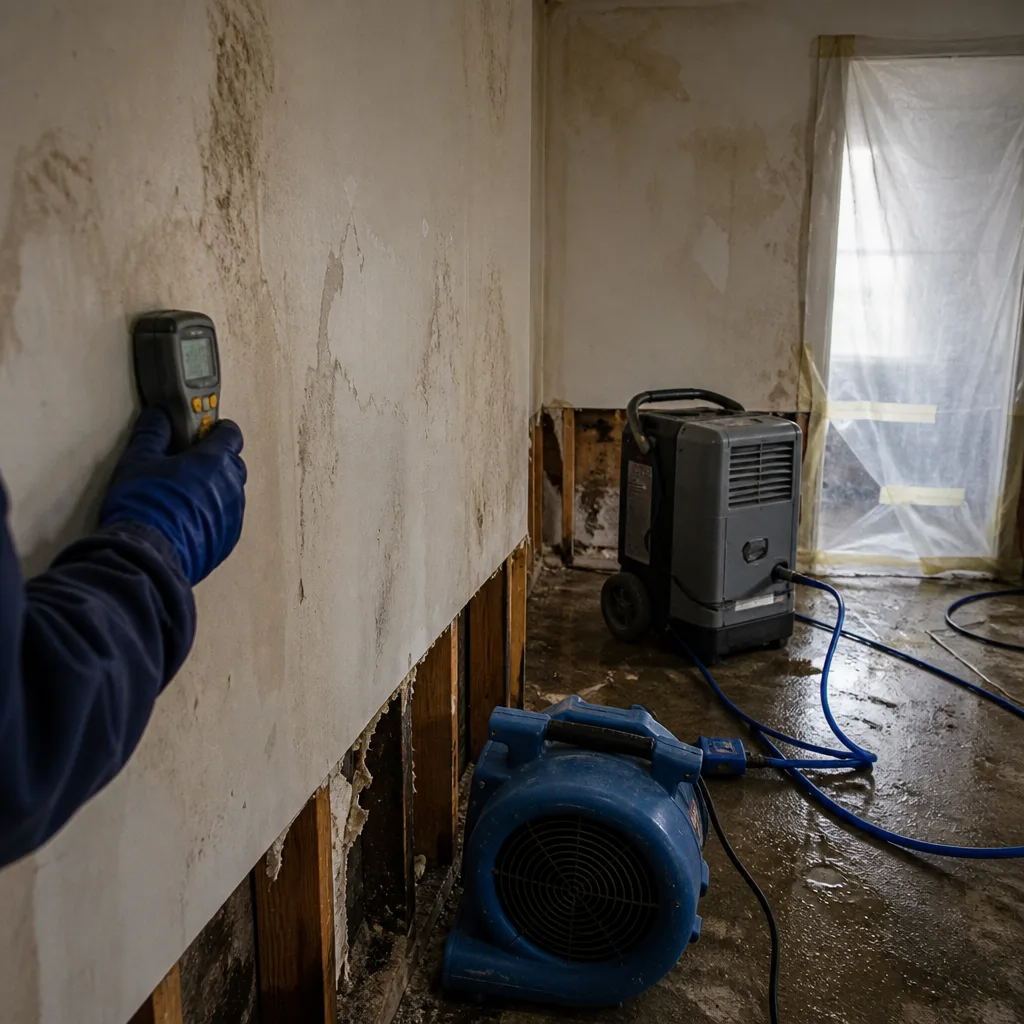 Before
 After
AfterDamage Restoration Cost Breakdown: The Secaucus Homeowner’s Reference for 2026
Here’s the number most Secaucus homeowners never hear until the bill arrives: a Category 3 water loss in a finished Meadowlands-area basement runs $7 to $12 per square foot when extraction, drying, and rebuild are all included. The national average sits closer to $3.70. Why the gap? Secaucus sits four feet above sea level on former tidal marsh, which means a high water table, slow natural drying, and building codes written around flood resilience. This guide walks through real 2026 cost figures for water, fire, mold, sewage, and storm damage in Secaucus, line by line, so you can read an estimate without squinting. You’ll learn what drives pricing, what insurance typically covers, which mistakes cost homeowners thousands, and when a restoration bill is actually a bargain.
Quick Answer
Full-cycle damage restoration in Secaucus typically costs $3,500 to $18,000 depending on the source, square footage, and whether structural rebuild is required. Simple water mitigation (extraction, drying, baseboard pull, no rebuild) on a 500-square-foot finished basement runs $2,800 to $6,500. Fire and smoke restoration pushes higher, $8,000 to $30,000. The single largest cost variable in Secaucus is whether the job stops at mitigation or continues through rebuild with the same crew, because every handoff between companies tacks on 15 to 25 percent in double-handled labor and re-scoped work.
Table of Contents
- Water Damage Restoration: What Secaucus Homeowners Actually Pay
- Mold Remediation in Secaucus: Cost Factors Most Estimates Leave Out
- Fire and Smoke Damage: The Most Expensive Restoration, Explained
- Sewage Cleanup and Biohazard: The Category That Cannot Wait
- Storm and Disaster Restoration: The Meadowlands Factor
- Who Pays: Insurance, Out-of-Pocket, and the Direct-Billing Difference
- Rebuild vs. Mitigation: Where the Real Cost Hides
- Common Mistakes to Avoid
- When to Call a Professional
- Frequently Asked Questions
- The Bottom Line
Water Damage Restoration: What Secaucus Homeowners Actually Pay
Water damage restoration in Secaucus falls into three price bands. The band you land in depends on the water’s source, not the water’s volume. Clean water from a burst supply line is the least expensive to mitigate at $3.50 to $5.50 per square foot. Gray water from a washing machine overflow or dishwasher leak runs $5 to $8 per square foot because it requires antimicrobial treatment. Black water, the Category 3 classification for sewage, river water, or any water that has sat more than 72 hours, starts at $8 per square foot and climbs past $12 when the water has wicked into drywall and framing.
Line-by-line cost table for a typical 500-square-foot Secaucus finished basement
- Emergency extraction and haul-off: $900-$1,400 (includes pump-out, wet material removal, and disposal fees)
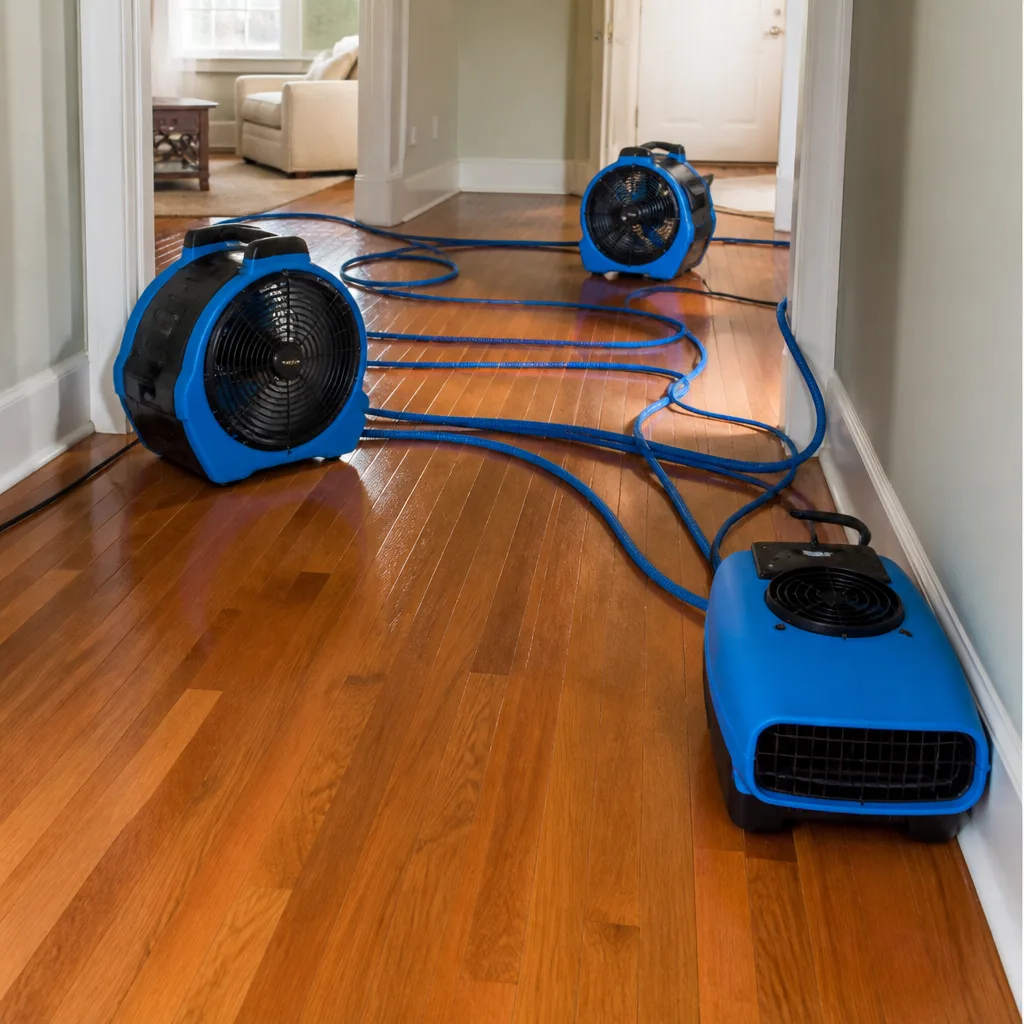
- Structural drying (5-7 days): $1,200-$2,200 (professional-grade dehumidifiers and air movers, daily moisture readings)
- Baseboard and drywall removal (2-foot flood cut): $700-$1,100
- Antimicrobial and odor treatment: $250-$500
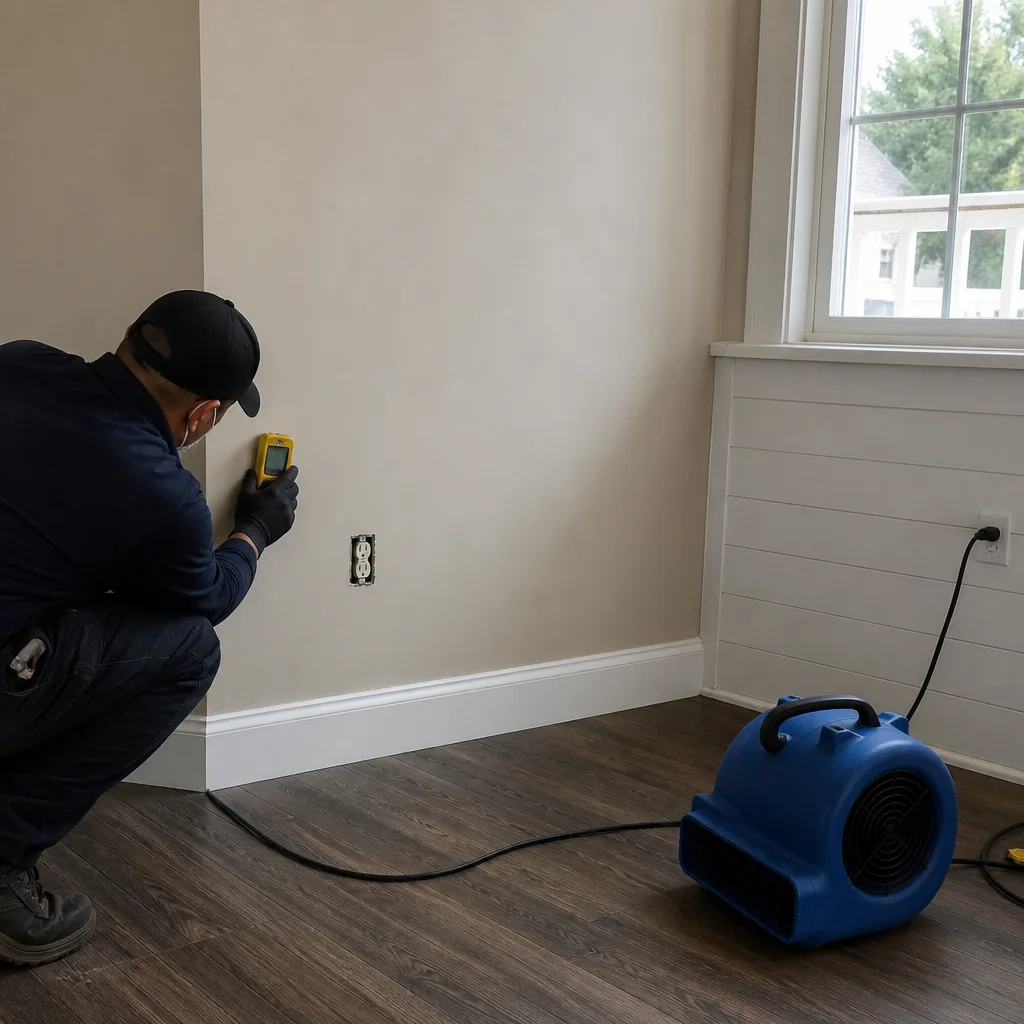
- Moisture mapping and documentation: $300-$600 (the log your insurer will ask for)
- Rebuild (insulation, drywall, paint, baseboard): $1,800-$3,800
Total restoration on that basement runs $5,150 to $9,600 when done start to finish by one crew. Compare that to the mitigation-only bill plus a separate contractor for rebuild, and you’re looking at $6,500 to $11,500, plus you’re coordinating schedules, liasing with the adjuster, and eating the gap between the mitigation company’s “we’re done” and the rebuild company’s “we can start next month.” In Secaucus, where humid summers stretch drying times, that gap is where secondary mold problems start. Every week a basement sits open, the odds of a secondary claim rise.
Mold Remediation in Secaucus: Cost Factors Most Estimates Leave Out
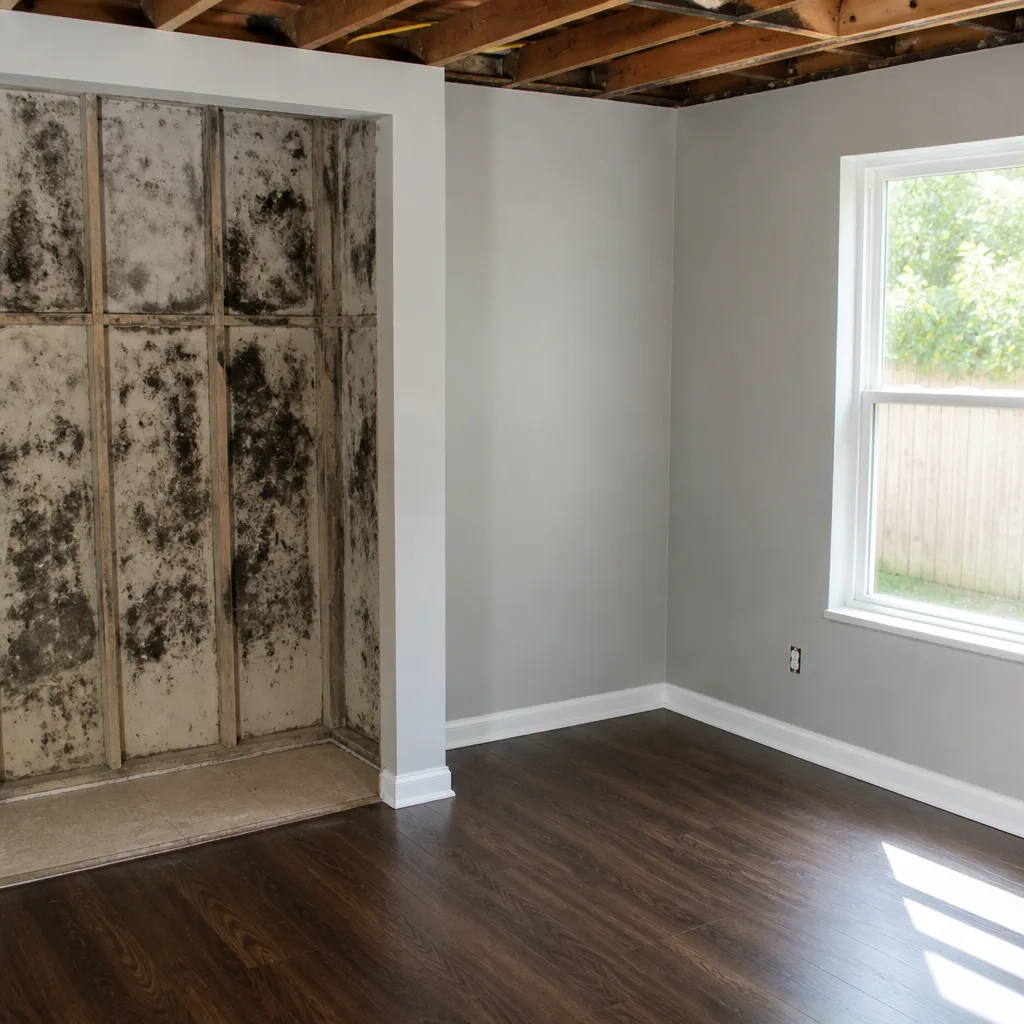
Mold remediation in Secaucus averages $2,200 to $6,800 for a contained area under 100 square feet. Whole-basement remediation runs $8,000 to $25,000. The national range is wider than nearly any other restoration category because the scope depends on three variables: the mold species, the depth of penetrative growth, and whether the moisture source that fed the mold is still active. In Secaucus, that third variable has an outsized effect. A high water table in the Meadowlands means basement slab moisture is a chronic condition, not a one-time event. If the mold grew because of a foundation leak that was patched but never waterproofed from the exterior, remediation without addressing the moisture source means the mold returns. A real remediation estimate in Secaucus should always answer one question in writing: what stopped the water, and what proof exists?
What a professional mold remediation includes
- Containment: $400-$1,200 for negative air, polyethylene barriers, and HEPA filtration setup
- HEPA vacuuming and surface treatment: $500-$1,500 depending on affected area
- Porous material removal: $3-$6 per square foot for drywall, carpet, and insulation that cannot be cleaned
- Moisture source correction: $300-$3,000 depending on whether it is a simple pipe repair or slab treatment
- Post-remediation clearance testing: $400-$900 by a third-party industrial hygienist
Skip the clearance test, and you will not know whether the remediation worked until the musty smell returns. Skip the moisture source correction, and the mold absolutely will return, often within six months. In our experience across Secaucus, the clearest pattern in mold callbacks is not failed chemicals; it is an uncorrected water source. A $300 gutter repair is the cheapest mold remediation you will ever buy.
Fire and Smoke Damage: The Most Expensive Restoration, Explained
Fire and smoke restoration in Secaucus runs $8,000 to $30,000 for a contained kitchen fire and climbs past $60,000 for multi-room damage. The number surprises people who only see the burn mark on the wall and think “repaint and move on.” Smoke is a structural problem, not a surface problem. It penetrates every porous material in the house, which in most Secaucus homes means drywall, carpet, upholstery, clothing, and insulation. Restoring smoke damage means cleaning or replacing all of it, not just the room where the fire started.
Five steps in a professional fire restoration job
- Board-up and emergency stabilization: $1,500-$4,000. If the fire department opened the roof or broke windows, the house is exposed. Securing it prevents water and theft damage.
- Soot and smoke residue assessment: $500-$1,200. A professional determines how far smoke traveled through the HVAC system and wall cavities.
- Contents pack-out and cleaning: $2,000-$8,000. Belongings that can be saved are cleaned off-site. An ultrasonic cleaning station for hard goods costs less than a full contents loss, but someone has to pack, inventory, and document every item for the carrier.
- Structural cleaning and seal-coating: $3,000-$12,000. Soot is chemically reactive and will bleed through paint without a specialized sealant. This is the step DIY attempts miss, and it is the step that determines whether the smoke smell returns.
- Rebuild and finish work: $2,000-$15,000 depending on cabinetry, flooring, and drywall replacement.
In Secaucus multi-family buildings, which account for a meaningful share of local fire claims, shared walls complicate the job. Smoke travels through adjoining units, and restoration often requires coordination with the building’s management and neighboring owners. A restoration company that knows Secaucus building stock has seen these jobs before. A general handyman has not, and the difference shows up in re-opened walls and lingering odor complaints.
Sewage Cleanup and Biohazard: The Category That Cannot Wait
Sewage cleanup in Secaucus costs $4,000 to $12,000 for a standard basement backup and runs higher when the contamination reaches behind finished walls. This is the one restoration category where there is no partial response. Category 3 water is defined by what it carries: bacteria, viruses, and parasites that survive on surfaces for weeks. Anything porous that sewage touches gets removed. Anything non-porous gets disinfected, and the disinfectant matters less than the surface preparation. Concrete, which is everywhere in Secaucus basements, is porous. It requires cleaning, followed by an antimicrobial, followed by drying to a specific moisture standard before anyone re-carpets it.
Safety note: sewage cleanup is not a DIY job. The health risks from contact with contaminated water include hepatitis, E. coli, and gastrointestinal infections, and the protective equipment required is professional-grade. A trained restoration team uses full PPE, containment, and specialized disinfectants. If a contractor shows up in jeans and work boots without a respirator or gloves, send them home.
What a sewage cleanup job includes
- Containment and safety assessment: $600-$1,200
- Sewage extraction and contaminated material removal: $1,500-$4,000
- Structural drying to IICRC standards: $1,000-$2,500
- Disinfection and odor neutralization: $400-$900
- Documentation for the insurance carrier: Part of our process, included in the scope
The documented moisture log matters here more than anywhere else. An insurance adjuster who sees daily readings, photo documentation, and a clear scope of removed materials is far less likely to challenge the claim. What you do not want is a verbal “we cleaned it” with no record. Secaucus homeowners tell us the same thing every week: the adjuster asked for proof, and the previous contractor had none to give.
Storm and Disaster Restoration: The Meadowlands Factor
Storm restoration in Secaucus carries costs that vary wildly by event: $5,000 to $40,000 depending on whether you are dealing with wind-driven roof damage, floodwater intrusion, or both. What is consistent is the pattern. Storm damage in Secaucus tends to be widespread, which means restoration crews are booked out region-wide in the days after a big event. A homeowner who waits to call pays two costs: the damage spreads, and the schedule fills. The homeowners who get same-visit extraction and drying are the ones who called while the storm was still coming down, not the ones who called three days later when the carpet started to smell.
For this page, the practical reference is the floodline itself. The water leaves a mark on the wall. That mark is the starting line for the restoration work, and it is also the documentation your flood insurance carrier will ask about. Photograph the floodline before anyone touches anything. Then measure it. Then save the photos somewhere other than the phone that might end up dropped in the floodwater. In Secaucus, where the Hackensack River and its tributaries define the eastern and southern borders of town, flood claims are a recurring fact of life. Homes in the Harmon Cove and Mill Creek areas face the most direct exposure, but the high water table reaches every basement in town.
Storm restoration priority order
- Stop the water entry: tarp, board-up, or emergency pump-down ($800-$3,000)
- Extract standing water immediately: $900-$2,500 depending on volume and access
- Remove saturated porous materials: $1,000-$3,500 (carpet, pad, drywall in contact with floodwater)
- Dry to standard: $1,200-$4,000 with professional-grade equipment and daily readings
- Document everything for the claim: included in scope from a company that bills carriers directly
- Rebuild to flood-resilient standard: $2,000-$18,000 (the cost variation depends on whether you rebuild with standard materials or upgraded flood-resistant options)
Who Pays: Insurance, Out-of-Pocket, and the Direct-Billing Difference
Most Secaucus homeowners carry a standard homeowners policy that covers sudden and accidental water damage, fire, wind, and, with a separate endorsement, sewer backup. Flood insurance is a separate policy, typically through the National Flood Insurance Program or a private carrier, and Secaucus property owners in designated flood zones are often required to carry it. Here is where the restoration bill gets complicated: the deductible, the coverage limit, and the documentation all affect how much comes out of your pocket.
Typical coverage by damage type
- Burst pipe and appliance failure: covered by standard homeowners, minus deductible of $1,000-$2,500
- Washer hose leak (sudden, not slow): covered
- Slow leak over months (evidence of neglect): typically denied
- Sewer backup: covered only with an endorsement, typically $10,000-$25,000 in coverage
- Floodwater from the river or storm surge: covered by flood insurance, not standard homeowners
- Mold remediation: covered when it results from a covered water loss; denied when the mold is pre-existing or the result of long-term moisture
- Fire and smoke: covered, with smoke damage to contents included under personal property coverage
The direct-billing difference is worth understanding. When a restoration company bills the carrier directly, the homeowner never fronts the full cost and waits for reimbursement. The company works from the same scope and documentation the adjuster sees, which means fewer disputes and a faster claim. It does not mean the homeowner is out of the loop. It means the homeowner is not the messenger between the crew and the carrier. At Floodline Restoration Co. home, direct insurance billing is part of how we work, and we hand the homeowner the same photo documentation and moisture log the carrier receives. No hidden second version.
Rebuild vs. Mitigation: Where the Real Cost Hides
The single largest source of surprise on a restoration bill is the difference between mitigation and rebuild, and the handoff that happens when one company does the first and a different company does the second. Mitigation is the emergency work: extraction, drying, material removal, antimicrobial treatment. Rebuild is everything after: drywall, insulation, paint, trim, flooring, cabinetry. A mitigation-only company stops when the area reads dry. A rebuild company starts with a new work order, a new estimate, and a new schedule.
In Secaucus, where the same contractor pool serves multiple restoration companies, the handoff is where weeks turn into months. Homeowners in the interim are living in a partially stripped basement, managing two billing streams, and answering questions from an adjuster who wants to know why the rebuild scope includes work the mitigation company already documented differently. The full-cycle approach avoids this. One company, one scope, one written estimate that covers extraction through the last coat of paint. The homeowner gets a single point of accountability, and the carrier gets a single documentation package. The cost is often lower than the two-contractor path because no one is re-scoping work, and no one is paying for two mobilizations.
On rebuild work, here is what we tell Secaucus homeowners: this phase is scoped, scheduled, and priced in writing, like a remodel. It is not an emergency dispatch. The urgency belongs to the mitigation phase, where water is still moving and the clock is running. Once the structure is dry and the scope is agreed, the rebuild should be methodical, permitted where required, and done to the standard of the rest of the house, not to the standard of “good enough for the insurance check.”
Common Mistakes to Avoid
- Waiting to call after water damage. Every hour of standing water in a Secaucus basement increases the chance of secondary mold and wicks moisture higher into drywall. The same-visit extraction call is always cheaper than the five-day cleanup call.
- Taking the adjuster’s first number without documentation. A photo log, daily moisture readings, and a written scope are what turn a denied claim into a paid one. If your contractor cannot provide these, the carrier has every reason to challenge the bill.
- Hiring mitigation in a panic, then figuring out rebuild later. The cheapest mitigation bid often becomes the most expensive total job when the rebuild contractor discovers what the mitigation crew left behind. Get one scope for the whole job before anyone starts.
- Using a shop vac for sewage. Do not. The contamination risk in Category 3 water is not worth it, and a shop vac disperses contaminated particles into the air. This is a job for professionals with containment and PPE.
- Assuming homeowners insurance covers “flooding.” In Secaucus, the distinction between a sewer backup and a flood is a policy line that costs homeowners thousands. Read the policy before the water rises, not after.
- Painting over a water stain to hide it from the adjuster. The stain is evidence. Painting over it is the fastest way to turn a covered claim into a denied one, and it does not stop the moisture behind the wall.
- Skipping the moisture source correction on a mold job. Killing mold without fixing the leak or the slab moisture is a temporary fix with a permanent price tag. The mold returns, and the second remediation costs more because the first company now has to re-contain and re-test.
When to Call a Professional
Call a professional restoration company the moment standing water is more than a mop’s worth, any time sewage is involved, any time a fire has left smoke residue beyond the room of origin, and any time mold covers more than 10 square feet. The threshold is not “can I handle this” but “what happens if I get it wrong.” In Secaucus, getting it wrong means a basement that stays damp, a musty smell that never leaves, and a resale price that reflects both. Floodline Restoration Co. offers free estimates in Secaucus. Call (201) 762-0667, day or night, and a live dispatcher will answer. No recording, no callback list, no “someone will get back to you by Tuesday.”
Frequently Asked Questions
Water damage restoration in Secaucus runs $3,500 to $9,600 for a typical finished basement, which breaks down to $3.50 to $12 per square foot depending on the water category and whether rebuild is included. The range is wider than the national average due to Secaucus’s high water table and the drying time it adds to every job. For an exact quote on your specific loss, call (201) 762-0667; estimates are free.
Insurance covers sudden and accidental water damage, fire, and wind under a standard homeowners policy, sewer backup only with an endorsement, and flooding only under a separate flood policy. Slow leaks, pre-existing mold, and neglect-based damage are typically denied. The strongest predictor of a paid claim is documentation: photos, daily moisture logs, and a written scope. Floodline Restoration Co. documents every job to the IICRC standard and bills carriers directly so adjusters see the same facts the homeowner sees.
A crew from Floodline Restoration Co. can reach most Secaucus addresses within an hour of your call, and we answer the phone with a live dispatcher 24 hours a day, 7 days a week. The goal on any water or sewage job is extraction running the same visit. The first call should be the minute you notice the water, not after the weekend.
If the water came from a clean source, stopped quickly, and never touched drywall or carpet, a professional-grade surface cleaning may be enough. If the water was gray or black, sat for more than 72 hours, or wicked into porous materials, full remediation is the only safe answer. In Secaucus’s humid climate, a “cleaned” basement that never achieved the dry standard will be a mold claim within six months.
With Floodline Restoration Co., you deal with your adjuster as much or as little as you want. We provide the documentation, the moisture log, the photo record, and the written scope. We bill the carrier directly. You are never the courier between our crew and the insurance company, and you never have to translate construction language into insurance language. That work is part of the job.
The 90-Day Done Right Promise, our Keystone Standard, means that if the work is not done right, we make it right within 90 days, in writing, with no paperwork battles and no arguing. It applies to the entire scope, from extraction through rebuild, and it is the reason we document every job to the standard the carrier expects. The line the water left is where we start, and we stand behind everything we do until the last coat of paint dries.
The Bottom Line
Damage restoration in Secaucus costs between $3,500 and $18,000 on average, with the range set by water category, square footage, and whether rebuild is part of the scope. The homeowners who get the best outcome call early, insist on documentation, and keep the whole job with one accountable company rather than splitting mitigation from rebuild. In a town where the water table is four feet down and the river is a neighbor, “dry enough” is not a standard. It is either dry to the number on the moisture meter, or it is not. Done right and backed in writing is the only way to buy restoration work. Floodline Restoration Co. serves Secaucus 24 hours a day with live dispatch, direct insurance billing, and the 90-Day Done Right Promise on every job. Call (201) 762-0667 for a free estimate, and ask for the written scope before anyone starts. A square deal means no surprises on the bill, and that is the only kind of deal we write.
Written by Curt Bowman, Owner at Floodline Restoration Co., serving Secaucus since 2010.