
Last updated August 25, 2026
Free visual inspection and a written scope of work before any mitigation begins - photos, moisture readings, and drying logs go in your claim file
The scope we write is the scope we bill. Anything new gets shown to you, in writing, before we touch it.



 Before
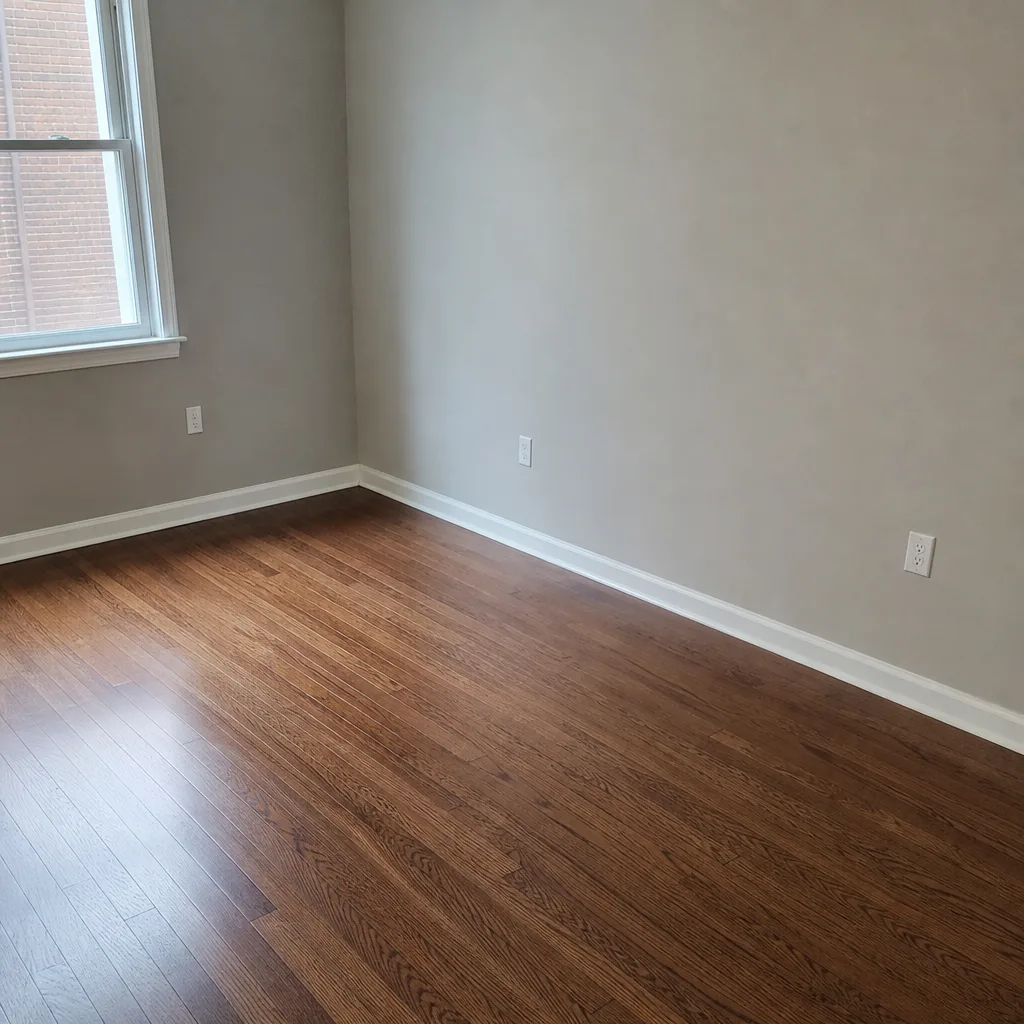 After
After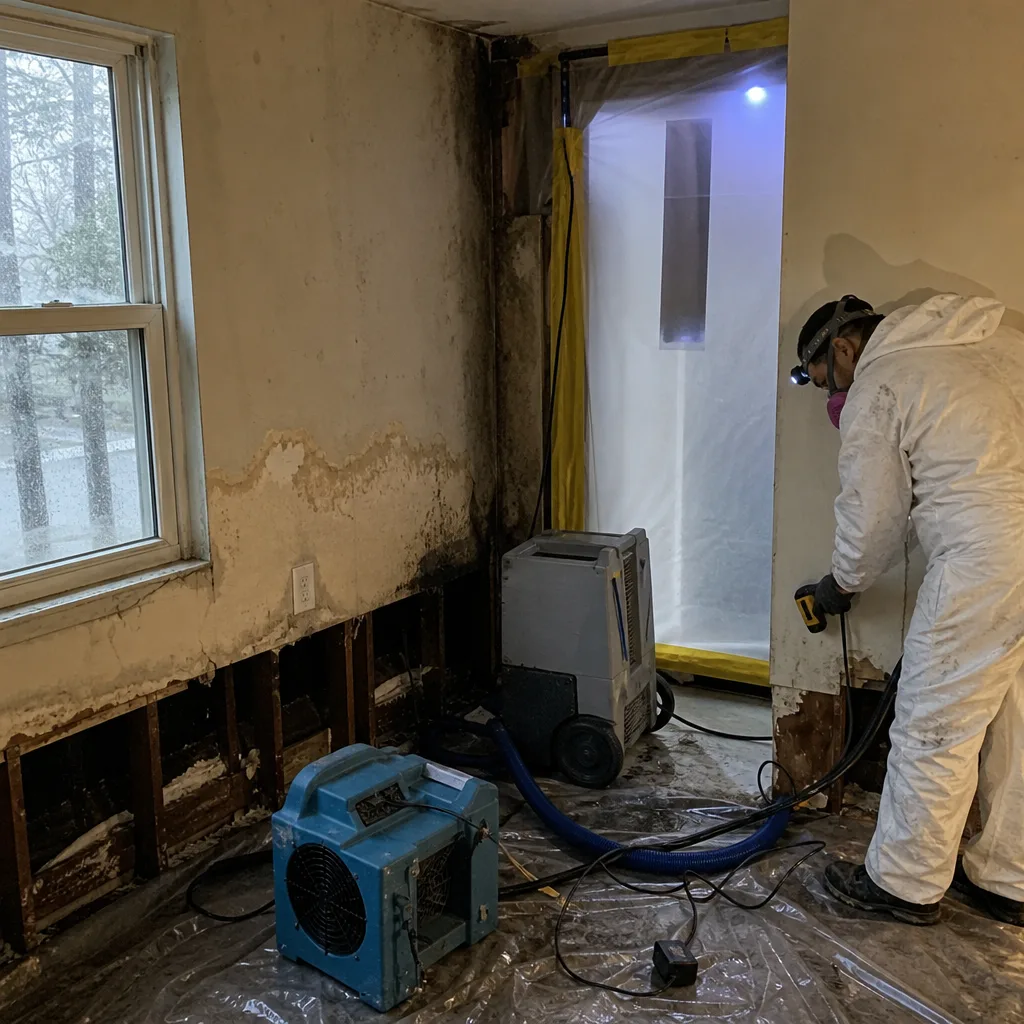 Before
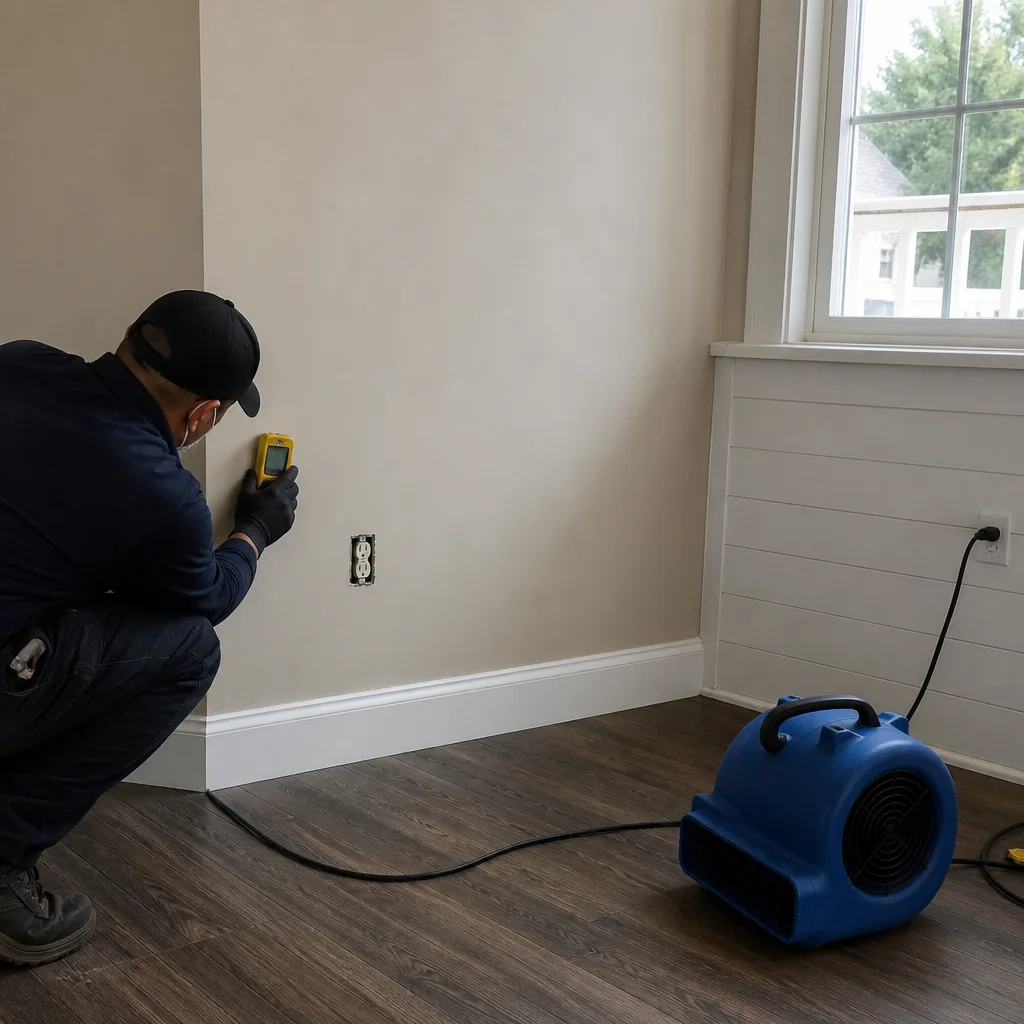 After
After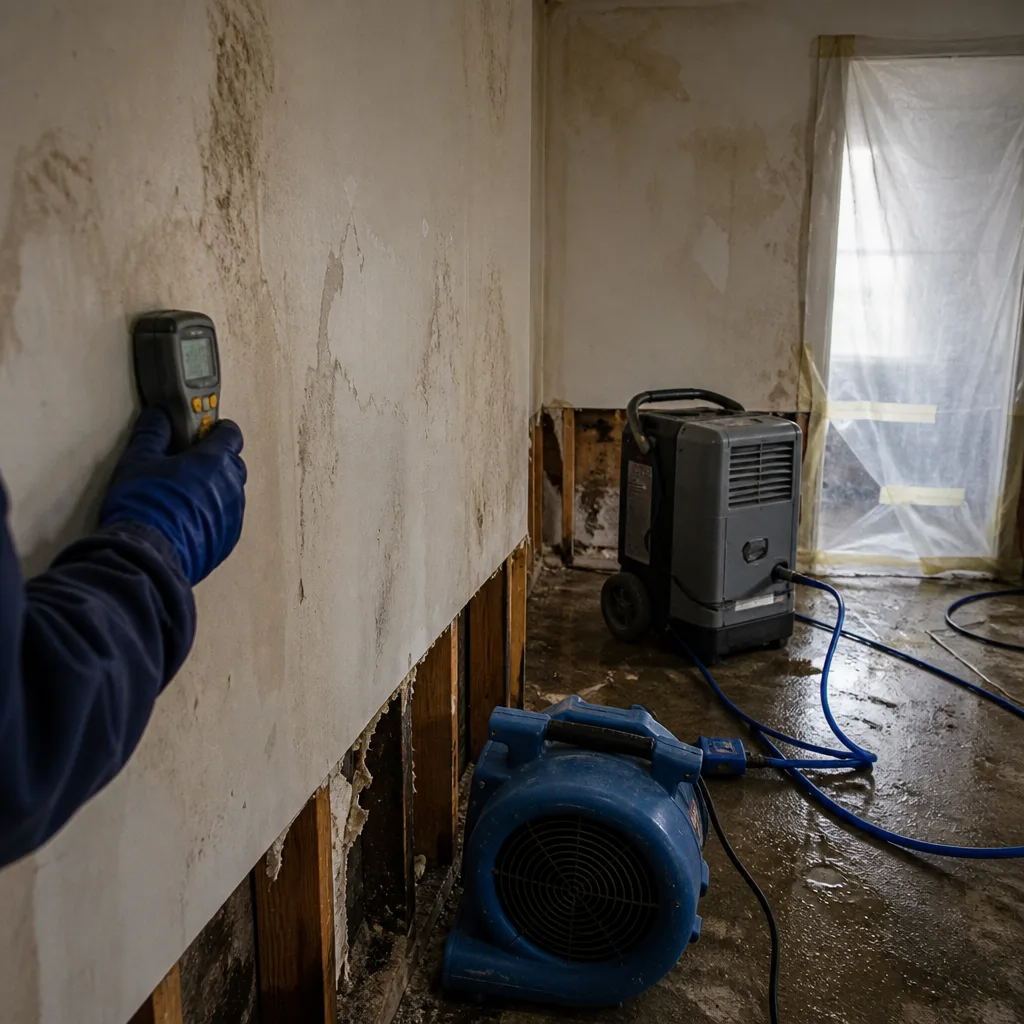 Before
 After
AfterDIY vs Professional Damage Restoration: The Secaucus Homeowner’s Decision Guide
Most Secaucus homeowners who try to dry out a flooded basement themselves end up paying for the same job twice. We know this because our crews have spent 42 years following behind well-intentioned DIY efforts that went wrong, from box fans pointed at soaked drywall to shop vacs that left water inside wall cavities. This guide walks through what a homeowner can safely handle, what they should never touch, and how to decide in the first hour after the water shows up. It’s written from the perspective of a restoration company in Secaucus, where the water table, the Meadowlands clay, and the age of our housing stock make damage decisions different than they are twenty miles west.
Quick Answer
DIY damage restoration in Secaucus is generally safe and appropriate for small, clean-water spills under roughly 10 square feet that you can reach and dry within 24 to 48 hours, using fans and a dehumidifier you already own. Anything involving sewage, hidden water in walls or under flooring, mold growth, or water that sat for more than a day should be handled by a professional restoration company with commercial drying equipment and moisture-mapping tools. The line between those two situations is thinner than most homeowners expect, and it usually hides behind the baseboard.
Table of Contents
- What DIY Can Realistically Handle
- What DIY Cannot Handle, No Matter How Determined You Are
- The Hidden Costs of DIY Restoration
- Secaucus-Specific Factors That Change the Math
- Equipment: What Pros Have vs. What You Can Rent or Buy
- A Step-by-Step DIY Process for Small, Clean-Water Spills
- When Professional Restoration Is the Only Choice
- Insurance and Documentation: The Part Nobody Explains
What DIY Can Realistically Handle
There is a real category of water damage that a homeowner can and should handle without calling anyone. The key is being honest about which category you’re in before the first towel comes out.
Clean-water spills from a supply line, an overflowing sink, a burst washer hose, or rainwater that came through an open window all fall into the safe zone if three conditions hold. First, the affected area is small: a bathroom floor, a closet, a section of kitchen tile under ten square feet. Second, you found the water within hours, not days. Third, the water never touched drywall, insulation, laminate flooring, or anything made of particle board that can’t be removed.
Here’s what safe DIY drying looks like in those situations:
- Remove the water with towels, a mop, or a wet/dry shop vac if you already own one.
- Lift any rugs or loose carpet and get airflow underneath them.
- Point every fan you own at the wet area from multiple angles.
- Run a dehumidifier in the room with the door closed for at least 48 hours.
- Check for lingering dampness by pressing a paper towel against the surface. If it comes away damp after 48 hours, you’re no longer in the DIY zone.
The honest test is the sniff test and the touch test. If the area smells musty after two days of drying, or if baseboards feel soft or look swollen, the water went deeper than the surface. In Secaucus, where many homes are split-levels and ranches built on slabs rather than full basements, water can travel laterally under tile and vinyl before you ever see a stain on top.
What DIY Cannot Handle, No Matter How Determined You Are
Some restoration work is not a question of skill; it’s a question of physics and biology. You cannot out-work either one.
Sewage and gray water are the most obvious line. Category 2 and Category 3 water, in restoration terms, carry bacteria, viruses, and parasites. A homeowner should not attempt sewage cleanup without full PPE, proper disposal protocols, and antimicrobial treatment. This is not about being squeamish. It’s about hepatitis, E. coli, and the long-term liability of a contaminated home. In Secaucus, where sewer backups during heavy rain events are more common than most towns because of our combined storm-sanitary infrastructure in older sections, this matters more than in a town with newer separated systems.
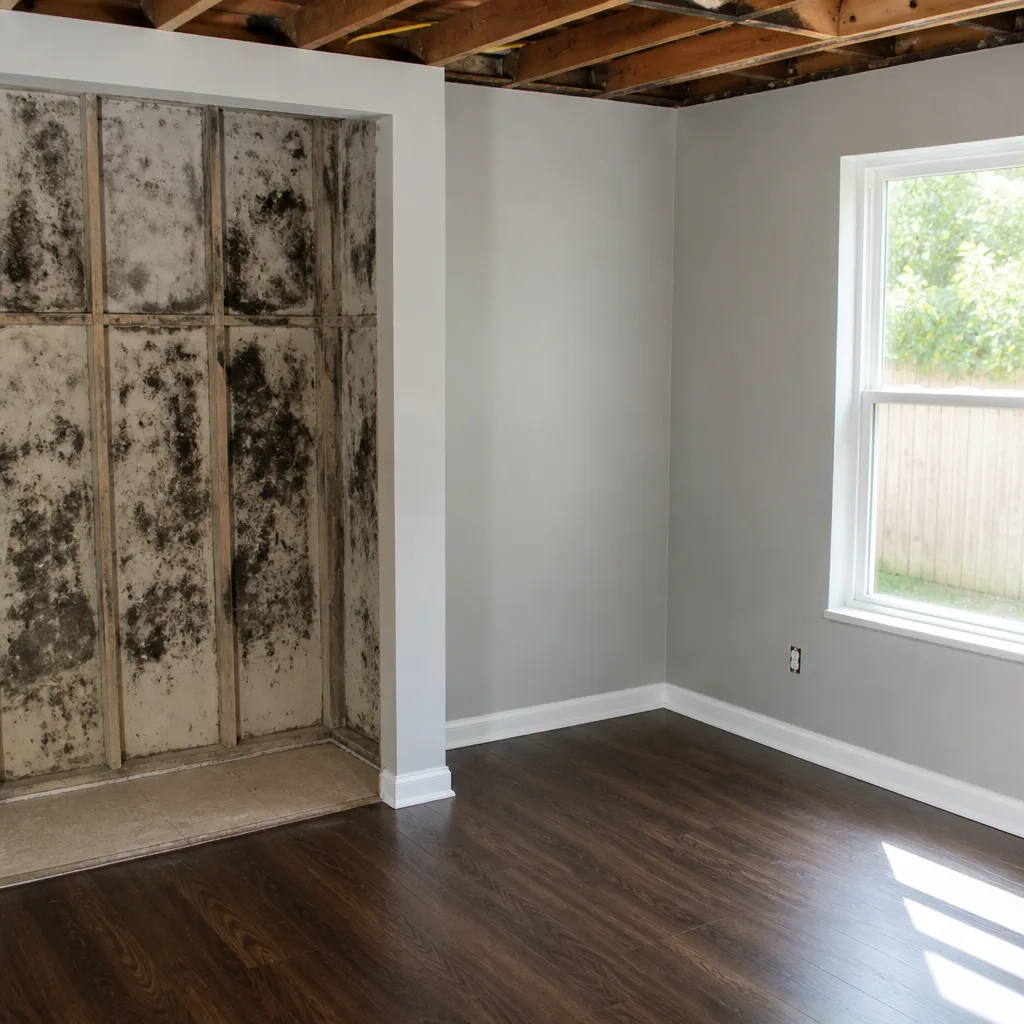
Hidden water is the less obvious line. Water behind baseboards, under vinyl plank flooring, inside wall cavities, or beneath cabinetry cannot be dried with fans and a dehumidifier, no matter how many you run. Water trapped in a wall cavity has almost no air exchange. It stays wet for weeks. Mold starts in 24 to 48 hours. By the time you smell it, the colony is established and the drywall is a loss.
Other categories that demand professional equipment and training:
- Any water loss with standing water more than a quarter inch deep over an area larger than a single room.
- Any damage involving electrical outlets, wiring, or panels within the affected area.
- Water that has penetrated subflooring or joist bays below the surface layer.
- Any visible mold growth beyond a few inches of surface discoloration on tile grout.
- Fire or smoke damage of any kind, including a small kitchen fire. Soot is carcinogenic, and smoke odor requires professional equipment and sealing to remediate.
Our technicians, trained to IICRC, RIA, and IFA standards, regularly walk into Secaucus homes where a homeowner spent two weeks fighting a musty smell with bleach and a rented dehumidifier, only to discover the problem was a soaked section of subfloor under the kitchen island that never got air. The mold had spread to the adjoining joist bays. The repair cost triple what the original extraction would have.
The Hidden Costs of DIY Restoration
DIY damage restoration looks cheaper on paper. That’s because the paper only shows the visible costs. The hidden costs are where it gets expensive.
The homeowner who uses a shop vac and box fans on a flooded finished basement has, in most cases, removed only the surface water. The concrete slab underneath, the drywall wicking water up from the bottom, the insulation soaked behind the studs: none of that dries. Within a week, the homeowner notices a musty odor. Within two weeks, mold grows behind the baseboards. Within a month, they’re calling a restoration company to do mold remediation that didn’t have to happen.
The math is uncomfortable and consistent.
- Water extraction and structural drying done right within the first 24 to 48 hours: often under $3,000, and sometimes fully covered by insurance.
- Mold remediation plus drywall replacement plus insulation removal after two weeks of inadequate drying: frequently $8,000 to $15,000 in Secaucus, depending on square footage and depth of contamination.
- Rebuilding a damaged floor system or replacing structural framing after prolonged water exposure: $20,000 or more, and weeks of displacement.
Then there’s the insurance angle, which we’ll discuss in more detail below. The short version: carriers deny claims they can argue were worsened by homeowner delay or inadequate mitigation. “We didn’t know it was that bad” is not a defense that survives an adjuster’s moisture log review.
Secaucus-Specific Factors That Change the Math
Secaucus is not a typical New Jersey suburb, and its restoration challenges are not typical either. Understanding local conditions explains why the DIY calculus is different here than in, say, Montclair or Ridgewood.
Our town sits in the Meadowlands. The water table is high. The soil is heavy with clay and organic matter that drains poorly. When a storm dumps three inches of rain in six hours, water has nowhere to go. Our storm drains fill, the Hackensack River backs up, and basements that never flooded in thirty years suddenly take on six inches of water. Homeowners who’ve lived here for decades have told us this is a new pattern. It’s not. It’s the old pattern, returning.
The housing stock matters too. A significant portion of Secaucus homes were built before 1970. Many have original cast iron drain lines that have corroded from the inside. Many have slab foundations rather than full basements, which means water under flooring has nowhere to go and no way to dry without professional extraction equipment. Block construction, common in older Secaucus homes, wicks moisture upward through capillary action in ways that modern poured concrete doesn’t.
Neighborhood conditions compound this. Homes in the North End, close to the river and with older combined sewer infrastructure, see different flood patterns than newer construction up by Harmon Meadow or near the High School. Homes on the west side of town, adjacent to the marsh, have groundwater pressure that homeowners farther east never feel.
The point is not to scare anyone. The point is that a Secaucus homeowner facing water damage is not facing a generic water damage problem. They’re facing a Secaucus water damage problem, and the decisions should be made with local conditions in mind.
Equipment: What Pros Have vs. What You Can Rent or Buy
Homeowners can rent or buy equipment that sounds like what professionals use. The difference is not the brand name. The difference is measurement.
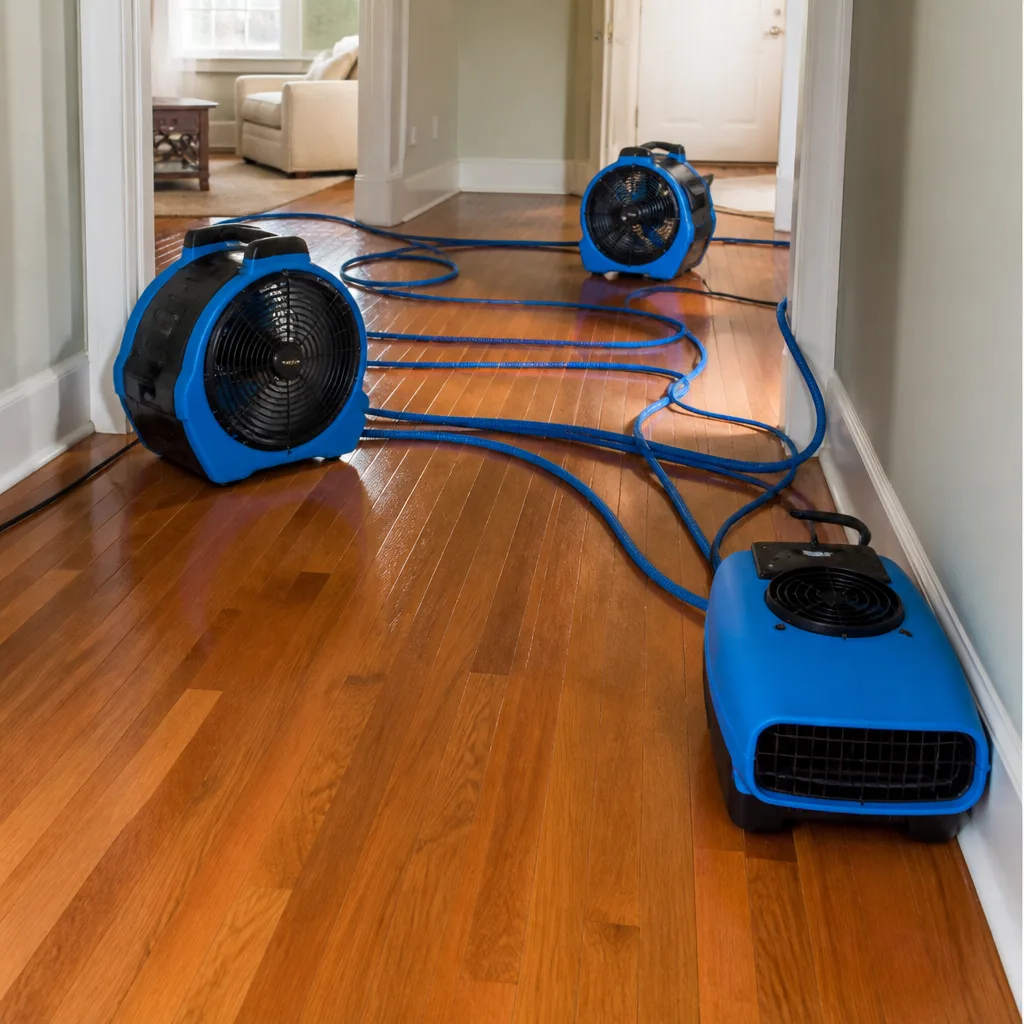
A professional restoration company in Secaucus arrives with commercial-grade equipment from manufacturers like Dri-Eaz and Phoenix: low-grain refrigerant dehumidifiers that pull 20 to 30 gallons of water from the air per day, high-velocity axial air movers that create the laminar airflow needed to force moisture out of building materials, and injection systems like Injectidry that push dry air into wall cavities and under cabinetry. A big-box store dehumidifier pulls 3 to 5 gallons per day. A box fan moves air without any strategy. The difference is not small.
But the real difference is the moisture map. Our crews don’t guess. They use moisture meters and thermal imaging to find water that isn’t visible. They mark affected areas on a diagram. They take readings on day one, and they take readings every day until the dry standard is met. That log, handed to the homeowner and the carrier, is the proof that the job was done. Without it, a homeowner is arguing with an insurance company using their own word as evidence.
Here’s the honest equipment comparison, stated plainly:
| Factor | DIY Setup | Professional Setup |
|---|---|---|
| Water extraction | Wet/dry shop vac, towels, mop | Truck-mounted or portable extraction units pulling hundreds of gallons per hour |
| Dehumidification | Residential unit, 3-5 gallons/day | Commercial low-grain units, 20-30 gallons/day each, in multiples |
| Air movement | Box fans, no directional strategy | Axial air movers positioned in calculated airflow patterns |
| Wall cavity drying | None | Injectidry systems or equivalent, pushing dry air into enclosed spaces |
| Moisture measurement | Touch test, visual inspection | Moisture meters, thermal imaging, daily logged readings to dry standard |
| Mold prevention | Bleach on visible surfaces only | Antimicrobial treatment, HEPA air scrubbing, containment where needed |
The equipment matters. But the person reading the equipment matters more. A moisture meter in the hands of someone who doesn’t know how to interpret the readings is just a beeping box.
A Step-by-Step DIY Process for Small, Clean-Water Spills
For the small spills that genuinely qualify as DIY, here is the process we’d tell a neighbor to follow. This works for a washing machine hose that burst while you were home, a sink overflow, or a small roof leak caught immediately. It does not work for sewage, standing water, or anything that soaked into walls or flooring.
- Stop the water. Turn off the supply valve, shut the breaker to the affected area if there’s any chance water reached an outlet, and stop the source before you touch anything else.
- Remove what you can. Towels, mop, wet/dry vac. Get the standing water up. Work from the perimeter toward the drain or the lowest point.
- Remove wet items. Rugs, floor mats, cardboard boxes, anything that can be moved goes outside or into a dry area with airflow. Wet fabric and paper will re-humidify the room if left in place.
- Create airflow. Place fans low, angled toward the wettest area. Open windows if the outside humidity is lower than the inside. In a Secaucus summer, when outdoor humidity is 80%, keep windows closed and run the AC instead.
- Run a dehumidifier. Close the room off. Empty the collection tank regularly. If you’re running it for more than 48 hours, attach a drain hose.
- Check at 24 and 48 hours. Paper towel test on surfaces, press test on baseboards, visual check for bubbling paint or swelling laminate. If anything fails on a test, stop and call a professional.
- Sanitize what you saved. Wipe down non-porous surfaces with a household disinfectant. Don’t bleach wood or porous materials: it doesn’t prevent mold and it can damage the surface.
This process works. We know it works because we’ve seen homeowners do it successfully on small spills. What we’ve also seen is homeowners try to stretch this process to cover damage it was never meant to handle, and the result is always the same: a worse problem two weeks later.
When Professional Restoration Is the Only Choice
There are damage scenarios where the decision is not really a decision. Calling anyone other than a professional restoration company is simply delaying the inevitable, and every hour of delay adds cost.
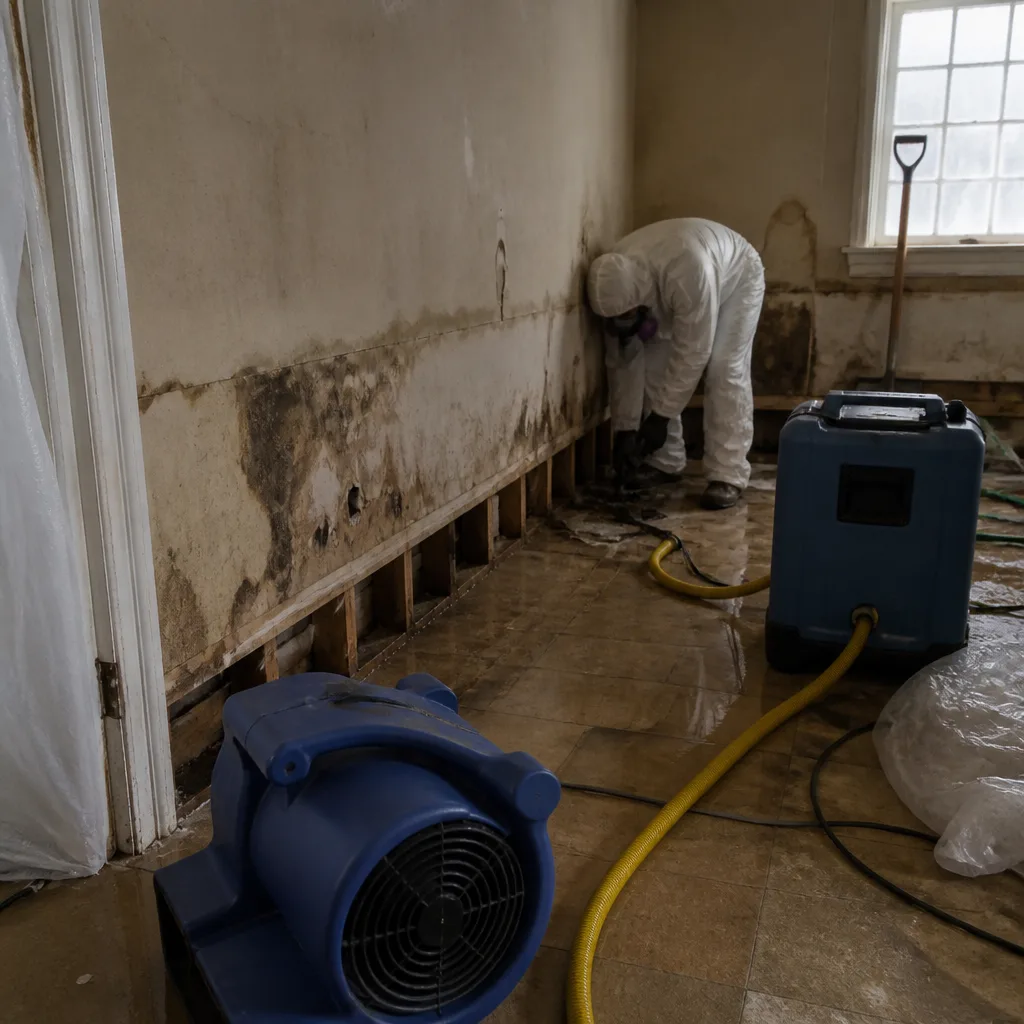
Sewage backups are the clearest case. Raw sewage in a basement is a health hazard, a contamination event, and a job that requires proper PPE, proper disposal, and proper antimicrobial treatment. A homeowner should not attempt this. The same applies to any floodwater that came from outside, because Meadowlands floodwater is not clean water. It carries whatever was in the street, the drains, and the marsh.
Mold growth visible on more than a few square inches of surface is another hard line. DIY mold removal on drywall sends spores throughout the house. Proper remediation requires containment, negative air pressure, HEPA filtration, and removal of affected materials. Anything less is cosmetic.
Fire and smoke damage, even from something small, is never DIY. Soot contains carcinogens. Smoke odor requires professional equipment and sealants to address, and the damage behind walls and above ceilings is always worse than what’s visible from the kitchen.
Finally, any water damage that involves hidden water, structural materials, electrical systems, or that covered more than a single room: call a professional. Floodline Restoration Co. offers free estimates in Secaucus, and we’re happy to tell a homeowner when their situation genuinely is DIY and they don’t need us. That’s not a sales tactic. That’s what 42 years in the same town teaches you: a straight answer earns a customer for life, and a homeowner who dries their own small spill successfully will call us when the big one hits.
Insurance and Documentation: The Part Nobody Explains
Most homeowners discover how their insurance actually works at the worst possible moment, which is the middle of a flood at 2 a.m. Here’s what you need to know before the water shows up.
Water damage from a sudden, accidental source inside the home, like a burst pipe or an overflowing washer, is typically covered by a standard homeowner’s policy. Flood damage from outside water entering the home, including storm surge, river overflow, or groundwater, is not covered unless you have separate flood insurance. In Secaucus, with our Meadowlands geography and our flood history, this distinction matters more than in almost any other town in Hudson County.
Sewer backups are a separate coverage line in most policies. If you have it, great. If you don’t, a sewer backup in a Secaucus home can be a five-figure uninsured event. We recommend every Secaucus homeowner check their policy for sewer backup coverage, and add it if it’s missing. It’s inexpensive relative to what it covers.
Documentation is the part homeowners get wrong. Here’s the discipline that protects you:
- Photograph everything before anyone touches anything. Wide shots, close shots, video if you can.
- Photograph the water source if it’s visible. A burst pipe, a failed appliance, a foundation crack.
- Keep a written log of when you first noticed the damage and what you did, step by step, with times.
- Save receipts for anything you buy: towels, rented fans, dehumidifiers, cleaning supplies. These are recoverable in many claims.
- Do not throw anything away until your adjuster tells you to. Wet carpet, damaged drywall, ruined belongings: document and store what you can.
When you work with an insurance claim, Floodline Restoration Co. bills the carrier directly. We handle the paperwork, we talk to the adjuster, we provide the moisture log and the photo documentation the carrier requires. The homeowner never plays messenger between our crew and their insurance company. In our experience, that’s the single biggest source of claim delays and disputed coverage: a homeowner relaying technical restoration information they shouldn’t have to understand.
Common Mistakes to Avoid
- Waiting to see if it dries on its own. It won’t. Water behind baseboards and under flooring has no air movement and no way to dry. In Secaucus humidity, it can stay wet for months. By the time you see the problem, it’s worse than it was.
- Using bleach to “kill mold.” Bleach is not an EPA-approved mold remediator. It removes surface staining but does not reach mold roots in porous materials, and it adds moisture to the material while it works. On drywall, bleach is mostly water.
- Pointing a box fan at a wet wall. Air blowing across the surface doesn’t dry the inside of the wall. It just moves damp air around the room and gives you a false sense of progress. Professional drying uses calculated airflow patterns and, for enclosed spaces, injection drying.
- Not checking for sewer backup coverage before the backup happens. In Secaucus, this is the most expensive insurance gap a homeowner can carry. The time to check is now, not during a Nor’easter.
- Pulling up wet carpet and padding, then leaving the concrete slab bare. The slab holds water. Without extraction and drying, the next flooring you install will fail, and mold will grow underneath it. Removing the carpet is step one; drying what’s underneath is step two, and it’s the harder step.
- Believing a “handyman” can do restoration work. Restoration is a distinct trade with distinct standards. The person who fixes your deck is not the person you want assessing moisture levels in your wall cavities. IICRC, RIA, and IFA certifications exist because restoration is not general contracting.
When to Call a Professional
Call a professional restoration company when the water is sewage or floodwater, when it covered more than a single room, when it touched walls or flooring that can’t be removed, when you see mold, when you smell mustiness that won’t go away, or when any electrical components were exposed to water. Call also if you’re not sure which category you’re in. A straight answer costs nothing, and it beats guessing wrong. Floodline Restoration Co. offers free estimates in Secaucus. Call (201) 762-0667 and describe what you’re seeing. We’ll tell you if it’s a job for our crew or a job for your shop vac, and we’ll be straight either way.
Frequently Asked Questions
Small, contained water extraction and drying jobs in Secaucus typically run from $1,500 to $3,500, depending on square footage and how long the water sat. Full basement floods, sewage backups, and anything requiring mold remediation or structural repair run higher, often $8,000 to $20,000 or more. Every job is different, which is why Floodline Restoration Co. gives written estimates before work starts with no surprises on the bill. Call (201) 762-0667 for a free estimate.
You can dry small, clean-water spills under roughly 10 square feet with household fans and a dehumidifier, as long as the water didn’t reach walls, flooring, or insulation. If water went under baseboards, into wall cavities, or soaked into subflooring, household equipment won’t dry it, and mold will develop within 48 hours. At that point, call a professional restoration company before the damage spreads.
Sudden, accidental interior water damage from a burst pipe or appliance failure is typically covered by standard homeowner’s insurance. Flood damage from outside water is not, unless you carry separate flood insurance, which matters in Secaucus because of our Meadowlands location. Sewer backups require their own coverage line. Check your policy before you need it, and save all documentation if damage occurs. Floodline Restoration Co. bills carriers directly and handles adjuster communication.
Floodline Restoration Co. answers the phone with a live person 24/7, including at 2 a.m., and dispatches certified crews in Secaucus the same visit. In a water emergency, speed matters: water damage worsens by the hour, and mold begins forming within 48 hours. We plan our dispatch around a real board and real crews, not a sales desk.
If the water was clean, you dried everything thoroughly within 48 hours, and no water reached hidden cavities, you probably don’t need mold remediation. If water sat longer than 48 hours, soaked into drywall or subflooring, or if you notice a musty smell that lingers, mold has likely already started and professional assessment is warranted. A visual inspection and moisture reading costs nothing and beats discovering a mold colony behind your baseboards.
A restoration company is certified to IICRC, RIA, and IFA standards, uses commercial drying equipment like Dri-Eaz and Phoenix units, and works directly with insurance carriers through the full extraction-to-rebuild process. A general contractor builds, but doesn’t typically handle emergency water extraction, moisture mapping, containment, or antimicrobial treatment. After water damage, the restoration work comes first, and the rebuild happens only after the structure is verified dry.
The Bottom Line
DIY damage restoration has a place. Small, clean-water spills that never touched walls or flooring can be handled with household equipment, and a homeowner who does it right saves money and learns something. But the line between DIY and professional territory is narrow, and in Secaucus, our climate, our water table, and our older housing stock push that line closer to professional work than homeowners expect. Hidden water is the enemy: you can’t dry what you can’t see, and you can’t measure moisture with your fingers. The best decision is the one made early, with straight information, before mold gets its 48-hour head start. When you’re not sure, call (201) 762-0667 and ask. We’ll tell you the truth either way, and we’ll stand behind what we do, in writing.
Written by Curt Bowman, Owner at Floodline Restoration Co., serving Secaucus since 2010.