
Last updated August 25, 2026
Free visual inspection and a written scope of work before any mitigation begins - photos, moisture readings, and drying logs go in your claim file
The scope we write is the scope we bill. Anything new gets shown to you, in writing, before we touch it.



 Before
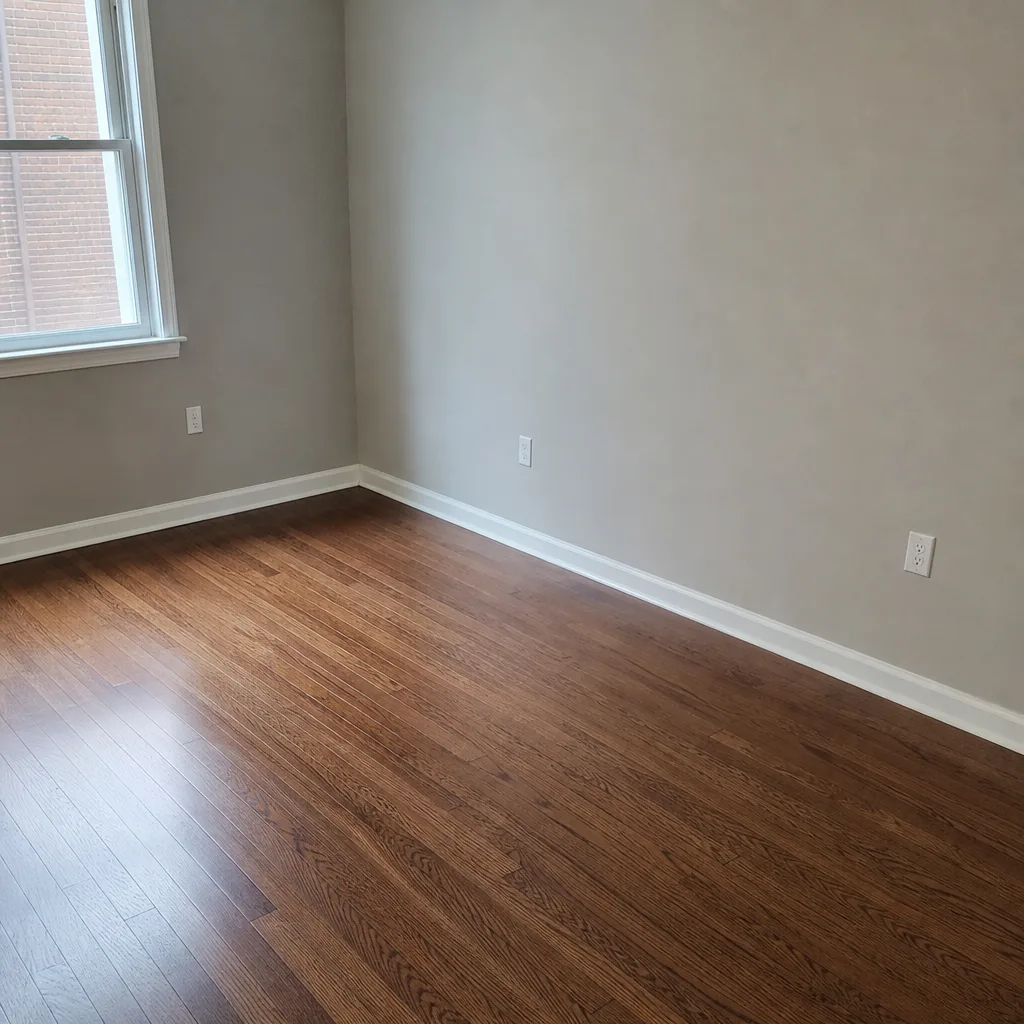 After
After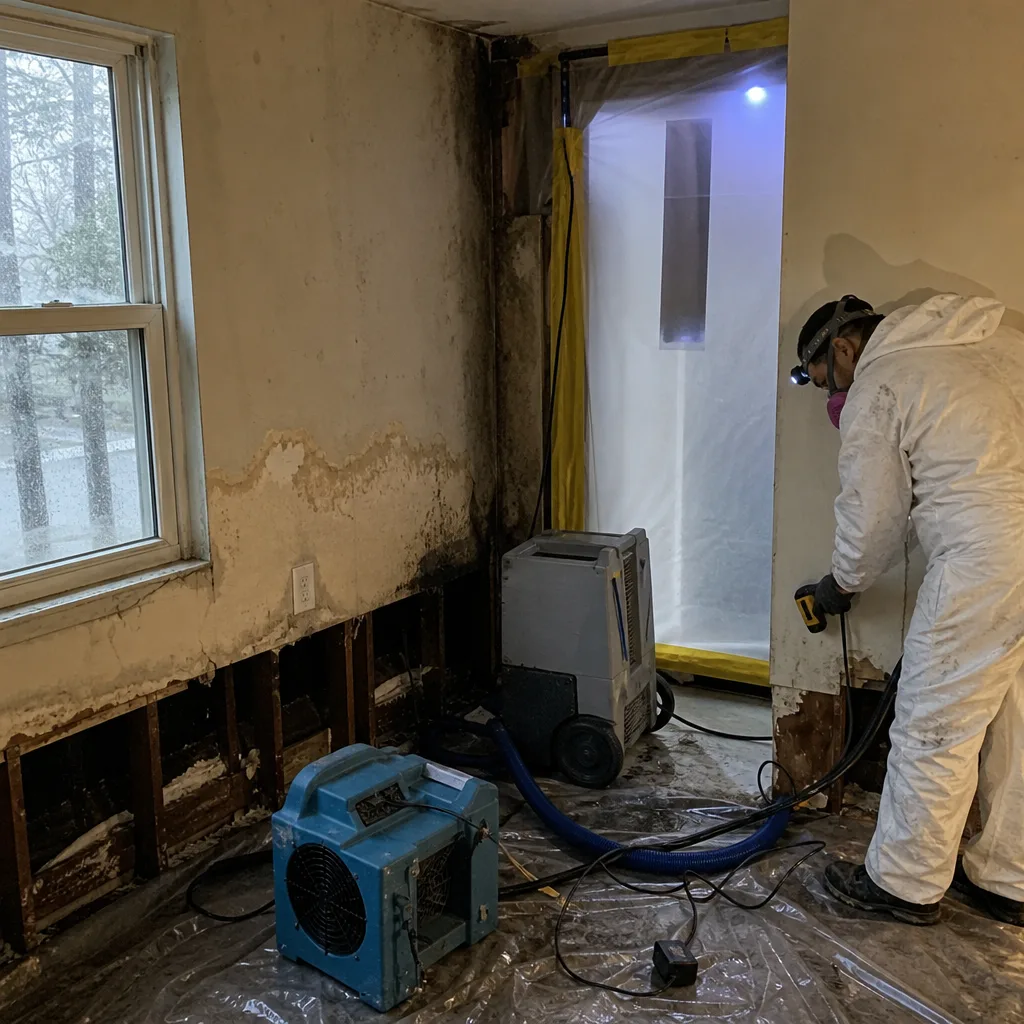 Before
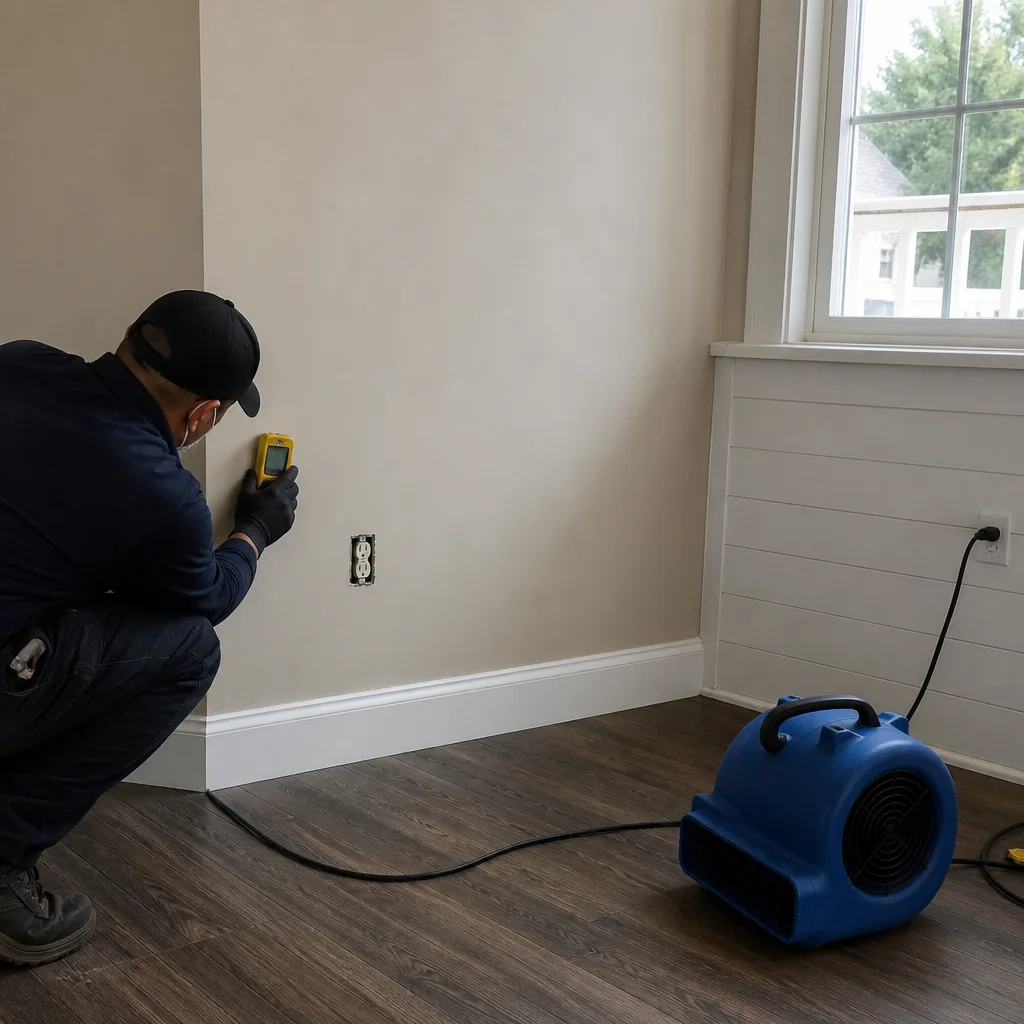 After
After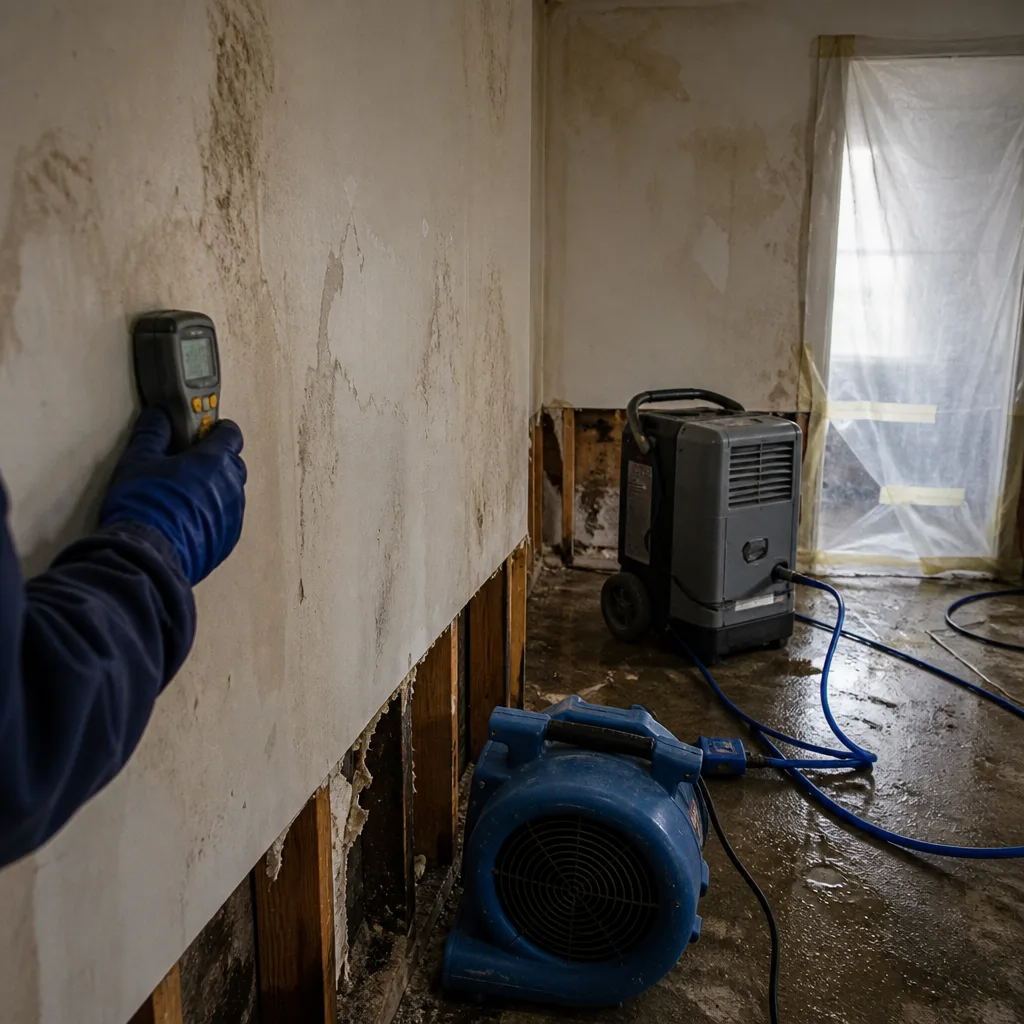 Before
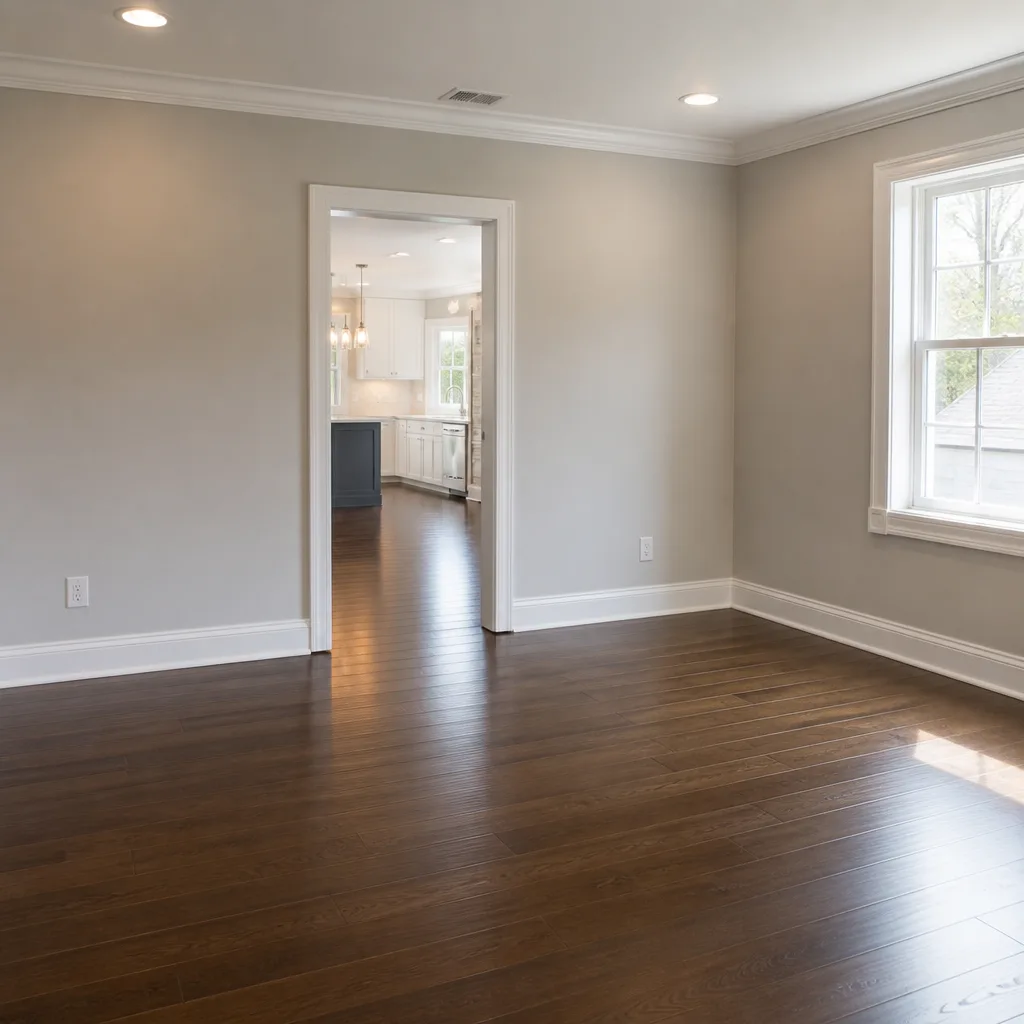 After
AfterThe Complete Guide to Damage Restoration in Secaucus
Most homeowners in Secaucus don’t realize that the same geography that makes this town convenient - the Hackensack River on one side, the Meadowlands on the other, and water moving through the bedrock beneath every street - is exactly what makes property damage here follow a different pattern than it does ten miles inland. A nor’easter that dumps three inches of rain on Bergen County can push storm surge up the Hackensack tidal estuary and send groundwater rising through concrete slabs in Secaucus basements that have stayed dry for two decades. This guide explains what actually happens when water, fire, or mold gets into a Secaucus home, what it costs to fix, what insurance will and won’t cover, and how to avoid the mistakes that turn a $3,000 cleanup into a $30,000 rebuild. We’ll walk through every phase in order, from the first phone call to the final coat of primer, with the specifics that matter in Secaucus.
Quick Answer
Damage restoration in Secaucus means removing water, soot, sewage, or mold growth from a home, drying the structure to a documented standard, treating what needs treating, and rebuilding what got destroyed - and the process typically costs between $1,800 and $8,500 depending on the damage class and how fast you act. The single most important variable is time: water that sits for 72 hours in a Secaucus home with the Meadowlands humidity becomes a mold problem, and a mold problem inside a wall cavity costs three times more to fix than the original extraction. Floodline Restoration Co. has handled every category of damage in Secaucus since 2010, from Hudson Avenue kitchen fires to cast-iron pipe failures on County Road, and we answer the phone with a live person at any hour.
Table of Contents
- Water Damage Restoration in Secaucus
- Mold Remediation: What Secaucus Homeowners Need to Know
- Fire and Smoke Damage: The Restoration Sequence
- Sewage Backup and the Category 3 Problem
- Storm and Flood Response for the Meadowlands
- Reconstruction: From Demo Day to Finished Walls
- Secaucus Damage Restoration Costs and Insurance
- Common Mistakes to Avoid
Water Damage Restoration in Secaucus
Water damage is the category we see most often in Secaucus, and the causes break down predictably by neighborhood. In the older homes near the center of town - the Colonials and split-levels built between 1950 and 1980 - failing supply lines and water heaters account for most calls. In the newer construction near the Harmon Cove area and along the river side, we see more slab leaks and sump pump failures after heavy rain because the water table sits close to the surface. The restoration sequence is the same regardless of cause: stop the source, extract what can be extracted, map the moisture, set drying equipment, monitor daily, and rebuild what water damaged beyond saving.
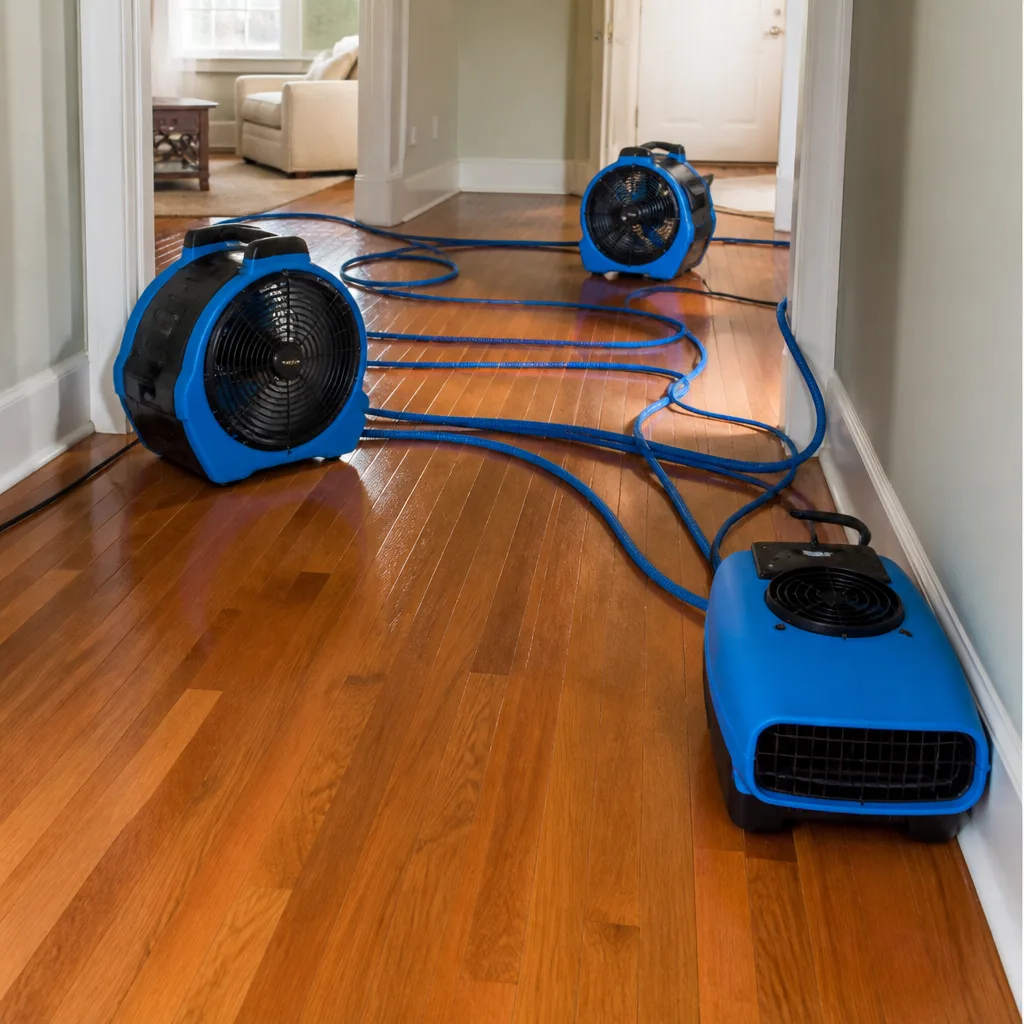
What complicates water damage in Secaucus specifically is the humidity. The Meadowlands holds moisture in the air at levels that would be unusual even five miles west. A concrete slab or a wall cavity that reads 16 percent moisture content in a Livingston basement might sit at 22 percent here for the same amount of water, simply because ambient moisture slows evaporation. That is why professional drying in Secaucus relies on low-grain refrigerant dehumidifiers rather than box fans, and why daily moisture readings - not a guess - determine when drying is complete. We use Dri-Eaz and Phoenix dehumidifiers, plus XPOWER air movers, and we hand the homeowner and the carrier a moisture log at the end of every job. If you have standing water you can see, call a professional. The water you cannot see inside the wall cavities is the water that causes the problems.
Secaucus water damage response, step by step:
- Stop the source. Shut off the main valve if it is a plumbing failure. If it is groundwater, shut off the breaker to the affected area before anyone steps into standing water near an outlet or appliance.
- Call a restoration company with live dispatch. In Secaucus, the window between a pipe burst and irreversible saturation is measured in hours, not days. A live person should answer.
- Extraction begins on the first visit. Truck-mounted or portable extraction removes standing water before it wicks up drywall and into subflooring.
- Moisture mapping. A thermal camera and penetrating moisture meter show which areas are wet, including the areas that look dry.
- Equipment placement. Air movers and dehumidifiers are positioned according to the moisture map, not scattered randomly.
- Daily monitoring. Readings are logged every day until the dry standard is met, usually 3 to 5 days in Secaucus.
- Repair and rebuild. What cannot be dried - saturated drywall, swollen trim, delaminated flooring - gets removed and replaced.
The big decision on any water damage job is what stays and what goes. Drywall that has been wet above the baseboard for more than a few hours will almost always be cut out and replaced. But hardwood floors can often be saved with the right drying setup, especially if the water sat for less than a day. We have dried oak strip flooring in Secaucus homes that other estimators said would have to come out, using Injectidry panel systems that draw water down through the boards. It works, but it requires patience and daily equipment checks. The written scope we agree on before work begins is what governs every one of these decisions.
Mold Remediation: What Secaucus Homeowners Need to Know
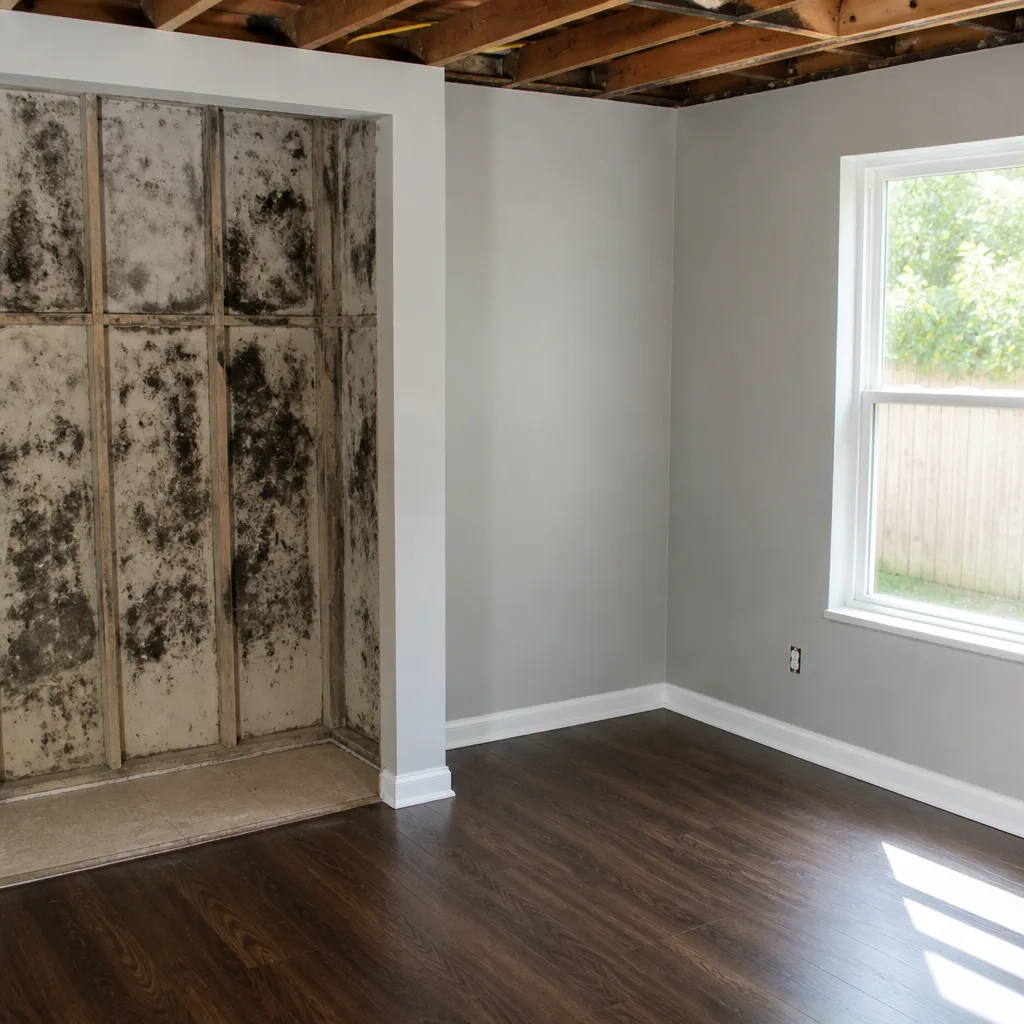
Mold is a moisture problem with a cleanup attached. If you fix the moisture but skip the cleanup, the mold comes back. If you clean the mold but ignore the moisture source - a leaking pipe, a condensation line, a foundation crack - you have bought yourself a few months, not a solution. In Secaucus, the natural humidity makes mold growth faster than homeowners expect: under the right conditions, colonies can establish themselves within 48 to 72 hours of a water event. The areas between the walls, under the slab, and inside the floor cavities are the most common breeding grounds because they stay damp longest.
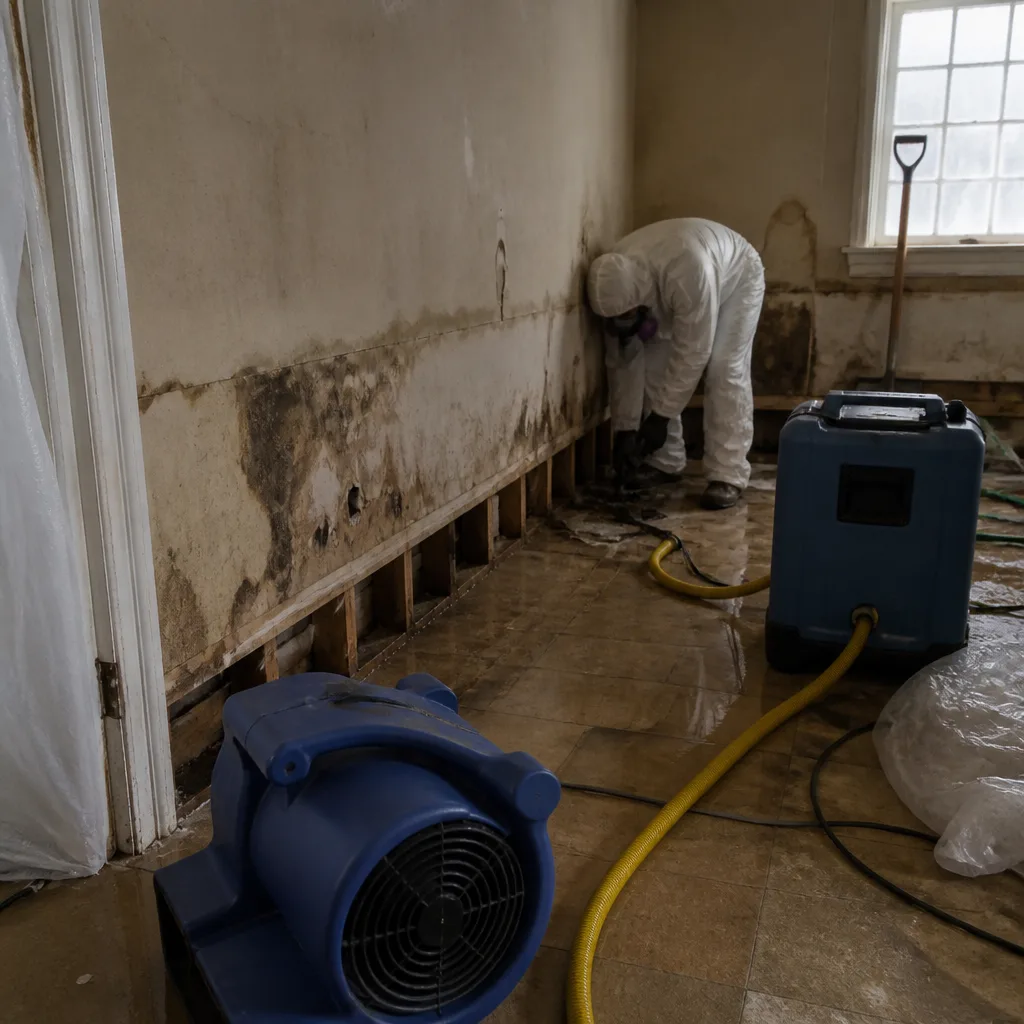
We perform mold remediation in Secaucus to the standards set by the IICRC and RIA. That means containment before disturbance, negative air pressure to keep spores from spreading during removal, and HEPA filtration running throughout the job. Cutting into moldy drywall without containment sends tens of thousands of spores into the air of a home. The spores settle into carpet, furniture, ductwork - anywhere air touches - and a small contained problem becomes a whole-house issue. Our technicians set up sealed containment rooms with poly sheeting, run air scrubbers, remove the affected material by hand, treat the framing, and verify clearance before the containment comes down.
One misconception worth dispelling: mold testing is not always required. In many cases, the presence of visible mold growth on a surface tells you enough. Testing adds time and cost, and the results rarely change the scope of what must be removed. Where testing does make sense is after remediation, to verify that spore counts have returned to normal background levels, or when a homeowner needs documentation for a real estate transaction. We will recommend testing when it matters and tell you when it does not. We see no point in running up a bill on a homeowner who just wants the mold gone.
The sewer smell that sometimes accompanies mold is often mistaken for sewage backup. Black mold in a wall cavity can produce the same musty, earthy odor. The distinction matters because sewage requires pathogen-level disinfection, while mold requires moisture control and spore removal. A professional assessment tells the difference in minutes.
Fire and Smoke Damage: The Restoration Sequence
Fire restoration follows a sequence that surprises most homeowners. You do not start by scrubbing walls. You start by boarding up and tarping, because a fire-damaged house in Secaucus is vulnerable to weather and trespass until the openings are sealed. Then you remove the debris and any standing water from firefighting. Then you assess what can be cleaned versus what must be torn out - and smoke damage is almost always more extensive than the burn marks suggest.
A kitchen fire that is contained to the stovetop can still push smoke into every room on the second floor. Smoke is a gas plus particulate matter: the gas penetrates porous surfaces - drywall, ceiling texture, carpet, insulation, furniture - while the soot deposits themselves are often oily, acidic, and embedded. Within days, acid soot can etch glass and permanently darken paint and ceilings if left untreated. The cleaning agents and techniques vary by surface: dry-chem sponges on fresh soot, chemical sponges and HEPA vacuuming on walls, ultrasonic processing for contents that can be removed and restored off-site. We have restored contents from Secaucus fire jobs that homeowners assumed were lost: china, books, clothing, tools, family photographs.
The rebuild phase after a fire often includes more than the burn zone. A wall may be charred behind the cabinets, which means the cabinets come out, the wall is opened, and the framing is evaluated. If structural members are compromised, the scope grows. A written scope agreed before work begins keeps this process from turning into a surprise. Fire cleanup is physically demanding and chemically involved, and the safety risk is real - wear a respirator if you attempt any cleaning yourself, and never enter a structure with structural damage until it has been inspected.
Sewage Backup and the Category 3 Problem
Sewage backup is the restoration category that demands the most rigid protocols. The industry classifies water by contamination level: Category 1 is clean, Category 2 is significantly contaminated, and Category 3 is grossly contaminated - sewage, floodwater from outside, or any water that has come into contact with fecal matter. A toilet backup in a Secaucus bathroom is Category 3. A foundation leak that lets groundwater seep through a floor is Category 3 the moment it touches soil or anything else outside.
Category 3 water means the affected materials are not just wet; they are potentially infective. The pathogens present - E. coli, Salmonella, Hepatitis A, and others - can remain viable in porous materials for weeks, even after the surface looks dry. That is why restoration standards call for removal of saturated carpet, pad, drywall, insulation, and upholstered items that have absorbed Category 3 water. Some non-porous surfaces can be cleaned and disinfected with EPA-registered disinfectants. Wood wall studs can sometimes be cleaned and treated with an antimicrobial if they are structurally sound and can be dried adequately.
What a homeowner should never do after sewage backup is run fans or use a household vacuum to dry things out. That aerosolizes whatever is in the water and spreads it through the home. Shut the area off, keep children and pets away, and call a professional who will show up in appropriate PPE and establish containment just as they would for mold. We answer the phone with a live dispatcher around the clock for exactly this reason - sewage does not wait for Monday morning, and a Secaucus homeowner with a backed-up floor drain at 2 a.m. should not have to leave a voicemail.
Storm and Flood Response for the Meadowlands
Flooding in Secaucus is a different animal than a broken supply line. When the Hackensack or the surrounding Meadowlands wetlands rises, the water that enters a home is Category 3 - it has run across asphalt, through drainage systems, and mixed with whatever was in its path. It also tends to come in larger volumes and affect multiple homes at once. After major storm events, restoration resources get stretched across the entire Meadowlands region, and the difference between a fast response and a delayed one is measured in thousands of dollars of additional damage.
Storm response begins before the water recedes. We monitor the storm forecasts and stage equipment in anticipation of flooding events in low-lying Secaucus neighborhoods, particularly near the river and in the areas where the storm drain system becomes overwhelmed during coastal storms. When a home floods, the first visit includes rapid extraction, followed by inspection for structural hazards, then drying and disinfecting. The mud left behind by floodwater works its way into every crevice and behind every baseboard. Simply rinsing is not enough; the moisture inside wall cavities must be properly dried or the mud becomes the medium for mold growth.
For a homeowner waiting for a restoration crew after a flood, the worst mistake is waiting. The second worst is trying to dry it out with household fans while waiting. Call while the water is still rising if you can; a company that knows the area will have equipment staged and can be at your door within the hour in many cases. Stay out of the water until it has been disconnected from the electrical system. Water in a flooded Secaucus basement that is touching an outlet box or an extension cord is a serious shock hazard - get the power off at the breaker before any human being steps into that water.
Reconstruction: From Demo Day to Finished Walls
Reconstruction is where restoration turns back into construction. Once the water is extracted, the structure is dry, and the mold is remediated, what remains is a construction project: framing, drywall, insulation, flooring, trim, paint, and sometimes cabinetry, tile, and fixtures. The difference between restoration-grade reconstruction and ordinary remodeling is the documentation trail. An insurance claim requires a scope of work, a line-item estimate, and proof that the work was done to standard. A reconstruction contractor who does not understand insurance documentation will cost the homeowner money.
In Secaucus, reconstruction after water damage follows the same code requirements as any renovation. Permits are generally required for structural repairs, electrical work, and plumbing changes. Our crews handle the permit process as part of the job. The town’s code office requires that work meet current standards, and in many cases, a home built decades ago must have certain elements brought up to code when they are touched - a 1970s electrical panel with fabric-insulated wiring is a common example. We flag these issues in the written scope before work begins, not after the walls are open. The 90-Day Done Right Promise - our Keystone Standard, given in writing - applies to every reconstruction job we complete. If it is not done right, we make it right. No paperwork battles.
Homeowners sometimes ask whether they should have one company handle both the mitigation and the reconstruction. In our experience, the answer is yes, for a reason that is not obvious until you have lived through it: the mitigation crew’s moisture map shows exactly what was wet, and the reconstruction crew should be reading from that same map. If two different companies handle the job, the handoff is where information gets lost, and the homeowner ends up relaying messages between teams. One company, one moisture log, one warranty, one point of accountability. That is the Floodline Restoration Co. home approach.
Secaucus Damage Restoration Costs and Insurance
Restoration costs in Secaucus run slightly higher than the state average because of the humidity factor, the older housing stock, and the speed with which water migrates through Meadowlands soil conditions into foundations and slabs. But costs are governed above all by the extent of the damage and how quickly the response begins. The same burst pipe that costs $2,000 to fix within the first 12 hours can cost $8,000 or more if water has had time to wick through drywall, saturate flooring, and creep up walls for a day or two.
Cost Ranges for Common Secaucus Restoration Jobs
| Damage Type | Typical Range (Secaucus Market) | What Affects the Price |
|---|---|---|
| Water extraction and drying (single room) | $1,800 - $3,200 | Time wet, containment, drying time |
| Whole-house water mitigation | $4,000 - $8,000 | Square footage, class of damage, drywall removal |
| Mold remediation (contained room) | $2,000 - $5,000 | Containment size, material removal, lab testing |
| Mold remediation (multiple rooms / HVAC) | $6,000 - $15,000 | Extent of spread, duct cleaning, rebuild |
| Sewage cleanup and disinfection | $2,500 - $6,000 | Contamination level, materials removed, hours |
| Fire and smoke restoration | $3,500 - $25,000+ | Burn extent, smoke penetration, contents cleaning |
| Storm flood response | $2,000 - $12,000 | Water volume, contamination, area accessibility |
| Full reconstruction after damage | $5,000 - $40,000+ | Room count, fixture grade, code upgrades |
These ranges reflect jobs we have completed in Secaucus over the past 15 years. They are not bids - every job needs an on-site scope and a written estimate before the first tool comes off the truck. What we promise is no-hassle upfront pricing: the price we put in writing is the price you pay, and there are no change-order surprises. On insurance claims, we bill the carrier directly. The homeowner never has to play messenger between Floodline and the insurance company over an approved scope.
Insurance is the other big variable in Secaucus restoration. Standard homeowners’ policies cover water damage from sudden and accidental events - a burst pipe, a water heater failure, a fire. They do not cover floodwater from the Hackensack entering through the foundation unless the homeowner carries separate flood insurance through the National Flood Insurance Program. Groundwater seepage through a slab is generally not covered without a specific endorsement. We photograph everything, document every moisture reading, and coordinate directly with the adjuster to make sure nothing on the claim is missed. The documentation is how the claim gets paid.
Common Mistakes to Avoid
- Waiting to call. Every hour that water sits in a Secaucus home, it wicks further into drywall, framing, and flooring. The difference between a one-day response and a three-day response can double the cost.
- Using household fans. Fans move air; they do not remove moisture. In a humid Secaucus environment, that moisture stays in the home and creates the exact conditions for mold growth behind baseboards and inside walls.
- Skipping the moisture log. A professional restoration job ends with a documented record of daily moisture readings showing the dry standard was met. If that log does not exist, the drying was not verified - and the homeowner has no proof for the insurance company.
- Choosing the cheapest bid. A low price often means no professional equipment (Dri-Eaz, Phoenix, XPOWER), no containment, no monitoring, and a crew that disappears once the initial extraction is done. Secaucus homeowners end up calling us to redo the job correctly.
- Ignoring the water you cannot see. A homeowner sees a wet carpet and assumes everything else is fine. Water behind the baseboard, inside the wall cavity, and trapped beneath the flooring is where the real damage is growing.
- Filing a claim without documentation. Insurance companies need evidence: photos, moisture readings, a written scope. Good documentation is the difference between a claim settled to fair value and one reduced to a disappointing check.
- Mixing mitigation and rebuild without a scope. If the company tearing out the drywall is not the company rebuilding the wall, the homeowner is acting as general contractor between two teams. Written scopes prevent mid-job arguments.
When to Call a Professional
Some damage is obvious: standing water in the basement, visible mold, a kitchen fire. Other damage is quieter - a stain spreading on a ceiling, a musty smell that comes and goes, a floor that feels soft underfoot, a wall that suddenly has a water line after a rainstorm. Any of these signs in a Secaucus home warrants a professional assessment, because what they point to is almost always worse behind the wall than on the surface. If you notice them on a Friday afternoon, calling Monday is not soon enough. Call immediately. Floodline Restoration Co. offers free estimates in Secaucus - call (201) 762-0667. A live dispatcher answers, at any hour.
Frequently Asked Questions
Most water damage drying takes 3 to 5 days with professional equipment, but that depends on the volume, the materials affected, and how quickly drying began. Extraction starts on the first visit, and reconstruction after drying may add 5 to 15 days or more depending on the scope. Call (201) 762-0667 and a live person will give you a straight answer about your situation.
Standard homeowners’ policies cover sudden and accidental water events like a burst pipe or a failing water heater, but not floodwater from outside or groundwater seepage without a separate flood policy. We document every job with photos and moisture readings and bill the carrier directly, so you get what the policy allows. Call us and we will help you understand what your policy covers.
A live dispatcher answers our phone 24 hours a day, 7 days a week, and a certified crew reaches Secaucus homes typically within the hour for water, sewage, and storm emergencies. On fire jobs, we board up and secure the property the same day, and the restoration scope follows. Call (201) 762-0667 now - the phone is answered by a person, not a recording.
If mold is growing behind a wall, inside a cabinet, or under flooring, cleaning the visible surface is not a solution; the source of the moisture must be found and eliminated, and the affected material must be removed. A visual assessment by a professional is the only way to know for sure. We will give you an honest answer, even when the answer saves you from spending money you don’t need to spend.
We do. Floodline Restoration Co. coordinates directly with your adjuster, sends the documentation, photographs, written scope, and moisture log, and bills the carrier for approved work. You are never left playing messenger between your insurance company and the restoration crew. That is the square deal we believe a Secaucus homeowner deserves.
Shut off the water source if you can do so safely, turn off power to the affected area at the breaker, move valuables off wet floors, and stay out of standing water - especially if it could be in contact with electrical outlets or appliances. Do not run household fans or use a household vacuum on water. Then call (201) 762-0667 and let a live person get a crew moving toward your street.
The Bottom Line
Damage restoration in Secaucus comes down to three things: speed, documentation, and doing the job the same way twice - never cutting a corner the first time. The town’s geography makes water a persistent fact of life, and its aging housing stock makes sudden failures a regular occurrence. When damage hits, the homeowner who acts within the first hours gets a smaller scope, a faster drying timeline, and a claim that settles to fair value. The homeowner who waits pays for it in money and in months. Floodline Restoration Co. has served Secaucus since 2010 with live 24/7 dispatch, written scopes, professional-grade equipment, and a 90-Day Done Right Promise in writing. The line the water left is where we start.
Call (201) 762-0667 for a free estimate - a live person will answer.
Written by Curt Bowman, Owner at Floodline Restoration Co., serving Secaucus since 2010.