
Last updated August 25, 2026
Free visual inspection and a written scope of work before any mitigation begins - photos, moisture readings, and drying logs go in your claim file
The scope we write is the scope we bill. Anything new gets shown to you, in writing, before we touch it.




 Before
 After
After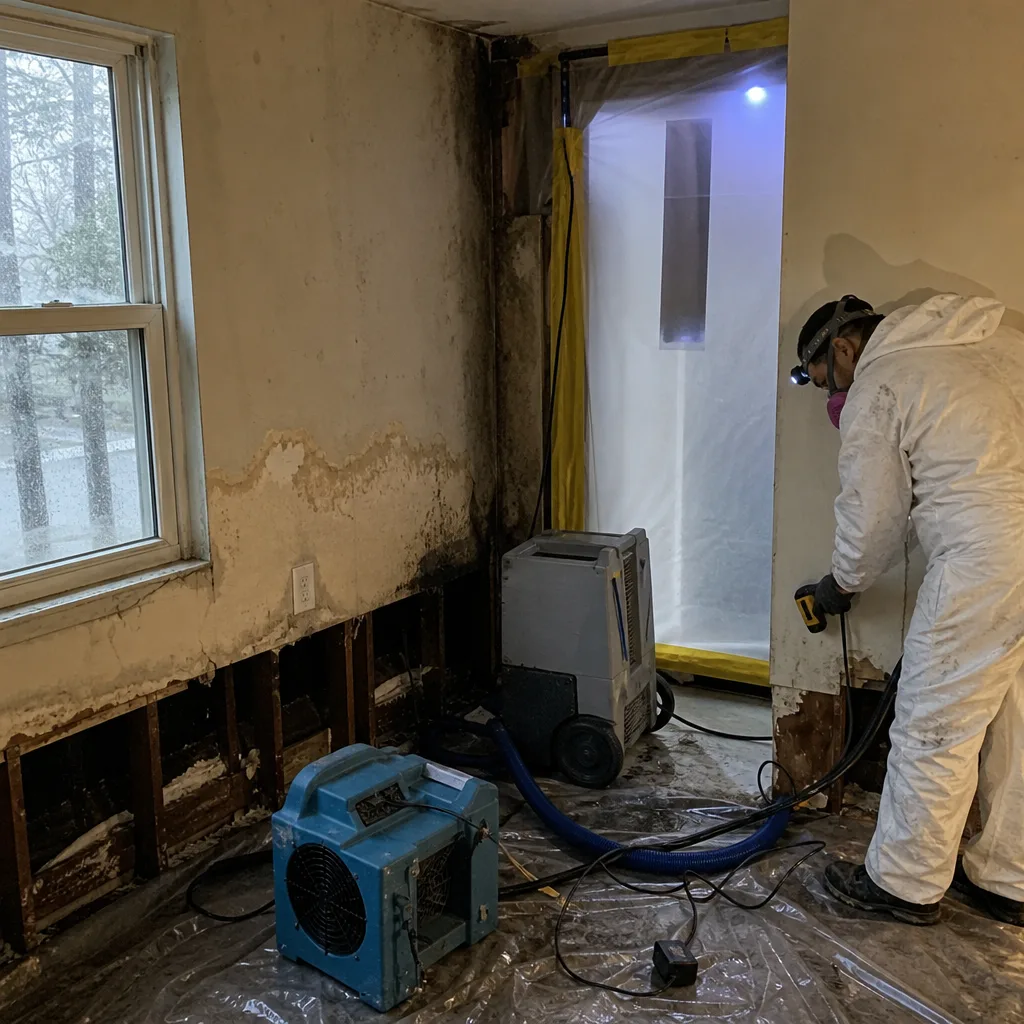 Before
 After
After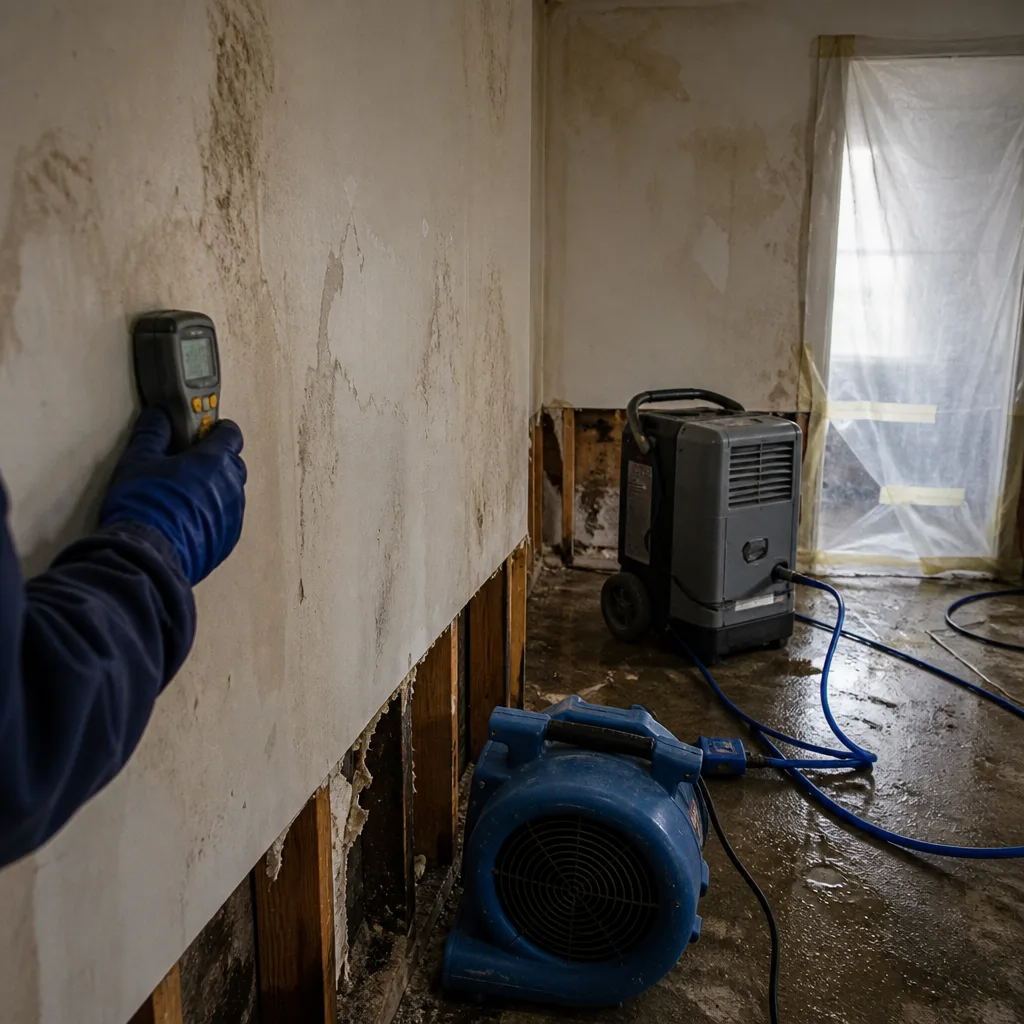 Before
 After
AfterWater Damage Restoration Maintenance Checklist for Secaucus Homeowners
Here’s a number most Secaucus homeowners never hear until it’s too late: a single 1/8-inch crack in a supply line can release up to 250 gallons of water per day. By the time you notice the warped baseboard or that musty smell near the utility closet, the water has already been working against your subfloor for somewhere between three days and three weeks. This guide walks through exactly what to check, month by month and season by season, so the first sign of trouble isn’t standing water in the finished basement. You’ll learn what to inspect yourself, what to leave alone, and how the unique conditions in Secaucus, from our high water table to our older housing stock, shape the way water damage shows up here.
Quick Answer
A prevention checklist for Secaucus homeowners means checking six systems monthly: supply lines, appliance hoses, the water heater, sump pump, gutters and downspouts, and any room below grade. The goal is catching slow leaks before they become structural problems, because in Secaucus, where the water table sits close to the surface and many homes were built before modern waterproofing standards, even small leaks find their way into foundations fast. Run through this list once a month and before every heavy rain event.
Table of Contents
- The Monthly Walkthrough: Six Systems to Check
- Seasonal Maintenance for Secaucus’s Climate
- Below-Grade Spaces: Basements and Crawl Spaces
- Appliance Hoses and Supply Lines: The First 80% of Failures
- The Sump Pump System: Your First Line of Defense in Secaucus
- Gutters, Downspouts, and Grading: Moving Water Away From the Foundation
- Reading the Early Warning Signs of Moisture Intrusion
- Common Mistakes to Avoid
- When to Call a Professional
- Frequently Asked Questions
- The Bottom Line
The Monthly Walkthrough: Six Systems to Check
We’ve been doing water damage restoration in Secaucus since 2010, and in our experience, roughly eight out of ten emergency calls trace back to one of six systems. None of them are complicated to inspect. A monthly walkthrough takes about 20 minutes, and it’s the single highest-return habit a homeowner in this area can develop, because the cost of a missed slow leak in Secaucus runs higher than in towns with better natural drainage.
The Six Systems
- Supply lines under sinks and behind toilets. Look for green corrosion on brass fittings, white mineral crust at connection points, and any sign the braided stainless jacket is fraying or bulging. A bulging hose is a hose about to fail.
- Water heater and its connections. Check the top and bottom fittings for rust trails. Look at the floor beneath: even a faint waterline means a slow weep at the tank’s seams. Water heaters older than 10 years in Secaucus, where our municipal water runs moderately hard, are statistically past their useful life.
- Appliance hoses behind the washer and dishwasher. Washer hoses should be replaced every five years, full stop. The rubber compound degrades from the inside out, so a hose that looks fine can burst at 3 a.m. Braided stainless lines fail at the crimp, not the jacket, so check where the metal meets the connector.
- Sump pump and pit. Lift the lid. Look for debris, sludge, or a float switch stuck in the raised position. Pour a five-gallon bucket of water into the pit and confirm the pump cycles on and off on its own. If it runs but doesn’t discharge, the check valve is stuck.
- Exterior grading and downspout extensions. Walk the perimeter. Soil should slope away from the foundation at least six inches over the first ten feet. Downspout extensions should carry water at least four feet from the slab. In Secaucus, where many homes sit on fill and see a high water table after rain, this matters more than most owners realize.
- Visible plumbing in unfinished areas. Shine a flashlight along every exposed pipe in the basement, crawl space, and utility room. Look for condensation that never dries, green staining at joints, and any damp spot on an otherwise dry floor.
If you find anything questionable during this walkthrough, the fastest response is a call to Floodline Restoration Co. home services. We’ll assess it and give you a straight answer, not a sales pitch. Our crews are trained to IICRC and RIA standards, and every visit includes a written scope before any work begins.
Seasonal Maintenance for Secaucus’s Climate
Secaucus gets about 47 inches of rain a year, and the pattern is not gentle. We get cloudbursts in summer, Nor’easters in the shoulder seasons, and the occasional hurricane remnant that dumps four inches overnight. That means the same house can face entirely different water risks depending on the month, and your maintenance routine has to follow the calendar.
Spring Tasks
- Clean gutters thoroughly before the first heavy spring rain. Decaying leaves from fall, now matted and wet, are the number one cause of gutter overflow we see in March and April.
- Inspect the roof for lifted shingles, cracked flashing around vents and chimneys, and any granule accumulation in the gutter debris. Winter ice and wind take a toll.
- Test the sump pump by filling the pit and watching the discharge outside. Confirm the discharge line drains freely and isn’t clogged with silt from winter.
- Check the basement walls for new efflorescence, a white chalky powder that signals water moving through masonry. Spring is when rising groundwater first shows itself in Secaucus basements.
Summer Tasks
- Inspect and clean window wells. Heavy summer downpours can fill an uncovered or clogged well in under an hour, and the water goes straight into the basement through the window frame.
- Check the air conditioner’s condensate drain line. A clogged line overflows inside the mechanical closet, often onto finished flooring. Pour a cup of white vinegar into the line monthly during AC season.
- Recheck exterior hose bibs and irrigation lines. A cracked frost-free bib that leaked all winter and went unnoticed becomes a steady drip all summer, usually inside the wall cavity.
Fall Tasks
- Clean gutters and downspouts a second time, after the leaves drop. Secaucus has a dense tree canopy in residential neighborhoods, and a full gutter in October means water cascading directly against the foundation during November rain.
- Disconnect, drain, and store exterior garden hoses. Shut off interior valves that feed exterior bibs, and leave the exterior bib open so any remaining water can expand without cracking the pipe.
- Inspect the foundation for cracks before the ground freezes. Hairline cracks in summer become quarter-inch cracks by spring, because water enters, freezes, expands, and works the gap wider. Seal small cracks with an appropriate masonry sealant.
Winter Tasks
- Keep the home heated at a minimum of 55 degrees even if you’re away. Frozen pipes are the leading winter water damage cause in Secaucus, especially in homes with uninsulated exterior walls.
- Open cabinet doors under kitchen and bathroom sinks on nights forecast to drop below 20 degrees. Let the warm interior air reach the supply lines.
- If a pipe does freeze, shut off the main supply valve immediately and call a professional. The thaw is when the pipe splits and releases, not when it’s frozen.
Below-Grade Spaces: Basements and Crawl Spaces
In Secaucus, the finished basement is a second living room, a home office, a place for the grandkids to watch cartoons. It’s also the room most likely to flood. Our town sits on flat, low-lying terrain, and the water table is close enough to the surface that a few days of heavy rain translates directly into hydrostatic pressure against basement walls and floors. Any crack in the slab becomes a weep hole when that pressure builds.
Here’s what to do monthly in any below-grade space:
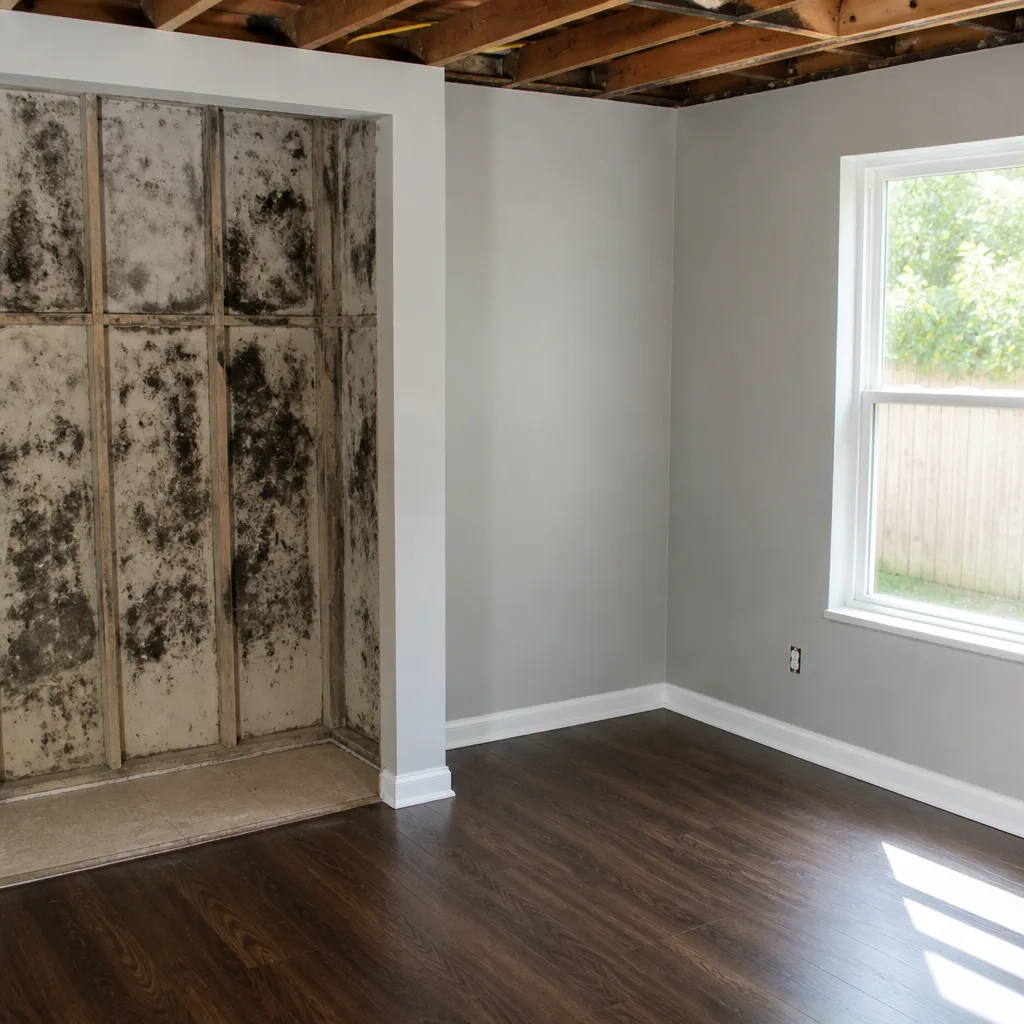
- Run your hand along the bottom six inches of finished drywall in basement rooms. Discoloration, bubbling paint, or a vague coolness that never goes away all indicate moisture behind the wall. The paper backing of drywall is mold food.
- Check the perimeter cove joint, the seam where the floor meets the wall. Water entering through the cove joint is a classic hydrostatic pressure symptom, and it means the ground outside is holding more water than the slab can resist.
- Inspect the sump pit for sediment buildup. A pump sitting in six inches of sludge can’t draw efficiently, and it may overheat and shut off during a storm when you need it most.
- Monitor the relative humidity. If the basement routinely reads above 60% humidity on a hygrometer, you’ll eventually see mold growth on organic surfaces. A dehumidifier that drains continuously to a floor drain or sump pit is the right fix.
If you have a crawl space instead of a full basement, the same rules apply, but you also need to confirm the vapor barrier on the ground is intact and covers the entire soil area. A torn or undersized vapor barrier in a Secaucus crawl space puts that damp, musty smell into the living spaces above within a season.
Appliance Hoses and Supply Lines: The First 80% of Failures
We field calls in Secaucus every month for appliance line failures, and the story is always the same. The hose was original to the machine, the homeowner had no idea hoses have a lifespan, and the water ran for hours before anyone saw it. A washing machine supply line under full house pressure delivers about five to seven gallons per minute. In 30 minutes, that’s 150 to 210 gallons on the floor, through the ceiling, or down the walls.
Three rules cover almost every failure we see:
- Replace rubber washing machine hoses every five years, and replace braided stainless hoses every 10 years even if they look new. The braided jacket protects the rubber core from cuts but hides the core’s deterioration. Write the install date on a piece of masking tape and wrap it around the hose.
- Inspect dishwasher and ice maker supply lines monthly for any sign of crimp, kink, or leak at the connection. Dishwasher lines run behind the machine where they’re never seen, and a slow drip there rots the subfloor before you notice the smell. Look for raised, darker staining on the floor in front of the machine.
- When you shut the water off to a fixture, always shut it off at the branch valve, not the main. An old stop valve that hasn’t been turned in years may not seat fully when reopened. If a valve is frozen, stiff, or won’t move, replace it before it becomes the reason the house floods.
For homeowners in Secaucus with older homes, these rules matter double. Many houses in our community date to the 1940s and 1950s and still have original galvanized supply lines in the walls. Galvanized pipe corrodes from the inside and fails without warning, and no amount of monthly inspection catches it early. If your home still has galvanized plumbing, the best insurance is a whole-house repipe sooner rather than later, and the second best is knowing how to shut the main off fast.
The Sump Pump System: Your First Line of Defense in Secaucus
No single piece of equipment prevents more Secaucus basement floods than the sump pump. It runs silently, patiently, and for years without attention, until the one storm that would have overwhelmed the pit without it. Then it matters more than any other device in the house.
A properly maintained sump pump system has four working parts:
- The pump itself. A submersible pump should move at least 35 gallons per minute to handle our heaviest rain events. Pedestal pumps, with the motor mounted above the pit, cost less but fail sooner and can’t keep up in a real storm.
- The check valve. This one-way valve on the discharge pipe prevents the water you just pumped from draining back into the pit. A missing or failed check valve short-cycles the pump and burns out the motor.
- The discharge line. It must direct water at least four feet from the foundation and ideally slope away for the entire run. A discharge line that dumps at the base of the wall pumps the same water back into the pit, over and over.
- The backup system. In Secaucus, a battery backup or water-powered backup pump is not an option. It’s the difference between a dry basement and a flooded one when the power goes out in the middle of a Nor’easter. A battery backup runs the pump for several hours; a water-powered backup runs indefinitely as long as municipal water pressure holds.
Test the system monthly during the rainy months. Fill the pit and watch the pump cycle. Listen for a clean shutoff when the float drops. And if the pump is more than 10 years old, replace it before the season, not after the flood.
Gutters, Downspouts, and Grading: Moving Water Away From the Foundation
The most effective water damage prevention in Secaucus does not happen inside the house. It happens at the roofline and the soil line, where water is either directed away or allowed to pool against the foundation. A single one-inch rain event drops about 620 gallons on a 1,000-square-foot roof. If the gutters are clogged, most of that water sheets off the edge and lands within a foot of the slab, over and over, all season long.
Here is the full drainage checklist:
- Gutters clear, seamless, and pitched. Gutters should pitch toward the downspout at one inch per ten feet. If you see standing water in the gutter after a rain, the pitch is off or a hanger has sagged.
- Downspouts and extensions functional. Every downspout should terminate in an extension, a splash block, or an underground drain that carries water at least four feet from the foundation. Six feet is better. Ten feet is ideal.
- Splash blocks positioned correctly. A splash block that has shifted or sunk lets water run backward toward the slab instead of away. Reset it and pack the soil beneath it tightly.
- Positive grading around the entire perimeter. The soil should slope down and away from the house. If it slopes toward the house anywhere, add compacted fill until it slopes away. In Secaucus, where many homes are built on fill that has settled over decades, regrading is a five-figure job worth doing once.
- Window wells covered and drained. A window well that fills with water during a storm is a direct line to the basement. Use a clear polycarbonate cover and check that any drain at the bottom is not clogged with leaves and silt.
These are not complicated tasks, but they are physically demanding and require attention to fall safety. If working on a ladder or stepping onto a roof is outside your comfort zone or physical ability, hire a professional gutter service. The money you spend on a seasonal gutter cleaning is a fraction of what one flooded basement costs.
Reading the Early Warning Signs of Moisture Intrusion
Water damage restoration in Secaucus would be a much rarer event if every homeowner could read the early signals moisture leaves behind. Water always announces itself long before the flood, in smells, stains, and small physical changes. Here is how to read the room:
- Musty smell that persists after cleaning. That smell is microbial volatile organic compounds emitted by mold growing somewhere you cannot see. It doesn’t have to be black mold; any mold signals a moisture source that hasn’t stopped.
- Warped or cupped flooring near exterior walls, under windows, or around plumbing fixtures. Hardwood and laminate both respond to moisture by expanding. A board that lifts at the edges is a moisture map showing you where the water is pooling.
- Bubbling or peeling paint or wallpaper on exterior or below-grade walls. The water is in the wall cavity behind the finish, and it’s been there long enough to degrade the adhesive and push the paint off the surface.
- Visible staining on ceilings. Brown rings or yellow patches on a ceiling mean water from a leak has saturated the drywall. The rings show multiple wetting and drying cycles, which tells you the leak has been there for a while.
- Efflorescence on foundation walls. This fluffy white deposit is dissolved minerals left behind when water passes through masonry and evaporates. It’s the clearest signal that groundwater is moving through the wall.
- A humidity gauge that reads high for days in a row. In a Secaucus basement, sustained humidity above 60% means the space is slowly absorbing moisture from the air, the walls, or the floor underneath.
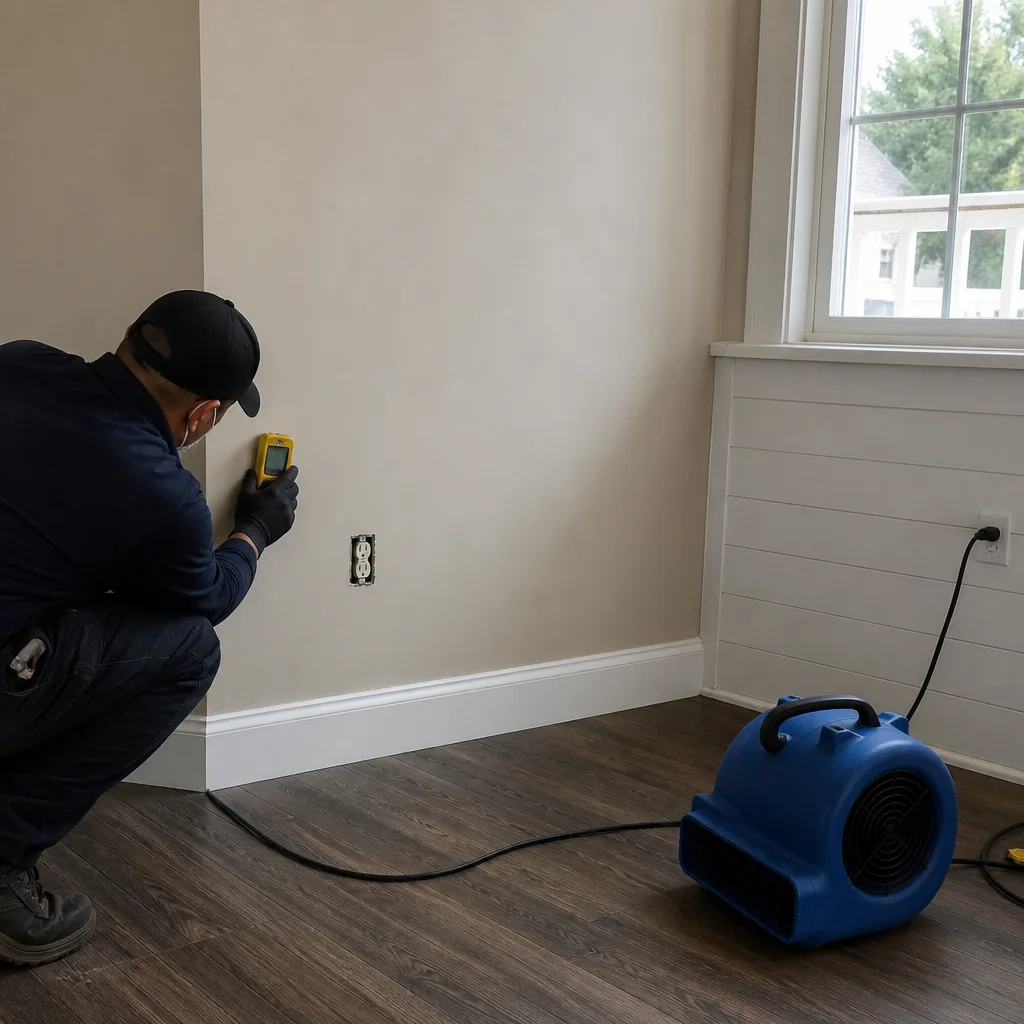
Any one of these signs is worth a phone call. Two or more, and the smart move is a professional moisture assessment. The team at Floodline Restoration Co. has been reading moisture maps in Secaucus since 2010, and we use the same Dri-Eaz and Phoenix equipment to find hidden water that we use to dry it out.
Common Mistakes to Avoid
- Ignoring a small stain because it’s “not getting bigger.” Water behind a wall never stops moving. It wicks upward through drywall, spreads along the floor joist, and feeds mold growth you can’t see. By the time the stain grows, the framing has been wet for months.
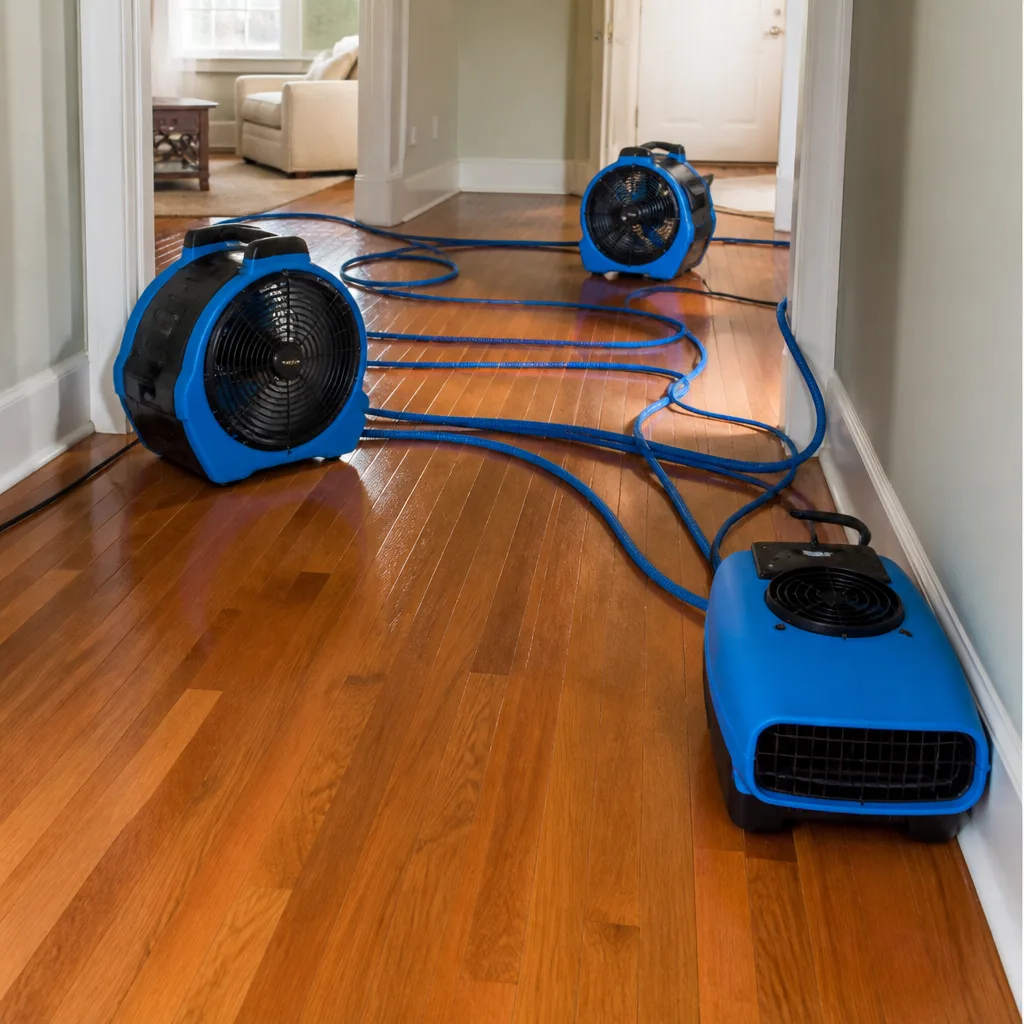
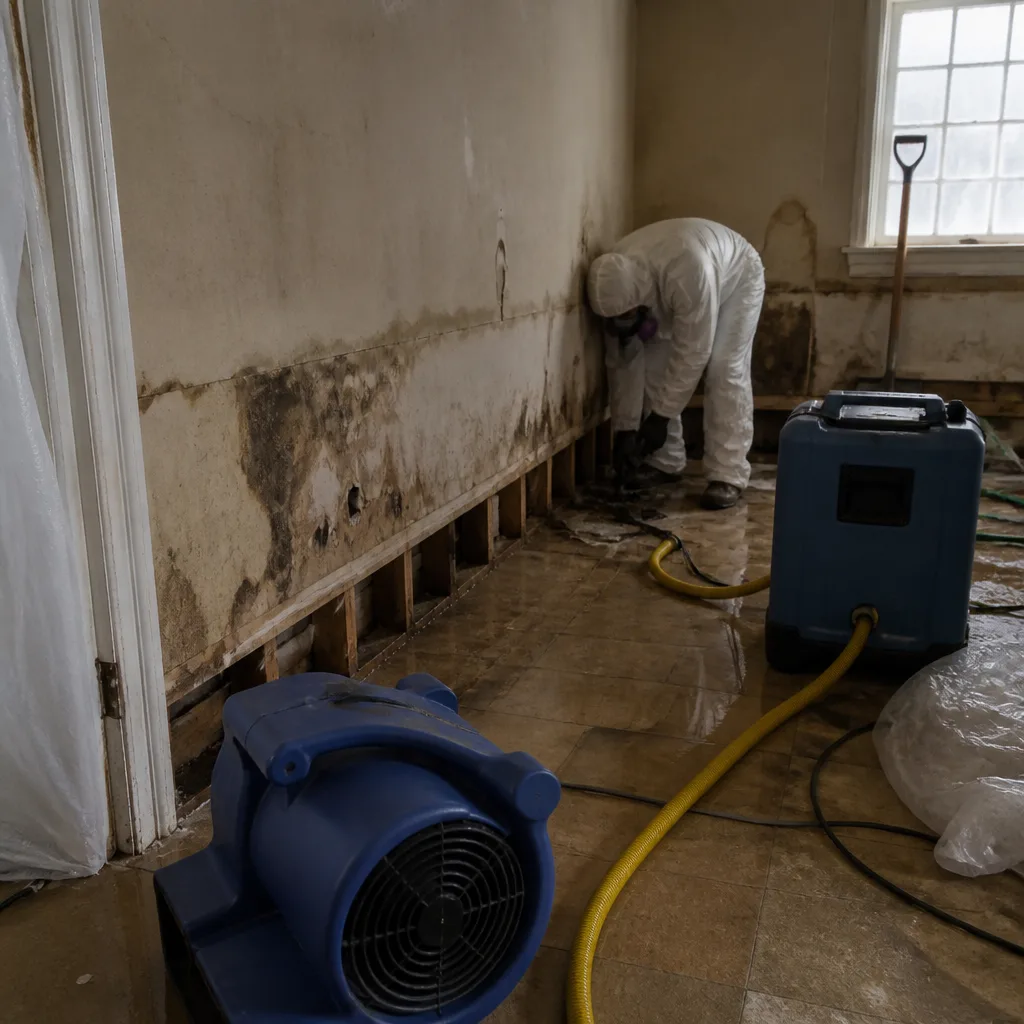
- Using a household fan to dry a water event instead of calling a professional. A box fan moves air over the surface but doesn’t pull water from inside walls, under baseboards, or from the subfloor. That moisture stays trapped and does its damage silently. Professional-grade Phoenix and Dri-Eaz equipment pulls water from the materials themselves, with daily moisture readings logged until the dry standard is met.
- Waiting to replace a sump pump that “still works.” A pump that has given you eight or ten years of service is on borrowed time. Replace it before the storm that kills it, and install a battery backup the same day.
- Dumping the dehumidifier too close to the wall. A dehumidifier placed against a wall creates a pocket of dry air that reads well on its own sensor while the rest of the basement stays damp. Position it 18 inches from walls and furniture so air circulates evenly.
- Not documenting water damage with photos before cleanup begins. Your insurance carrier needs a clear record of what got wet and how far the damage extended. Take photos from multiple angles before moving anything, and keep them. We photograph and document every job as part of our standard process, and we work directly with your adjuster so you’re never left playing messenger.
When to Call a Professional
Some problems are meant for a checklist. Others are meant for a trained crew with professional-grade equipment and a moisture map. Call a professional immediately if you see water actively entering your home from any source, if the water has been standing for more than a few hours, if you smell mold, if a pipe has burst, or if the sump pump failed during a storm. These are not wait-and-see situations. Every hour the water sits, it wicks further into the structure. Floodline Restoration Co. offers free estimates in Secaucus, and we answer the phone with a live person around the clock, so a certified crew can reach your home and start extraction the same visit. Call (201) 762-0667.
Frequently Asked Questions
Monthly, and more often during heavy rain seasons. A 20-minute walkthrough covers all six high-risk systems, and it’s far cheaper than remediation. In Secaucus, where the water table is high and older homes are common, monthly checks are the single best habit a homeowner can build.
In our experience, appliance hose failures and supply line leaks are the most common causes we see, followed closely by sump pump failures during heavy rain. Galvanized supply lines in older Secaucus homes also fail without warning and account for a meaningful share of our emergency calls.
It depends on the source. Sudden and accidental events, like a burst pipe or a washer hose failure, are typically covered. Gradual leaks that went unaddressed for months often are not. Flooding from rising groundwater or exterior flooding requires a separate flood policy. We work directly with your adjuster and provide photo documentation to support your claim. Call (201) 762-0667 and we’ll help you understand your coverage before you file.
If you’re dealing with active water, you can reach a live dispatcher 24/7 and a certified crew can be at your door on the same visit. Extraction equipment gets running the same day, which is what stops the damage from spreading. The sooner extraction starts, the less material has to be replaced.
If water moved beyond the surface of the floor, the answer is almost always full restoration. Fans dry the air in the room, not the water trapped inside the walls, under the baseboards, or in the subfloor. We use professional-grade Dri-Eaz, Phoenix, XPOWER, and B-Air equipment to pull moisture from the materials themselves, and we log daily readings until every surface meets the dry standard. If you’re not sure, call us. A quick assessment costs nothing and gives you a straight answer.
Shut off the water source if you can access it safely, shut off power to any affected rooms, take photos of the damage, and call a professional restoration company. Don’t use a wet/dry vacuum on standing water that may have touched electricity, and don’t enter a room with standing water and live outlets. Call (201) 762-0667 and a live person will walk you through the first steps while the crew is on the way.
The Bottom Line
Water damage in Secaucus is never a small problem that stays small. It’s a slow, patient force that works its way into foundations, framing, and finished rooms while homeowners believe the worst is behind them. The good news is that most water damage is preventable with a consistent, low-cost routine. Check the six systems monthly. Maintain your sump pump and install a backup. Keep your gutters clean and your grading positive. Replace appliance hoses on schedule. And when something does go wrong, call a restoration company that shows up fast, documents everything, works directly with your insurance carrier, and stands behind the work in writing, with the 90-Day Done Right Promise. That’s what we’ve been doing in Secaucus since 2010.
Written by Curt Bowman, Owner at Floodline Restoration Co., serving Secaucus since 2010.