
Free visual inspection and a written scope of work before any mitigation begins - photos, moisture readings, and drying logs go in your claim file
The scope we write is the scope we bill. Anything new gets shown to you, in writing, before we touch it.
 Before
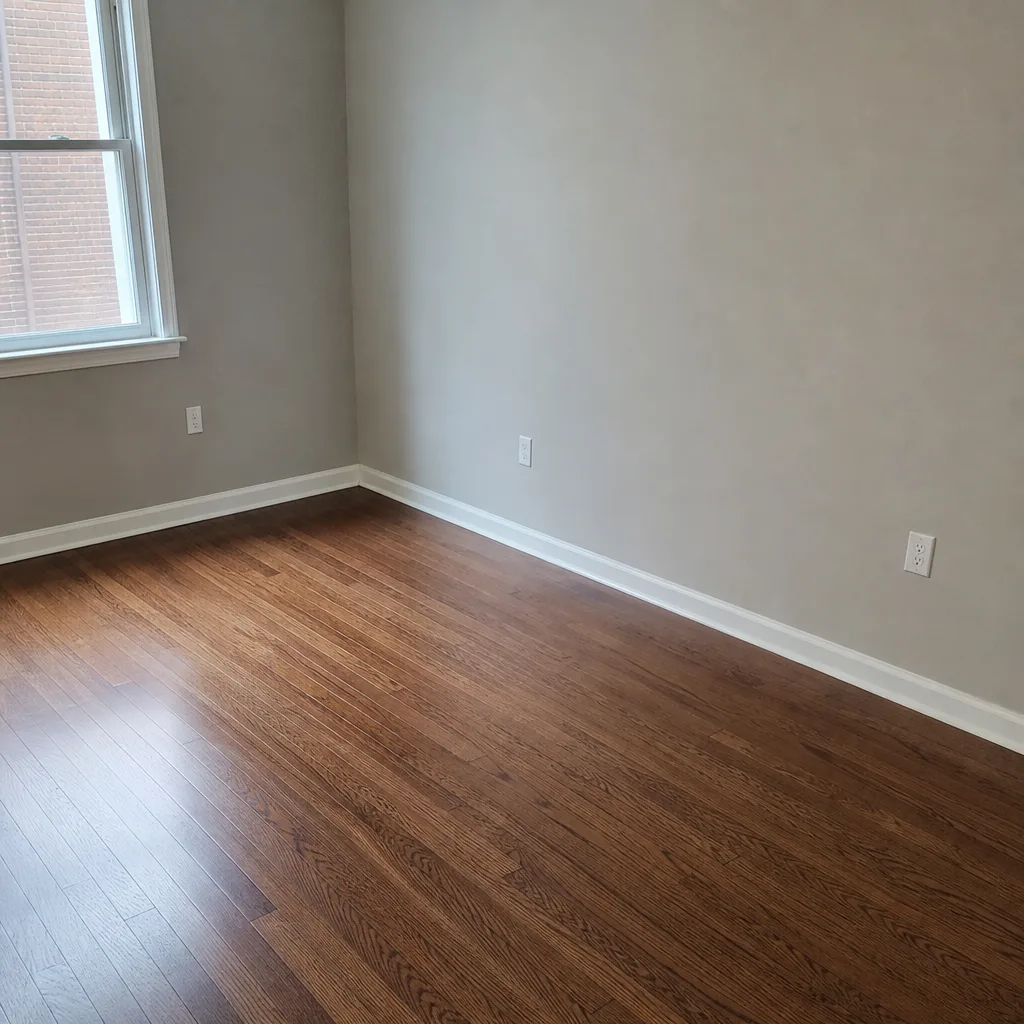 After
After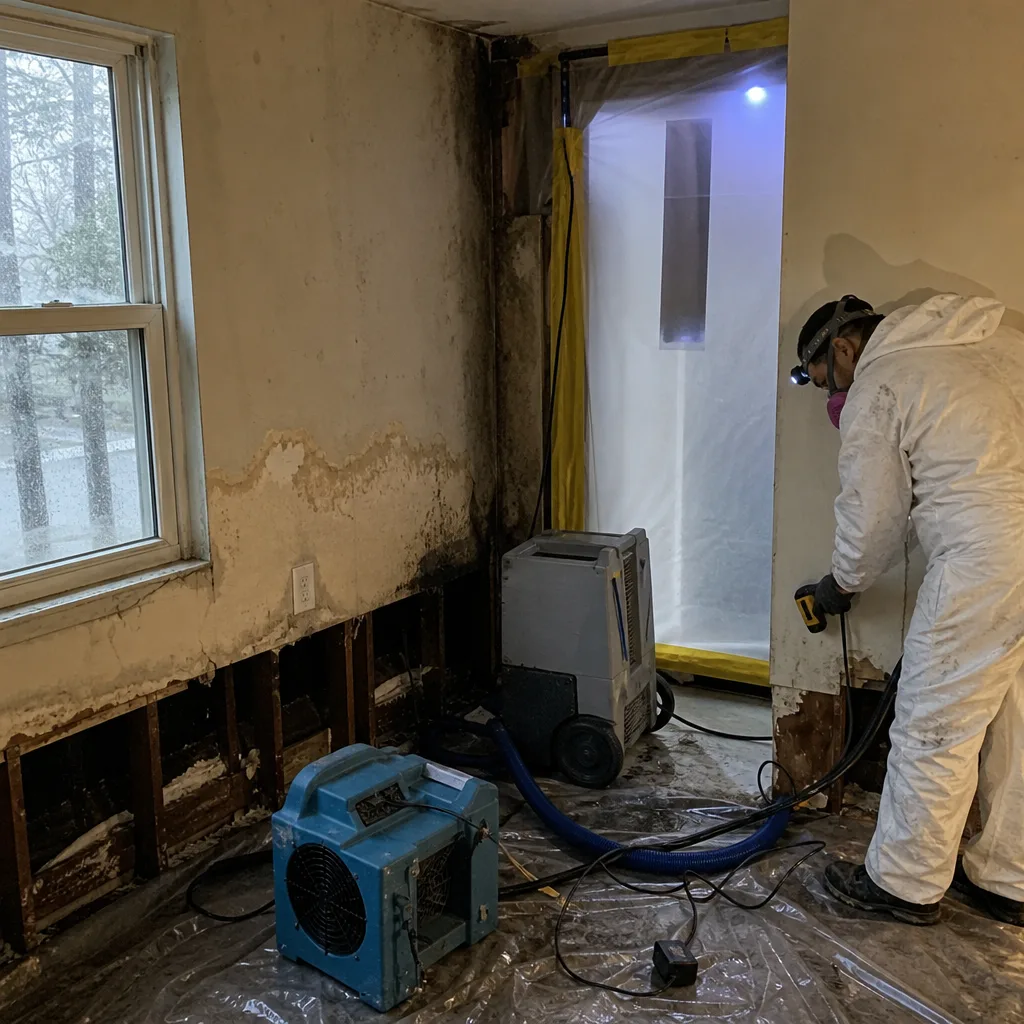 Before
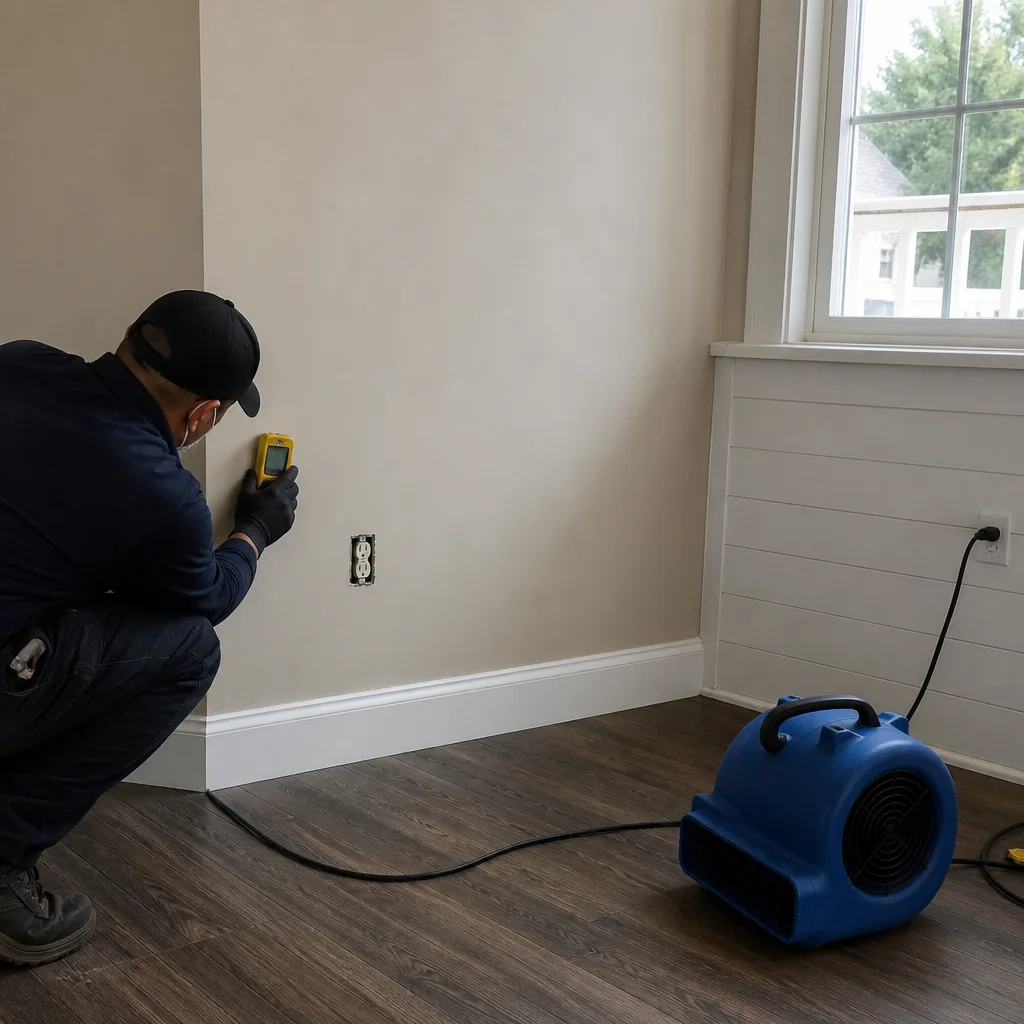 After
After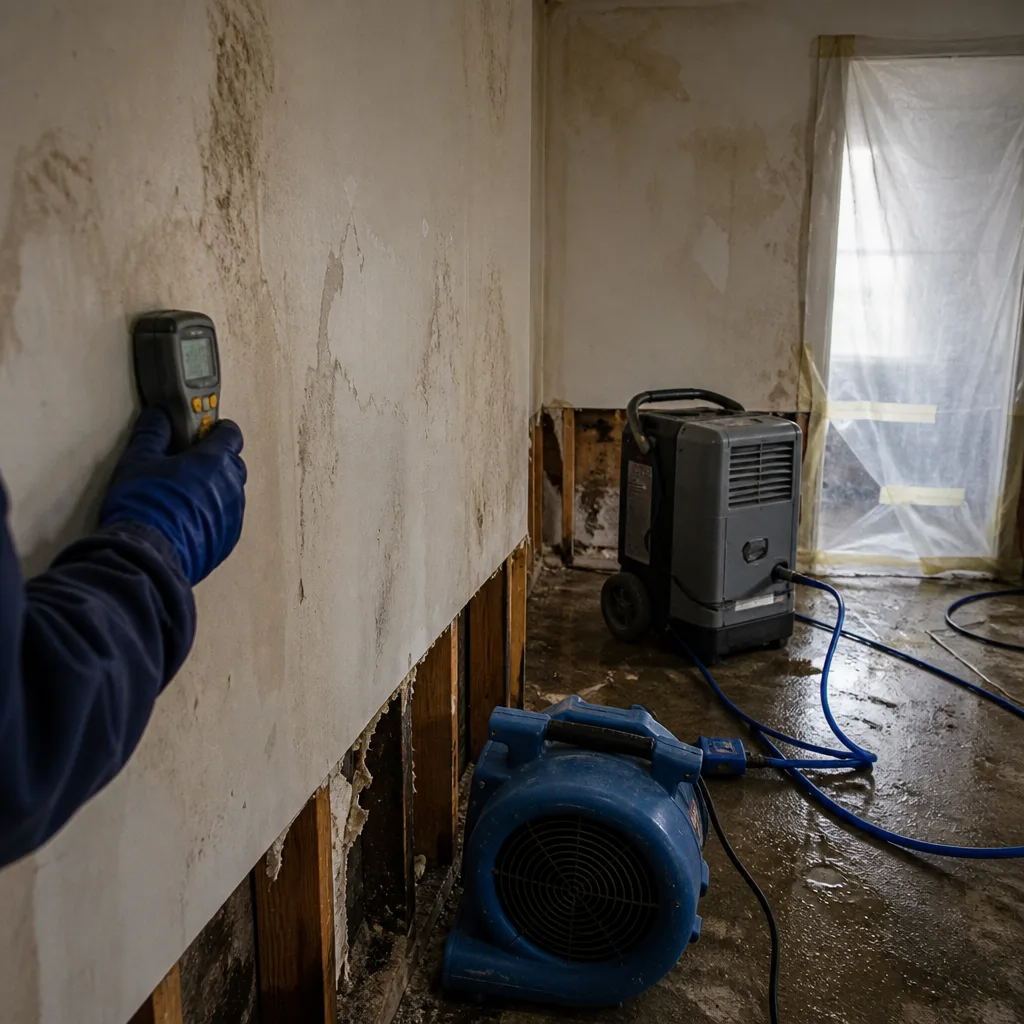 Before
 After
After24/7 Emergency Storm & Disaster Restoration in Carlstadt
Storm damage in Carlstadt doesn’t wait for business hours, and neither do we. Floodline Restoration Co. answers the phone with a live person at 2 a.m., not a recording, and our certified crews reach properties across the Meadowlands freight corridors within the hour. Call (201) 762-0667 the moment you see water moving across a slab or wind has compromised an opening. The first hour matters most with this kind of damage: wind-driven rain pushing through a failed roll-up door or missing roof section keeps saturating the concrete slab beneath it, and every hour of standing water pulls more moisture up through the slab from the high Meadowlands water table below. A free visual inspection gets a certified technician on site fast, and then extraction starts that same visit.
Understanding Storm & Disaster Restoration Severity in Carlstadt Properties
Storm restoration in Carlstadt splits into two very different damage profiles, and the severity assessment starts with the building type. Most calls come from slab-on-grade commercial structures along Washington Avenue, Commerce Road, and the freight corridors feeding the Meadowlands industrial core. These buildings suffer Category 3 water when the Hackensack River backs up through storm drains or when a nor’easter drives debris through a roll-up door. That water carries sewage, fuel residue, and whatever the surge picked up crossing the lowlands. It demands full containment, biocide treatment, and structural drying well beyond what a residential basement ever requires. The smaller residential stock in Carlstadt, mostly early-1900s one- and two-family homes along Hoboken Road and Broad Street, sees a different failure mode: wind-driven rain entering through aged windows and roof penetrations, plus localized flooding from overloaded catch basins. Moisture mapping in either case uses thermal imaging and penetrating hygrometers, because surface readings miss what’s wicking up through a concrete slab. In Carlstadt, you cannot dry a slab like you dry a wood-framed floor. The peat and fill soils under the borough hold water for weeks after the flood event has visibly receded, which means daily drying logs and extended dehumidification are standard here, not optional.
Why Carlstadt Property Owners Choose Floodline Restoration Co.
- 45-minute response commitment – crews are stationed to reach Carlstadt fast when a storm opens a building to the weather.
- Live answer, 24/7 – a dispatcher picks up at two in the morning. Every time. No automated phone tree.
- IICRC-certified crews – WRT and ASD certified technicians run the drying floor, with AMRT-certified crew leads where mold is present.
- Free visual inspection – we assess the damage on site at no charge before any work begins or any scope is written.
- Direct insurance billing – we coordinate with commercial flood adjusters and carriers directly, including the documentation Carlstadt properties actually need.
- One team, start to finish – from emergency board-up through structural drying and rebuild, you’re not handed off to a different crew mid-job.
Our Storm & Disaster Restoration Process
Inspection & Assessment
We arrive, walk the property, and map every surface that took water or wind. Thermal imaging and hygrometer readings establish a moisture baseline, and we check wind-load ratings on any door or opening that failed.
Extraction / Stabilization
Standing water comes out first, then we board and tarp any openings. This includes temporary roll-up door stabilization on commercial structures where freight operations need to resume safely.
Drying & Dehumidification
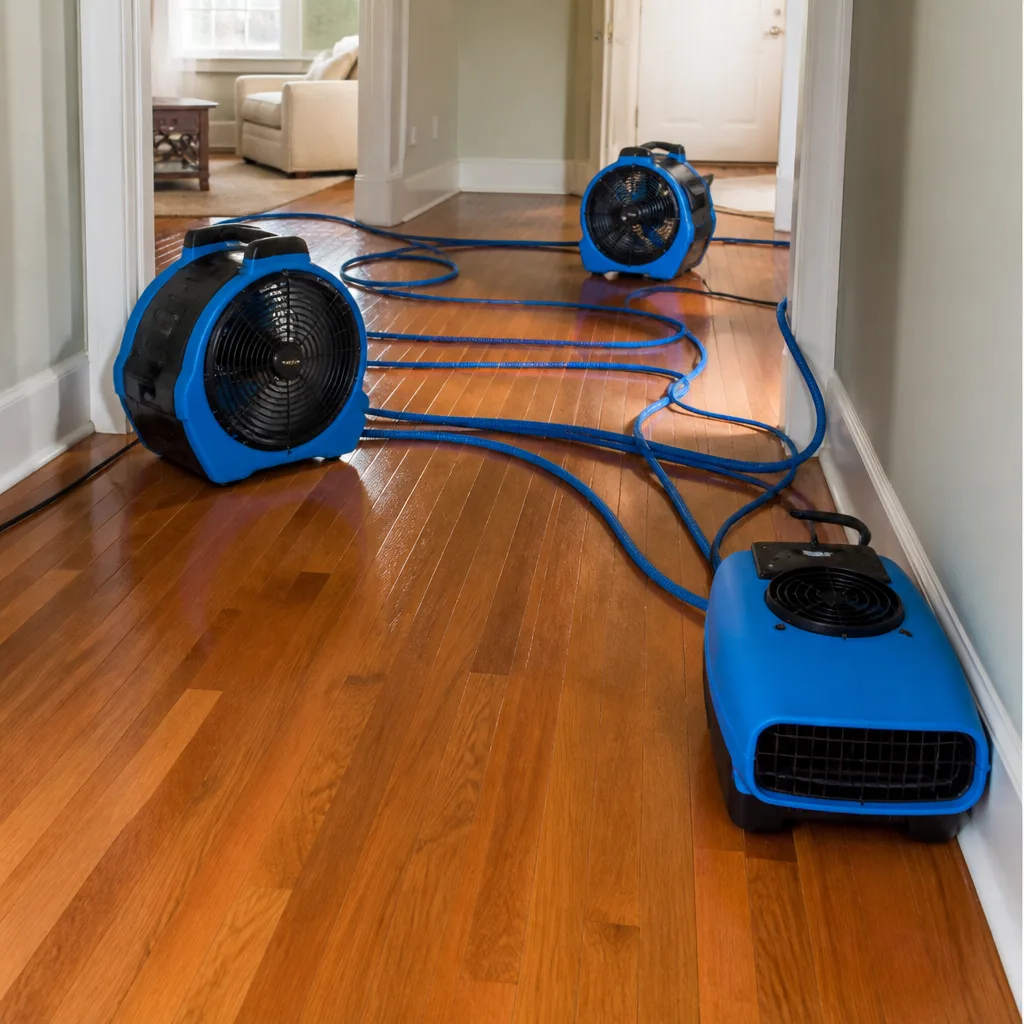
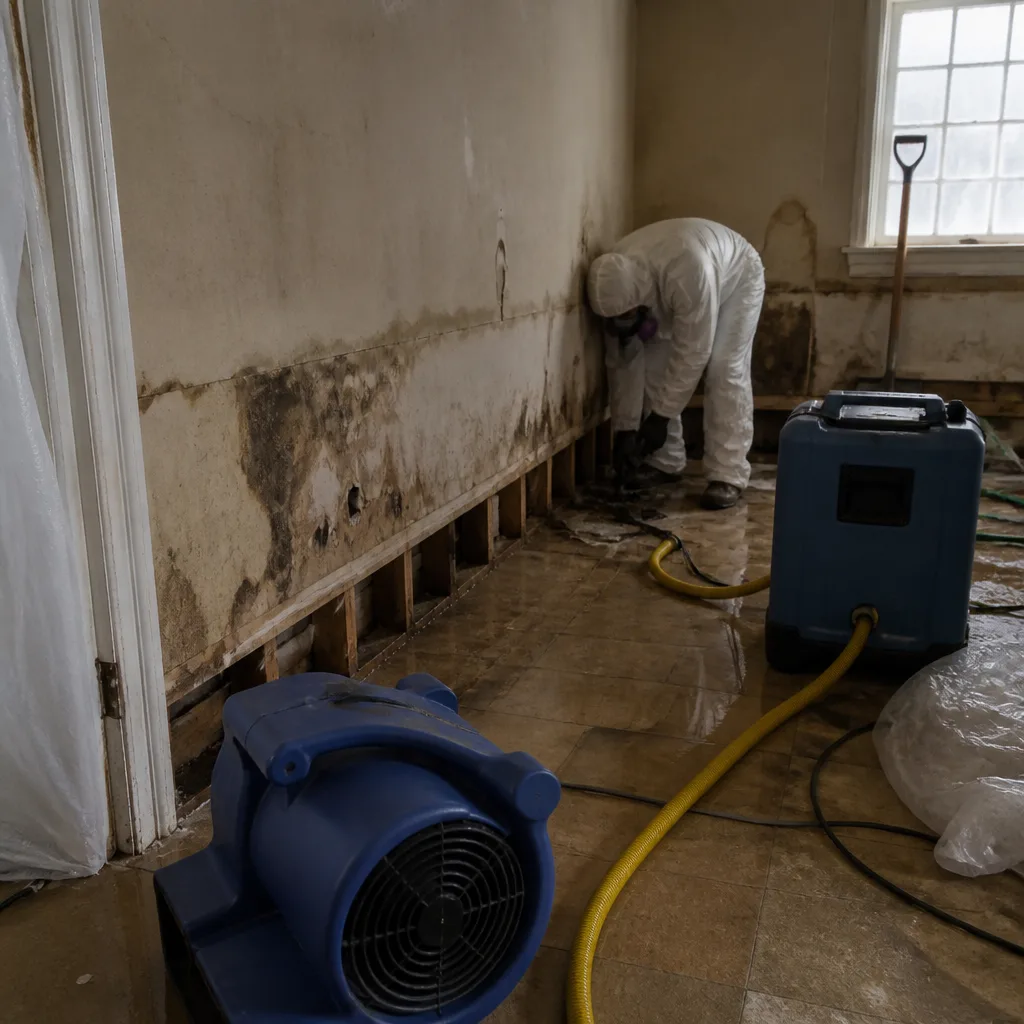
Dri-Eaz dehumidifiers and XPOWER air movers go to work across the affected slab or floor area. Daily moisture readings get logged until the dry standard is met, which in Carlstadt typically takes longer than upland Bergen County towns because of the persistent Meadowlands water table.
Cleaning & Sanitization
Category 2 or 3 water gets full biocide treatment and antimicrobial application. HEPA air scrubbers run throughout containment to keep spores and contaminated dust from spreading to unaffected areas.
Wind Damage Repair & Structural Reinforcement
We assess and repair roll-up doors, track systems, and wind-bracing. Any door that failed gets evaluated against current wind-load code requirements before we reinstall or recommend replacement.
Repairs & Restoration
From drywall and framing to commercial dock equipment and roof systems, the same crew that extracted the water handles the rebuild. We hand you a written scope before that work begins.
Need Emergency Storm & Disaster Restoration in Carlstadt Now?
Crews minutes away, answering live 24 hours a day. The sooner we start, the less it costs.
Working With Your Insurance Company
Commercial flood claims in Carlstadt carry a paperwork load that residential polices never see, and the adjusters assigned to these files know the repeat-loss addresses. We document from the first hour: photos of every affected area before extraction, moisture readings taken at initial assessment, daily drying logs that show the slab’s progress toward dry standard, and a line-item scope that speaks the language commercial carriers expect. We coordinate directly with your adjuster, so you’re not translating technical drying data into claim language. For properties in FEMA-designated Special Flood Hazard Areas, we produce the elevation certificate and repeat-loss documentation that adjusters require before approving mitigation scopes.
What We Provide Your Insurer
- Thorough documentation of the loss
- Photos of all damage, room by room
- Moisture readings and drying logs
- A detailed, line-item scope of work
- Direct coordination with your carrier
Built for Carlstadt’s Loss Calendar
Carlstadt’s storm damage calendar tracks the Hackensack River and the Atlantic storm season more than it tracks the thermometer. Nor’easters from November through March are the biggest single driver of major losses: sustained northeast winds drive rain horizontally against warehouse door faces and push storm surge up the river into the borough’s drainage network. Spring brings heavy rain events that overwhelm catch basins in the low-lying commercial core, sending sheet water across slabs and into dock-leveler pits. Summer thunderstorms arrive fast and drop inches in an hour, which the flat Meadowlands geography has nowhere to drain. And because Carlstadt sits at or near sea level, even a moderate coastal storm can push brackish water up through the tidal backflow system. Property owners who have gone through this before know the pattern: the water recedes into the peat soils, but the slab keeps wicking moisture for weeks. That’s why we set drying expectations differently here than we would in Rutherford or East Rutherford.
Storm & Disaster Restoration Across Carlstadt’s Neighborhoods
The geography of Carlstadt dictates how storm restoration plays out block by block. Along Washington Avenue and through the central industrial district, large distribution centers and freight-forwarding operations run the length of the commercial spine. These are the properties that take the worst of the wind damage: oversized roll-up doors facing the prevailing nor’easter winds, concrete slabs that measure in the tens of thousands of square feet, and loading docks that channel wind-driven rain straight into the building. East of Route 17, closer to the Hackensack River, the flood risk climbs sharply. Properties in this band sit closest to the river surge path and the tidal backflow outlets, and we respond to water intrusion here after every major coastal event. The residential pockets around Hoboken Road and Broad Street present a smaller-scale version of the same problem: older two-family homes with slabs that wick moisture from the same saturated soils, but with smaller air movers and shorter drying runs. Near the Moonachie border, the storm patterns shift slightly; wind exposure picks up across the open marshland and the drainage response gets slower as the land drops toward the river.
Specialized Storm & Disaster Restoration Services We Offer in Carlstadt
Wind Damage Repair
Wind is the primary enemy of Carlstadt’s commercial buildings. A 60-mph nor’easter gust against a 12-by-14-foot roll-up door exerts thousands of pounds of lateral force, and when a track lets go the entire opening fails. We repair track systems, reinforce mounting hardware, and assess every door against its wind-load rating before returning it to service. A door that failed once in Carlstadt will fail again unless the root cause is addressed.
Emergency Board-Up
When a door or window fails during a storm, the opening has to be stabilized before drying can begin. We use structural plywood and bracing rated to hold against continued wind loads, not just to keep the curious out. For commercial roll-up doors, that means securing the opening in a way that protects the freight operations behind it while we assess the door’s repair path.
Storm Damage Cleanup
After the wind stops and the water recedes, the debris remains: displaced racking, saturated cardboard, mud packed against the dock threshold, and whatever the surge carried in. We remove contaminated debris, pressure-wash affected slabs, and prepare surfaces for drying and sanitization. This is the step that gets a Carlstadt warehouse back toward operational readiness.
Flood Damage Restoration
When the Hackensack River or the storm drain system sends water into your building, the response has to account for what’s in that water. Category 3 water from river backflow carries sewage and industrial contaminants across the slab. We handle it with full containment, biocide treatment, and structural drying that accounts for the moisture already moving up through the concrete before the flood ever arrived.
Roof Tarping
A nor’easter can tear membrane roofing in the middle of the night, and wind-driven rain follows immediately. We tarp the affected roof sections with materials rated for continued wind exposure, preventing interior damage from multiplying while a permanent roof repair is scoped and scheduled. On Carlstadt’s flat commercial roofs, proper tarping means anchoring beyond just the damaged square footage.
Debris Removal
Storm debris in Carlstadt is a working problem, not just a cleanup chore: a blocked dock door or a debris pile against a utility room door can stop freight operations entirely. We clear debris from building openings, loading zones, and drainage paths, then document everything for your claim.
What happens when you call
- 1
A real person answersNo phone trees - you reach a local pro.
- 2
You get an upfront price rangeHonest numbers before anyone is dispatched.
- 3
A background-checked tech heads outLicensed & insured, dispatched right away.
- 4
You approve before work beginsNothing starts until you say go.
Storm & Disaster Restoration Costs in Carlstadt, NJ
Storm damage restoration in Carlstadt is priced against the scale of the structures involved, and the numbers are honest. Emergency board-up of a compromised roll-up door or window opening typically runs $400 to $1,200, depending on the opening size and whether structural bracing is needed. Roof tarping on a commercial flat roof in Carlstadt runs $800 to $2,500 for a standard damage area, more if the membrane section is large or difficult to access. Water extraction and drying of a warehouse slab typically runs $3 to $5 per square foot, so a 3,000-square-foot saturation zone lands between $9,000 and $15,000. Wind damage repair to a roll-up door track system runs $600 to $2,800, while full door replacement on a commercial freight opening runs $4,000 to $12,000 depending on size and wind-load rating. Debris removal on a storm-affected commercial site runs $500 to $3,000. Most commercial storm claims in Carlstadt fall under flood or wind policies and involve adjuster-approved scopes; we bill insurance directly wherever the claim covers the work. For anything your carrier won’t cover, you’ll see the line-item number before we start. Call (201) 762-0667 for a free inspection and a written scope.
We Also Serve Cities Near Carlstadt
The same certified crews that handle Carlstadt’s commercial storm damage also serve the surrounding Meadowlands and Bergen County communities. We respond regularly to storm and flood restoration calls in East Rutherford, Rutherford, Moonachie, and Passaic, bringing the same wind-load expertise and slab-drying protocols to every property we touch.
Serving Carlstadt, NJ - Our Local Coverage Area
We’re based in the Carlstadt area and know this community well. Use the map below to see our service coverage - if you’re nearby, we can almost certainly help.
Carlstadt Storm & Disaster Restoration Questions, Answered
Why do commercial warehouses in Carlstadt take longer to dry after a flood than similar buildings in Wood-Ridge or Rutherford?
Carlstadt sits on peat and fill soils in the Hackensack Meadowlands with a water table that stays high year-round. Concrete slab-on-grade floors wick that groundwater upward continuously, so after a flood event the slab is being re-wetted from below even as dehumidifiers pull moisture from above. Upland towns like Wood-Ridge and Rutherford sit on better-draining soils, so their slabs dry closer to the textbook timeline. In Carlstadt, we typically extend drying runs by 30 to 50 percent over what the same square footage would require in an upland borough. Call (201) 762-0667 if you need a drying timeline calculated for your specific property.
What wind-rating documentation does Carlstadt require before a damaged roll-up door can be reinstalled on a commercial building?
Carlstadt enforces the New Jersey building code’s wind-load provisions, which for the Meadowlands commercial zone require roll-up doors on large freight openings to meet specific design pressure ratings based on exposure category and building height. After a storm, a door that failed its track or panel system must be re-evaluated against those ratings before it can go back into service. We document the existing door’s rated capacity versus what the code requires for the opening, and if the door is under-rated we specify an upgrade rather than reinstalling a door that will fail again. The written scope we provide your adjuster includes this wind-load verification.
How do you handle category 2 or 3 water in a Carlstadt warehouse after Hackensack River backflow?
River backflow water in Carlstadt is Category 3, which means it carries sewage, fuel residue, and whatever else the surge picked up. We don’t treat it like a clean-water event. Full containment goes up around the affected area, HEPA air scrubbers run throughout, and we pump out the standing water before applying antimicrobial treatment to every surface the water touched. Contaminated porous materials get removed, not dried. The slab then gets structural drying with daily moisture logs until it meets the dry standard, with the understanding that the Meadowlands water table beneath the slab extends the timeline. Call (201) 762-0667 for a same-day assessment.
Why do I need an elevation certificate before my Carlstadt commercial property can be restored after a flood?
Most commercial properties in Carlstadt sit inside FEMA-designated Special Flood Hazard Areas, and many have documented repeat-loss histories. Commercial flood insurance policies on these properties require current elevation certification before a claim scope is approved, because the certificate establishes the relationship between the building’s lowest floor and the base flood elevation. Without it, adjusters stall on approving mitigation scopes, and water extraction gets delayed on an already saturated slab. We produce the elevation certificate documentation and coordinate directly with your commercial flood adjuster so the claim can move forward without you running interference. This is a paperwork layer we handle every month in Carlstadt and far less often in upland towns.
Can you restore a large roll-up door after a storm, or does it always need full replacement in Carlstadt warehouses?
Most storm-damaged roll-up doors can be restored if the track system is intact and the panels bent but not structurally compromised. We repair tracks, replace damaged panel sections, and re-tension the spring system. Replacement becomes necessary when the door’s wind-load rating is below what Carlstadt’s code requires for the opening, when the track damage extends into the building structure, or when panels are deformed enough to compromise the door’s wind resistance. We give you a straight answer either way, with a written scope and cost before any work proceeds. Call (201) 762-0667 for a door assessment.
How fast can you actually get to my Carlstadt property during a storm?
Our commitment is a 45-minute response to Carlstadt properties, and our crews are stationed to make that realistic even when the storm is still moving through. A live dispatcher answers the phone at any hour, and the crew is dispatched the same minute. We do not use answering services or callback queues. When you call (201) 762-0667 at 2 a.m., you talk to a person who can tell you exactly when the truck rolls.
Will my commercial flood insurance cover storm restoration in Carlstadt?
Most commercial storm damage in Carlstadt is covered under a combination of wind and flood policies, but the coverage depends on how the water got in. Wind-driven rain through a storm-damaged opening is typically a wind claim; water that rose from the Hackensack River or backed up through the drainage system is typically a flood claim. We document the cause of loss from the first hour, photograph the failure point, and coordinate directly with whichever carrier holds the appropriate policy. Some Carlstadt properties carry both, and we handle the documentation both adjusters need.
What should I do in the first 30 minutes after storm damage in Carlstadt?
First, get everyone out of the affected area and cut power if water has reached outlets or equipment. Second, call (201) 762-0667. Third, if it’s safe, take photos of the damage before anything is moved. Try not to walk through contaminated water in work boots that will track it across unaffected areas. Don’t run commercial fans or HVAC systems in the affected zone, because that pushes contaminated moisture into clean spaces. The faster we’re on site with extraction running, the less the slab absorbs and the shorter your drying timeline will be.
Written by Curt Bowman, Owner at Floodline Restoration Co., serving the Storm & Disaster Restoration needs of Carlstadt property owners with certified crews and a written guarantee on every job.