
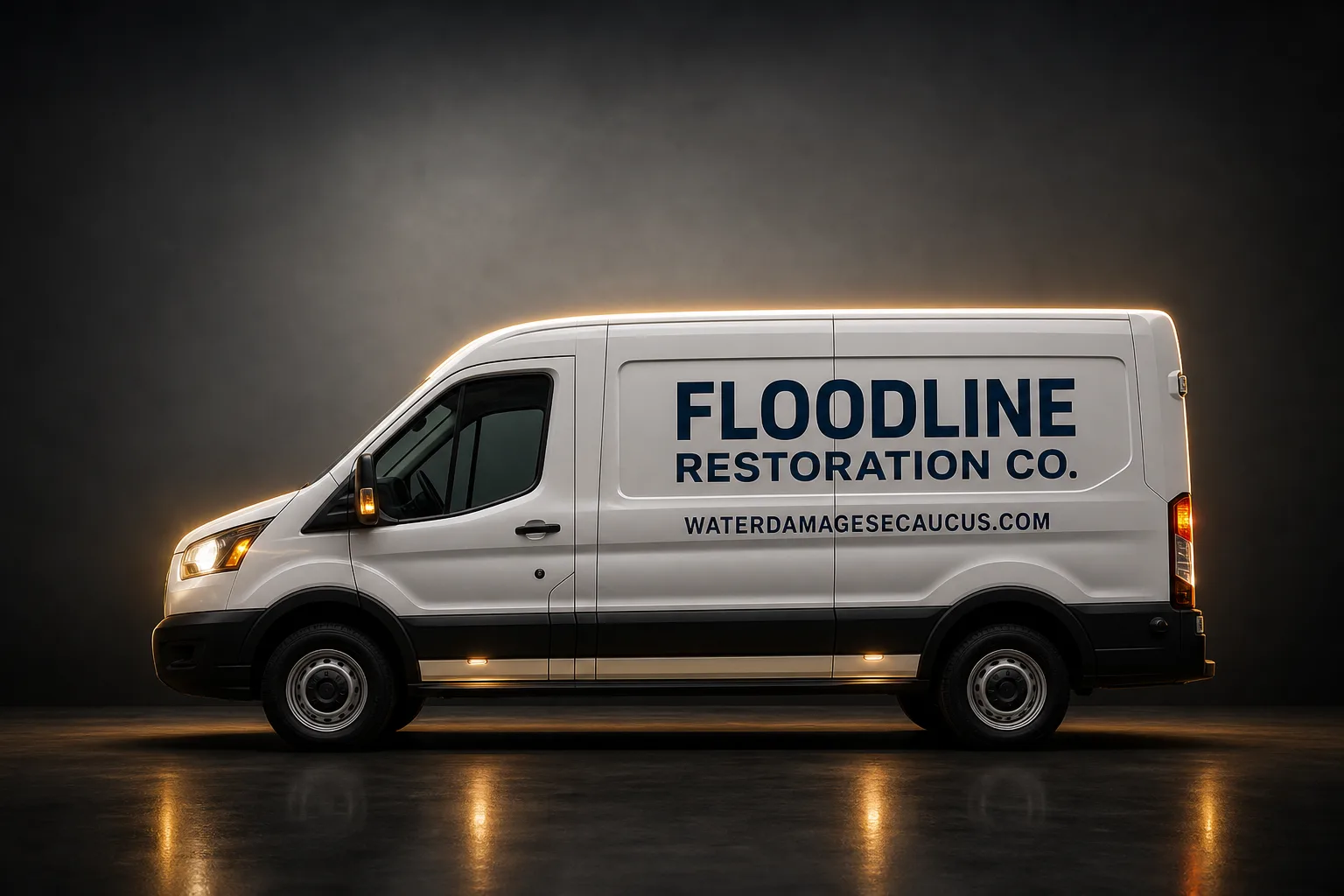
Free visual inspection and a written scope of work before any mitigation begins - photos, moisture readings, and drying logs go in your claim file
The scope we write is the scope we bill. Anything new gets shown to you, in writing, before we touch it.
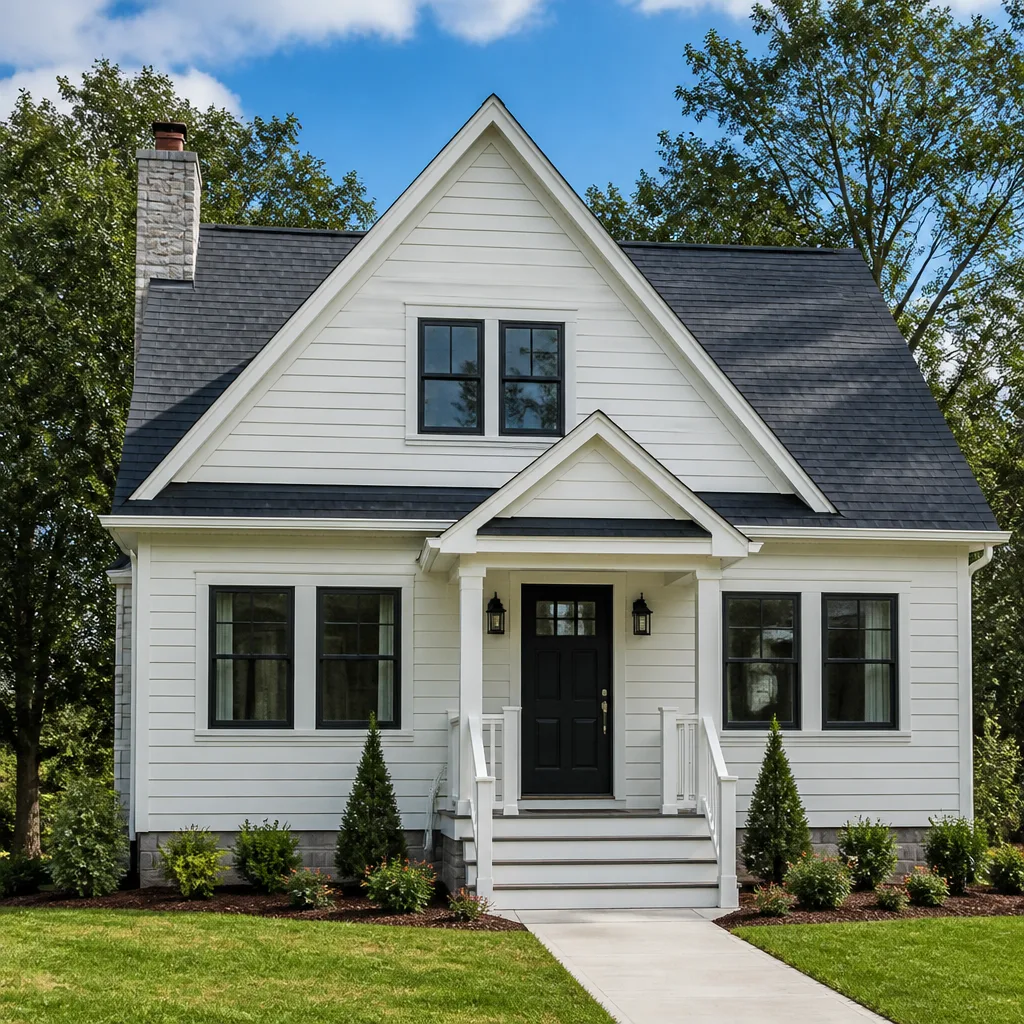
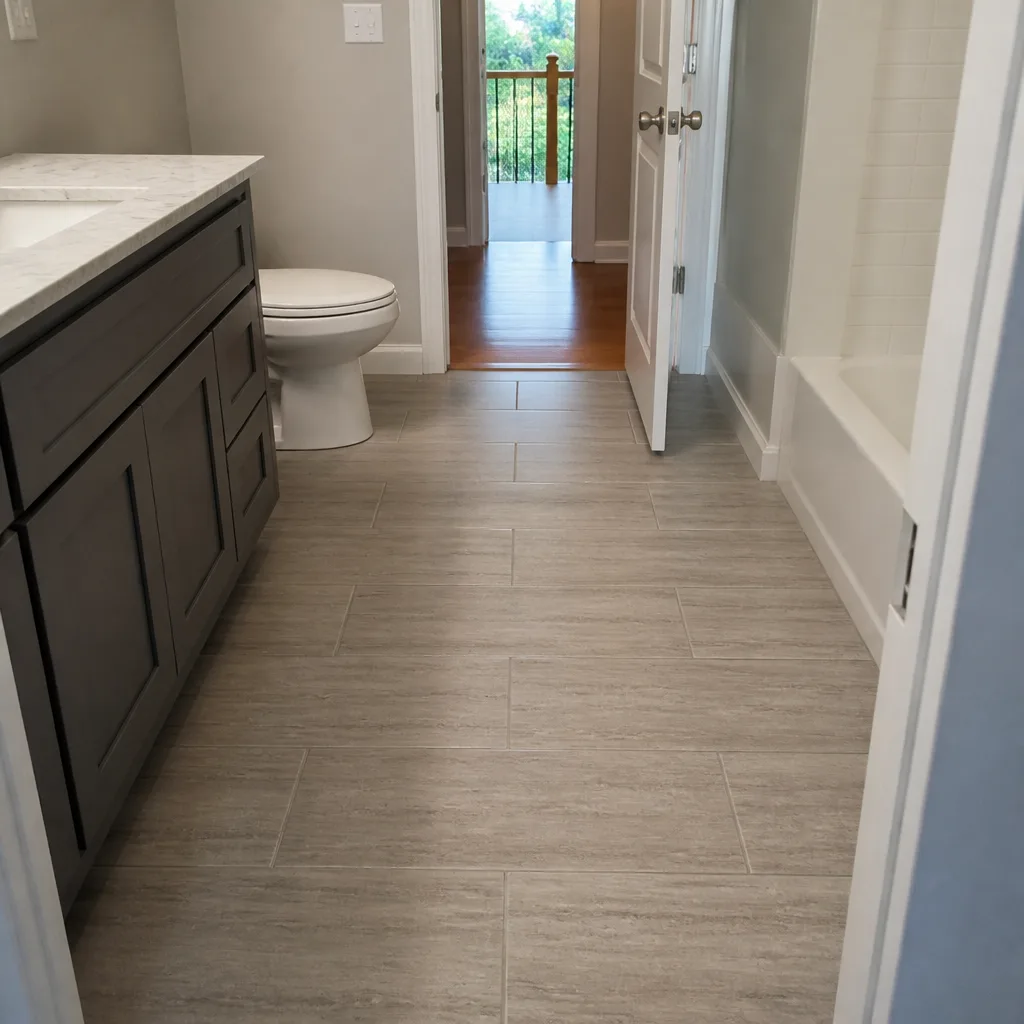
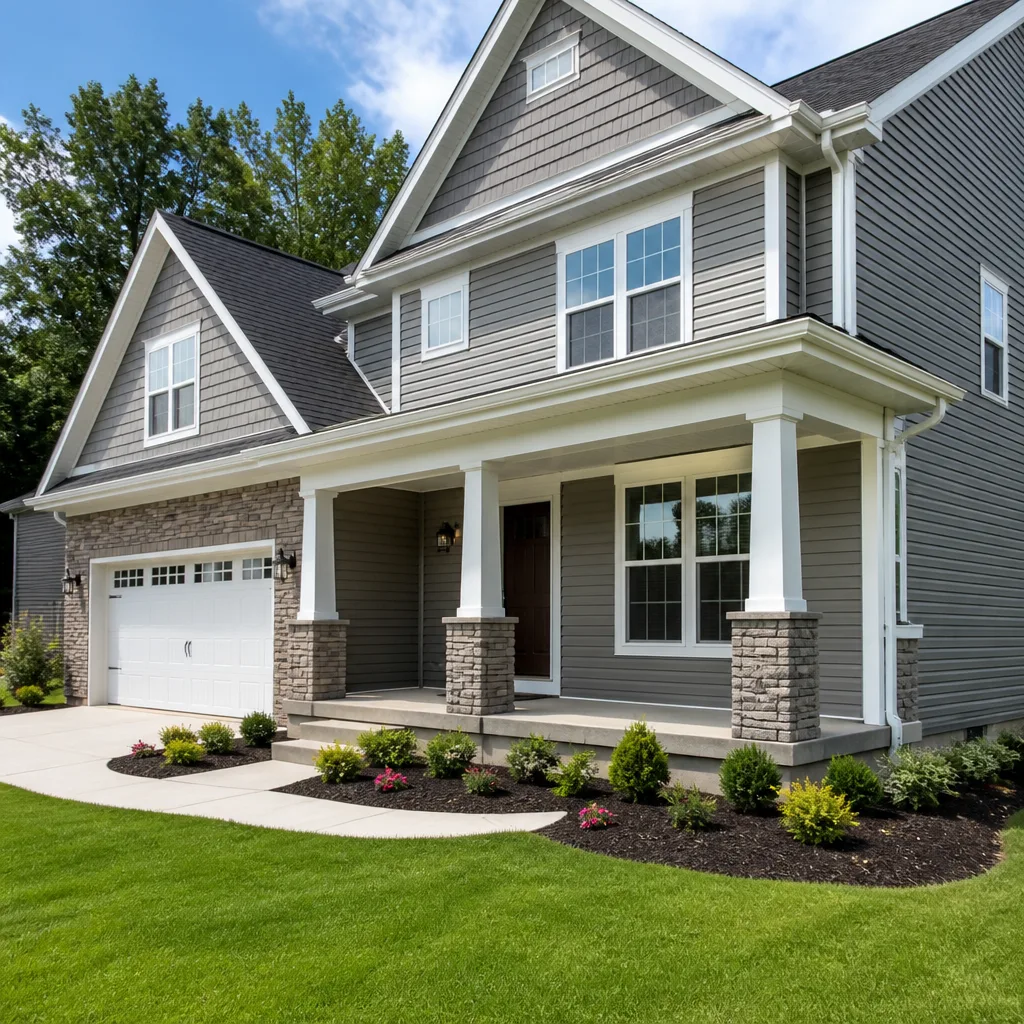
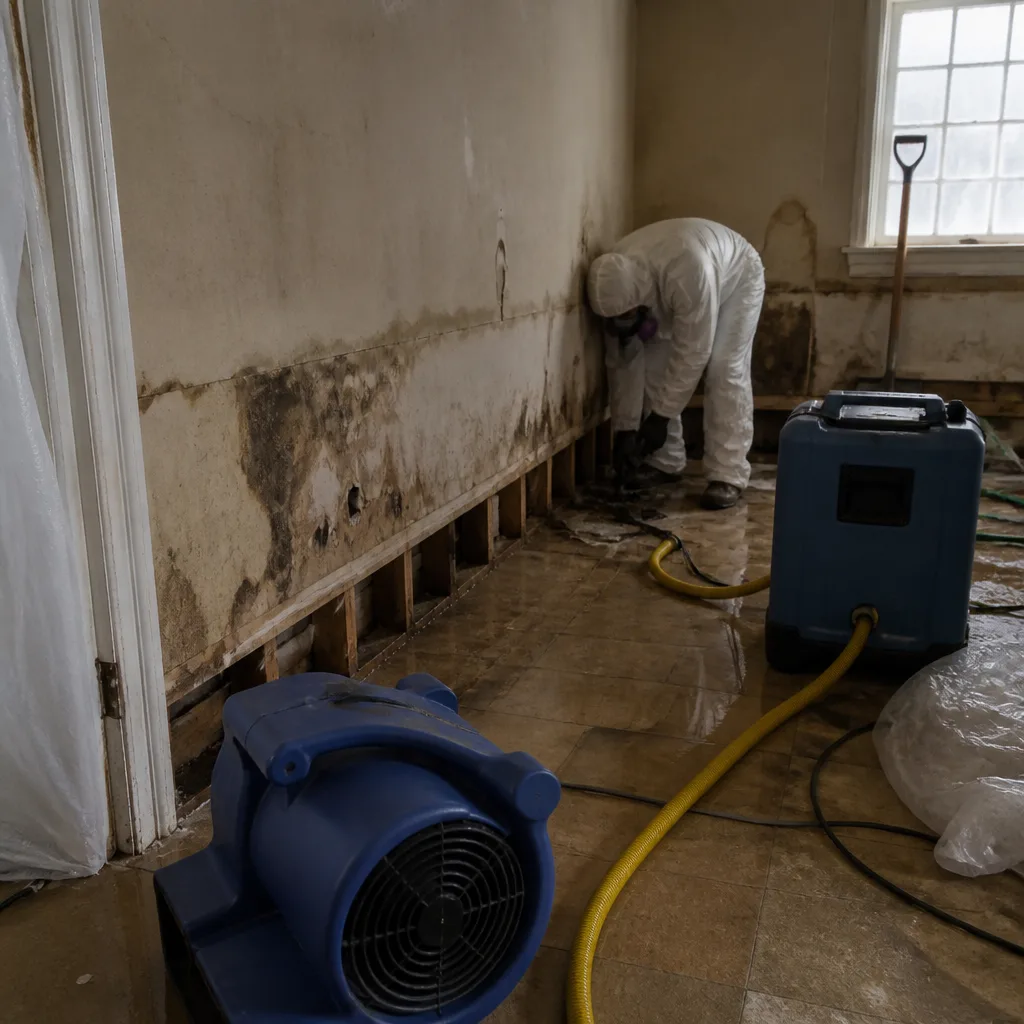 Before
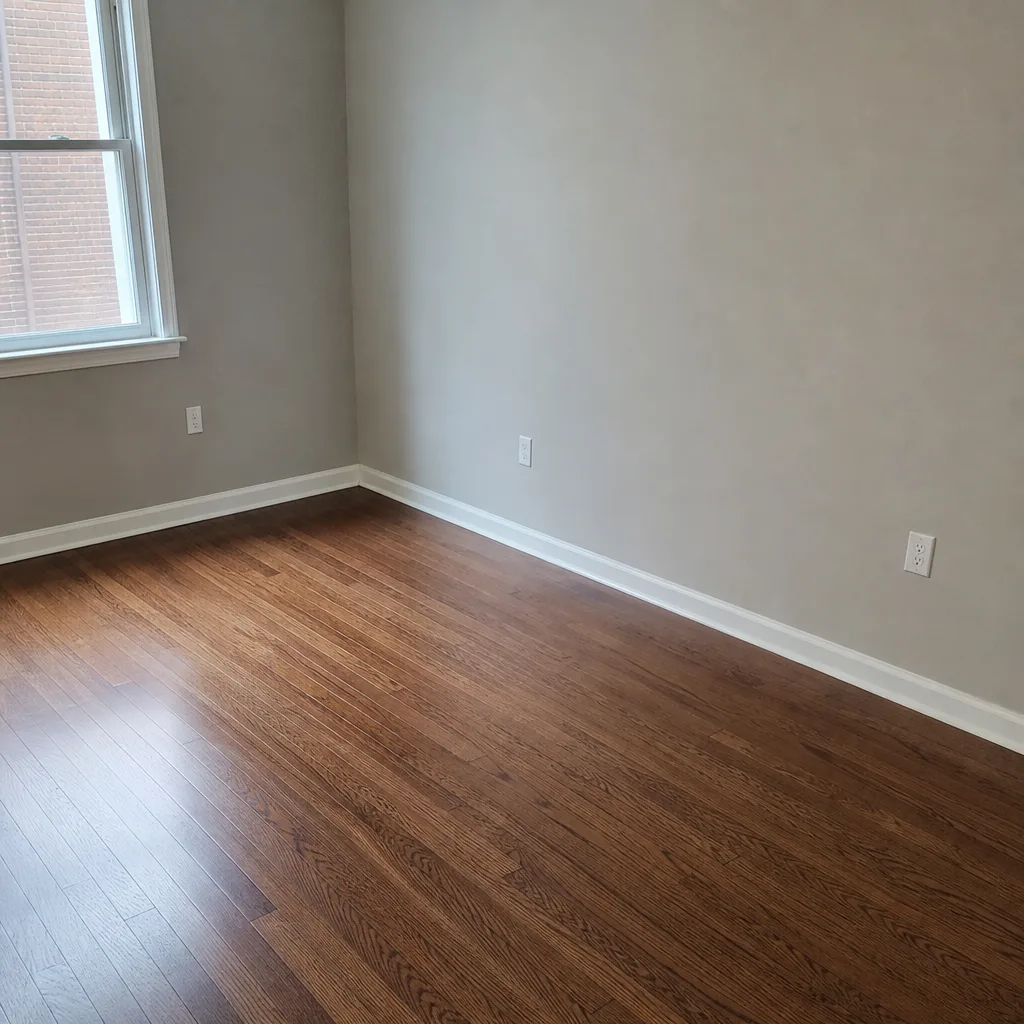 After
After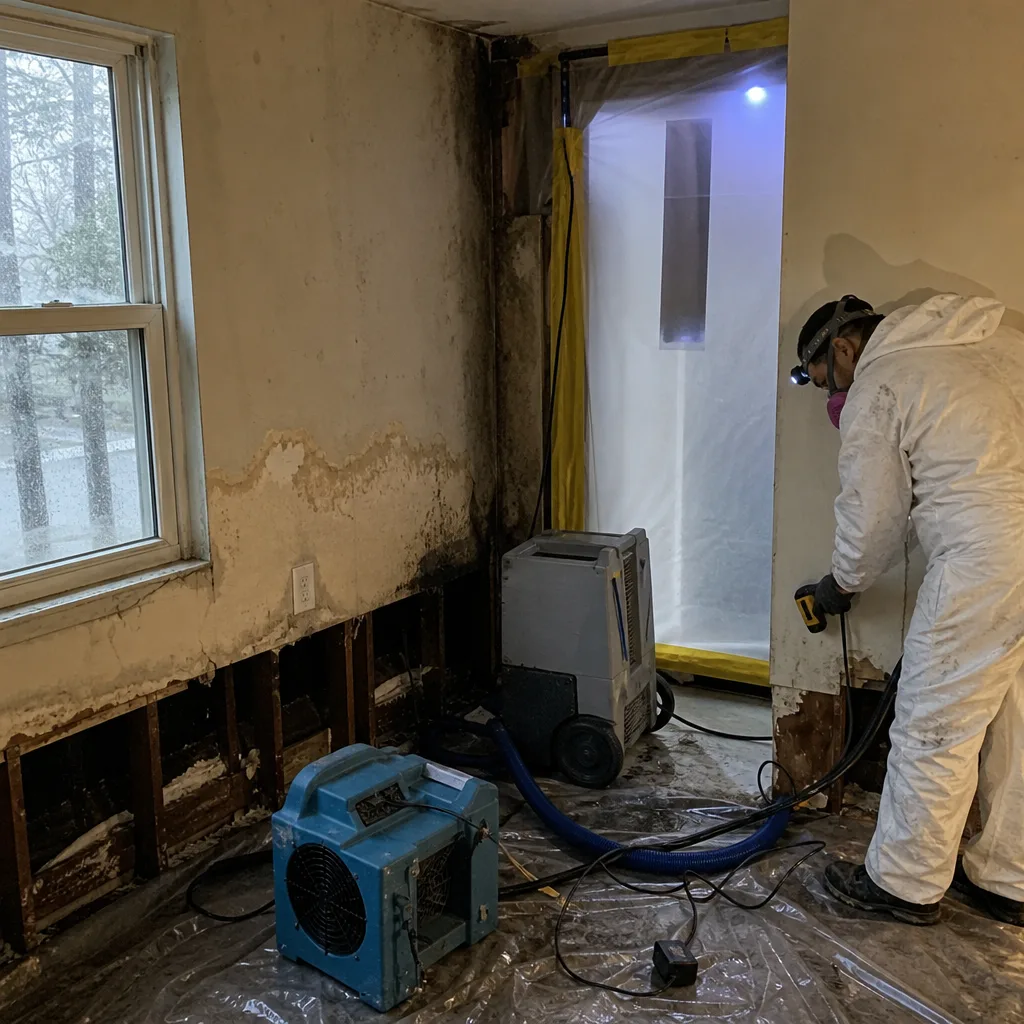 Before
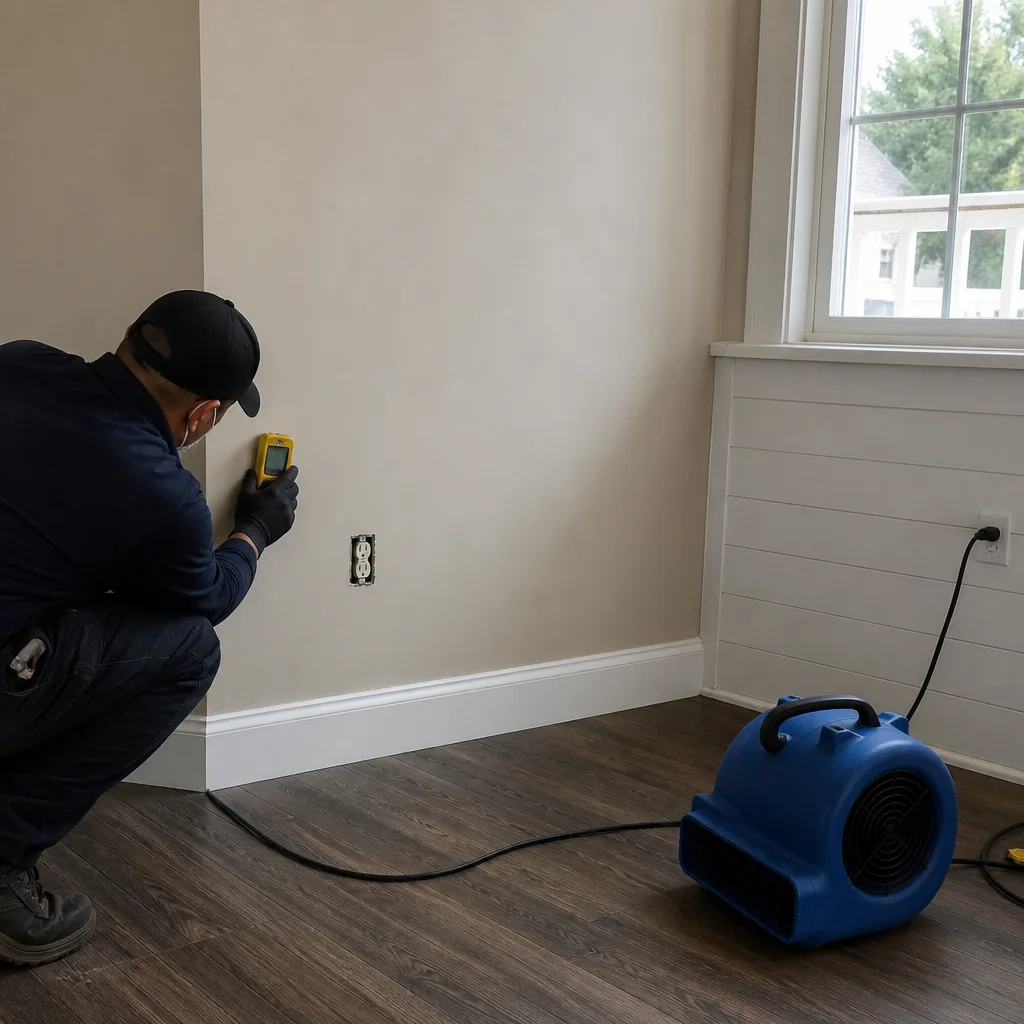 After
After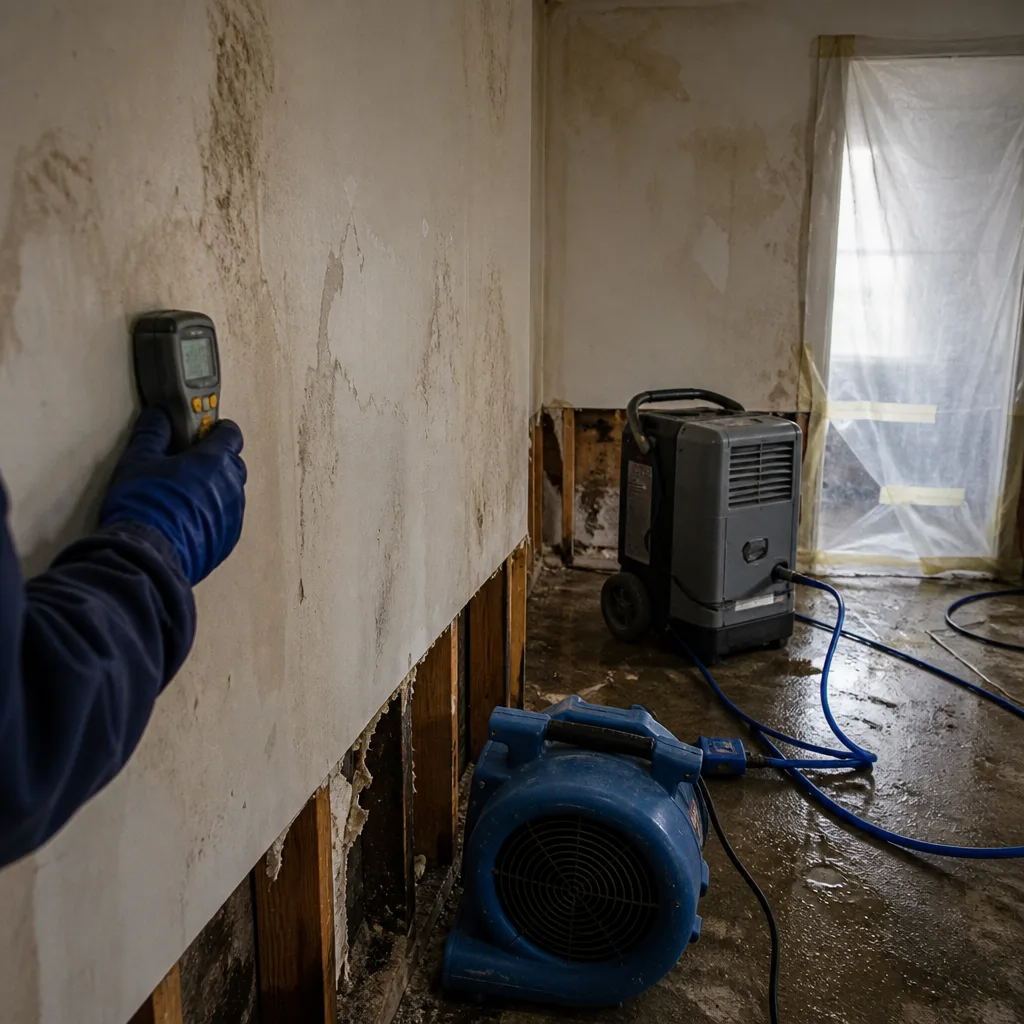 Before
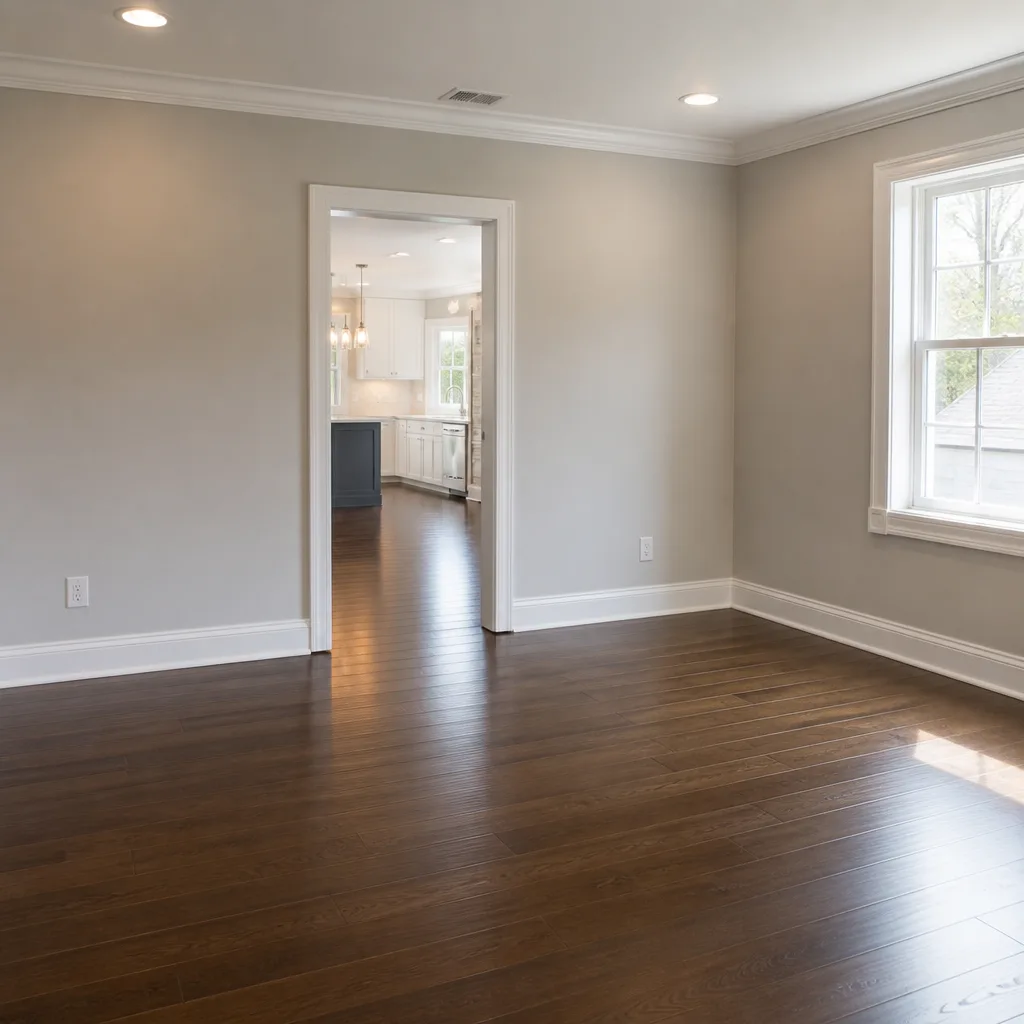 After
After24/7 Emergency Reconstruction & Cleanup in West New York
Reconstruction and cleanup in West New York starts with a phone call that a live person answers, at any hour, and a crew that knows the town’s stacked brick apartment buildings well enough to scope the job properly the first time. Call (201) 762-0667 day or night and you’ll reach a dispatcher, not a recording. We dispatch teams inside West New York within 45 minutes, and every job starts with a free visual inspection so you know exactly what you’re facing before any work begins. When water moves through a 1930s walk-up, it doesn’t stop at one unit. The first hour determines whether you’re dealing with one damaged ceiling or a multi-floor structural drying project, and that difference is measured in thousands of dollars and weeks of displacement.
Understanding Reconstruction & Cleanup Severity in West New York Properties
West New York’s housing stock is unlike almost anywhere else in New Jersey. The inland blocks are dominated by 4-to-6-story brick multi-family buildings built between the 1920s and 1950s, and many still run original galvanized supply lines and cast-iron drain stacks. When a supply line fails on the fourth floor, gravity does the rest. Category 3 water from a ruptured drain stack carries sewage and bacteria, and it travels through wall cavities and under flooring faster than most landlords expect. Moisture mapping with thermal imaging and hygrometers tells us where the water actually went, not just where it pooled. Soot from a kitchen fire in a pre-war building behaves differently too: smoke migrates through shared chases and behind plaster and lath, leaving odor in units two floors away. And in the waterfront blocks, the 2012 Sandy storm surge left a baseline of compromised building envelopes and salt-damaged slab edges that reactivate with every new water event. We classify the loss, set the drying standard, and scope the rebuild from the first reading. To learn more about how our Reconstruction & Cleanup team handles each stage, start with our full service overview.
Why West New York Property Owners Choose Floodline Restoration Co.
- 45-minute response commitment to West New York. We dispatch from a nearby New York City office, and our trucks are on the road before you hang up.
- Live answer, 24 hours a day, 365 days a year. A real person picks up at 2 a.m. Not a phone tree. Not a voicemail that gets checked in the morning.
- Certified crews, trained to IICRC standards. Our technicians hold WRT, FSRT, and AMRT certifications, and they’re background-checked and uniformed on every job.
- Free visual inspection before any work begins. You get a written scope and honest pricing before we put a single tool in the building.
- Direct insurance billing, handled by us. We document the loss from hour one, work with your adjuster directly, and you never play messenger between us and the carrier.
- One team, from first extraction to finished rebuild. The same certified crew that reads the moisture map on day one handles daily readings and rebuilds what needs rebuilding. No mid-job handoff. No inherited crew.
Our Reconstruction & Cleanup Process
Inspection & Assessment
We walk the entire affected area, including floors above and below, with thermal imaging and moisture meters. In West New York’s stacked buildings, water rarely stays where it started, so we map the full path before scoping anything.
Extraction & Stabilization
Standing water comes out first with truck-mounted extraction. Then we stabilize the structure: temporary shoring, tarping, and containment barriers to stop further damage while we assess what’s salvageable.
Drying & Dehumidification
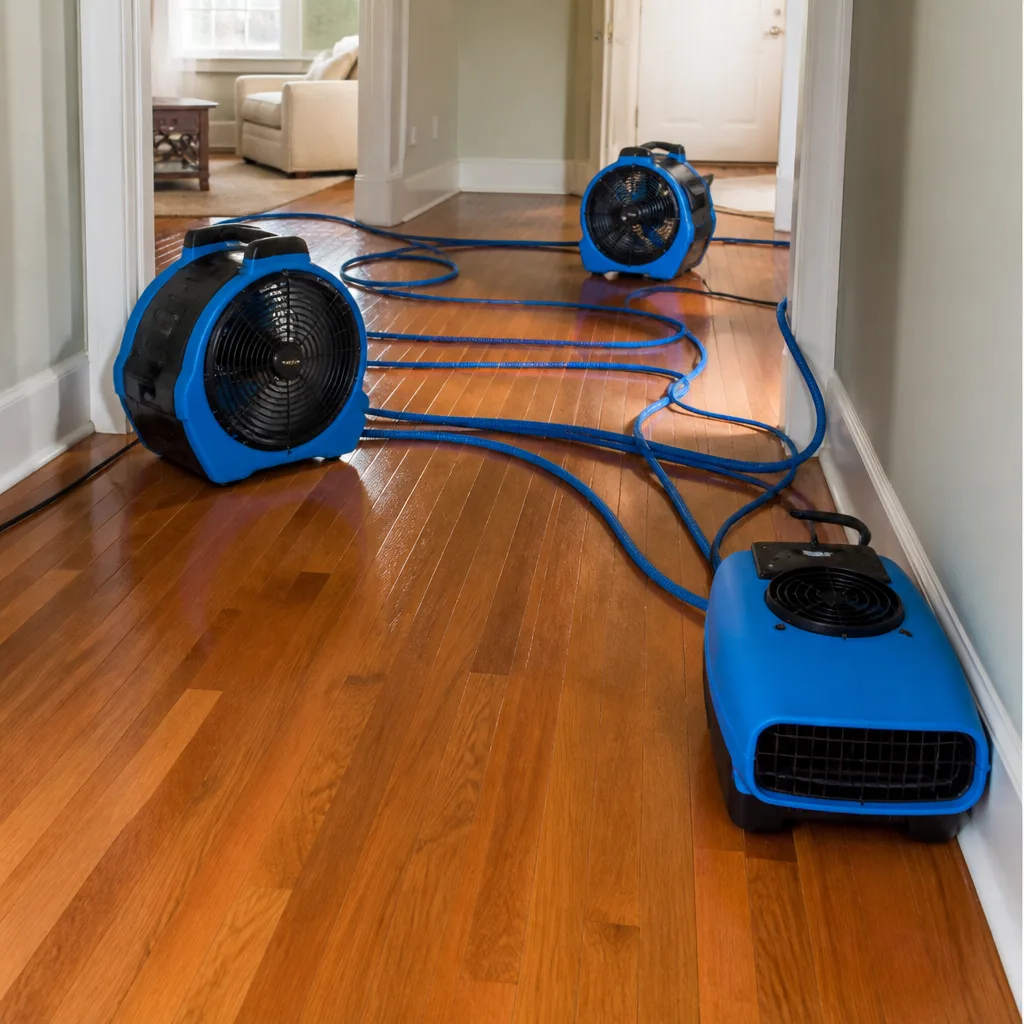
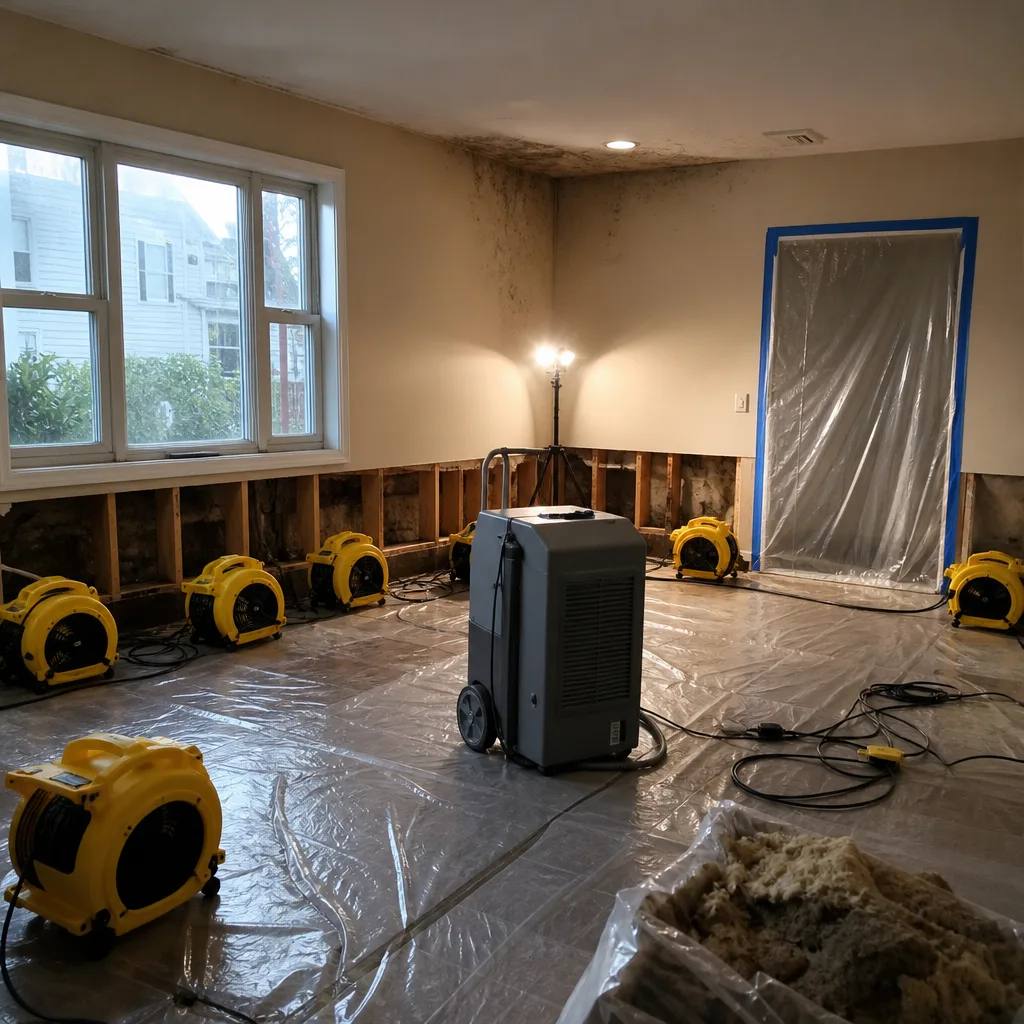
We run Dri-Eaz and Phoenix air movers with commercial dehumidifiers, sized to the cubic footage and the moisture load. Daily readings are logged until the dry standard is met, and that log goes to you and your carrier.
Cleaning & Sanitization
Category 2 and 3 water require antimicrobial treatment. For fire and soot losses, we clean with HEPA scrubbing and odor treatment appropriate to the soot type. Every cleaned surface is tested before rebuild begins.
Specialty Treatment for Reconstruction
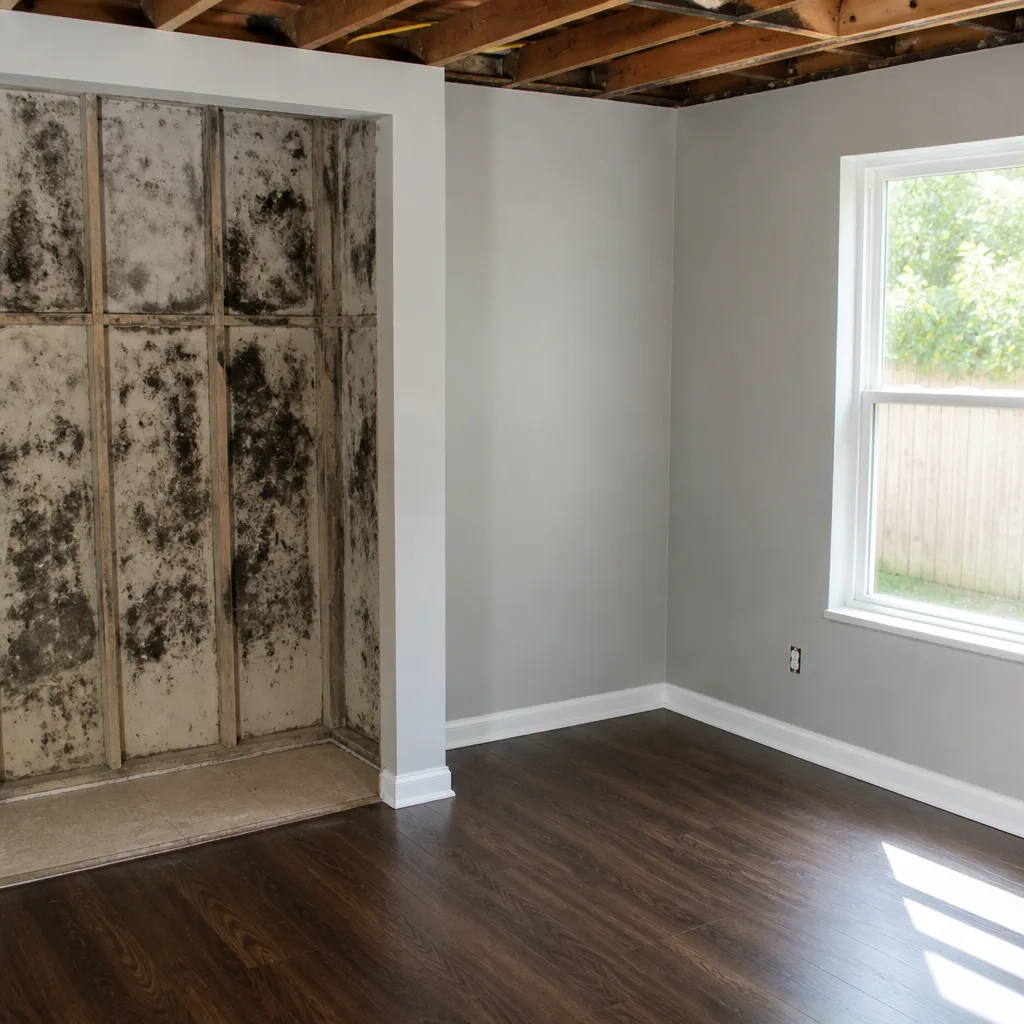
When we strip failed drywall or plaster and lath, we treat the exposed framing with antimicrobial and seal it where needed. We also document what’s behind the walls, because in West New York’s older buildings, previous fixes hide behind fresh drywall.
Repairs & Restoration
Full rebuild: drywall, flooring, paint, trim, and any structural repair. We match existing materials where possible and source legacy parts when needed. The finish work is done to pre-loss condition, and the 90-Day Done Right Promise covers it in writing.
Need Emergency Reconstruction & Cleanup in West New York Now?
Crews minutes away, answering live 24 hours a day. The sooner we start, the less it costs.
Working With Your Insurance Company
Most reconstruction and cleanup work in West New York is an insurance claim, and the documentation you gather in the first 48 hours usually decides how smoothly that claim goes. We start documenting at the first inspection: photos of every affected room, moisture readings before and during drying, and a line-item scope that your adjuster can actually use. When handling our West New York work, we communicate with your carrier directly so you never have to translate between a restoration crew and a claims department. For multi-tenant losses, we separate the building envelope work from the unit-level work in the scope, because carriers handle those differently. Curt Bowman has built this process to remove the friction that usually lands on the homeowner’s lap.
What We Provide Your Insurer
- Thorough documentation of the loss
- Photos of all damage, room by room
- Moisture readings and drying logs
- A detailed, line-item scope of work
- Direct coordination with your carrier
Built for West New York’s Loss Calendar
January in West New York means deep freezes that burst galvanized supply lines in pre-war buildings, flooding top-floor units and cascading down through floors of plaster and hardwood. Spring brings nor’easters that hammer the flat and minimally-pitched roofs on the inland blocks, and a saturated roof membrane finds every existing crack. Summer thunderstorms dump inches of rain in an hour, and the low-lying waterfront blocks east of Boulevard East see basement seepage through slab cracks that never fully dried after Sandy. By fall, we’re back into wind-driven rain and gutter failures around older cornices and parapets. Each season has a signature loss pattern in this town, and our crews know which buildings are prone to what because we’ve been inside them. We stock matching materials for the period-specific trim and flooring common in 1920s through 1950s apartment buildings, so the rebuild looks like it belongs. If you’re in one of the older buildings near Blvd East or Park Avenue and you’ve patched the same ceiling more than once, call us before the next storm. A fresh patch won’t fix what’s happening behind it.
Reconstruction & Cleanup Across West New York’s Neighborhoods
West New York is small in square miles but dense in loss history, and the patterns vary block by block. Along Boulevard East, the post-2000 luxury high-rises have modern plumbing and newer roofs, so most calls are interior losses: supply line failures, appliance leaks, and occasional fire damage. The work there means coordinating with building management and working around doormen and freight elevator schedules. Inland, around 54th through 61st Streets between Bergenline Avenue and Park Avenue, the 1920s and 1930s walk-ups carry original cast-iron stacks and galvanized supply lines that have been patched, repatched, and deferred. Ceiling collapses are common, and they usually reveal layers of older water damage hidden behind fresh drywall. Down near Donnelly Park and the lower blocks approaching the Palisades, basement units and garden-level apartments contend with groundwater seepage and the legacy of Sandy-era salt intrusion into slab edges. On the busy retail stretches of Bergenline Avenue, we do a lot of post-construction cleanup after tenant fit-outs, and we understand the noise and dust rules that come with working above open storefronts. Each of these areas requires a different scoping logic, and the same crew handles all of them.
Specialized Reconstruction & Cleanup Services We Offer in West New York
Full-Service Reconstruction
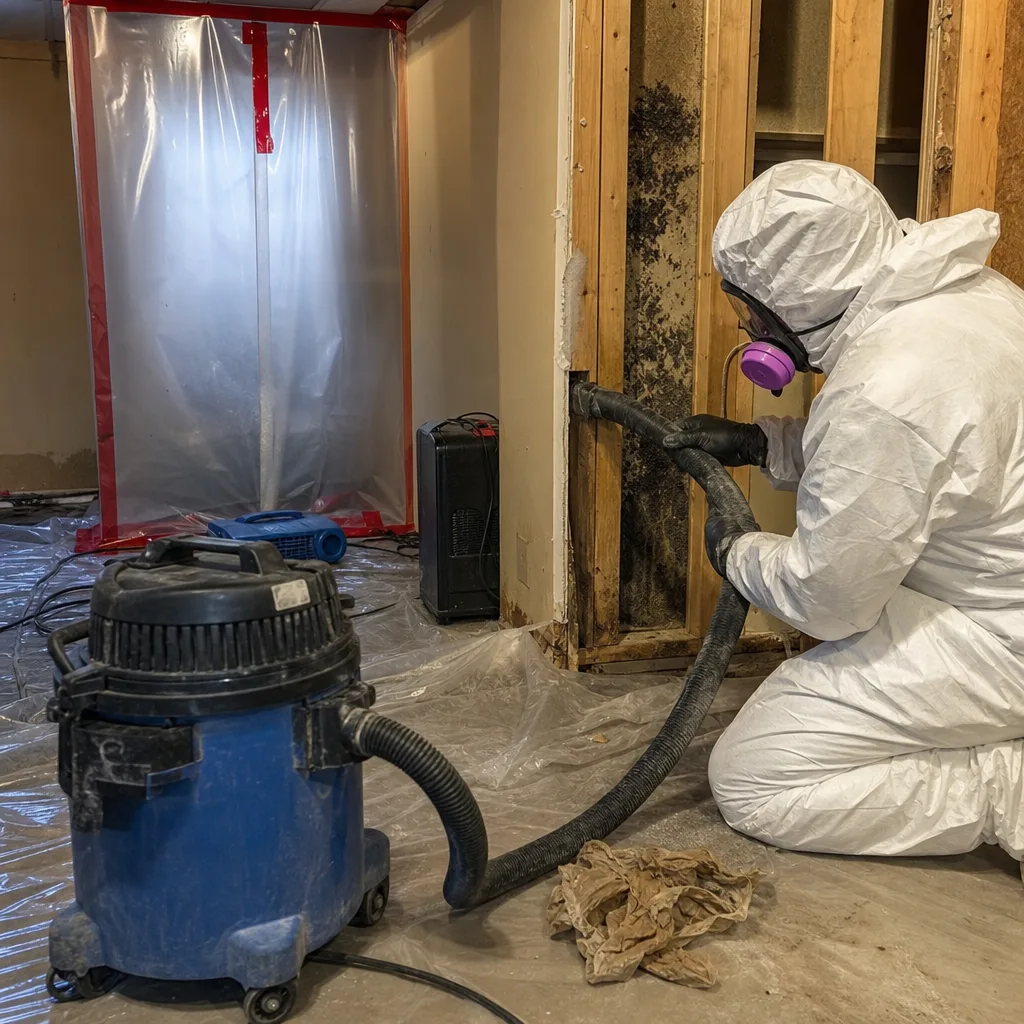
We rebuild what water, fire, or mold took out: framing, drywall, plaster, paint, trim, and finish carpentry. In West New York’s older buildings, that often means matching period molding profiles and sourcing salvage-grade doors and hardware. We don’t hand the finished wall off to another contractor. The same certified crew that pulled the wet drywall hangs and finishes the new drywall.
Drywall & Flooring Repair
After extraction and drying, we replace damaged drywall and flooring. For pre-war buildings, that can mean matching hardwood species and board widths from the 1930s, and for high-rise units, it means working within building rules for moisture barriers and subfloor prep. We document everything for the claim, because carriers need to see what came out before they’ll approve what goes back in.
Contents Restoration & Pack-Out
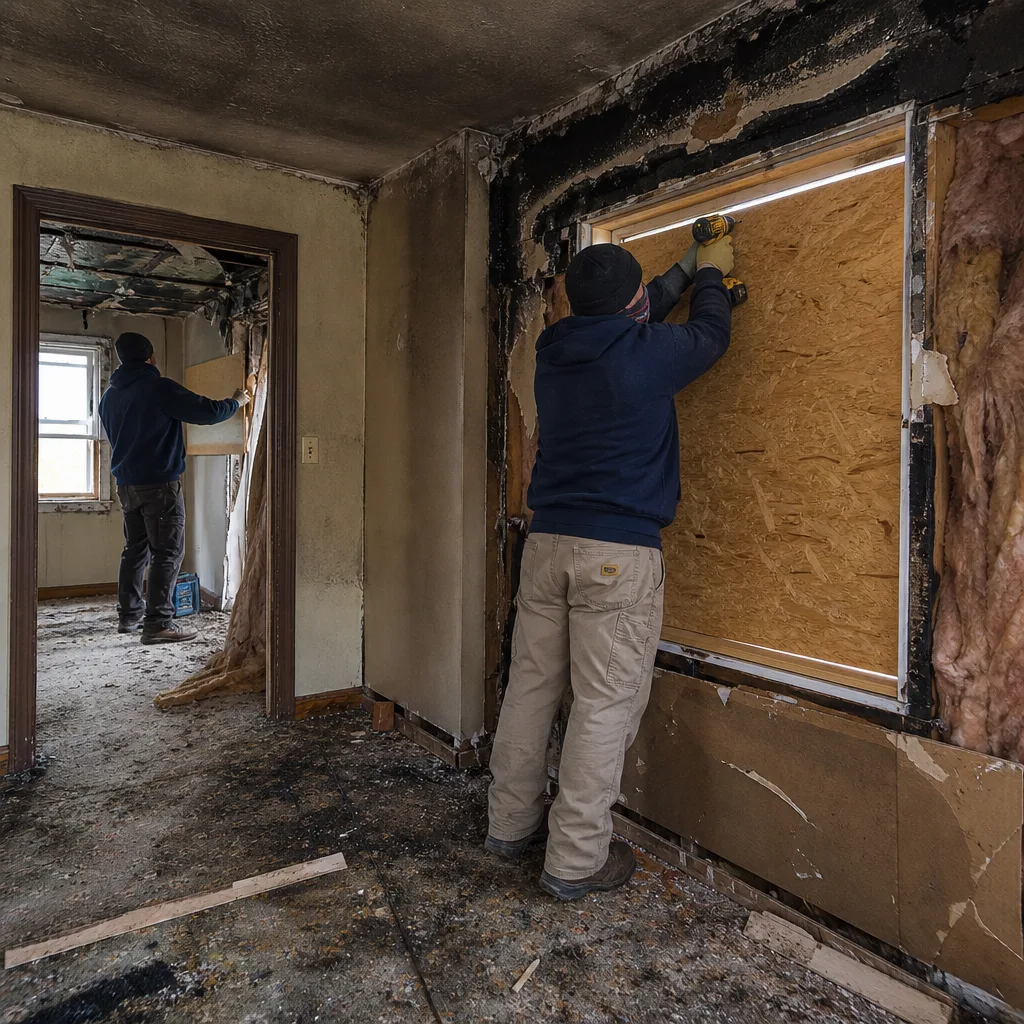
When a unit is badly damaged, we pack out the contents, inventory everything photographically, and bring the restorables to a climate-controlled facility. In a West New York rental, this is the difference between a tenant losing everything and a landlord facing a lawsuit. We handle it carefully and we document every item.
Carpet & Upholstery Cleaning
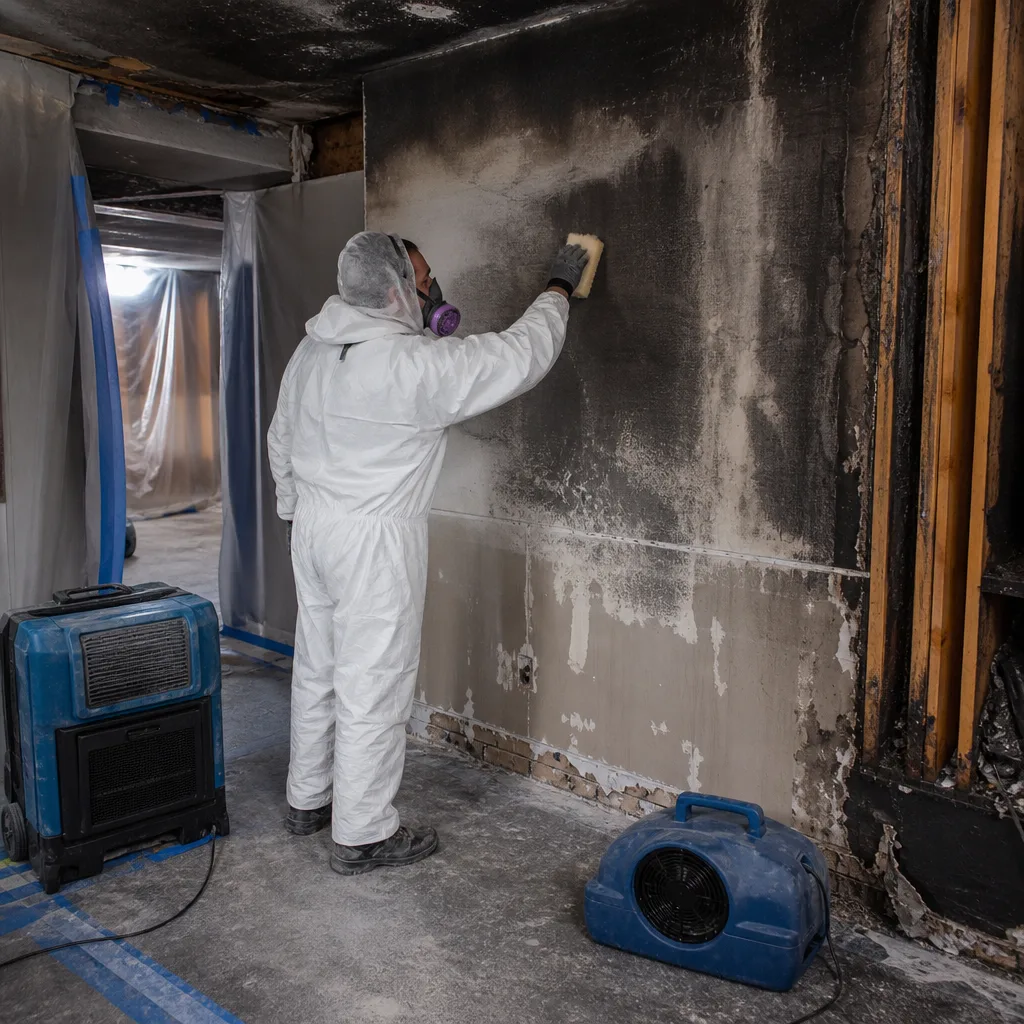
After construction dust settles or a small water loss wicks into carpet, we clean with truck-mounted hot water extraction and professional-grade drying. This is a common final step before a tenant moves back in, and we schedule it around the rebuild so the unit is ready on move-in day.
Post-Construction Cleanup
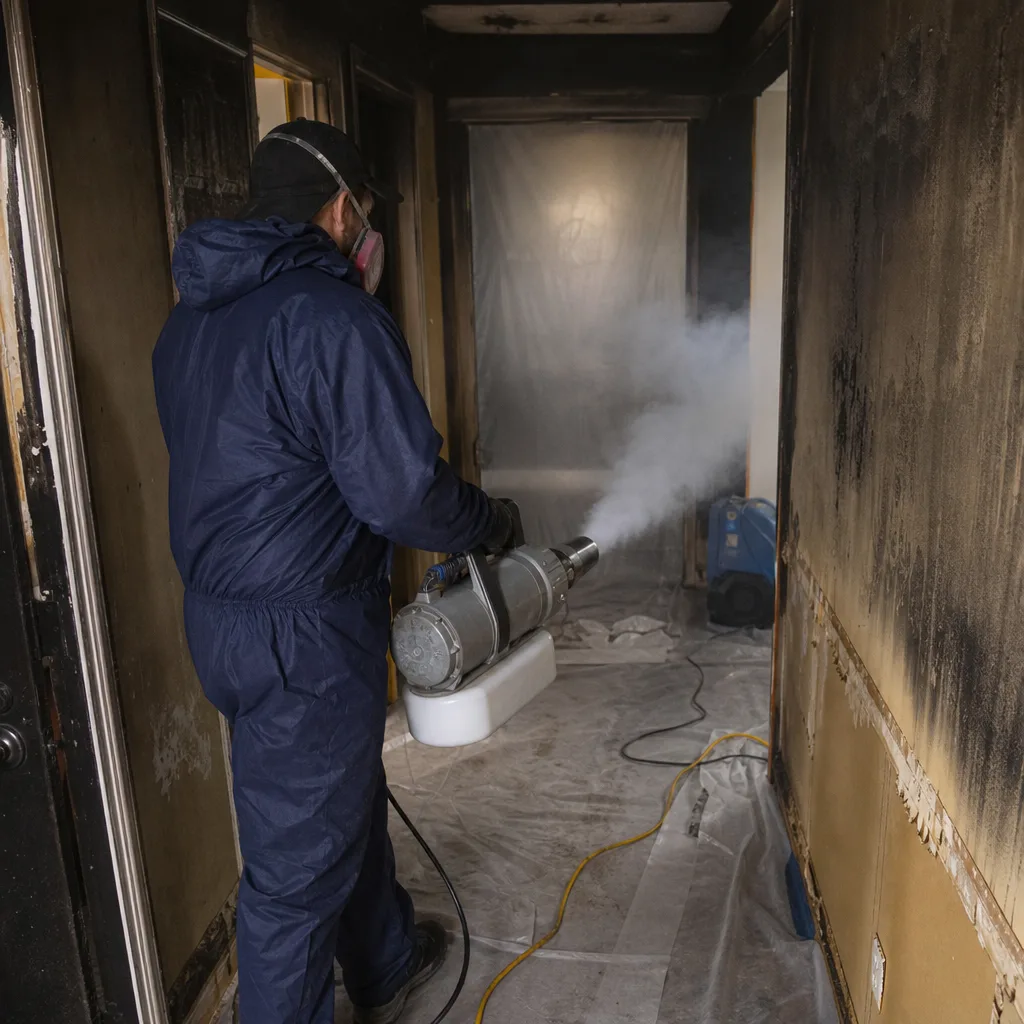
Every rebuild leaves dust. We run HEPA air scrubbers during construction and do a full post-construction clean before we hand the unit back. In occupied multi-family buildings, we use negative air pressure and daily cleanup protocols so your neighbors aren’t living in our dust.
What happens when you call
- 1
A real person answersNo phone trees - you reach a local pro.
- 2
You get an upfront price rangeHonest numbers before anyone is dispatched.
- 3
A background-checked tech heads outLicensed & insured, dispatched right away.
- 4
You approve before work beginsNothing starts until you say go.
Reconstruction & Cleanup Costs in West New York, NJ
Reconstruction and cleanup pricing in West New York runs higher than in nearby single-family suburbs, and there’s a reason for that. A typical drywall and flooring repair after a water loss in a 1930s walk-up runs $2,400 to $5,800 depending on the square footage and ceiling height. Full unit reconstruction after a top-floor roof failure typically lands between $9,000 and $24,000, and that includes vertical containment, common-area protection, and the documentation your carrier needs. Post-construction cleanup for a one-bedroom unit runs $350 to $850. Contents pack-out and restoration starts around $1,500 for a standard one-bedroom unit and goes up with volume. What moves the price more than anything in West New York is the multi-tenant factor: protecting hallways, stairwells, and neighboring units adds labor and material costs that a single-family job never has. About 80% of the reconstruction work we do here is insurance-covered, and we bill your carrier directly. For a firm scope, call (201) 762-0667 and we’ll do a free visual inspection.
We Also Serve Cities Near West New York
If you’re a property owner or landlord in the surrounding Hudson County and Bergen County towns, our crews cover the same ground daily. We handle reconstruction and cleanup in Secaucus, Carlstadt, East Rutherford, and Lyndhurst, with the same 45-minute response commitment and the same direct insurance billing. Call the same number and speak to the same live dispatcher.
Serving West New York, NJ - Our Local Coverage Area
We’re based in the West New York area and know this community well. Use the map below to see our service coverage - if you’re nearby, we can almost certainly help.
West New York Reconstruction & Cleanup Questions, Answered
Why do reconstruction estimates in West New York include an extra line for vertical containment and common-area protection?
Because in the town’s 4-to-6-story brick apartment buildings, you cannot demo a ceiling or run air movers without sealing off hallways, stairwells, and neighboring units. Vertical containment, negative air, and floor protection are standard line items here because building management requires them, and the carriers expect to see them. If a bid doesn’t include them, the crew is going to get shut down on day one. Call (201) 762-0667 for an exact scope for your building.
What paperwork does a landlord need from a reconstruction crew to submit a claim for a multi-tenant water loss in West New York?
A complete claim package includes the initial loss photos, a moisture map with daily drying logs, a line-item scope that separates building envelope work from unit-level work, and the final invoice matching the approved estimate. We provide all of it, organized the way carriers in New Jersey expect to see it. We also send document updates directly to your adjuster, so you’re never chasing paperwork.
Can you rebuild just the top-floor unit after a roof leak in a West New York apartment, or does the whole stack have to be assessed?
You can rebuild just the damaged unit, but you should assess the whole stack first. Water from a roof failure travels down through wall cavities and floor systems, and a top-floor ceiling collapse usually means the units below have hidden moisture. We inspect the floors below with thermal imaging before scoping any rebuild, because missing a saturated subfloor under a neighbor’s apartment is how claims get reopened. Estimates are free, so call (201) 762-0667.
What replacement parts are hardest to source for reconstruction in West New York’s 1920s-1950s apartment buildings?
Original plaster and lath materials are gone, and matching that finish requires lime plaster work or a skim coat done correctly. Period-specific hardwood flooring in narrow board widths, original door hardware, and older trim profiles are the hardest things to source. We keep salvage contacts for these materials and we match them rather than substituting modern equivalents that look out of place in a pre-war unit.
How fast can you start drywall and flooring repair after a water extraction in a West New York high-rise?
After extraction and the drying standard is met, which typically takes 3 to 5 days in a properly managed drying process, we can start drywall and flooring repair immediately. In high-rises, we schedule around freight elevator availability and building management rules, but we’re usually hanging drywall within a week of the first visit. Call (201) 762-0667 and we’ll give you a timeline for your building.
Will my insurance cover reconstruction and cleanup in West New York?
Most standard New Jersey policies cover reconstruction and cleanup after a sudden and accidental water event, a fire, or a covered storm loss. Gradual leaks and long-term deferred maintenance are usually excluded, which is why older buildings with patchwork histories are tricky. We document cause of loss clearly and work directly with your adjuster. If it’s covered, we bill the carrier directly.
How long does full reconstruction take in a typical West New York apartment unit?
A standard one-bedroom unit with ceiling, wall, and flooring damage takes 2 to 4 weeks from start of rebuild to final paint. If structural work, plaster matching, or custom flooring matching is involved, add another week or two. We give you a written schedule before work starts, and we stick to it.
What should I do in the first 30 minutes after a water loss in my West New York building?
Call (201) 762-0667 first. Then, if it’s safe, kill power to the affected area and move valuables out of the water path. Don’t use a shop vac on sewage water, and don’t open walls yourself. In stacked buildings, water is already moving through the structure, so the first 30 minutes are about stopping the source and getting a professional scope in motion. We’ll be there inside 45 minutes and we’ll document everything from the start.
On 60th Street between Bergenline and Hudson, our crew handled a top-floor ceiling collapse in a 1930s brick walk-up after a spring nor’easter. The landlord had patched the same ceiling twice before, but moisture mapping showed saturated drywall and black mold behind layers of old repair. We set containment and negative air, removed 350 square feet of failed plaster and lath, treated with antimicrobial, then rebuilt to pre-loss condition with new drywall and paint, all documented for the insurance claim with drying logs and scope of work. That’s the job this town repeatedly hands us, and it’s the job we do differently than the franchise crews that quote it like a single-family house.
If you’re a landlord with a building on Bergenline Avenue, a condo owner in a Boulevard East high-rise, or a homeowner on one of the inland side streets, call (201) 762-0667. We’ll answer live, get a crew to West New York inside 45 minutes, and put a written scope in your hand before any work starts. The 90-Day Done Right Promise covers every job we finish, in writing. If it’s not done right, we make it right. That’s the Keystone Standard, and it’s been the rule since Curt Bowman started this company.
Written by Curt Bowman, Owner at Floodline Restoration Co., serving West New York with reconstruction and cleanup since the day the storm water first hit these blocks.