
Free visual inspection and a written scope of work before any mitigation begins - photos, moisture readings, and drying logs go in your claim file
The scope we write is the scope we bill. Anything new gets shown to you, in writing, before we touch it.
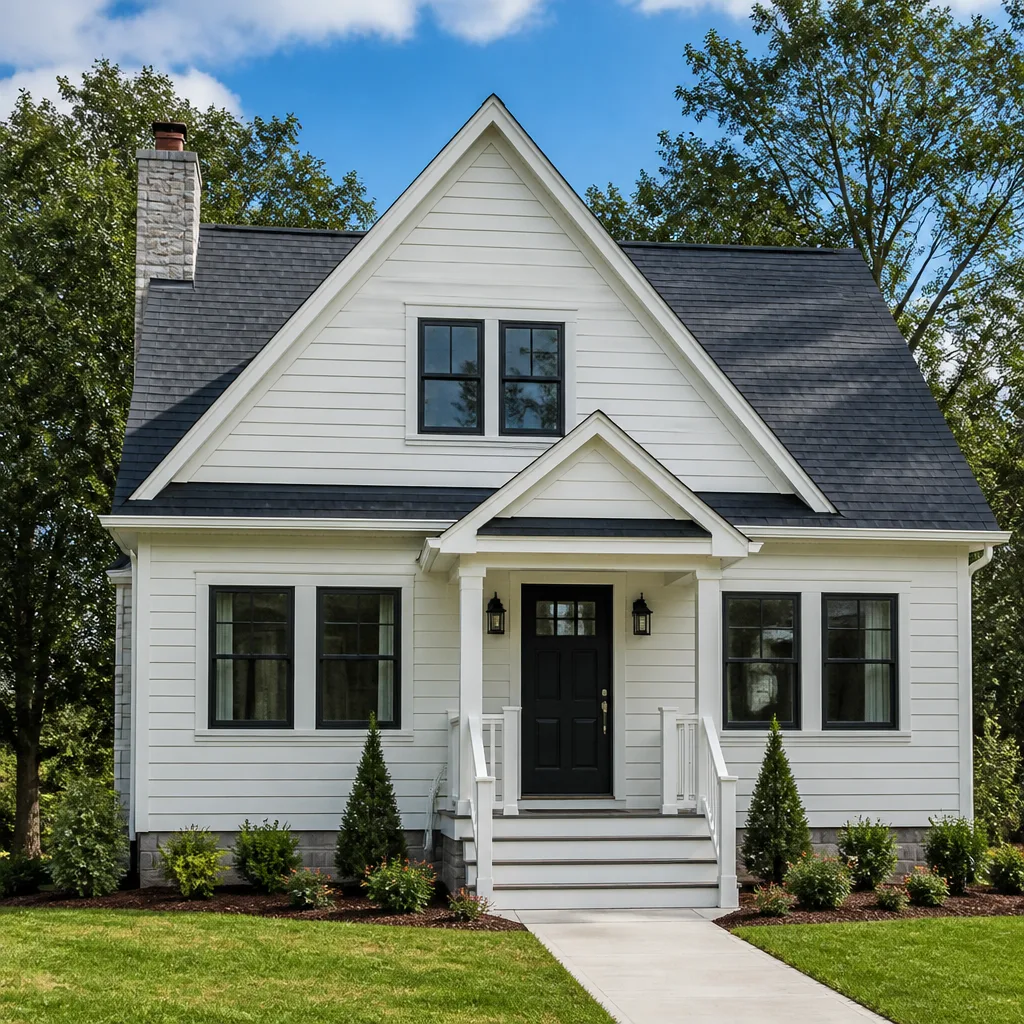
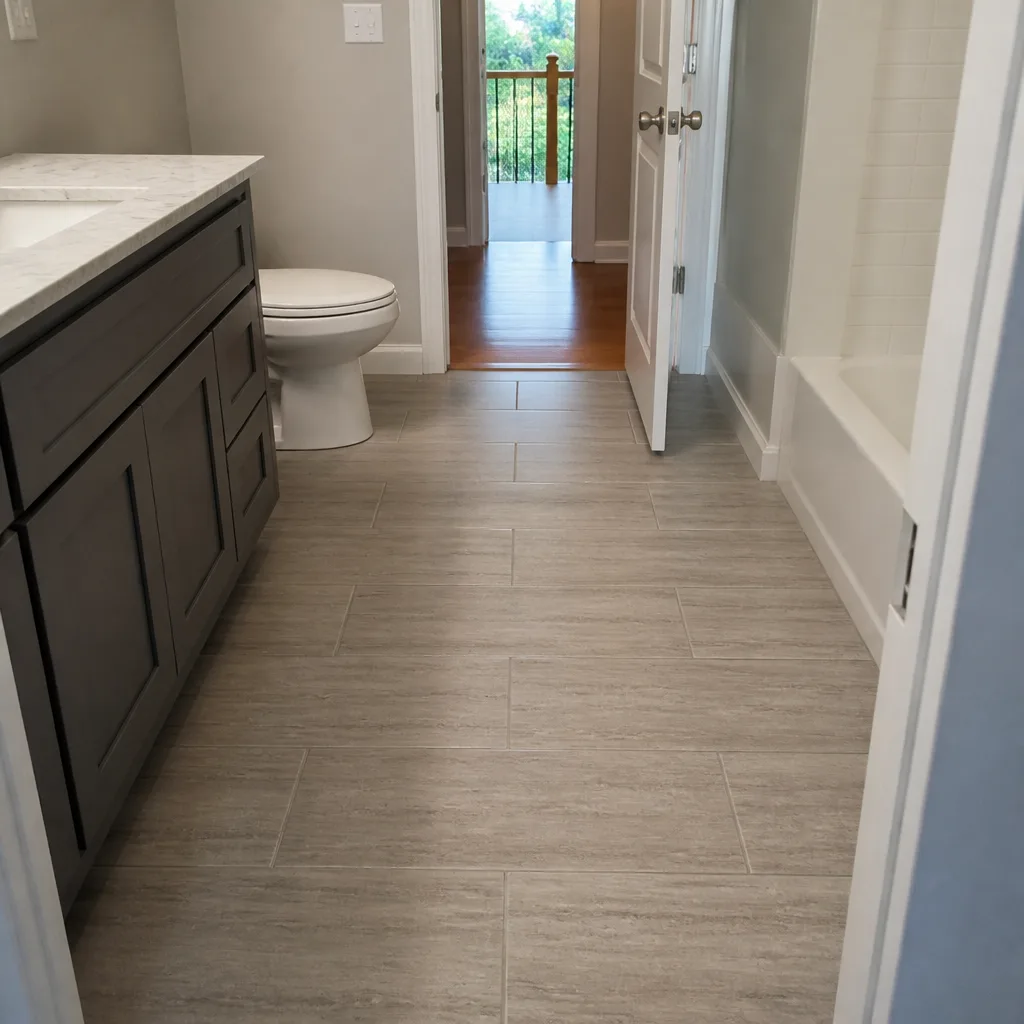
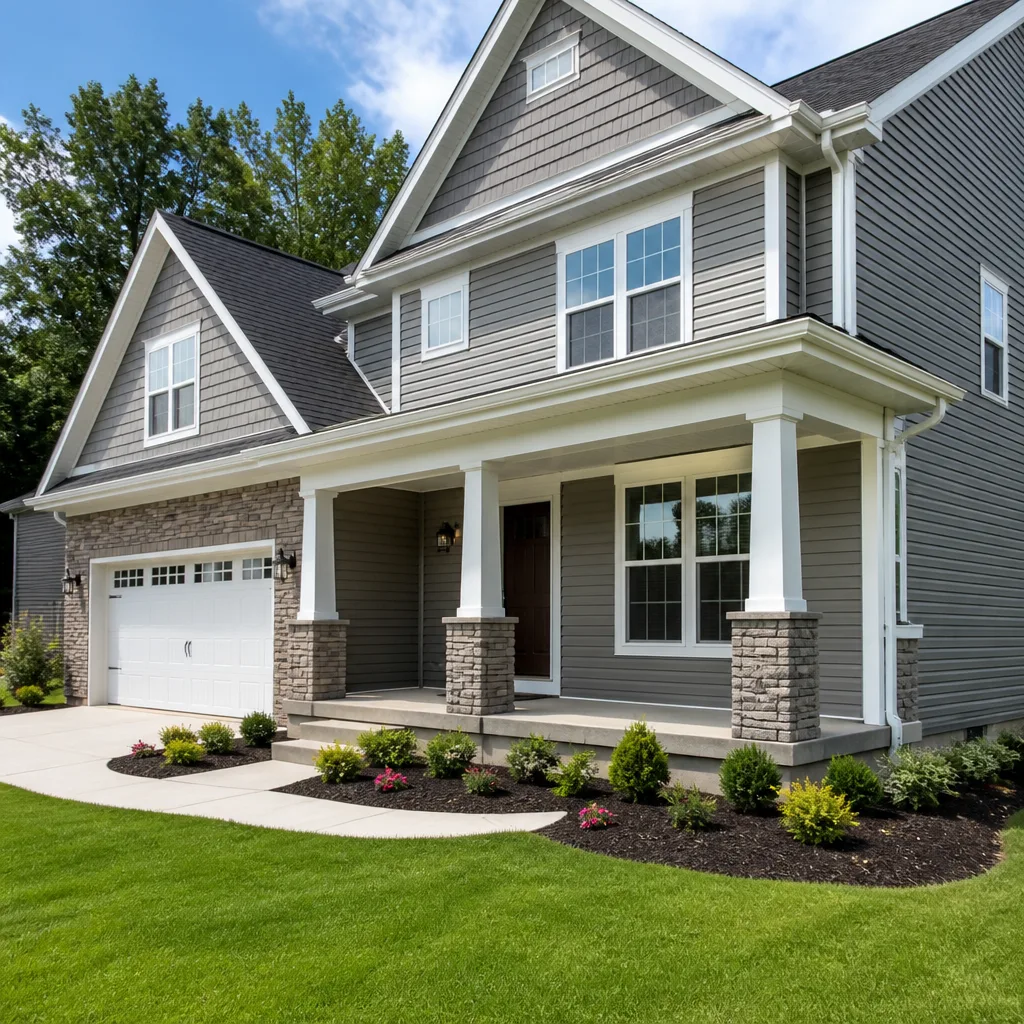
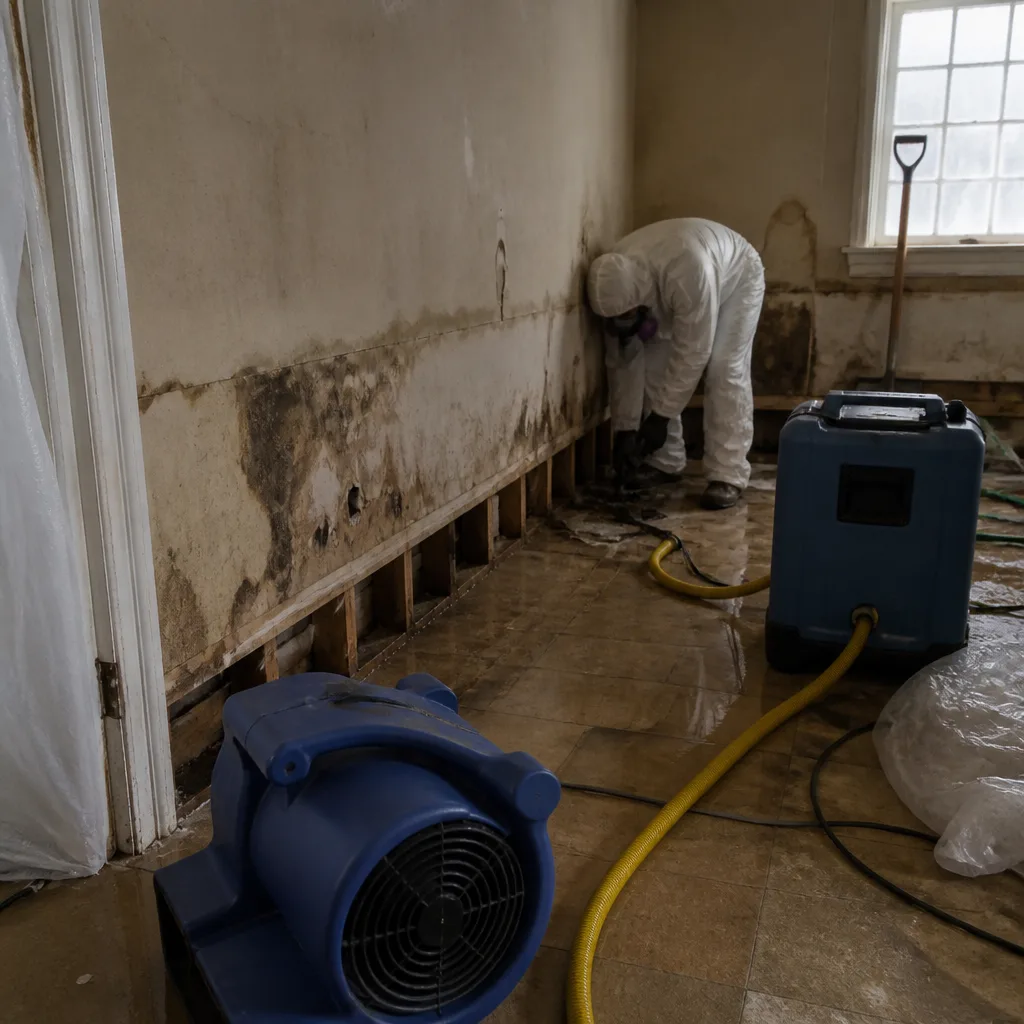 Before
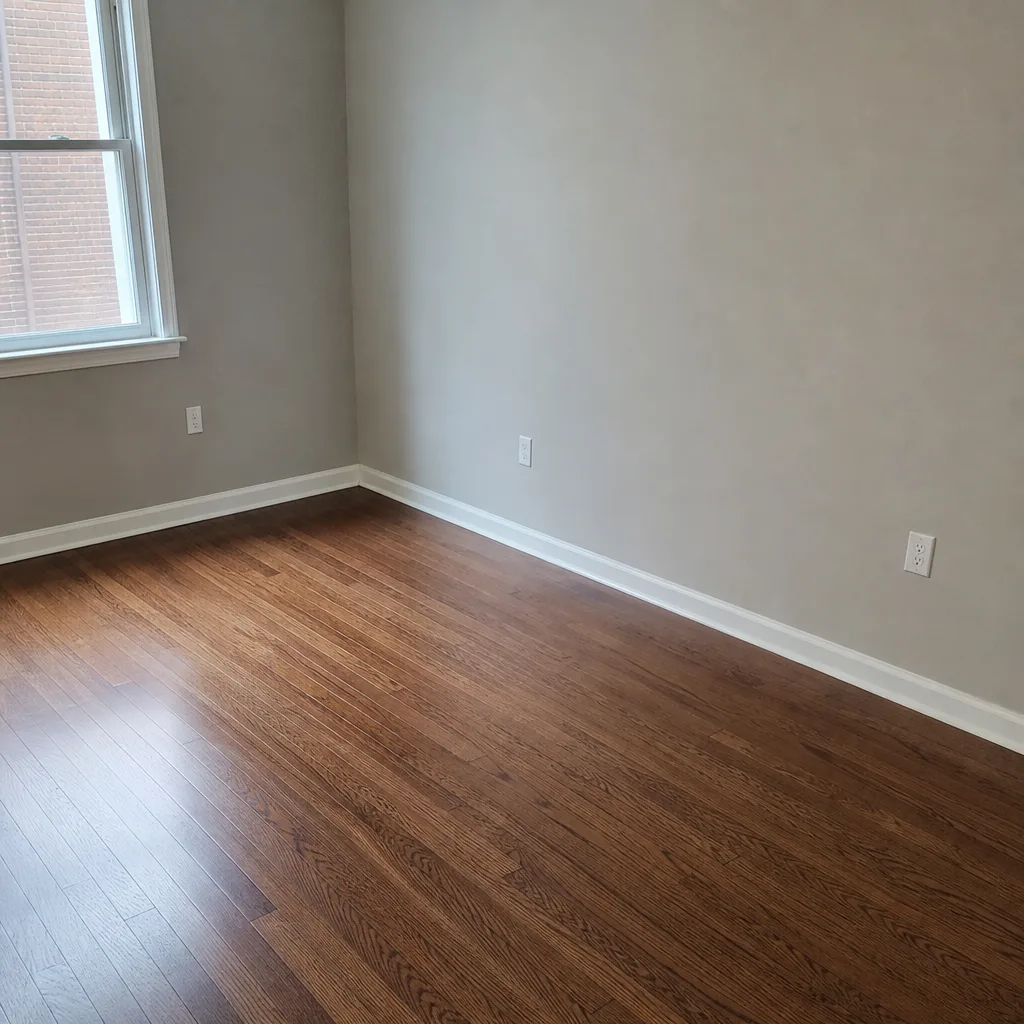 After
After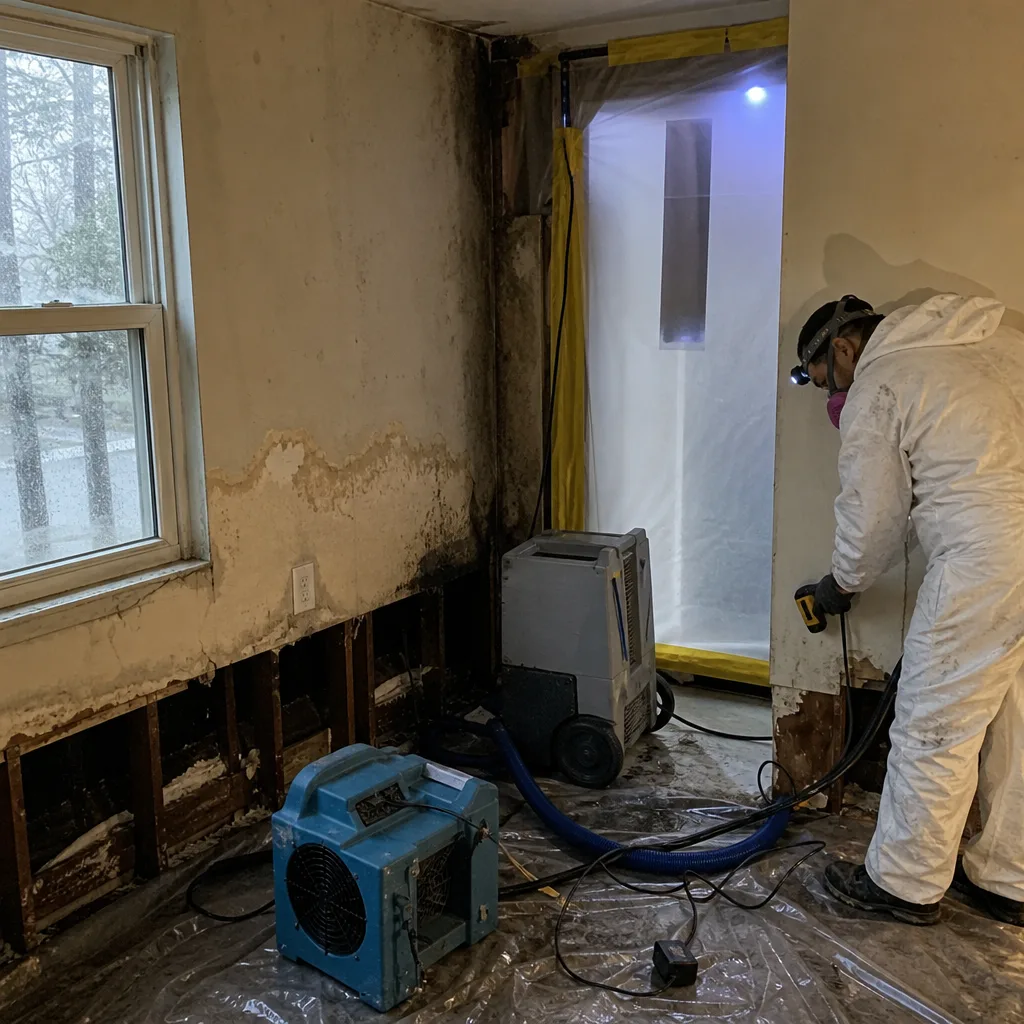 Before
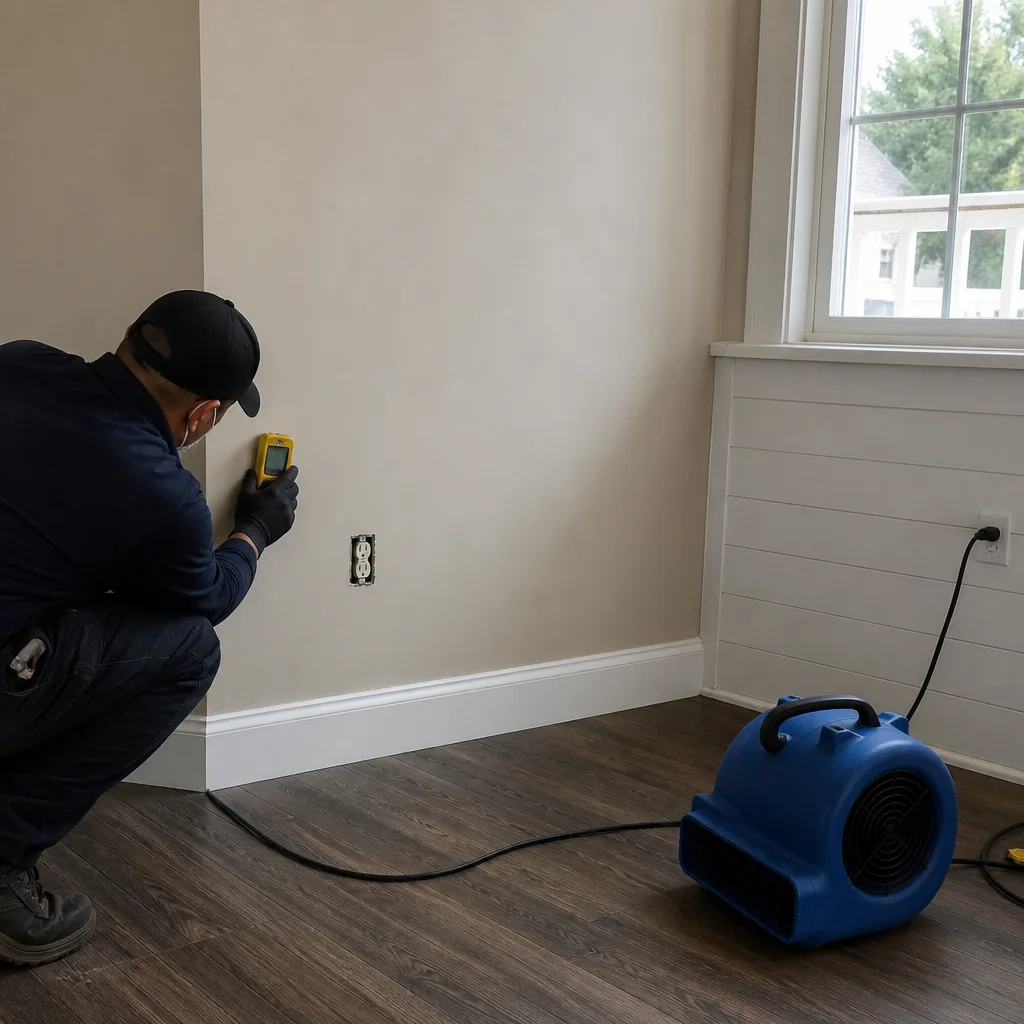 After
After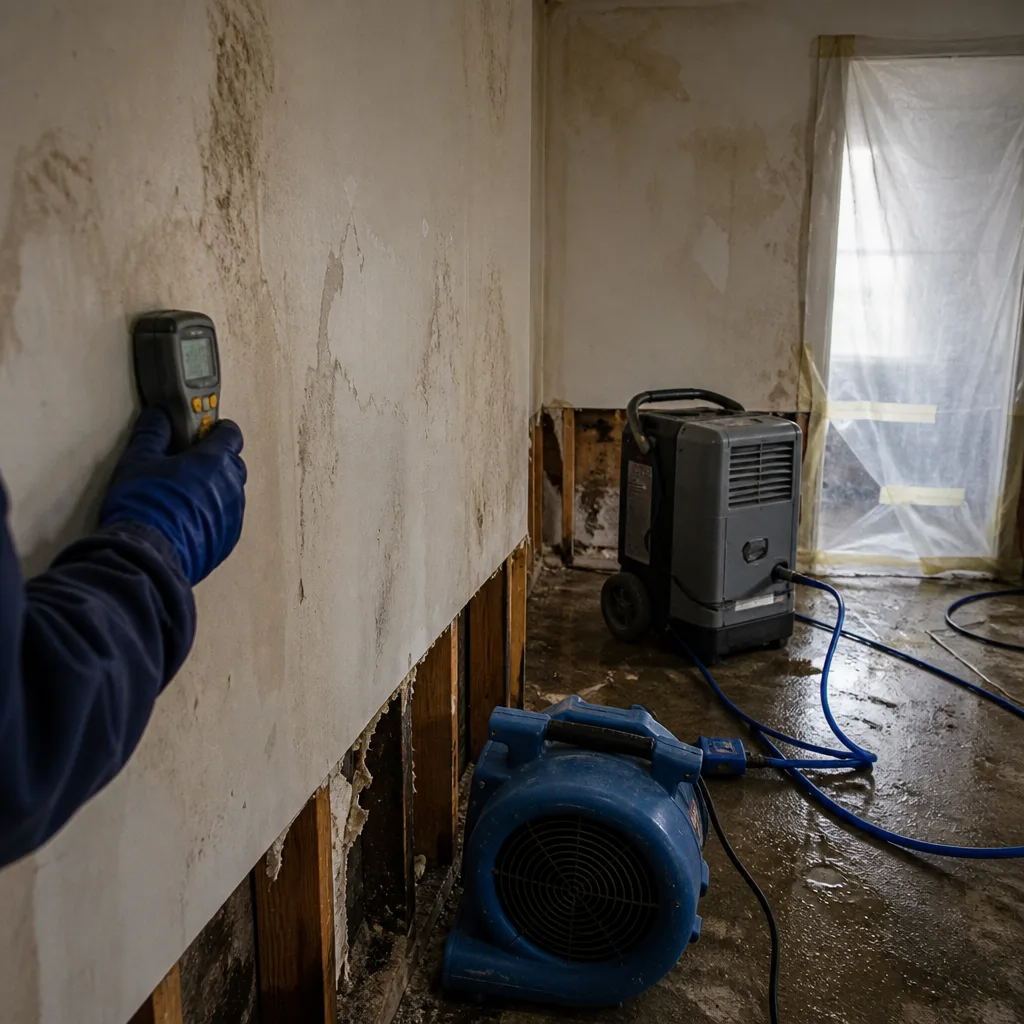 Before
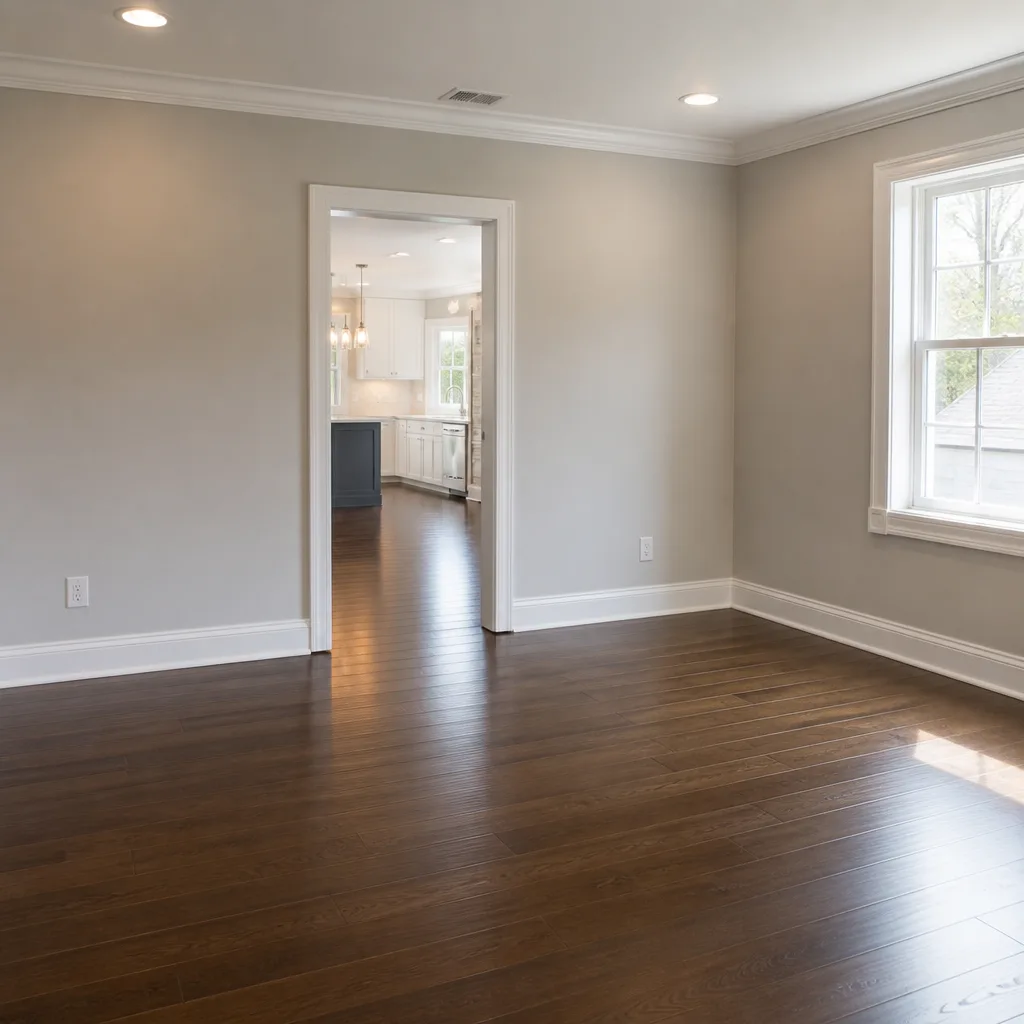 After
After24/7 Emergency Mold Remediation in West New York
Mold remediation in West New York typically runs $1,800-$6,500 depending on how many stacked units are involved, and our crews can start containment the same day you call. If you’ve spotted black staining on a bathroom ceiling, caught a musty smell in a closet, or had a washer overflow into the unit below, call (201) 762-0667 right now. A live dispatcher answers at 2 a.m., not a recording, and we’ll have a certified tech at your door inside 45 minutes for a free visual inspection. In West New York’s dense brick apartment buildings, the first hour matters more than anywhere else in Hudson County: mold spores move through shared air shafts and plumbing chases fast, and what starts as one unit’s problem becomes the building’s problem by morning.
We’re Floodline Restoration Co., and we’ve handled mold in West New York’s pre-war walkups long enough to know that every job here is really a multi-unit job. The line the water left is where we start. Done right – and backed in writing.
Need Emergency Mold Remediation in West New York Now?
Crews minutes away, answering live 24 hours a day. The sooner we start, the less it costs.
Understanding Mold Remediation Severity in West New York Properties
Not all mold is the same job, and in West New York, the building itself tells you most of what you need to know before anyone opens a wall. We classify every project by the extent of water damage behind the visible mold – Category 1 is clean water from a supply line, Category 2 is gray water from a washer or sink overflow, and Category 3 is black water from sewage or river flooding. That classification drives the whole scope: category 3 means full containment, HEPA air scrubbing, and cutting out contaminated drywall, never just spraying and painting over it.
West New York’s housing stock changes the math. Those 4-to-6-story brick buildings along Bergenline Avenue and the side streets west of Park Avenue were built largely between the 1920s and 1950s. Original galvanized supply lines and cast-iron drain stacks run inside party walls and floor cavities that were never designed for access. A slow leak behind a top-floor bathroom wall can travel three floors down before anyone sees a stain. By the time we arrive, what looks like a two-foot patch of ceiling mold is often a moisture-mapped issue spanning several units. That’s why containment here means vertical containment – floor to ceiling, landing by landing – not just hanging plastic over one doorway.
Along the eastern edge of town, the post-2000 high-rises on Boulevard East and the waterfront present a different set of conditions: newer drywall, tighter building envelopes, but shared mechanical shafts and HVAC returns that move air between units just as efficiently as the old chase walls do inland.
Why West New York Property Owners Choose Floodline Restoration Co.
- 45-minute response commitment. We dispatch crews from minutes outside West New York and commit to a technician on-site inside 45 minutes, any hour, any day. No call-back queue, no “sometime this week.”
- 24/7 live answer – a real person, never an automated system. Our dispatch board is staffed by humans around the clock. When your ceiling caves at 1 a.m. on a Sunday, you’ll talk to Donna or Mike, not a phone tree.
- IICRC-certified crews trained to WRT, AMRT, and FSRT standards. Every technician on your job holds current certifications in water damage restoration, applied microbial remediation, and fire/smoke restoration. They’re background-checked and uniformed.
- Free visual inspection with moisture mapping. Before any work starts, we walk the unit with thermal imaging and hygrometers to map where the moisture actually is – not just where the stain shows.
- Direct insurance billing. We bill your carrier directly and handle the adjuster communication. You don’t play messenger between Floodline and the insurance company.
- One team from first extraction to finished rebuild. The crew that sets up containment on day one handles daily moisture readings, hands you and your landlord the drying log, and rebuilds what needs rebuilding. No mid-job handoff to a subcontractor.
Our Mold Remediation Process
Inspection & Assessment
We start with a full walkthrough using thermal imaging and moisture meters to map the extent of wet building materials. In West New York’s stacked units, this means checking the floors above and below the visible damage, because the water rarely stays put.
Containment & Stabilization
We set up floor-to-ceiling containment barriers with negative air pressure so mold spores don’t travel through shared air shafts and plumbing chases into neighboring apartments. Stabilization includes stopping the source of water – whether that’s a roof membrane, a supply line, or a drain stack.
Drying & Dehumidification
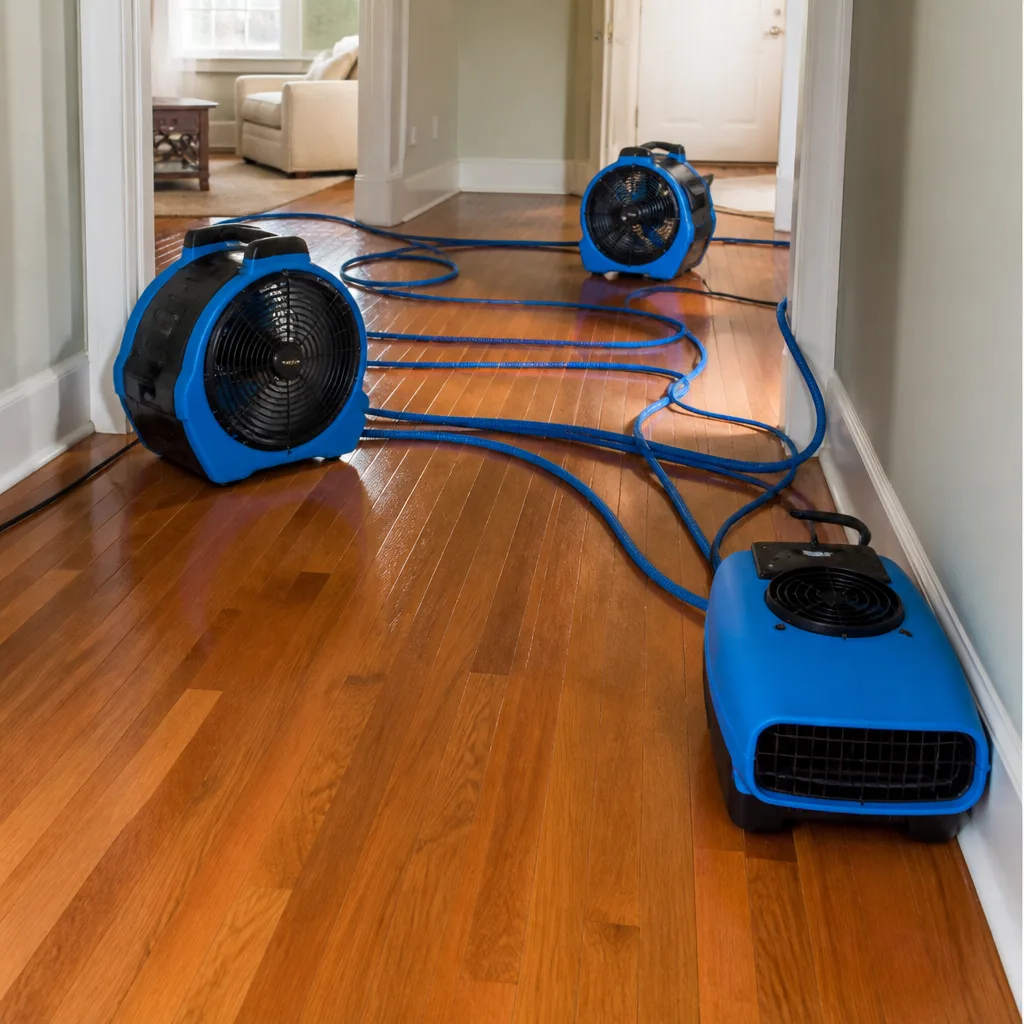
We run Dri-Eaz and Phoenix dehumidifiers alongside XPOWER air movers to pull moisture from drywall, plaster, and framing. Daily readings are logged and shared with you and your carrier until every surface reaches pre-loss moisture levels.
Cleaning & Sanitization
HEPA air scrubbers run continuously to pull airborne spores out of the air while our crew removes contaminated drywall, insulation, and trim. Non-porous surfaces get antimicrobial treatment; porous materials that absorbed category 2 or 3 water get cut out, never covered over.
Specialty Mold Treatment
For black mold and recurring blooms in crawl spaces and behind brick party walls, we apply targeted antimicrobial protocols and may install vapor barriers or humidity controls. Landlords in West New York often need this step to break the cycle of patched-over recurrences.
Repairs & Restoration
After clearance testing confirms spore counts are back to normal, we rebuild: drywall, plaster, paint, trim, insulation, whatever was removed. Same crew, same trucks, no handoff. We stand behind it with the 90-Day Done Right Promise in writing.
Working With Your Insurance Company
Mold claims in West New York are a known battleground, especially in older apartment buildings where carriers argue about pre-existing conditions. We deal with that every week. From the first hour on-site, we document everything: photos of every affected room, moisture readings before and after drying, containment logs, and a line-item scope of work that matches industry-standard estimating software. Our team communicates directly with your adjuster – you don’t have to translate a restoration job into insurance language. Whether it’s a top-floor in an inland brick walkup or a waterfront high-rise, the documentation trail is what gets a claim approved or denied. We build it thick.
What We Provide Your Insurer
- Thorough documentation of the loss
- Photos of all damage, room by room
- Moisture readings and drying logs
- A detailed, line-item scope of work
- Direct coordination with your carrier
Built for West New York’s Loss Calendar
Mold in West New York follows a rhythm that locals know in their bones. January and February bring deep freezes that burst supply lines in unheated stairwells and behind poorly insulated walls – the pipes in those 1920s buildings along 60th Street and Palisade Avenue have survived a century of winters, but every freeze tests them again. Spring thaw pushes groundwater up through cracked basement slabs, especially in the low-lying blocks east of Park Avenue near the river. Summer thunderstorms dump rain faster than the town’s combined storm drains can handle, and flat roofs pond water for weeks – which is exactly how our 60th Street top-floor job started. Nor’easters in the fall push Hudson River surge into ground-floor spaces along the waterfront. And through all of it, the urban heat island effect keeps humidity inside these brick boxes higher than in the leafier suburbs, which means any water intrusion colonizes mold faster. If you own or rent in West New York, the question isn’t whether moisture will find its way in. It’s whether the response gets documented and dried correctly the first time.
Mold Remediation Across West New York’s Neighborhoods
Response routes shape how we work in different parts of town. In the residential blocks around Bergenline Avenue, parking is tight and building access is through narrow front doors – our crews carry equipment up four flights on a regular basis, and we plan for it. The older brick walkups between 60th and 67th Streets, from Hudson Avenue back to the Boulevard East high-rises, are where we see the most recurring top-floor ceiling leaks: flat roofs pond water, water travels down through cast-iron stacks, and three or four units get wet from one roof membrane.
Down toward the waterfront along River Road, the newer luxury buildings bring a different profile: sealed envelopes, shared mechanical shafts, and tight HOA rules about access hours and noise. We coordinate with building management there and bring equipment through service elevators. Around the Donnelly Memorial Park area and the blocks off of 54th Street, ground-floor and garden-level units sit close to the water table, and basement mold follows every heavy rain. And the mixed-use corridors along Park Avenue and Bergenline mean retail spaces with residential units above – a burst pipe in a storefront at 3 a.m. is a mold problem in the apartment above by noon if someone doesn’t start extraction immediately.
In West New York’s aging 4-to-6-story brick apartment buildings, a single ceiling leak on the top floor routinely cascades into three or four stacked units below. That means mold remediation here is not a one-unit job but a multi-level containment project that must be coordinated with landlords, building management, and displaced renters all at once. We’ve done enough of them to know the difference between a quick single-room job and a building-wide event – and to price and schedule accordingly.
We handled a top-floor unit on 60th Street where a flat roof had ponded water for weeks, soaking through original cast-iron drain stacks and wetting three floors of drywall below. Our crew set up floor-to-ceiling containment on each landing, ran Injectidry drying mats on the bathroom walls, and logged moisture readings every 12 hours until every unit hit pre-loss condition – stripping three layers of patched-over drywall that had hidden older mold blooms from previous leaks.
Specialized Mold Remediation Services We Offer in West New York
Mold Inspection & Testing
Before any remediation, you need to know what you’re actually dealing with. We run air sampling and surface swabs in West New York apartments to identify spore types and concentrations, then map the moisture source with thermal imaging. In an aging brick building, what a visual check misses – mold behind a party wall, in a plumbing chase, under a top-floor membrane – is exactly what the lab results catch. A proper mold inspection in West New York tells you whether you need full remediation or a targeted cleaning, and we’ll put that in writing before any demo starts.
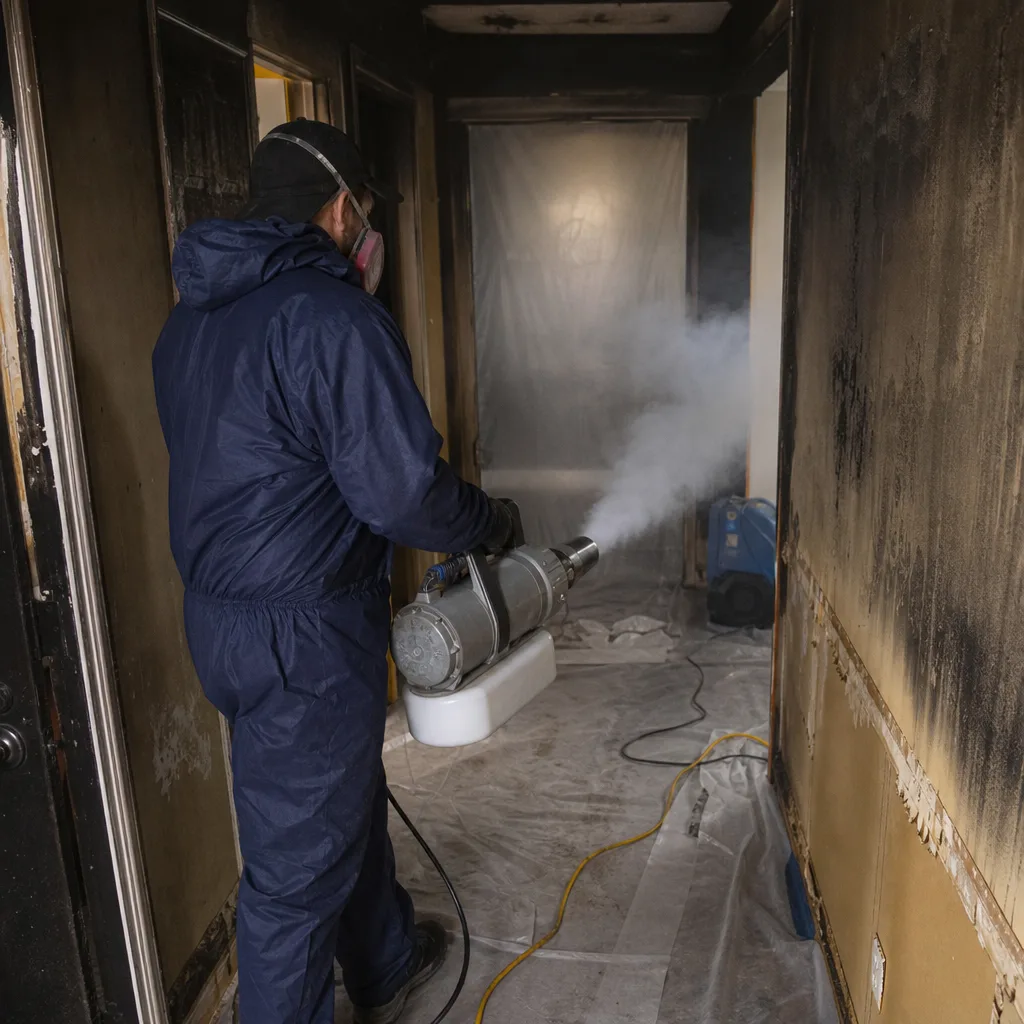
Mold Removal
Removal means cutting out contaminated drywall, insulation, and trim, not spraying something on top of it. In West New York’s brick buildings, that often means opening up walls that haven’t been touched since the 1950s and finding the water source three floors above. We do the cut-out, the drying, the HEPA scrubbing, and the rebuild – one crew from start to finish.
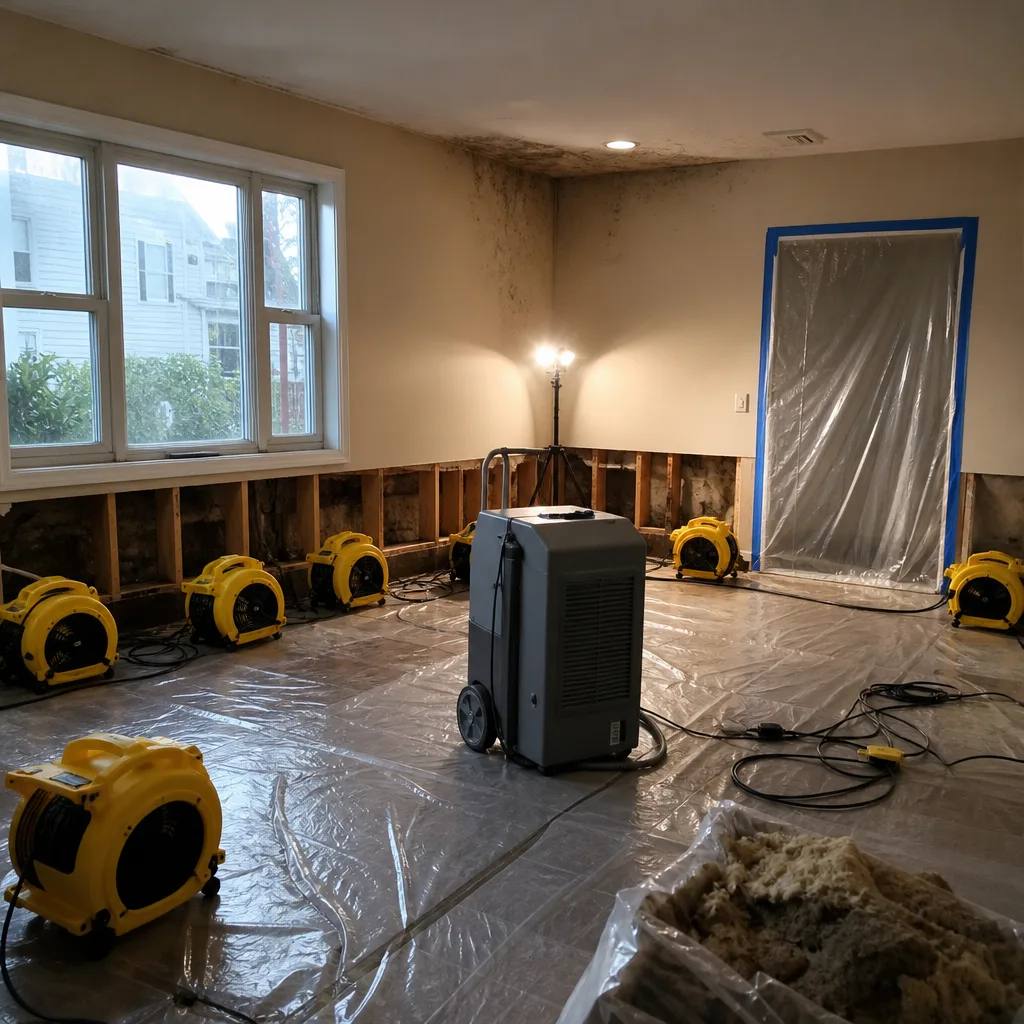
Black Mold Remediation
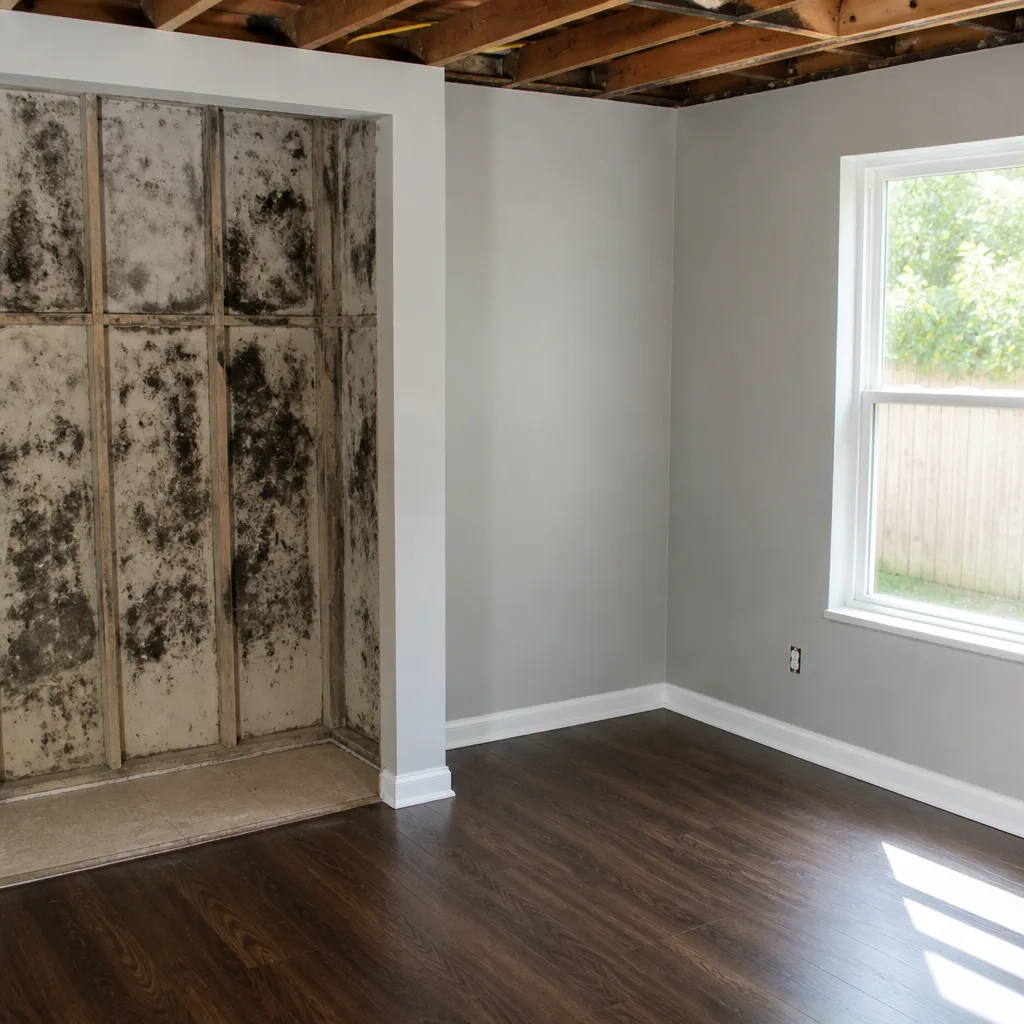
Black mold – stachybotrys chartarum – grows where water has sat for weeks, which is exactly what happens inside those hidden wall cavities behind brick party walls and under flat roofs. Full containment, negative air pressure, and clearance testing are non-negotiable. We handle it by the book: IICRC AMRT protocols, HEPA air scrubbing, and a written clearance report before anyone moves back in.
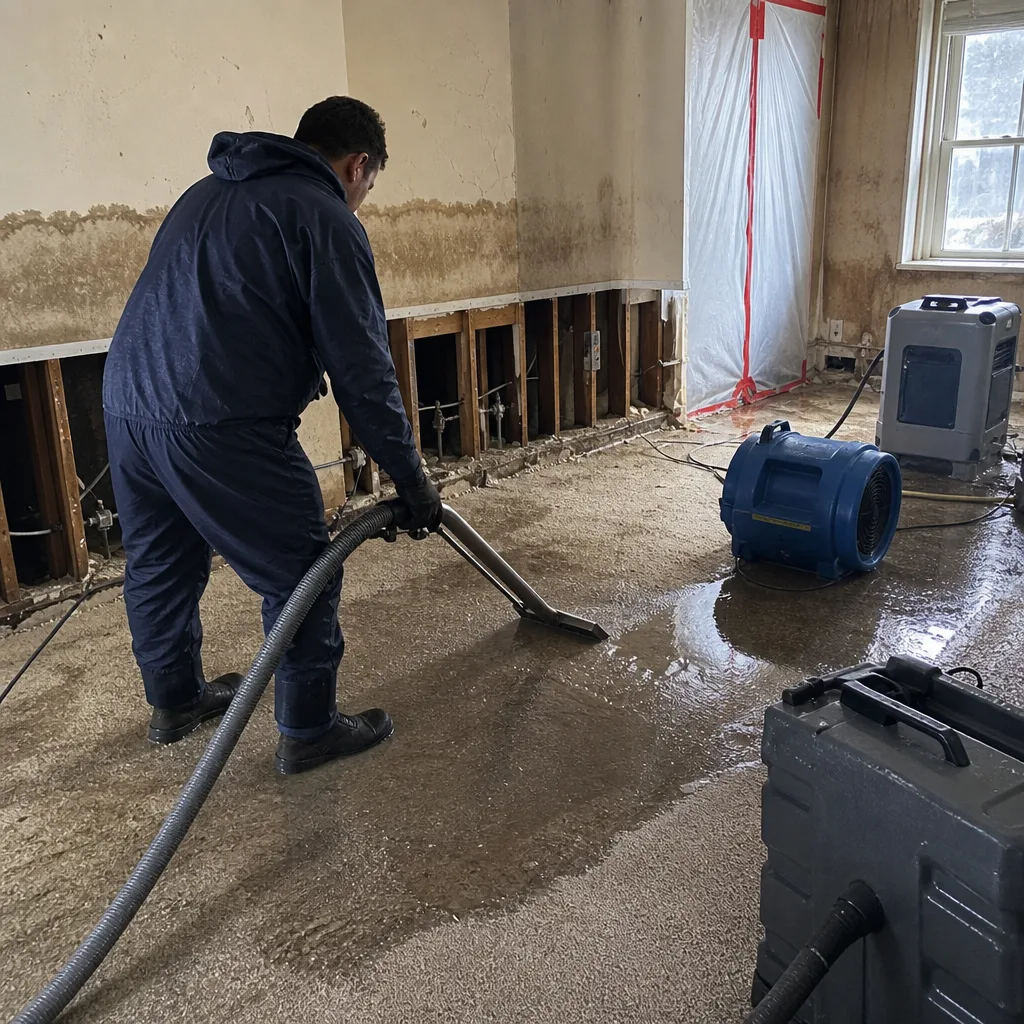
Air Quality Restoration
After a mold job, the air inside a West New York apartment can hold more spores than the walls did. We run HEPA air scrubbers and take post-remediation air samples to confirm spore counts are back to normal before we call the job done. For units in shared buildings, that air testing protects your neighbors too – spores from one unit’s tear-out shouldn’t become a problem in the unit next door.
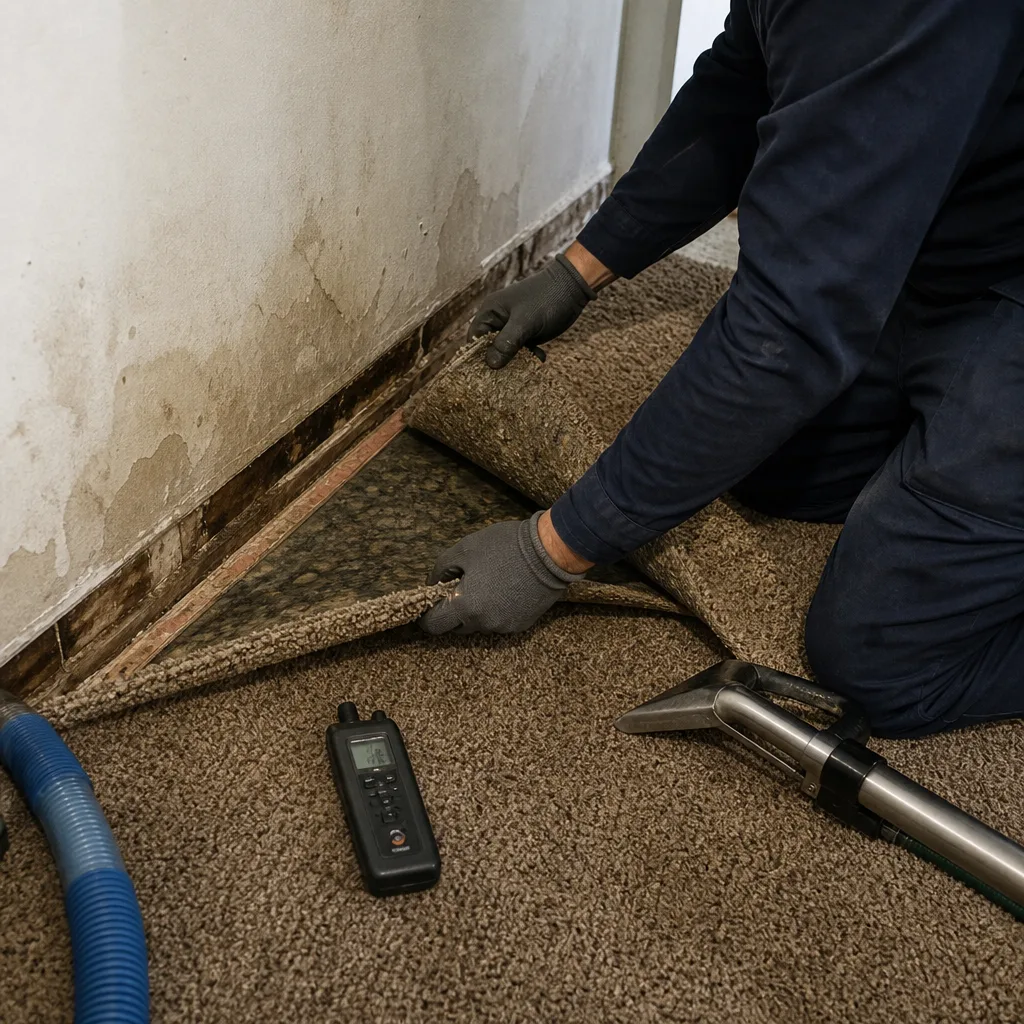
Crawl Space Treatment
Garden-level and ground-floor units in West New York sit close to the water table, especially in the low-lying blocks east of Park Avenue. Crawl spaces and basement slabs trap humidity, and that’s where mold colonies start before they spread upward. We treat the source: vapor barriers, dehumidification, antimicrobial treatments on framing and masonry, and sealing out the moisture that keeps feeding the bloom.
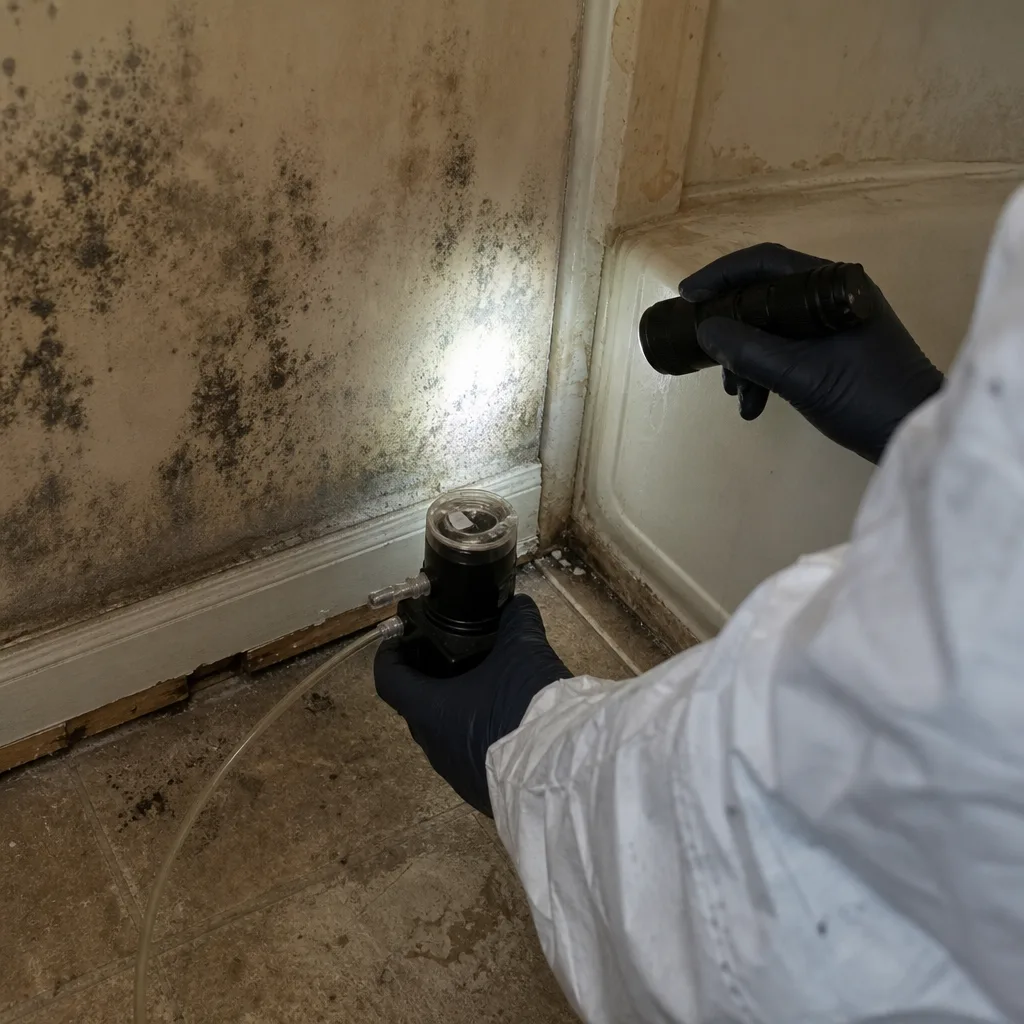
Moisture & Humidity Control
Long-term mold prevention in West New York means controlling the humidity that the town’s dense brick housing stock holds onto. We install dehumidifiers, exhaust fans, and crawl space encapsulation systems in apartments and common areas. For landlords, this is the step that stops the same top-floor leak from becoming the same mold claim every other year. For homeowners, it means keeping pre-war plaster and framing dry enough to stay clean.
What happens when you call
- 1
A real person answersNo phone trees - you reach a local pro.
- 2
You get an upfront price rangeHonest numbers before anyone is dispatched.
- 3
A background-checked tech heads outLicensed & insured, dispatched right away.
- 4
You approve before work beginsNothing starts until you say go.
Mold Remediation Costs in West New York, NJ
A single-room mold job in West New York – think an 8-by-10 bathroom with a ceiling bloom from a supply line leak – typically runs $1,800 to $3,200 including containment, cut-out, drying, and rebuild. A multi-unit stacked contamination across two or three floors of a brick walkup runs $4,500 to $8,500, because you’re setting up vertical containment and coordinating access across tenants. Black mold remediation with full containment and clearance testing in a top-floor unit under a flat roof runs $3,500 to $6,500 depending on how much ceiling and wall material needs to come out. A mold inspection with air sampling and lab analysis in West New York runs $350 to $700. What moves the price: building age, access (walkup vs. elevator), whether category 2 or 3 water is involved, and whether landlords need documented clearance testing for tenant records. Insurance covers mold remediation when the water source was sudden and accidental – a burst pipe, an overflow, storm damage. It rarely covers what carriers call “long-term seepage.” When we do the free inspection, you’ll get a firm, line-item scope in writing. No surprises on the bill. Call (201) 762-0667 for an exact quote – estimates are free.
We Also Serve Cities Near West New York
Floodline Restoration Co. provides Mold Remediation throughout Hudson and Bergen counties. Beyond West New York, our crews regularly work in West New York‘s neighboring towns, including Secaucus, Carlstadt, East Rutherford, and Lyndhurst. Same live dispatch, same 45-minute response commitment, same written guarantee.
West New York Mold Remediation Questions, Answered
How do you prevent mold from spreading to neighboring units in West New York’s stacked apartment buildings?
We prevent cross-unit mold spread by setting up floor-to-ceiling containment with negative air pressure on every affected landing, sealing plumbing chases and air shafts between floors, and running HEPA air scrubbers continuously during cut-out and drying. In West New York’s brick walkups, the shared building cavities are the highway, so containment has to be vertical, not just one doorway. Call (201) 762-0667 and we’ll walk the building with you before any demo starts.
Can you remediate mold in a top-floor unit without tearing out the entire ceiling under a flat roof?
Sometimes yes, sometimes no – it depends on what the moisture map shows. If the roof leak is recent and the drywall hasn’t crumbled, we can often dry it in place using Injectidry mats and save most of the ceiling. If the water has been ponding for weeks and the drywall is soft, cutting it out is the only legitimate path – patching over saturated mold-bearing drywall is exactly the failure pattern we see in West New York’s older buildings. We’ll show you the readings and tell you straight.
What does a mold inspection in an aging West New York brick building tell us that a visual check can’t?
A visual check sees the stain. An inspection with air sampling, surface swabs, thermal imaging, and moisture meters tells you where the water came from, how deep it traveled, and what spore types are in the air. In a 1920s brick walkup, we regularly find mold three stories below the visible damage, hiding in original cast-iron chases and behind party walls that no one has opened in decades. The lab results and moisture map are what let us scope the job correctly – and they’re what your insurance company will ask for.
How fast can you start containment in a West New York apartment after a washer overflows into the unit below?
Within 45 minutes of your call, a certified tech is at the door, and containment typically starts within two to three hours for a washer overflow. Gray water moves fast through floor cavities, and in a West New York apartment building, every hour of delay means more drywall to cut out – and more units potentially involved. Call (201) 762-0667 the minute you see water, even if it’s midnight.
Does remediation in a West New York high-rise on the waterfront require anything different than inland brick buildings?
Yes. Waterfront high-rises built after 2000 have tighter envelopes and shared mechanical shafts, which means our containment work has to account for HVAC returns that move air between units. Building management often has access-hour rules and service-elevator requirements that inland walkups don’t. The mold itself doesn’t care about the view, but the logistics are different. Our crews have worked both ends of town enough to plan for it.
How long does mold remediation take in a West New York apartment?
A single-room job with no structural surprises runs three to five days from containment to clearance testing. A multi-unit stacked contamination across three floors of a brick walkup runs two to three weeks, because drying logs have to hit pre-loss moisture levels in every affected unit, not just the one where the leak started. We’ll give you a written timeline after the free inspection.
Can we stay in our apartment during mold remediation?
For a contained single-room job, you can usually stay with the containment zipped shut and HEPA scrubbers running. For black mold or category 2/3 water spanning multiple rooms or floors, we recommend relocating until clearance testing comes back – and we’ll document that recommendation for your insurance carrier if loss-of-use coverage applies.
What should I do in the first 30 minutes after discovering mold or a water leak in West New York?
Stop the water source if you can do it safely, move furniture and personal items out of the wet area, and call (201) 762-0667. Don’t run a box fan – that just blows spores into the air. Don’t wipe the visible mold; you’ll disturb it. Photograph everything for your insurance file. The faster our crew gets there with real containment and drying equipment, the less material has to be cut out and the sooner you’re back to normal.
Serving West New York, NJ - Our Local Coverage Area
We’re based in the West New York area and know this community well. Use the map below to see our service coverage - if you’re nearby, we can almost certainly help.
Call Floodline Restoration Co. for Mold Remediation in West New York
If you’ve got mold in West New York – whether you’re in a top-floor walkup on 60th Street, a garden unit near the water table, or a waterfront high-rise on Boulevard East – call (201) 762-0667 now. You’ll get a live person, a free visual inspection, and a written scope of work before any demo starts. We’re licensed, insured, and we’ve been answering the phone at 2 a.m. for years. Every job is backed by the 90-Day Done Right Promise, in writing, no arguing. Senior and veteran discounts always apply. $50 off any repair over $250. A square deal – no surprises on the bill.
Written by Curt Bowman, Owner at Floodline Restoration Co., providing Mold Remediation in West New York and across Hudson County.